
Sydney and Kangaroo Route Shake-Up: Middle East Airspace Disruptions Reshape Australia–Europe Travel
Middle East airspace closures and 120-minute tactical flight detours disrupt the iconic Kangaroo Route, triggering Australia's new statutory Aviation Industry Ombuds Scheme and accelerating the shift toward uncurfewed Western Sydney Airport.

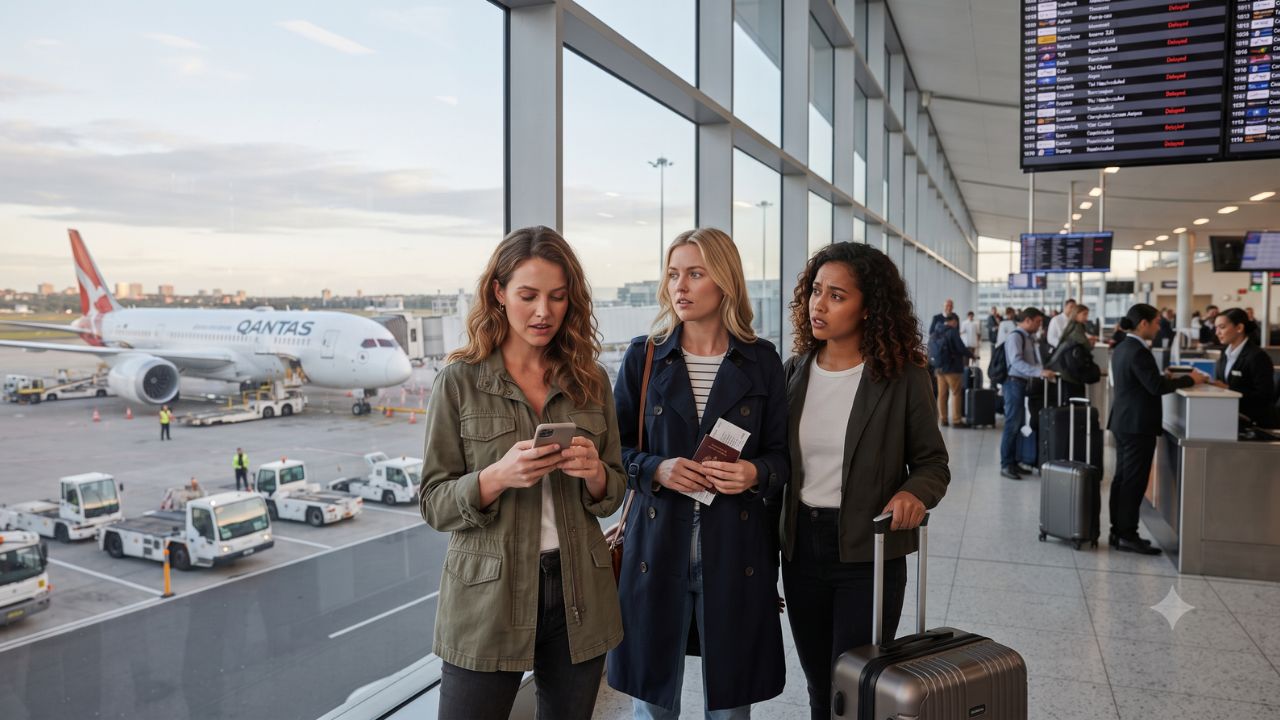
With tactical flight detours adding 90 to 120 minutes of flight time per sector and burning thousands of tons of contingency fuel, the historic Kangaroo Route connecting Australia to Europe is undergoing its most severe structural upheaval in three decades. The geopolitical instability spanning the Levant, Red Sea, Persian Gulf, and Iranian plateau has fractured the primary transit model that carried generations of Australian passengers through mega-hubs in Dubai, Abu Dhabi, and Doha. Long-haul widebody aircraft operated by Emirates, Etihad Airways, Qatar Airways, and European flag carriers are routinely forced onto circuitous northern or southern detour corridors, generating systemic operational shocks that destabilize schedules across Australasia.
The cascading impact strikes Australia's eastern gateways with acute intensity. In Sydney, where Kingsford Smith Airport enforces a strict statutory overnight curfew, delayed long-haul flights arriving past cutoff thresholds face mandatory diversions to Melbourne or Brisbane, leaving travelers dislocated and domestic feeder networks fractured. Simultaneously, a sweeping regulatory overhaul led by the federal government's Aviation White Paper is dismantling voluntary carrier dispute bodies, replacing them with a statutory Aviation Industry Ombuds Scheme equipped with mandatory cash refund powers and formal show-cause evidentiary requirements.
The Fragility of the Gulf Mega-Hub Transit Model and Overflight Volatility
For more than twenty years, Australian passenger and cargo connectivity to the United Kingdom and continental Europe relied upon synchronized transfer waves through the Persian Gulf. Carriers built profitable global networks by funneling high-capacity Boeing 777 and Airbus A380 fleets through synchronized 90-minute connection windows. This operational architecture assumed predictable, uninterrupted access to primary airways crossing the Middle East. When missile strikes, military air defense activations, and rolling sovereign airspace closures sever these corridors, the entire transit apparatus stumbles.
Flight operations dispatchers must redirect long-haul sectors along two congested alternative corridors. The northern detour routes flights across the Caucasus, Central Asia, and northern India, navigating narrow corridors beneath closed airspace over Ukraine and the Russian Federation. The southern detour routes traffic across Egypt, the Red Sea, Saudi Arabia, and the Sultanate of Oman. Both deviations force widebody aircraft to traverse air traffic control sectors operating well above designated capacity baselines, triggering extensive airborne holding patterns and tactical speed reductions.
Carrying extra contingency aviation turbine fuel creates compounding operational penalties. Under long-haul flight dispatch mathematics, an aircraft aloft burns roughly three to four percent of its carried fuel per hour simply to transport the weight of its reserve fuel. As gross takeoff weights approach maximum structural limits, airlines are forced to offload high-yield belly-hold air freight to remain within legal performance limits. Metrics monitored by the International Air Transport Association (IATA) confirm that airspace choke points and extended sector lengths have compressed operating margins while inflating aggregate industry fuel expenditures across intercontinental trunk routes.
Gateway Vulnerabilities and Regulatory Standards: Australian Airport Analysis
The consequences of flight detours vary significantly across Australia's capital city airports, exposing structural differences in local infrastructure, night curfews, and fleet positioning.
| Airport Gateway | Operational Operating Window | Primary Corridor Disruption Risk | Strategic Airline Adaptation / Tactical Routing |
|---|---|---|---|
| Sydney Kingsford Smith (SYD) | 06:00 to 23:00 (Strict statutory night curfew) | Late arrivals diverted to MEL or BNE after 90–120 min detours | Aircraft forced into emergency diversions; domestic fleets dislocated |
| Western Sydney International (WSI) | 24/7 Uncurfewed commercial operation | Primary diversion buffer absorbing late international arrivals | Swing-gate terminal; Singapore Airlines, Qantas, and Jetstar basing |
| Melbourne Tullamarine (MEL) | 24/7 Uncurfewed commercial operation | Severe terminal congestion during delayed Gulf transit waves | Booking shift toward Southeast Asian hubs (Singapore, Kuala Lumpur, Bangkok) |
| Perth Airport (PER) | 24/7 Uncurfewed commercial operation | Direct oceanic flights avoid Middle East airspace entirely | Qantas nonstop point-to-point flights to London Heathrow and Paris CDG |
| Brisbane Airport (BNE) | 24/7 Uncurfewed commercial operation | Missed morning domestic connections to regional leisure hubs | Stranded UK/European tourists; unrecoverable cancellations in Cairns/Whitsundays |
To protect consumers against recurring international travel chaos, the Australian Federal Government introduced comprehensive statutory reforms through the Department of Infrastructure, Transport, Regional Development, Communications and the Arts. The legacy, voluntary Airline Customer Advocate has been abolished in favor of an independent statutory Ombuds scheme with legislative teeth.
| Regulatory Dimension | Legacy Airline Customer Advocate | Statutory Aviation Industry Ombuds Scheme |
|---|---|---|
| Institutional Authority | Voluntary, airline-funded advisory body | Independent statutory authority backed by federal law |
| Legal Power & Remedies | Non-binding recommendations; no enforcement | Legislative power to direct binding cash compensation and refunds |
| Refund Requirements | Subservient to unilateral carrier contract terms | Mandatory prompt cash refunds across all original ticketing classes |
| Delay Evidentiary Standard | Internal, unchallenged airline categorization | Mandatory formal "Show Cause" reporting and burden of proof |
| Intermediary Legal Status | Indeterminate; travel agents absorbed chargebacks | Clear statutory shield protecting travel agents from carrier refund liability |
Expert Analysis: Crew Duty Hour Cliffs, Mandatory Show Cause Liability, and the Rise of Western Sydney
For travelers booking transcontinental itineraries through Middle Eastern hubs, the direct consequence of extended flight routing is the flight crew duty hour cliff. Under international civil aviation flight time limitation rules, pilots and cabin crew operate under non-negotiable maximum duty periods to prevent fatigue. When an inbound sector from London, Frankfurt, or Paris to Dubai encounters tactical vectoring, air traffic holds, and a 100-minute detour, flight crews frequently reach legal duty limits on the apron. Because international airlines cannot instantly position reserve flight crews at overseas hubs, outbound connecting departures to Sydney, Melbourne, and Brisbane are canceled or held for 12 to 24 hours, stranding thousands of passengers inside transit concourses.
The pricing pressure this dynamic creates means corporate travel managers are aggressively reallocating travel budgets away from Persian Gulf transit points. Corporations booking executive travel are accepting premium fares on Qantas nonstop flights operating out of Perth to London Heathrow and Paris Charles de Gaulle. By routing across the Indian Ocean and entering southern European airspace through safe channels, these point-to-point services bypass Middle Eastern choke points completely. Simultaneously, retail agencies are redirecting leisure and corporate bookings through Southeast Asian hubs, primarily Singapore Changi, Kuala Lumpur, and Bangkok Suvarnabhumi, leveraging airline partnerships with Singapore Airlines, Malaysia Airlines, and Thai Airways to guarantee arrival predictability.
From a regulatory perspective, Australia's new statutory "Show Cause" mechanism fundamentally alters carrier liability. Under the Aviation Customer Rights Charter, monitored in coordination with the Australian Competition and Consumer Commission (ACCC), international airlines can no longer dismiss downstream schedule collapses as blanket force majeure. While immediate military missile strikes or sudden sovereign airspace shutdowns constitute genuine force majeure, cascading cancellations caused by inadequate crew buffering, aircraft reassignments, or preventive schedule consolidations are legally classified as controllable airline actions. When an airline cancels a flight for controllable operational reasons, it is legally bound to provide immediate cash refunds across all original fare classes rather than trapping passenger funds in expiring travel vouchers.
Crucially, representations led by Dean Long, Chief Executive of the Australian Travel Industry Association (ATIA), ensured that accredited travel agents are legally insulated from carrier defaults. Travel agencies act as booking facilitators and do not retain airline funds once tickets are ticketed; the new federal statutes shield intermediaries from chargebacks, ensuring that refund liability rests exclusively on the operating carrier's balance sheet.
Long-term structural relief will emerge through Western Sydney International Airport (Nancy-Bird Walton) at Badgerys Creek. Built without a night curfew and featuring flexible swing-gate infrastructure that switches gates between domestic and international configurations within minutes, the airport provides a permanent operational relief valve for the Sydney basin. When severe overseas flight delays push arrivals past Kingsford Smith's 11:00 pm curfew, long-haul widebodies can land at Western Sydney rather than burning fuel diverting to Melbourne or Brisbane, protecting passenger itineraries and stabilizing Australia's international aviation network.
Key Takeaways
- Tactical Middle East airspace detours add 90 to 120 minutes per sector, elevating fuel consumption and pushing flight crews past legal duty limitations.
- Sydney Kingsford Smith's 23:00 curfew forces late-arriving European flights to divert to Melbourne or Brisbane, causing severe domestic schedule dislocations.
- The new statutory Aviation Industry Ombuds Scheme replaces the toothless Airline Customer Advocate, enforcing mandatory cash refunds and binding dispute resolution.
- Under mandatory "Show Cause" reporting, carriers cannot claim blanket force majeure for cancellations caused by preventable crew timeouts or fleet reassignments.
- Western Sydney International Airport provides an uncurfewed 24/7 diversion haven, while corporate travelers increasingly pivot toward nonstop Perth flights and Southeast Asian hubs.
FAQ: Kangaroo Route Disruptions and Passenger Rights 2026
Why do Middle East airspace closures cause flight cancellations in Sydney?
Airspace diversions add up to two hours of flight time, causing flight crews to exceed legal duty limits. Delayed flights arriving after Sydney Airport's 11:00 pm curfew cannot land and must divert interstate, triggering rolling cancellations.
Are airlines required to pay cash refunds under Australia's new aviation ombuds rules?
Yes. Under the statutory Aviation Customer Rights Charter, if a flight cancellation or severe delay stems from controllable airline operational decisions, carriers must issue prompt cash refunds across all fare classes rather than non-refundable vouchers.
Are Australian travel agents liable for refunding airline tickets during international disruptions?
No. Federal legislation provides a statutory shield for accredited travel intermediaries. Because travel agents do not hold ticketing funds once issued, legal and financial refund obligations rest entirely with the operating airline.
How does Western Sydney International Airport prevent passenger diversions?
Operating 24 hours a day without a night curfew, Western Sydney International can accept late-arriving long-haul flights that miss Kingsford Smith Airport's curfew, preventing costly diversions to Melbourne or Brisbane.
Mastering uncurfewed gateway alternatives and enforcing statutory passenger refund rights remain the essential defenses for travelers navigating the shifting Kangaroo Route.
Related Travel Guides
Disclaimer
This article is for informational and educational purposes only. It does not constitute legal, financial, or professional advice. While we strive to provide accurate and up-to-date information, travel policies, regulations, and conditions change rapidly. Always verify information with official sources before making travel decisions. Nomad Lawyer makes no representations about the accuracy, reliability, completeness, or suitability of the information provided. Readers should consult qualified professionals for advice specific to their circumstances. The views expressed in this article are those of the author and do not necessarily reflect the views of Nomad Lawyer.
Naina Thakur
Contributor & Travel Specialist
Travel enthusiast and legal writer covering visa regulations, responsible tourism, and cultural journeys across global destinations.
Learn more about our team →