
ATSB Investigates Qantas Runway Incursion at Sydney Airport
The Australian Transport Safety Bureau has launched an investigation into a Qantas runway conflict at Sydney Airport on July 27, 2026.
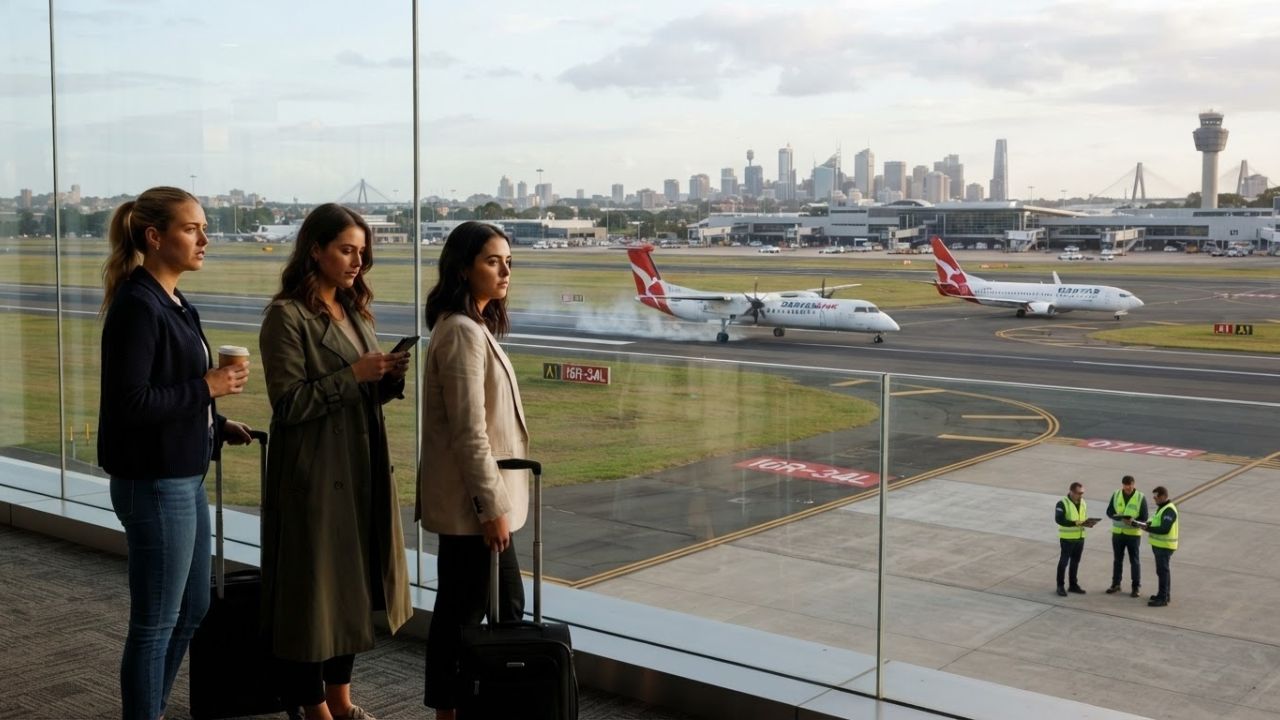
Image generated by AI
The Australian Transport Safety Bureau has launched an investigation into a runway conflict at Sydney Airport involving two Qantas-group aircraft on July 27, 2026.
The Local Trend Revealed
Aviation safety systems and runway incursion tracking are facing fresh scrutiny at Australia's busiest international terminal. On July 27, 2026, at approximately 08:14 AM AEST, a runway conflict occurred at Sydney Airport (SYD) involving two Qantas-group aircraft.
A domestic QantasLink Bombardier Dash 8 (VH-QOC) from Canberra was completing its landing roll on runway 34L when a Qantas Boeing 737-838 (VH-XZG) arriving from Queenstown, New Zealand, crossed the runway holding point on intersecting runway 25. The Australian Transport Safety Bureau (ATSB) has initiated a formal safety investigation (code AO-2026-086) to evaluate the communication protocols between air traffic controllers and the flight decks.
Incident Flight Parameters & Sydney Terminal Metrics
Coordinating runways at intersecting taxi paths requires tracking active airframes and airport movements. The following tables outline the incident parameters and Sydney Airport operational statistics.
| Flight / Registry | Aircraft Model & Reg. | Departure Hub | Runway in Play | Operating Mode / Action |
|---|---|---|---|---|
| QantasLink QLK424D | Bombardier Dash 8 (VH-QOC) | Canberra (CBR) | Runway 34L | Completing landing roll |
| Qantas QFA124 | Boeing 737-838 (VH-XZG) | Queenstown (ZQN) | Runway 25 | Cleared to cross runway 34L |
Qantas group aircraft involved in Sydney Airport runway safety incident.
| Operational Metric | Volume / Performance (2025/26) | Strategic Goal (Master Plan 2039) |
|---|---|---|
| Annual Passenger Traffic | 42.54 million (+2.7% YoY) | 65.6 million passengers |
| International Passengers | 17.17 million passengers | Expanded international gates |
| Annual Airfield Movements | ~292,000 flights (FY 2024-25) | T2-T3 precinct upgrades |
| National On-Time Arrival | 81.1% (February 2026 BITRE) | Fleet integration checks |
Sydney Airport traffic volumes, terminal upgrades, and passenger statistics.
Cultural & Environmental Value
For the visitor, the real impact is that independent safety investigations ensure the preservation of Australia's strict safety standards, protecting the integrity of trans-Tasman and domestic travel links. While no collision or damage took place, checking safety barriers helps manage carbon-intensive holding patterns and abort maneuvers.
By analyzing flight data recorders and recorded communications, the ATSB helps refine runway layouts and control procedures, direct support for community-led eco-tourism and business travel across New South Wales.
Visitor Insider Tips
To navigate transits at Sydney Airport safely during active investigations, follow these local insights:
- Terminal Transfer Shuttles: If transferring between Terminal 1 (International) and Terminals 2/3 (Domestic), utilize the T-Bus shuttle. Allow at least 45 minutes for the transfer.
- Aviation Safety Updates: Monitor the ATSB official database for progress reports on investigation AO-2026-086, scheduled for release in the final quarter of 2026.
- On-Time Performance Logistics: Review the Bureau of Infrastructure and Transport Research Economics (BITRE) monthly reports to identify carriers with the lowest cancellation rates (averaging 1.5% in early 2026).
- Consular Assistance: For international arrivals landing at Terminal 1, passport control counters offer direct access to visa extensions and currency exchange desks near the arrivals hall.
Tourism Outlook
The ATSB's independent investigation ensures that Sydney Airport remains a secure gateway for international visitors, particularly as the airport progresses with its A$6 billion capital upgrade program. While the incident caused no schedule delays or injuries, the final report will likely introduce refined safety clearances.
These regulatory steps maintain public confidence and support the long-term growth of tourism across New South Wales and New Zealand.
Related Travel Guides
Gulf Airlines Maintain Boeing Jet Orders Amid Middle East Airspace Rerouting
Disclaimer
This article is for informational and educational purposes only. It does not constitute legal, financial, or professional advice. While we strive to provide accurate and up-to-date information, travel policies, regulations, and conditions change rapidly. Always verify information with official sources before making travel decisions. Nomad Lawyer makes no representations about the accuracy, reliability, completeness, or suitability of the information provided. Readers should consult qualified professionals for advice specific to their circumstances. The views expressed in this article are those of the author and do not necessarily reflect the views of Nomad Lawyer.