
Switzerland’s Zurich Expands Tourism Appeal Through Technology Events and Innovation Travel: All You Need to Know
Switzerland’s Zurich Expands Tourism Appeal Through Technology Events and Innovation Travel: All You Need to Know

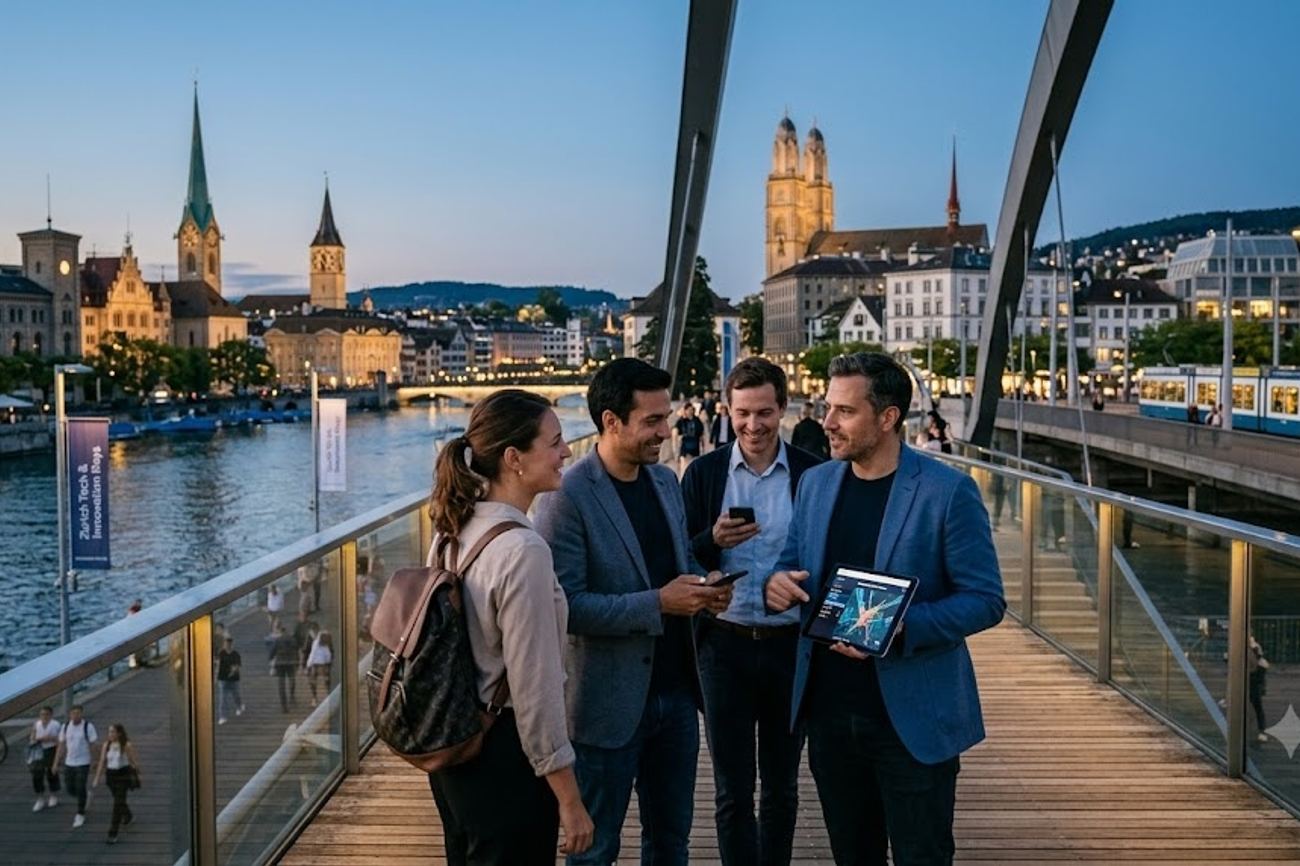
Image generated by AI
40,000 visitors over a nine-day period at Scientifica 2026 underscores Zurich's capacity to convert high-level academic research into a scalable, commercial visitor experience. This figure is not merely a tourism statistic; it is a proof of concept for the city's strategy to merge the Meetings, Incentives, Conferences, and Exhibitions (MICE) sector with its dense concentration of intellectual capital. By positioning itself as an "innovation ecosystem" rather than a simple host city, Zurich is attempting to decouple business tourism from the traditional model of hotel-and-convention-center packages, moving instead toward a model of integrated knowledge transfer.
The Convergence of Intellectual Capital and MICE Infrastructure
The strategic pivot in Zurich's business tourism is rooted in the intentional alignment of its visitor infrastructure with its knowledge economy. The city is not relying on generic appeal but is leveraging specific economic clusters—Information and Communication Technology (ICT), life sciences, and finance—to attract high-value international delegates. This approach transforms the city into a living laboratory where the venue is secondary to the accessibility of the experts.
Central to this strategy is the collaboration between municipal bodies and academic powerhouses. The partnership involving the Canton of Zurich, the Greater Zurich Area, and Zurich Tourism creates a streamlined pipeline for event organizers. Instead of importing speakers and exhibits from abroad, planners are encouraged to utilize the local "innovation park" model. This is exemplified by the role of Innovation Park Zurich in Dübendorf, which serves as a physical bridge between corporate interests and early-stage research.
The city's value proposition is further strengthened by its specialized research fields. While finance remains a cornerstone, the acceleration of artificial intelligence (AI), robotics, space exploration, and fintech has provided Zurich with a contemporary identity that appeals to the "deep tech" sector. This shift allows the city to compete with traditional hubs like London or Singapore by offering a more concentrated, specialized environment for scientific exchange.
Quantitative Capacity and Logistical Efficiency
The ability to host massive scientific gatherings requires a precise balance of square footage and logistical throughput. Zurich’s infrastructure is designed to handle high-density, short-duration visits, which are typical of the technology and finance sectors.
| Facility/Metric | Capacity/Detail |
|---|---|
| Kongresshaus Zürich Total Space | 5,300 square metres |
| Maximum Single Room Capacity | 2,000 participants |
| Combined Capacity (with Tonhalle) | 4,500 participants |
| Venue Flexibility | 20+ rooms and foyers |
| Airport Connectivity | Direct flights to 60+ countries |
| Airport-to-City Transfer | Approximately 15 minutes |
| Scientifica 2026 Total Attendance | 40,000 visitors |
| Scientifica 2026 Opening Attendance | 10,000 visitors (Dübendorf) |
| Scientifica 2026 Presenters | 1,500+ researchers, students, and start-ups |
| Scientifica 2026 Activities | 200+ exhibitions, labs, and workshops |
Logistically, the city leverages its compact geography to reduce "friction" for the international traveler. The 15-minute transit time from baggage reclaim to the city center is a critical KPI for organizers of three-day summits, where every hour of delegate availability is monetized. This efficiency is supported by the broader Swiss transport network, often coordinated through Switzerland Tourism, which emphasizes the reduction of transit dead-time as a competitive advantage.
Expert Analysis: The "Knowledge-as-a-Service" Model
For the modern business traveler and event organizer, Zurich is transitioning from providing "space" to providing "access." This is a fundamental shift in the business of tourism. In the traditional MICE model, a city sells its hotels and convention halls. Zurich is instead selling its proximity to ETH Zurich and the University of Zurich.
The direct consequence for travelers booking these routes is a change in the itinerary. We are seeing the rise of the "hybrid itinerary," where a formal conference at the Kongresshaus Zürich is supplemented by site visits to robotics labs or fintech incubators. The Open-i event, scheduled for 26 November 2026, serves as a prime example of this. It is not just a meeting; it is a technology transfer mechanism.
The pricing pressure this creates is significant. When a destination can offer built-in access to 1,500+ researchers and a specialized AI ecosystem, it can command a premium over destinations that offer only luxury amenities. For the delegate, the value is no longer in the hotel star rating, but in the networking potential of the "innovation park" visits. This creates a high barrier to entry for other European cities; while many have convention centers, few have the specific synergy between a world-leading technical university and a municipal government dedicated to "location promotion."
Furthermore, the Zurich AI Festival demonstrates a move toward "distributed events." By spreading 25+ events across the Greater Zurich Area, the city avoids the congestion of a single venue and integrates the business traveler into the actual working environment of the city's tech sector. This increases the "stickiness" of the destination, encouraging longer stays and higher spend per visitor.
Key Takeaways
- Integrated Ecosystem: Zurich has moved beyond traditional tourism by linking its MICE infrastructure directly to its ICT, life sciences, and fintech clusters.
- Academic Synergy: The partnership with ETH Zurich and the University of Zurich allows event planners to integrate real-world research and technology demonstrations into their programs.
- Scalable Capacity: With a combined capacity of 4,500 participants at the Kongresshaus and Tonhalle complexes, the city can handle mid-to-large scale international congresses.
- Logistical Speed: A 15-minute transfer from the airport to the city center and direct connections to over 60 countries minimize travel friction for short-term business delegates.
- Proven Engagement: The success of Scientifica 2026, with 40,000 visitors and 200+ activities, proves there is a massive appetite for science-led business tourism.
FAQ: Zurich Business Tourism 2026
What is the maximum capacity for a single event in Zurich? Using the combined facilities of the Kongresshaus Zürich and the neighboring Tonhalle complex, the city can support international events with up to 4,500 participants. The largest single meeting room can accommodate 2,000 people.
How easy is it to get from Zurich Airport to the city center? The transit is highly efficient, with rail services transporting passengers from baggage reclaim to central Zurich in approximately 15 minutes, making it ideal for short-duration business trips.
What makes Zurich a better choice for tech conferences than other cities? Zurich offers a "knowledge ecosystem," providing direct access to ETH Zurich, the University of Zurich, and specialized hubs in AI, robotics, and fintech, allowing organizers to build programs around local expertise.
What was the impact of Scientifica 2026 on Zurich's tourism profile? The event proved the city's ability to manage large-scale scientific crowds, attracting 40,000 visitors and showcasing the ability to integrate 1,500+ researchers and start-ups into a public-facing event.
Zurich is no longer just hosting the conversation; it is providing the intelligence.
Tags: ETH Zurich, Kongresshaus Zürich, Zurich AI Festival, Scientifica 2026, Switzerland MICE, Innovation Park Zurich
Related Travel Guides
- Andaman Travel Alert Ferry Availability Changes Dramatically Between Monsoon and Peak Season
- Travelmarvel Sirius Nile River Cruise Begins New Egypt Journey Connecting Ancient History With Modern Luxury Travel
- Norwegian Jewel Starts Sailing From Philadelphia With New Canada and New England Fall Cruises for Travellers
Disclaimer
This article is for informational and educational purposes only. It does not constitute legal, financial, or professional advice. While we strive to provide accurate and up-to-date information, travel policies, regulations, and conditions change rapidly. Always verify information with official sources before making travel decisions. Nomad Lawyer makes no representations about the accuracy, reliability, completeness, or suitability of the information provided. Readers should consult qualified professionals for advice specific to their circumstances. The views expressed in this article are those of the author and do not necessarily reflect the views of Nomad Lawyer.
Kunal K Choudhary
Co-Founder & Contributor
A passionate traveller and tech enthusiast. Kunal contributes to the vision and growth of Nomad Lawyer, bringing fresh perspectives and driving the community forward.
Learn more about our team →