Andaman Travel Alert Ferry Availability Changes Dramatically Between Monsoon and Peak Season

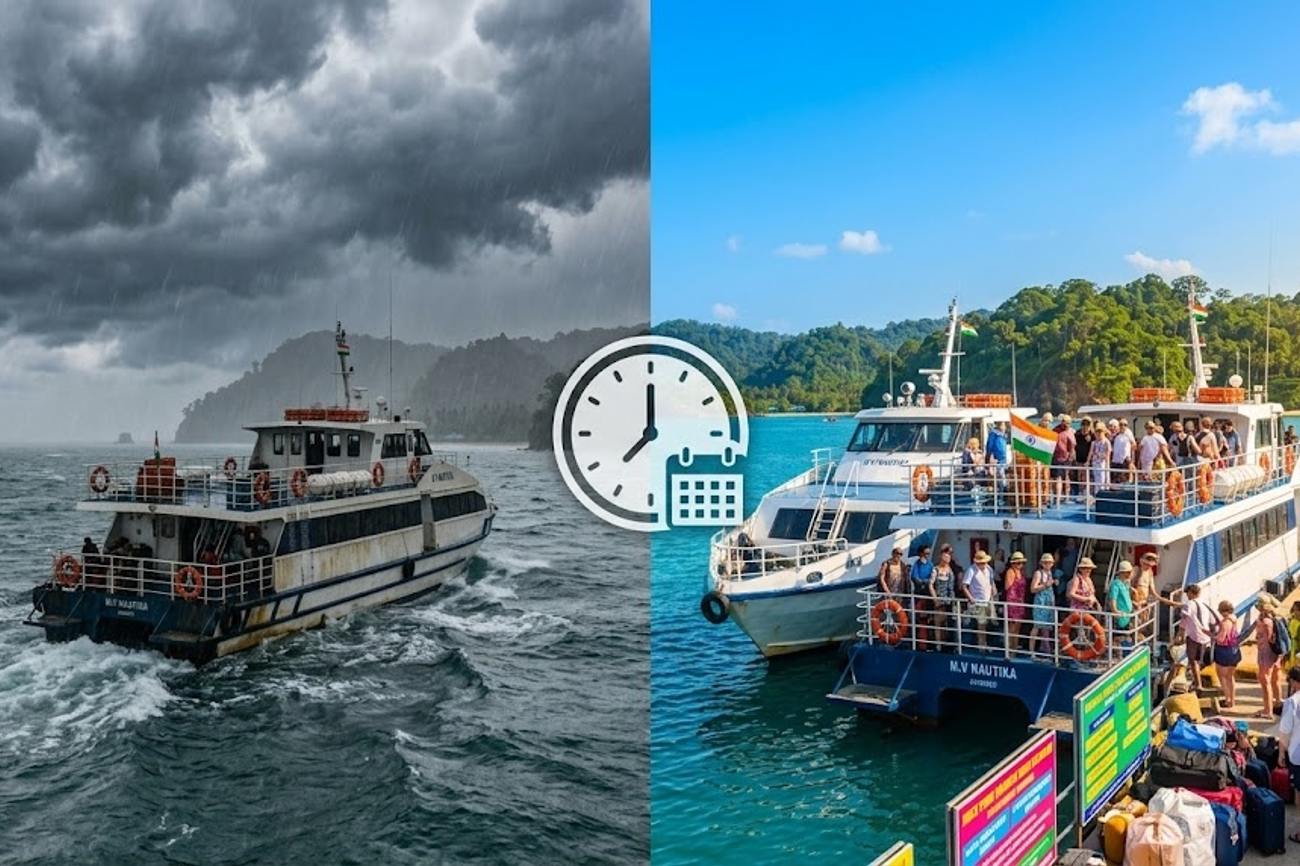
Image generated by AI
[Port Blair, July 2026] — Ferry connectivity across the Andaman Islands collapses by nearly 92% during the peak of the monsoon season, forcing travelers to radically alter booking behaviors to secure transit between islands.
New data analyzing 34,868 ferry legs operated between June 2025 and July 2026 reveals a stark divide in maritime availability. While the peak travel window from October to February averages 2,837 confirmed ferry legs per month, that number plummets to just 717 monthly legs during the June to September monsoon period. The disparity is most acute in July, which sees only 8% of the ferry volume available in December.
The Monsoon Connectivity Crash
The reduction in service is not uniform across the archipelago, creating a fragmented transit network where some routes remain viable while others nearly vanish. Operators including Makruzz, Nautika, Green Ocean, and ITT Majestic adjust their vessel deployment based on weather conditions, route demand, and overall vessel availability.
The data shows that "seasonal resilience" varies by sector. The link between Havelock and Port Blair is more stable, retaining 43% of its peak-season capacity during the monsoon. In contrast, the Havelock–Neil route is far more volatile, maintaining only 19% of its peak-season volume when the weather turns. This means travelers cannot rely on general seasonal trends but must verify the specific status of each individual leg of their journey.
Affected Routes and Volume Metrics
The following data outlines the specific impact on island-hopping logistics:
| Metric / Route | Monsoon Period (June-Sept) | Peak Period (Oct-Feb) | Retention Rate (Monsoon vs Peak) |
|---|---|---|---|
| Avg. Monthly Ferry Legs | 717 | 2,837 | ~25% |
| Havelock $\rightarrow$ Port Blair | Variable | High | 43% |
| Havelock $\rightarrow$ Neil | Variable | High | 19% |
| July Volume | Critical Low | N/A | 8% of December volume |
Practical Traveler Advisory and Strategic Insights
For those booking travel to the Andaman Islands, the "corporate" reality of vessel deployment translates into high-risk logistics for the passenger.
The "Last-Minute" Trap: Current booking patterns show a dangerous reliance on short-term planning. Analysis of 3,265 booked sectors between April and July 2026 indicates that 42% of all ferry seats are reserved within 48 hours of departure. This behavior is increasing as the monsoon hits; last-minute bookings rose from 38% in April to 48% in June. In a period where capacity is already slashed, this creates a high probability of travelers being stranded.
Route-Specific Lead Times: Travelers must adjust their booking windows based on the specific island pair:
- Port Blair to Havelock: The median booking window is three days.
- Havelock to Neil: The median booking window is six days.
The Flexibility Requirement: Visiting during the monsoon requires a complete abandonment of rigid itineraries. Because connectivity does not follow a fixed pattern and is subject to immediate operational changes, passengers must monitor updated availability in real-time via official operator channels or the Andaman and Nicobar Administration portals.
Shifting Booking Dynamics
The median booking window across the network currently stands at four days. While a minority of 22% of travelers plan ahead by booking two or more weeks in advance, the majority are gambling on availability.
Vivek Lall, Founder of BookYourFerry, warns that treating the islands as a uniform network is a mistake. He notes that travelers are attempting to adapt their behavior to seasonal patterns, but the effectiveness of this adaptation depends on recognizing that individual routes behave differently. For instance, a traveler may easily secure a seat from Port Blair to Havelock but find themselves completely blocked from reaching Neil Island during the same trip.
The data suggests that as ferry frequency becomes more limited, the decision-making process for travelers becomes more reactive. The increase in 48-hour bookings during June suggests that passengers are waiting to see if a boat is actually sailing before committing funds, rather than planning a cohesive trip.
Future Planning and Logistics
As the region moves toward the October-February peak, the volume of available legs is expected to surge back toward the 2,837 monthly average. However, the sheer increase in volume does not guarantee ease of travel. During these months, the high demand often offsets the increased supply, making the 22% "early bird" booking window (two weeks or more) the only reliable way to ensure a preferred sailing.
The Andaman and Nicobar Islands' ferry schedule is heavily influenced by the monsoon and peak seasons, with significant changes in ferry availability between these periods. For the most up-to-date and accurate information on ferry schedules, travelers can visit the Andaman and Nicobar Administration website, which provides official details on ferry services and tourism guidelines. This helps travelers plan their trips accordingly, ensuring a smooth and enjoyable experience in the islands.
For those planning multi-island journeys, the strategy must be bifurcated:
- Peak Season: Prioritize early reservations to avoid sell-outs on high-capacity vessels.
- Monsoon Season: Prioritize flexibility and maintain a "buffer day" between island transfers to account for cancellations or reduced frequency.
The reliance on a few major operators means that any mechanical failure or weather-related suspension of a single vessel can effectively sever the link between two islands for several days during the off-season.
FAQ: Andaman Ferry Logistics 2026
When is the worst time to travel between islands? July is the most restrictive month, offering only 8% of the ferry volume seen in December. Avoid rigid itineraries during this period.
How far in advance should I book my ferry? While the median is four days, 22% of travelers book two weeks early. For the Havelock–Neil route, aim for at least six days in advance.
Which route is most reliable during the monsoon? The Havelock–Port Blair route is more resilient, retaining 43% of its peak capacity, compared to the Havelock–Neil route which drops to 19%.
Which ferry operators serve the main islands? Major operators include Makruzz, Nautika, Green Ocean, and ITT Majestic. Schedules vary by date and vessel deployment.
Plan for the weather, not the brochure.
Related Travel Guides
- Travelmarvel Sirius Nile River Cruise Begins New Egypt Journey Connecting Ancient History With Modern Luxury Travel
- Norwegian Jewel Starts Sailing From Philadelphia With New Canada and New England Fall Cruises for Travellers
- Margaritaville at Sea Beachcomber Launches New Caribbean Cruise Era After Costa Fortuna Transformation
This article is for informational purposes. Flight routes, passenger regulations, visa rules, and transit advisories are subject to change by airlines and aviation authorities. Readers are advised to verify schedules and travel documentation with relevant carriers and border agencies before departure.
Related Stories

The Hidden Economics of Ultra-Luxury World Cruises: Inside the Six-Figure Voyages Dominating High-Net-Worth Travel

European Waterways Expands 2027 Luxury Barge Cruises Across Europe: New Brittany Route, Castle Falconry, and 10% Early Booking Savings