New York Cruise Shore Power Reality: Explora III Debut Exposes Red Hook Upgrades, Manhattan's $20M Rebuild, and the Cold-Ironing Gap

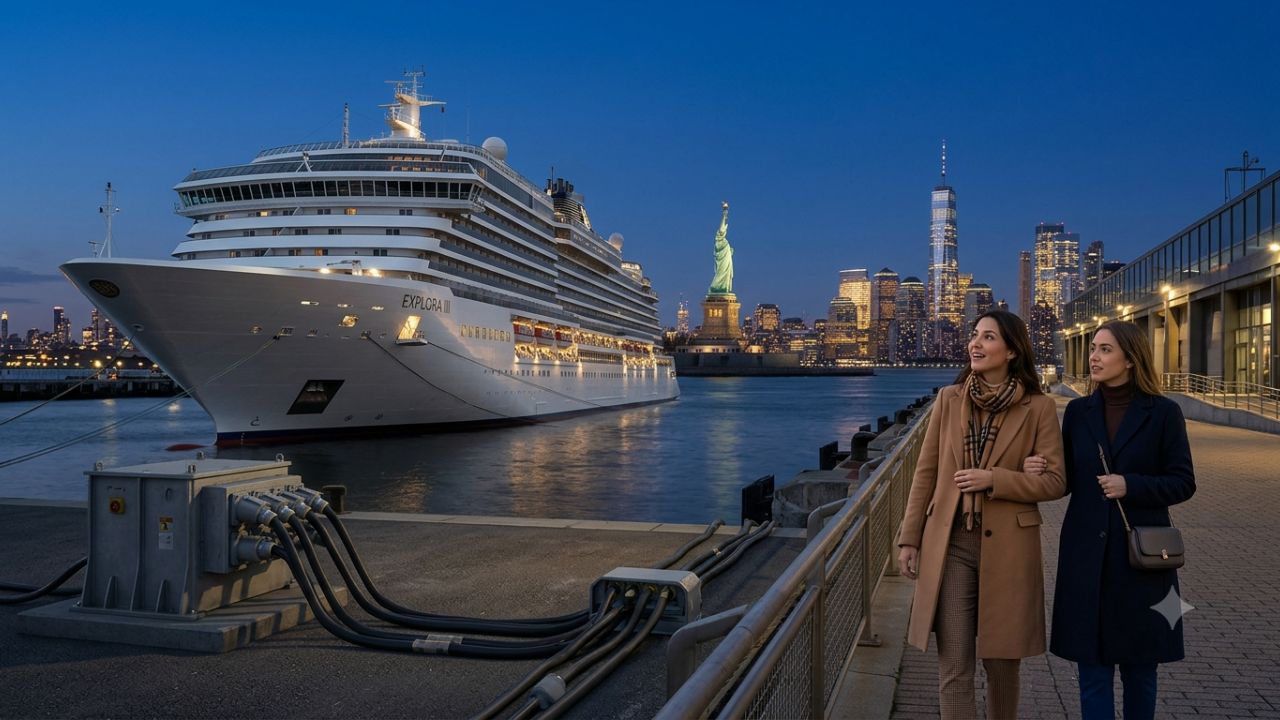
NEW YORK — When Explora Journeys' newly delivered luxury vessel EXPLORA III made its maiden call to New York Harbor in October 2026, the milestone placed a spotlight on one of the most pressing infrastructure debates in modern maritime tourism.
Constructed by Italian shipbuilder Fincantieri and operating as the luxury ocean travel brand of the MSC Group, the ship arrived in North America equipped with factory-fitted high-voltage shore connection systems designed to plug directly into municipal electrical grids while berthed at urban piers.
Yet, while Fincantieri's technical delivery dossiers confirmed the vessel's electrical cold-ironing capabilities, official maiden-call announcements confirmed the ship’s arrival in New York without disclosing whether it physically connected to shoreside power during its stay.
The omission underscores a structural reality confronting international cruise travel: the persistent disconnect between advanced shipboard environmental engineering and terrestrial port infrastructure. In New York City, where cruise tourism generates over $500 million in annual economic activity across 1.5 million passenger movements, a ship’s ability to shut down its fossil-fueled auxiliary engines at berth depends entirely on which side of the East River it docks.
While the Brooklyn Cruise Terminal in Red Hook has completed multi-year electrical upgrades that raised vessel compatibility from 17 percent in 2024 to 86 percent in 2026, the historic Manhattan Cruise Terminal on the West Side remains unequipped with shore power, operating under an early-stage redevelopment master plan backed by an initial $20 million municipal commitment.
For waterfront residents seeking relief from dockside exhaust and environmentally conscious travelers evaluating the true sustainability of their voyages, the distinction between theoretical ship compatibility and verified physical connection has become the defining benchmark of responsible cruising.
+----------------------------------------------------------------------------------------------------+ | NEW YORK HARBOR SHORE POWER & CRUISE INFRASTRUCTURE SCORECARD | +----------------------------------------------------------------------------------------------------+ | Featured Maiden Call Vessel | EXPLORA III | Explora Journeys (MSC Group) | Built by Fincantieri | | Delivery & Maiden Call Dates | Delivered July 2026 | New York Maiden Arrival October 8, 2026 | | Propulsion & Eco-Systems | Dual-Fuel LNG Engines, SCR Catalytic Converters, Shore Power Panel | | Terrestrial Connection Status| Shipboard hardware certified; physical dockside plug-in unconfirmed | | Brooklyn Terminal (Red Hook) | Operational high-voltage substation; movable gantry cable arms | | Brooklyn Compatibility Leap | Expanded from 17% (2024) to 86% (2026) through multi-point upgrades | | Manhattan Terminal (Piers 88)| Built 1935; zero active shore power; $20M initial rebuild allocation| | Manhattan Master Plan Scope | Replacing aging piers, raising flood elevations, adding shore power | | NYC Annual Cruise Throughput | ~1.5 Million Passengers across Manhattan and Brooklyn terminals | | Annual Economic Contribution | US$500 Million in Local Economic Activity | ~3,000 Supported Jobs | | Wider NYC Tourism Context | 65.0 Million Total Visitors (2025) | US$55.6 Billion Direct Spend | +----------------------------------------------------------------------------------------------------+
The Maiden Call of EXPLORA III: Shipboard Hardware Meets Harbor Realities
The arrival of EXPLORA III along the eastern seaboard of North America represents a technological showcase for modern luxury cruising. Handed over by Fincantieri at its Sestri Ponente shipyard in Genoa in July 2026, the vessel is the first of Explora Journeys' fleet to incorporate liquefied natural gas (LNG) propulsion.
In addition to its cryogenic fuel storage systems and catalytic reduction systems designed to eliminate nitrogen oxide emissions, the vessel features integrated High-Voltage Shore Connection (HVSC) switchboards conforming to IEC/ISO/IEEE 80005-1 international maritime standards.
                    COLD-IRONING ELECTRICAL INTEGRATION

    TERRESTRIAL MUNICIPAL GRID                VESSEL ONBOARD DISTRIBUTION
+--------------------------------+       +-----------------------------------+
| Con Edison 13.8 kV AC Supply   |       | Automated Shipboard Switchboard   |
|            |                   |       |            |                      |
|            v                   |       |            v                      |
| Terminal Substation Step-Down  | =====>| HVSC Receptacle Box (Hull Door)   |
| (Converts to 6.6 kV / 11.0 kV) |       |            |                      |
|            |                   |       |            v                      |
| Mobile Gantry Arm / Cable Disp |       | Hotel Loads Powered: Desalination,|
| Plugs Directly into Ship Hull  |       | HVAC, Lighting, Galley Systems    |
+--------------------------------+       +-----------------------------------+
                 \                                   /
                  ===> [ DIESEL GENERATORS SHUT DOWN ] <===
                       [ Zero Pier Smokestack Emissions ]
When berthed at a properly equipped maritime terminal, a ship equipped with cold-ironing hardware connects heavy flexible electrical cables from shoreside vaults directly into the vessel’s electrical distribution system. Once synchronization is verified, the ship's marine engineering crew executes an automated load transfer, transferring the ship’s extensive hotel load—powering climate control, lighting, water treatment plants, and galley equipment—from onboard diesel generators to the terrestrial power grid.
The onboard engines are subsequently shut down, eliminating local emissions of sulfur dioxide, particulate matter (PM2.5), and nitrogen oxides while docked.
However, the public announcements surrounding EXPLORA III's October 8 maiden call revealed an industry-wide informational ambiguity. Explora Journeys celebrated the ship’s arrival in New York, while Fincantieri highlighted the vessel’s advanced construction specifications.
Yet, neither release verified whether the vessel established an active electrical connection to the local grid while berthed. Without formal confirmation from terminal operating logs or municipal energy monitoring systems, travelers and environmental regulators cannot verify whether the vessel operated with zero dockside emissions or continued to burn auxiliary fuel throughout its stay.
The Brooklyn Transformation: Overcoming the Socket Alignment Bottleneck
The operational divide between New York City’s two cruise facilities is rooted in engineering geography and municipal investment timelines. At the Brooklyn Cruise Terminal (BCT), located at Pier 12 in the Red Hook neighborhood, the New York City Economic Development Corporation (NYCEDC) has spent several years overcoming a complex engineering obstacle: the physical socket alignment problem.
Historically, shore power installations at commercial ports suffered from severe spatial incompatibility. When the Brooklyn substation originally commenced operations, it utilized a fixed, stationary cable crane.
Because international cruise lines design their hulls independently, high-voltage connection receptacles are installed in widely divergent hull positions: some vessels locate sockets forward on the port side, others place them midship, and several position them aft on the starboard side across different deck elevations.
                    BROOKLYN CRUISE TERMINAL RETROFIT PHASING

    PHASE 1 (2024)                  PHASE 2 (2025)                  PHASE 3 (2026)
+-----------------------+       +-----------------------+       +-----------------------+
| Fixed Crane Replaced  |       | Second Connection     |       | Permanent Hardware    |
| with Movable Arm Jib  | ====> | Vault Point Added     | ====> | Structural Rigging    |
| Compatibility: 17%    |       | Along Pier 12 Apron   |       | Compatibility: 86%    |
+-----------------------+       +-----------------------+       +-----------------------+
As a consequence of these structural variations, NYCEDC recorded that only 17 percent of calling cruise ships could physically reach and plug into Brooklyn’s shore power equipment in 2024. Even if a calling ship arrived with certified onboard shore power capabilities, physical distance between the pier’s fixed arm and the vessel’s hull door frequently rendered connections impossible.
To resolve this limitation, NYCEDC executed a phased capital modernization:
- Movable Gantry Crane Deployment (2024): The static arm was dismantled and replaced with a mobile mechanical gantry capable of traversing along the pier apron to align with variable hull socket locations.
- Secondary Connection Vaults (2025): Contractors trenched the pier apron to install a secondary connection point, doubling the spatial reach of high-voltage feeder cables.
- Permanent Heavy Hardware Installation (2026): Structural winches and automated cable tensioners were permanently commissioned, stabilizing connections against tidal shifts in New York Harbor.
The engineering modifications produced a dramatic transformation: vessel compatibility at Brooklyn Cruise Terminal surged to 86 percent in 2026. Today, the vast majority of modern cruise vessels docking in Red Hook can align with shoreside equipment.
+----------------------------------------------------------------------------------------------------+ | BROOKLYN CRUISE TERMINAL ELECTRICAL SPECIFICATIONS | +----------------------------------------------------------------------------------------------------+ | Terminal Location | Pier 12, Red Hook, Brooklyn, New York | | Managing Authority | New York City Economic Development Corporation (NYCEDC) | | Terrestrial Utility Provider | Consolidated Edison (Con Edison) | | Substation Capacity | Dedicated 12-Megawatt High-Voltage Marine Substation | | Operational Voltages | Dual-Voltage: 6.6 kV and 11.0 kV at 60 Hz | | Physical Connection Hardware | Mobile motorized gantry jib arm with dual-point apron vaults | | Documented Compatibility | 86% of scheduled seasonal calling vessels (Expanded from 17% in 2024)| | Primary Cruise Tenants | Cunard Line (Queen Mary 2), Princess Cruises, MSC Cruises | +----------------------------------------------------------------------------------------------------+
However, municipal environmental auditors stress that compatibility does not equate to active connection. Operational logs maintained by the terminal determine whether an eligible ship plugged in.
Factors such as extreme weather events, utility peak-demand pricing spikes, minor electrical synchronization discrepancies, or brief turnaround schedules can lead ship captains and terminal managers to bypass plugging in, highlighting why published connection logs remain essential for verifying environmental claims.
Rebuilding Manhattan Cruise Terminal: A $20 Million Allocation for an Aging Icon
Across the East River, the Manhattan Cruise Terminal presents a vastly different operational and historical landscape. Situated along the Hudson River on the West Side of Manhattan between West 48th and West 54th Streets, the facility encompasses Piers 88, 90, and 92.
Opened in 1935 during the golden age of transatlantic ocean liners, the terminal was engineered to accommodate legendary maritime flagships like the SS Normandie and the Queen Mary.
While the facility continues to process approximately 70 percent of New York City's total cruise volume—hosting high-density calls from Norwegian Cruise Line, Carnival Cruise Line, Royal Caribbean, and Disney Cruise Line—it operates with zero active shoreside electrical infrastructure. Every ship docking at Piers 88 and 90 must continuously run its auxiliary diesel engines throughout its stay to maintain onboard hotel services.
                    MANHATTAN CRUISE TERMINAL MASTER PLAN

   EXISTING 1935 PIER STRUCTURE                   COMPREHENSIVE MASTER PLAN REBUILD
+------------------------------------+          +------------------------------------+
| - Aging Timber Piling Foundations  |          | - Modern Reinforced Concrete Piles |
| - Low Elevation Vulnerable to Floods| =======> | - Raised Above Federal Flood Levels|
| - Zero High-Voltage Shore Power    |          | - $20 Million Dedicated Shore Power|
| - Continuous Auxiliary Diesel Burn |          | - Integrated Hudson Ferry Landings |
| - Congested West Side Highway Curb |          | - Phased Multi-Year Construction   |
+------------------------------------+          +------------------------------------+
To modernize this aging asset, NYCEDC unveiled a transformative Master Plan designed to completely overhaul the Manhattan waterfront. The capital program addresses severe environmental and climate-resilience challenges:
- Elevation Above Federal Flood Levels: The existing timber-pile piers sit dangerously low in the Hudson River, leaving electrical switchgear and passenger check-in halls highly vulnerable to storm surges and sea-level rise, as demonstrated during the catastrophic flooding of Hurricane Sandy. The redevelopment plan will elevate the pier decks to comply with stringent federal flood design standards.
- The $20 Million Shore Power Commitment: The Master Plan establishes an initial municipal commitment of $20 million dedicated specifically to engineering and installing high-voltage shore power infrastructure across the Manhattan berths. This funding initiates utility substation upgrades along Route 9A (the West Side Highway) and conduits beneath the pier aprons to supply the massive electrical loads required by modern mega-ships.
- Phased Construction Continuity: Because the Manhattan terminal is indispensable to New York’s tourism economy, construction will proceed in calibrated phases. Berths will be upgraded sequentially, ensuring that cruise lines can maintain regular turnaround operations without forcing mass cancellations or temporary port relocations.
- Multimodal Ferry Integration: The architectural framework incorporates space for a future Hudson River commuter ferry landing, allowing passengers and local maritime commuters to reach the West Side piers via water transit, reducing vehicular congestion along 12th Avenue.
Until these capital works are completed and commissioned, however, ships docking in Manhattan—regardless of whether they possess advanced cold-ironing capabilities like EXPLORA III—have no physical mechanism to connect to the terrestrial grid, remaining dependent on internal combustion generators.
The Physics and Environmental Economics of Cold-Ironing
To understand why shore power infrastructure commands tens of millions of dollars in municipal capital, one must examine the staggering energy requirements of modern commercial passenger vessels. A modern cruise ship is effectively a floating municipality.
Even when tied securely to a concrete pier with its main propulsion propellers stationary, a vessel requires an uninterrupted electrical supply ranging between 6 and 12 megawatts (MW) of continuous electrical power.
                    CRUISE VESSEL DOCKSIDE ENERGY DEMANDS

+-----------------------------------------------------------------------------------+
| TOTAL BERTH ELECTRICAL LOAD: 6.0 TO 12.0 MEGAWATTS (Equivalent to 8,000 Homes)    |
+-----------------------------------------------------------------------------------+
|               |                                                   |               |
| HVAC & CLIMATE CONTROL (40%)                  WATER PRODUCTION & GALLEYS (30%)    |
| - Chilled-Water AC Compressors                - Reverse-Osmosis Desalination      |
| - High-Volume Air Handling Units              - High-Capacity Industrial Ovens    |
| - Stateroom Ventilation Filters               - Commercial Dishwashers & Laundry  |
|                                                                                   |
| HOTEL SERVICES & ELEVATORS (20%)              SAFETY & NAVIGATION SYSTEMS (10%)   |
| - Domestic Lighting & Entertainment           - Thruster Standby & Fire Pumps     |
| - Elevators & Escalator Networks              - Radar, Bridge & Security Systems  |
+-----------------------------------------------------------------------------------+
Powering these domestic hotel loads requires burning metric tons of marine gas oil (MGO) or ultra-low-sulfur fuel in onboard auxiliary generator sets. Over a standard ten-hour port call, an unpowered cruise ship running auxiliary engines releases significant volumes of air pollutants directly into the adjacent urban atmosphere:
- Fine Particulate Matter (PM2.5): Microscopic combustion particles that penetrate deep into human lung tissue, exacerbating asthma and respiratory diseases.
- Nitrogen Oxides (NOx): Precursors to ground-level ozone and urban smog formation.
- Sulfur Oxides (SOx): Contributors to localized atmospheric acidification.
- Carbon Dioxide (CO2): Major greenhouse gas emissions driving global climate change.
In neighborhoods like Red Hook in Brooklyn and Hell’s Kitchen along Manhattan’s West Side, waterfront residential communities have historically experienced elevated rates of pediatric asthma and environmental health burdens. Cold-ironing transforms this dynamic.
By drawing power from the terrestrial electrical grid—which Consolidated Edison (Con Edison) is progressively decarbonizing through upstate hydro, offshore wind, and solar imports—dockside emissions at the pier apron drop to absolute zero. Auxiliary engines are silenced, eliminating localized diesel exhaust and low-frequency engine vibrations that irritate surrounding neighborhoods.
Economic Engine: Cruise Passenger Yields in New York's Tourism Ecosystem
The imperative to modernize New York's cruise piers is propelled by the substantial economic contribution of maritime tourism to the municipal economy. According to comprehensive economic impact assessments published by NYCEDC, cruise operations across the Manhattan and Brooklyn terminals generate substantial economic dividends:
+----------------------------------------------------------------------------------------------------+ | ECONOMIC IMPACT: CRUISE TOURISM VS. TOTAL NYC VISITATION | +----------------------------------------------------------------------------------------------------+ | Economic Indicator | Cruise Sector (NYCEDC 2024) | Citywide Tourism (NYC Tourism 2025) | +------------------------------+-----------------------------+---------------------------------------+ | Total Passenger Volume | Approximately 1.50 Million | 65.0 Million Total Visitors (+0.7%) | | International Visitor Share | Embedded in Cruise Inflows | 12.5 Million International (-3.2%) | | Direct Economic Output | US$500 Million Direct / Ind | US$55.6 Billion Total Visitor Spend | | Local Employment Supported | Nearly 3,000 Maritime Jobs | Over 380,000 Hospitality & Leisure | | Secondary Sector Beneficiaries| Hotels, Dining, Yellow Cabs | Cultural Institutions, Retail, Shows | +----------------------------------------------------------------------------------------------------+
Cruise passengers represent some of the highest-spending leisure travelers entering New York City. Unlike day commuters, cruise vacationers exhibit structured spending behavior that directly benefits multiple economic sectors:
                    CRUISE PASSENGER LOCAL EXPENDITURE FLOW

    [PRE-CRUISE ARRIVAL] (1 to 2 Days Prior)
    - Midtown or Downtown Brooklyn Hotel Bookings ($350 - $650/night)
    - Broadway Theater Tickets & Fine Dining in Hell's Kitchen
          |
          v
    [EMBARKATION DAY]
    - Yellow Cab / Rideshare / Limousine Transfers to Pier
    - Local Longshoremen Baggage Handling & Provisioning
          |
          v
    [VESSEL PROVISIONING]
    - Multi-Ton Purchases of Fresh Food, Dairy & Beverages from Regional NY Farms
          |
          v
    [POST-CRUISE DISEMBARKATION]
    - Retail Shopping at Hudson Yards / Fifth Avenue
    - Return Transfers to JFK, LaGuardia, or Newark Airports
Additionally, maritime terminal activity supports well-compensated union employment. International Longshoremen’s Association (ILA) labor forces handle vessel mooring, baggage loading, containerized provisioning, and security screening.
Without ongoing capital investments to modernize pier structures and install mandatory shore power infrastructure, New York risks losing lucrative ship deployments to competing regional ports—such as Cape Liberty in Bayonne, New Jersey, or the Port of Boston—which are actively courting cruise operators with modernized facilities.
The Global Regulatory Tide: Decarbonization Mandates Accelerate
New York's infrastructure timeline unfolds against an aggressive wave of international environmental regulations compelling the maritime industry to decarbonize. Cruise lines operating modern tonnage are navigating legal mandates that will soon make shore power connectivity compulsory across major global ports:
- The California Benchmark (CARB At-Berth Regulation): The California Air Resources Board pioneered mandatory shoreside electrical connection standards. Under updated regulations, ocean-going passenger vessels calling at Los Angeles, Long Beach, San Diego, and San Francisco must achieve an 80 percent or higher shore power connection rate or face severe financial penalties.
- European Union FuelEU Maritime and AFIR Directives: Under the EU’s Alternative Fuels Infrastructure Regulation (AFIR), all major European commercial ports within the Trans-European Transport Network (TEN-T) must provide operational shoreside electrical power for passenger ships by January 1, 2030. Simultaneously, the FuelEU Maritime regulation penalizes ships that burn fossil fuels while berthed in European ports for more than two consecutive hours.
- Cruise Line Corporate Decarbonization Pledges: Major multinational cruise corporations—including MSC Group, Royal Caribbean Group, Carnival Corporation, and Norwegian Cruise Line Holdings—have pledged to achieve net-zero carbon operations by 2050. These commitments rely heavily on cold-ironing to eliminate Scope 1 emissions in port.
                    GLOBAL REGULATORY SHORE POWER MANDATES

    CALIFORNIA (CARB)               EUROPEAN UNION (AFIR)            NEW YORK CITY (NYCEDC)
+-----------------------+       +-----------------------+       +-----------------------+
| - Mandatory Connection|       | - Mandatory Shore     |       | - Brooklyn: 86% Ready |
| - Strict Penalties    | ====> |   Power at TEN-T Ports| ====> | - Manhattan: $20M Plan|
| - Active Since 2014   |       | - Fully Enforced 2030 |       | - Catching Up to Avoid|
| - Standard-Setter     |       | - FuelEU Carbon Caps  |       |   Fleet Obsolescence  |
+-----------------------+       +-----------------------+       +-----------------------+
As international cruise operators order new vessels equipped with shore power as standard factory equipment, ports lacking compatible shoreside electrical connections will face increasing operational obsolescence. Cruise lines will prioritize deploying their premier, highest-yielding flagships to destinations where they can demonstrate verifiable environmental compliance to regulators and consumers alike.
Strategic Guide for New York Cruise Travelers: Terminals, Transfers, and Green Auditing
For cruise travelers embarking or disembarking in New York City, understanding terminal logistics and verified environmental protocols is essential for seamless travel planning.
                      NEW YORK CRUISE TERMINAL SELECTION MATRIX

  TERMINAL               ADDRESS / LOCATION            KEY CRUISE TENANTS          TRANSIT LOGISTICS
+----------------------+-----------------------------+---------------------------+-----------------------------------+
| Manhattan Cruise     | 711 12th Avenue             | Norwegian, Carnival,      | Yellow Cab via West Side Highway; |
| Terminal (Piers 88)  | West 48th to 54th Streets   | Princess, Disney, Cunard  | M50 Crosstown Bus; Subway C/E     |
+----------------------+-----------------------------+---------------------------+-----------------------------------+
| Brooklyn Cruise      | 72 Bowne Street             | Cunard (Queen Mary 2),    | NYC Ferry (South Brooklyn Route); |
| Terminal (Pier 12)   | Red Hook Waterfront         | Princess, MSC Cruises     | Yellow Cab / Rideshare via BQE    |
+----------------------+-----------------------------+---------------------------+-----------------------------------+
Navigating Terminal Geography: Avoiding the Wrong-Borough Mistake
A frequent, costly error made by out-of-town travelers is arriving at the wrong cruise terminal:
- Confirm the Exact Terminal on Boarding Passes: Do not rely on generic "New York Port" booking notices. Verify whether your boarding documentation explicitly states Manhattan Cruise Terminal or Brooklyn Cruise Terminal. The two facilities are separated by several miles of congested urban traffic across the East River, and transferring between them on embarkation day can take up to an hour and cost over $80 in taxi fares.
- Manhattan Terminal Transit Strategy: Located along 12th Avenue in Hell’s Kitchen, the Manhattan terminal is easily accessed from Midtown hotels. Travelers arriving at Penn Station or Grand Central can take a short taxi ride west or board the M50 crosstown bus directly to 12th Avenue. Allow extra travel time on weekday mornings when commercial traffic along the West Side Highway is heavy.
- Brooklyn Terminal Transit Strategy: Situated in Red Hook, the Brooklyn terminal has limited direct subway access. The most convenient travel method from Lower Manhattan is taking the NYC Ferry (South Brooklyn Route) from Wall Street/Pier 11 directly to Atlantic Basin/Red Hook, landing steps from the cruise terminal security gates. Alternatively, book rideshare or licensed yellow cabs via the Brooklyn-Battery Tunnel.
Verifying Environmental and Shore Power Claims
For travelers committed to sustainable tourism who want to determine whether their specific voyage connects to shore power:
- Inquire Directly with the Cruise Line: Prior to booking, contact the cruise operator's guest relations or sustainability department. Request written confirmation of whether your specific vessel possesses certified shore power hardware and whether the operator has scheduled shoreside electrical connection for your specific departure date at the assigned berth.
- Consult Public NYCEDC Connection Logs: The New York City Economic Development Corporation publishes environmental performance summaries for the Brooklyn Cruise Terminal. These public records detail verified connection events, total megawatt-hours drawn from the municipal grid, and quantified emissions avoided during specific ship calls.
- Inspect the Pier Apron During Embarkation: Upon arriving at the Brooklyn Cruise Terminal, observant passengers can visually verify connection. Look along the ship's waterline and pier apron for the heavy yellow or black high-voltage cable bundle suspended from the mobile gantry arm into the ship's hull door. If the cable is deployed and no visible exhaust or low-frequency rumble originates from the ship's funnel, the vessel is actively cold-ironing.
Related Travel Guides
- Manhattan vs. Brooklyn Cruise Terminal: Transportation, Hotels, and Embarkation
- Cold-Ironing and Green Cruise Technology: How Shore Power Eliminates Port Emissions
- NYC Ferry Network Guide for Cruise Passengers: Traveling Between Manhattan and Brooklyn
- Top Luxury Cruise Ship Maiden Calls and Inaugural Itineraries: What Travelers Must Know
This article is for informational purposes. Flight routes, passenger regulations, visa rules, and transit advisories are subject to change by airlines and aviation authorities. Readers are advised to verify schedules and travel documentation with relevant carriers and border agencies before departure.