
Switzerland Autumn Travel Guide 2026: Geneva Lakeside, Jungfrau Region, and First Class Rail

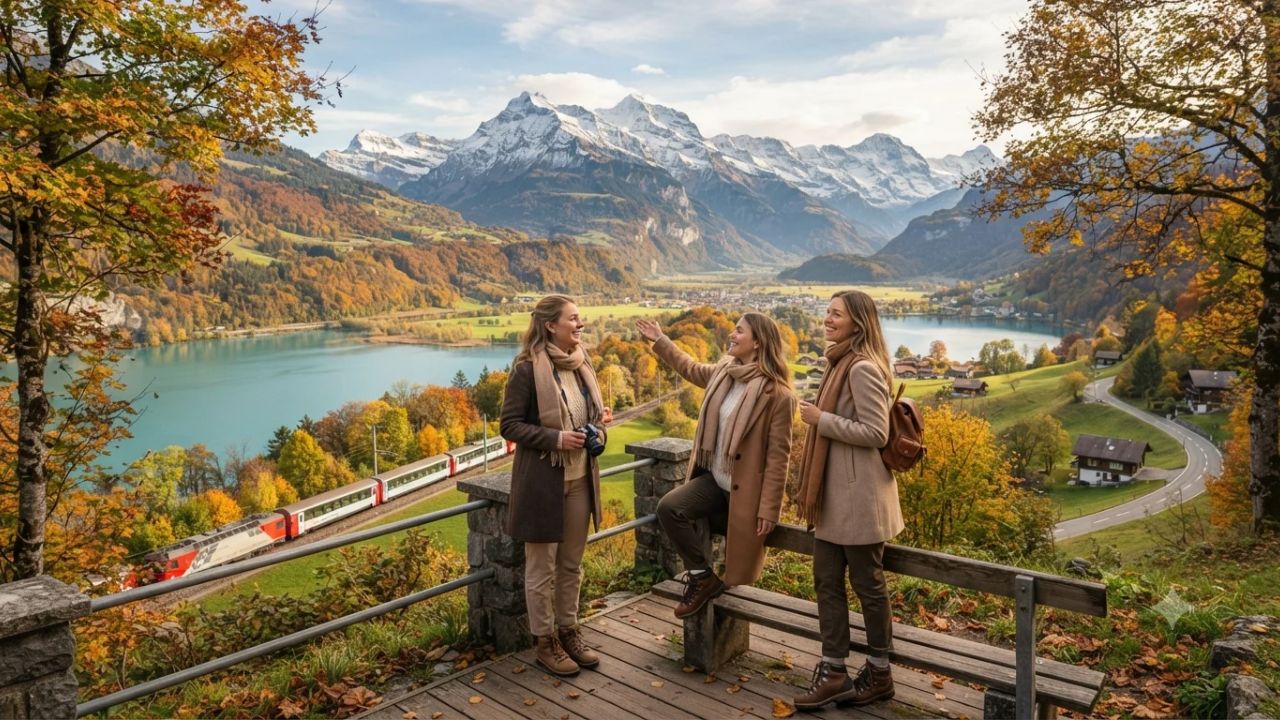
While summer crowds pack Alpine trails and winter tourists focus entirely on ski chalets, autumn in Switzerland delivers crystal-clear mountain visibility, golden larch forests, and uncrowded panoramic trains. From late September through November, Switzerland Tourism spotlights two contrasting seasonal journeys: the refined lakeside culture of Geneva on Lake Geneva and the rugged mountain wilderness of the Jungfrau Region surrounding Interlaken.
Paired with seamless flight connections on Swiss International Air Lines (SWISS) and First Class access across the integrated national rail network, autumn travelers can experience the world's most efficient public transit system. Whether sipping local Chasselas wine along lakefront promenades or riding mountain cogwheel railways beside snow-dusted granite peaks, the Swiss autumn reveals an authentic, tranquil side of Central Europe.
Two Distinct Autumn Escapes: Geneva vs. The Jungfrau Region
The autumn travel initiative focuses on two distinct Swiss regional identities, enabling travelers to tailor their journeys to cultural city exploration or high-altitude outdoor adventure:
- Geneva's Lakeside Elegance: Situated at the southwestern tip of Lake Geneva (Lac Léman), Geneva blends international diplomacy with historic Old Town charm. Autumn travelers can stroll through Parc des Bastions under golden chestnut canopies, visit the historic St. Pierre Cathedral, and explore the bohemian Carouge district with its artisan watchmakers and bistros.
- The Jungfrau Region and Interlaken: Positioned between the turquoise waters of Lake Thun and Lake Brienz, Interlaken serves as the gateway to the Bernese Oberland. From here, electric railways climb into the alpine valleys of Lauterbrunnen, Grindelwald, Mürren, and Wengen beneath the iconic trio of the Eiger, Mönch, and Jungfrau.
Supported by campaign resources on Switzerland Tourism Official Portal, travelers can choose between three-night boutique stays in three- or four-star historic hotels with daily artisan breakfasts, pairing urban gastronomy with alpine wellness retreats.
What Makes Swiss Autumn Travel Different
Unlike summer, which brings hazy midday skies and heavy trail traffic, autumn in the Alps offers exceptionally dry, stable air masses that produce tack-sharp visibility extending across hundreds of mountain summits.
The seasonal Swiss transit experience provides distinct advantages:
- First Class Swiss Travel Pass Privileges: Valid on all federal SBB trains, regional mountain postbuses, lake steamers, and city trams, First Class Swiss Travel Pass holders enjoy upper-deck seating on panoramic routes, dedicated quiet zones, and complimentary entry to over 500 museums across the country via the Swiss Travel System.
- Golden Larch and Deciduous Color Transitions: As temperatures dip, the deciduous beech forests of the lower valleys turn fiery red, while higher altitude European larches shift to luminous golden-yellow, creating striking contrasts against early autumn snowfalls.
- Glacial Exploration in the Jungfrau-Aletsch UNESCO Zone: Riding the Jungfrau Railway to the Top of Europe (3,454 meters) brings visitors to the edge of the Great Aletsch Glacier, protected under the UNESCO World Heritage Swiss Alps Jungfrau-Aletsch reserve as the largest ice flow in the Alps.
Visitor Insider Tips
Experiencing Switzerland during autumn like an insider requires smart rail choices, altitude preparation, and regional dining knowledge.
- Take the GoldenPass Panoramic Route Between Montreux and Interlaken: If connecting Geneva with the Bernese Oberland, bypass standard mainline tracks. Board the GoldenPass Express from Montreux to Interlaken Ost, riding panoramic First Class cars that climb past terraced Lavaux vineyards and mountain passes with variable-gauge bogie technology.
- Lake Steamer Cruising on Thun and Brienz: The vintage paddle steamers operating on Lake Brienz and Lake Thun operate on modified autumn timetables through late October. Board the steamer at Interlaken West to cruise past the cascading Giessbach Falls, sitting on the open wooden upper deck with a warm cup of spiced glühwein.
- Autumn Culinary Special: The Swiss Wild Season (Chasse): October marks the arrival of the traditional Swiss hunting season menu across Bernese and Vaudois taverns. Order Hirschpfeffer (braised venison stew) served with buttery Spätzli noodles, sweet glazed chestnuts, red cabbage, and poached pears with lingonberry preserve.
- Lauterbrunnen to Mürren Traffic-Free Walking: Take the cable car from Lauterbrunnen to Grütschalp, then walk the gentle 4.5-kilometer panoramic trail to the car-free village of Mürren. The trail faces the towering north wall of the Eiger across the valley and remains crowd-free throughout October mornings.
- Luggage Forwarding via SBB Flight Luggage: If arriving on Swiss International Air Lines at Zurich Airport (ZRH) or Geneva Airport (GVA), use the SBB train station luggage forwarding service to send heavy bags directly to your hotel in Interlaken or Grindelwald, allowing you to begin sightseeing unburdened.
Cultural and Environmental Context
Autumn in the Swiss Alps marks the historic Alpabzug (or Désalpe)—the centuries-old tradition where local alpine farming families guide their flower-crowned dairy cattle down from high summer pastures to valley barns. This seasonal ritual is celebrated in villages with traditional alphorn concerts, yodeling demonstrations, and artisan cheese markets.
Switzerland's commitment to ecological sustainability (known as Swisstainable) is evident in its transport grid. More than 90 percent of the Swiss rail network runs on renewable hydroelectric energy generated by mountain reservoirs and glacial streams.
By choosing shoulder-season travel in October and November, visitors support regional family-run guesthouses and mountain mountain railways during quieter months, alleviating environmental pressure on sensitive alpine ecosystems while engaging with living rural heritage.
FAQ: Visiting Switzerland in Autumn 2026
What is the weather like in Switzerland during autumn?
October daytime valley temperatures typically average between 10°C and 16°C (50°F to 61°F), while high alpine areas often experience freezing temperatures and early snowfalls.
What are the main benefits of a First Class Swiss Travel Pass?
The First Class pass provides spacious seating on trains, upper-deck access on lake steamers, unlimited regional bus travel, and free admission to over 500 museums.
Are mountain cable cars and railways open during autumn?
Most major railways like the Jungfraujoch and Gornergrat operate year-round, though some regional hiking cable cars undergo scheduled maintenance in November before the ski season.
How do travelers get from Geneva Airport to Interlaken?
Direct SBB trains connect Geneva Airport (GVA) to Interlaken Ost in approximately 2 hours and 45 minutes, with a simple transfer at Bern.
Watching the sun set in fiery gold over the snowfields of the Jungfrau proves that autumn is the Alps' best-kept seasonal secret.
Related Travel Guides
Disclaimer
This article is for informational and educational purposes only. It does not constitute legal, financial, or professional advice. While we strive to provide accurate and up-to-date information, travel policies, regulations, and conditions change rapidly. Always verify information with official sources before making travel decisions. Nomad Lawyer makes no representations about the accuracy, reliability, completeness, or suitability of the information provided. Readers should consult qualified professionals for advice specific to their circumstances. The views expressed in this article are those of the author and do not necessarily reflect the views of Nomad Lawyer.
Raushan Kumar
Founder & Lead Developer
Full-stack developer with 11+ years of experience and a passionate traveller. Raushan built Nomad Lawyer from the ground up with a vision to create the best travel and law experience on the web.
Learn more about our team →