
Global Energy Crisis and Travel Chaos: Iran Joins UAE, Saudi Arabia, Qatar, and US in High-Alert as Strait of Hormuz Blockade Triggers Oil Shock and Tourism Collapse
The Strait of Hormuz closure has stranded 800 ships, sending Brent crude toward $120 a barrel and triggering a massive global energy crisis and travel disruption.

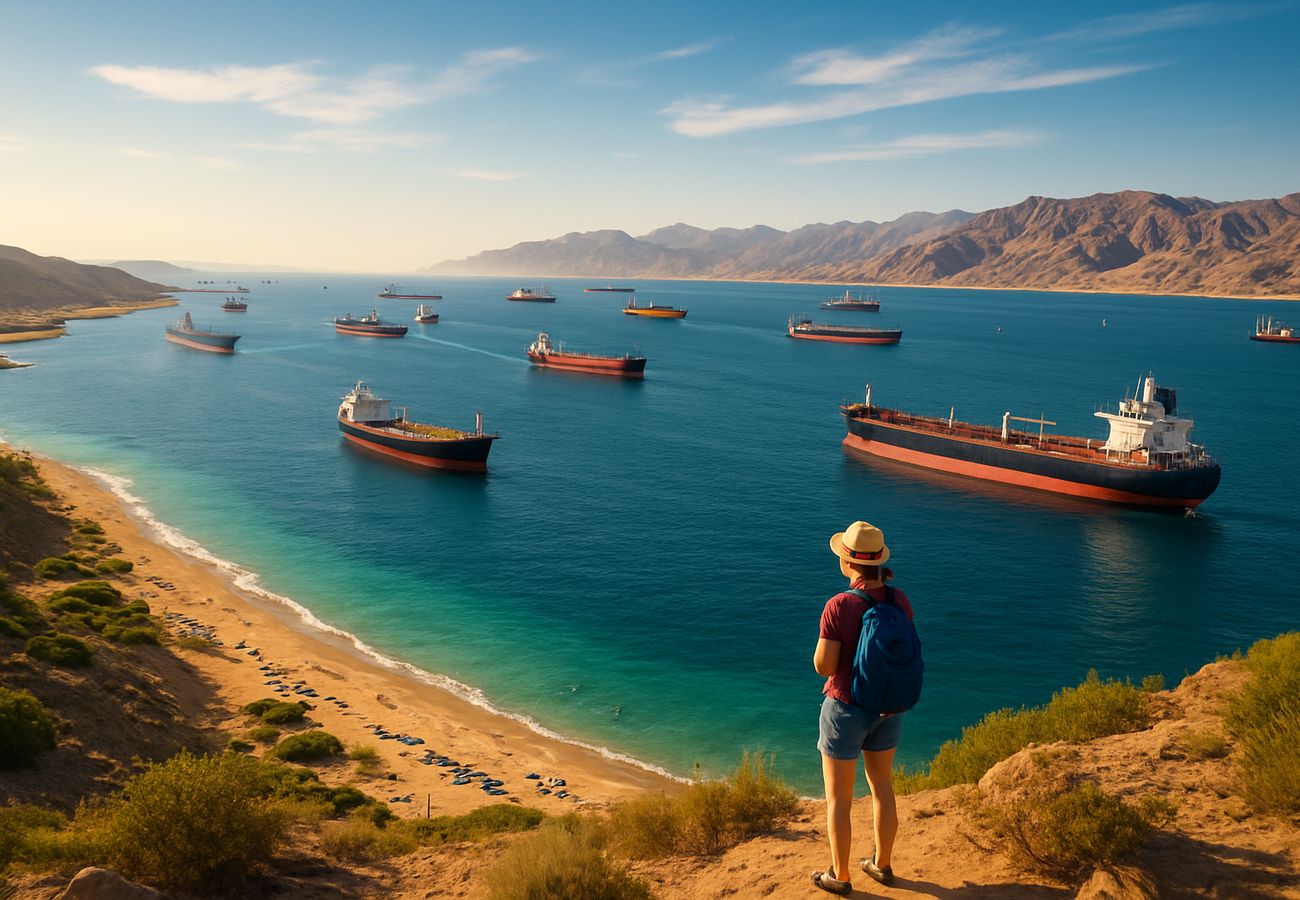
Image generated by AI
Global Energy Crisis and Travel Chaos: Iran Joins UAE, Saudi Arabia, Qatar, and US in High-Alert as Strait of Hormuz Blockade Triggers Oil Shock, Shipping Disruptions, and Tourism Collapse in 2026
A critical maritime blockade has stranded 800 ships and disrupted 20% of the world's oil supply, sending aviation costs skyrocketing and paralyzing Gulf tourism infrastructure.
The ripple effects of an unprecedented geopolitical standoff are violently reshaping global trade, energy markets, and international tourism. A rapid escalation in the US Iran conflict has effectively closed the Strait of Hormuz, plunging the Middle East into a state of severe uncertainty. As Iran enforces maritime control, a multinational coalition—including the United States, UAE, Israel, Qatar, India, Saudi Arabia, China, Japan, Germany, France, and Australia—is scrambling to manage the fallout. This sweeping shipping disruption has not only triggered a global energy crisis but has also unleashed aviation shockwaves, cruise shutdown fears, and a cascading tourism collapse across major hubs like Dubai, Doha, Manama, Amman, and Cairo.
Expanded Overview: A Chokepoint Paralyzed
At the center of this geopolitical earthquake lies the Strait of Hormuz, a narrow yet indispensable waterway connecting the Persian Gulf to the open ocean. Historically, nearly 20% of the world's daily oil and gas supply flows through this vital corridor.
Currently, the scale of the disruption is staggering. An estimated 800 commercial ships and oil tankers are hopelessly stranded in the Persian Gulf. The resulting bottleneck has paralyzed supply chains, immediately driving Brent Crude prices aggressively toward $120 per barrel. This is no longer merely a regional dispute; it is a global economic emergency that threatens to derail international logistics, skyrocket inflation, and force a dramatic recalibration of the global travel and aviation industries.
Geopolitical Context: The Standoff
The situation reached a breaking point following a series of aggressive military actions and strict retaliatory blockades. The Islamic Revolutionary Guard Corps (IRGC) recently attacked three cargo ships and seized two vessels operated by the Mediterranean Shipping Company (MSC).
In response to heightened naval pressure and a continued U.S.-led blockade, Iranian leadership—including President Masoud Pezeshkian and chief negotiator Mohammad Bagher Ghalibaf—has declared that reopening the Strait of Hormuz is "impossible" under current conditions. While a tentative ceasefire announced by Donald Trump aimed to de-escalate the Gulf tensions, the agreement remains highly uncertain, with multiple violations already reported on the ground.
Global Energy Impact: The Impending Oil Shock
The immediate consequence of the blockade is a severe shock to oil prices. With one-fifth of global energy transit halted, airlines, shipping conglomerates, and cruise operators are facing catastrophic fuel cost increases.
For the aviation sector, this translates to immediate pain for passengers. The surge in jet fuel prices has triggered a drastic 15-40% rise in international airfares. Airlines are aggressively implementing fuel surcharges and desperately attempting to maintain profitability as their operational overhead balloons overnight.
Shipping & Trade Impact: Supply Chains Severed
Beyond energy, the shipping disruption is devastating regional supply chains. The Gulf Cooperation Council (GCC) relies on maritime imports for survival. Currently, 70% of food imports to the region are delayed, sparking a legitimate "grocery supply emergency."
Maritime insurers have responded by astronomically raising war-risk premiums for any vessel attempting to navigate near the conflict zone. Consequently, major freight operators are completely avoiding the area, choosing instead to undergo massive delays or abandon routes entirely. The International Maritime Organisation (IMO) is urgently drafting a structured evacuation plan for the 800 stranded vessels, but execution is entirely dependent on safe navigation clearance and the sweeping of potential sea mines.
Regional Impact: The Gulf States
The economic fallout is ravaging the domestic economies of the Gulf states, particularly their highly developed tourism sectors:
- United Arab Emirates (UAE): With tourism contributing 12–15% to its GDP, Dubai and Abu Dhabi are facing a massive crisis. The transit hub model is threatened by airspace rerouting, and luxury cruise tourism is facing near-total suspension.
- Qatar: Doha, where tourism comprises roughly 10% of GDP, is heavily exposed. The blockade threatens Qatar Airways' transit dominance and restricts the luxury travel sector.
- Saudi Arabia & Kuwait: While primarily focused on energy exports—which are now severely bottlenecked—both nations face rising domestic costs and delayed infrastructure projects due to halted imports.
- Oman & Bahrain: Positioned dangerously close to the conflict, these nations are dealing with redirected maritime traffic and a collapse in regional visitor confidence.
- Broader Impact: Nations like India (where tourism is ~9% of GDP and outbound Gulf travel is critical), Iran itself (~6% tourism GDP pre-conflict), and the US (~7.6% tourism GDP) are all feeling the secondary effects of reduced global mobility.
Industry and Expert Analysis
Global affairs analysts emphasize that this blockade fundamentally alters the risk calculus for international business. "The Strait of Hormuz is not just a Middle Eastern chokepoint; it is the central artery of global energy and aviation logistics," notes one maritime security expert. "When it closes, you don't just lose oil—you lose the ability to reliably transport goods, food, and people across three continents."
This crisis has exposed the extreme vulnerability of heavily import-reliant tourist economies. Destinations that built their brands on seamless luxury and connectivity are now grappling with raw supply shortages and airspace constraints.
What Happens Next: Scenarios and Outlook
The immediate future hinges entirely on diplomatic breakthroughs. The IMO's evacuation plan requires a sustained de-escalation that currently seems out of reach.
If the ceasefire holds and safe navigation corridors are established, a phased reopening of ports may begin, allowing the slow clearance of the 800 stranded vessels. However, if violations continue and military posturing escalates, the global economy must brace for sustained oil prices above $120 per barrel, prolonged aviation rerouting, and a deep contraction in international travel.
Conclusion
The eruption of the Strait of Hormuz into a localized conflict zone has officially triggered a global emergency. What began as a geopolitical standoff has mutated into a massive logistical paralysis, reshaping everything from grocery availability in Dubai to the cost of a transatlantic flight. As the world watches the Persian Gulf, the certainty of modern global travel and trade hangs in the balance.
Key Takeaways
- Massive Disruption: A geopolitical blockade of the Strait of Hormuz has stranded 800 commercial vessels.
- Global Energy Crisis: Brent Crude is pushing toward $120 a barrel, threatening 20% of the world's daily oil supply.
- Soaring Travel Costs: International airfares have spiked 15-40% due to surging jet fuel prices and airspace rerouting.
- Supply Chain Emergency: 70% of food imports to the GCC region are currently delayed.
- Tourism Collapse: Cruise operations, transit flights, and luxury tourism in Dubai, Doha, and across the Gulf are facing severe cancellations and insurance hikes.
- Uncertain Future: Diplomatic efforts, including a fragile ceasefire, are struggling to secure safe maritime navigation and initiate the IMO's mass vessel evacuation plan.
Related Travel Guides
Disclaimer
This article is for informational and educational purposes only. It does not constitute legal, financial, or professional advice. While we strive to provide accurate and up-to-date information, travel policies, regulations, and conditions change rapidly. Always verify information with official sources before making travel decisions. Nomad Lawyer makes no representations about the accuracy, reliability, completeness, or suitability of the information provided. Readers should consult qualified professionals for advice specific to their circumstances. The views expressed in this article are those of the author and do not necessarily reflect the views of Nomad Lawyer.
Kunal K Choudhary
Co-Founder & Contributor
A passionate traveller and tech enthusiast. Kunal contributes to the vision and growth of Nomad Lawyer, bringing fresh perspectives and driving the community forward.
Learn more about our team →