
Global Energy Shock: Strait of Hormuz Blockade Triggers Ireland Jet Fuel Crisis as Saudi Arabia, UAE, and Qatar Redirect Oil Flows; Global Trade and Tourism Lifeline of Island Nation Under Severe Threat
Ireland's 90% reliance on aviation for international tourism has transformed into a critical vulnerability as the Strait of Hormuz blockade shatters global jet fuel supply chains.

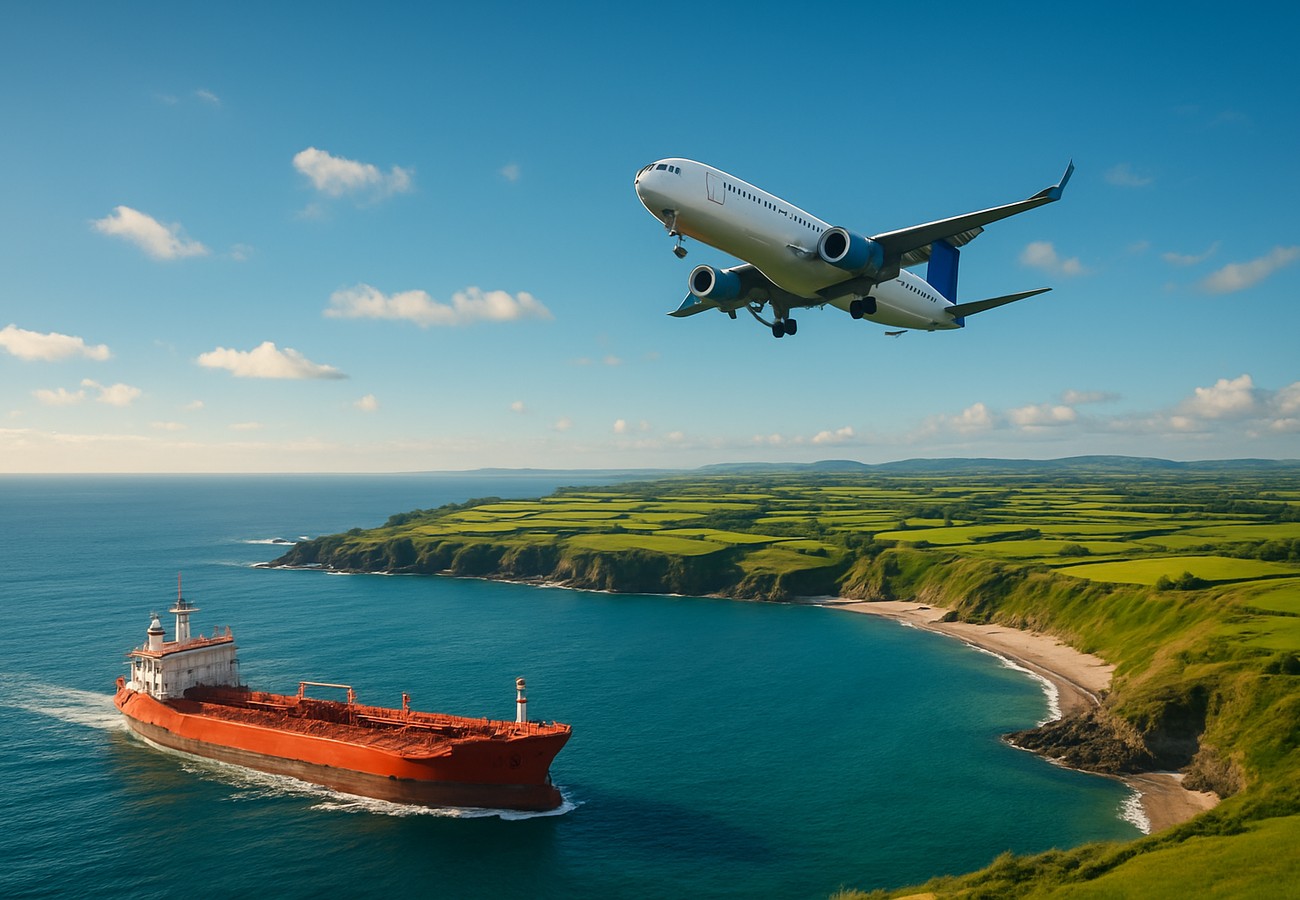
Image generated by AI
Global Energy Shock: Strait of Hormuz Blockade Triggers Ireland Jet Fuel Crisis as Saudi Arabia, UAE, and Qatar Redirect Oil Flows; Global Trade and Tourism Lifeline of Island Nation Under Severe Threat
Dublin Braces for Massive Flight Cancellations as Europe’s Jet Fuel Reserves Plummet; Ireland’s 90% Inbound Tourism Air-Dependence Becomes a Strategic Liability Amidst Escalating US-Iran Conflict
DUBLIN, Ireland — The Republic of Ireland is facing an unprecedented systemic threat to its national connectivity as the escalating blockade of the Strait of Hormuz sends catastrophic shockwaves through the global aviation fuel supply chain. In a nation where 90 percent of inbound travelers arrive by air, the current global energy crisis has transitioned from a distant geopolitical concern into an immediate economic emergency. As the US-Iran conflict intensifies, the primary energy hubs of Saudi Arabia, the UAE, and Qatar are being forced into a massive redirection of crude oil and refined product flows, leaving isolated island economies like Ireland’s "Tourism Lifeline" on the brink of collapse.
EXPANDED OVERVIEW: The 21% Global Bottleneck Shakes the Emerald Isle
The root of the crisis lies in the Strait of Hormuz, a maritime chokepoint that handles approximately 21 percent of the world’s total oil consumption. With the waterway now under "strict management" and facing periodic blockades, the global refined jet fuel market has been plunged into a state of structural deficit.
For Ireland, the impact is compounding daily. Unlike mainland European nations—such as Germany, France, or Spain—which benefit from a dense network of high-speed rail and transcontinental road alternatives, Ireland is geographically locked. Its "Air Connectivity Backbone" is the only thing linking its population of 5 million to the global market. Government-backed transport assessments now warn that any prolonged shipping disruption in the Gulf will result in a mandatory 30-40% reduction in flight capacity across Irish airports by May 2026.
GEOPOLITICAL CONTEXT: The US-Iran Standoff and the Irish Ripple Effect
The current travel chaos in Dublin and Cork is the direct byproduct of the high-stakes US-Iran conflict. As Washington maintains its naval blockade to enforce sanctions, Tehran has responded by leveraging its control over the Strait. This "Maximum Pressure" environment has forced the Gulf States—Saudi Arabia, UAE, Qatar, Kuwait, Oman, and Bahrain—into a strategic pivot.
While these nations attempt to stabilize global markets, the sheer volume of diverted shipments has created a "refining lag" in Europe. Ireland, which sits at the far edge of the European supply chain, is the first to feel the "inventory drought." The Irish government is now lobbying both the European Commission and the International Energy Agency (IEA) for priority fuel allocations, framing the situation as a matter of "Sovereign Connectivity."
GLOBAL ENERGY IMPACT: The Vanishing Inventory of Jet Fuel
Jet fuel is a "middle distillate" that requires specific refining configurations. As crude supplies from the Strait of Hormuz become unpredictable, European refineries are prioritizing heating oil and diesel to protect industrial outputs, leaving the aviation sector in a precarious position.
- Skyrocketing Prices: Jet fuel spot prices in the ARA (Amsterdam-Rotterdam-Antwerp) hub have surged by 45% since April 10, making low-cost "Tourism Lifeline" routes to Ireland economically unviable for carriers like Ryanair and Aer Lingus.
- Supply Chain Compression: European fuel inventories are currently at their lowest levels since the 2008 financial crisis, prompting airlines to "tanker" fuel (carrying extra weight to avoid refueling in expensive locations)—a practice that further increases total fuel consumption and emissions.
SHIPPING & TRADE IMPACT: The 50% Air Freight Risk
While tourism is the most visible victim, the Strait of Hormuz crisis threatens Ireland’s status as a global trade hub. Approximately half of Ireland’s high-value freight—including critical pharmaceuticals and technology components—is transported via air.
- Vessel Rerouting Costs: While maritime tankers are taking the long route around the Cape of Good Hope, the added time (10-14 days) has forced more manufacturers to rely on air freight, further depleting the already scarce jet fuel reserves.
- Insurance Parity: Maritime insurance premiums in the Gulf have spiked by 300%, a cost that is now trickiling down into the price of finalized consumer goods arriving at Irish ports.
- Logistical Breakdown: If jet fuel remains under "Crisis Observation," global logistics providers may suspend non-essential air-cargo routes to Dublin to save fuel for more central European hubs.
REGIONAL IMPACT: The Gulf States' Strategic Redirection
The nations of the Gulf Co-operation Council (GCC)—Saudi Arabia, UAE, Qatar, Kuwait, Oman, and Bahrain—find themselves in a delicate balancing act. While they hold the key to the global energy crisis, the naval blockade in the Strait makes the physical delivery of product to the West a high-risk operation.
The UAE and Saudi Arabia are currently fast-tracking cross-peninsula pipelines to bypass the Hormuz chokepoint, but these projects will not provide "Aviation Grade" relief to Ireland for several months. In the interim, Qatar and Bahrain are shifting their export focus toward Asian markets that offer shorter, safer maritime routes, leaving the trans-Atlantic and European "Tourism Lifelines" in a state of deep uncertainty.
INDUSTRY ANALYSIS: Why Island Nations are the First to Fall
"Ireland is the canary in the coal mine for the global aviation industry," says one senior energy analyst at a top-tier European think tank. "When you have an economy where 90% of your visitors and 50% of your trade rely on a single energy-intensive mode of transport, you are exceptionally vulnerable to Gulf tensions."
Airlines are already responding. Carriers across the EU are optimizing schedules by "thinning" frequencies to secondary hubs into Ireland. For travelers, this means the era of €19 flights is officially over; the "Fuel Surcharge" is no longer a line item but the dominant cost of the ticket.
WHAT HAPPENS NEXT: DIPLOMATIC AND ENERGY SCENARIOS
Scenario A: The IEA Emergency Release (May 2026)
The International Energy Agency coordinates a release of strategic petroleum reserves (SPR). This provides a 30-day "breathing room" for Irish aviation but does not solve the underlying US Iran conflict.
Scenario B: The Capacity Collapse (June 2026)
If the Strait of Hormuz remains under blockade, major airlines may suspend up to 50% of routes to Ireland, focusing their remaining fuel on mainland European routes where passengers have "alternate mode" (train/bus) options for the final leg.
CONCLUSION: A Season of High-Stakes Uncertainty
The fate of Ireland's 2026 summer tourism season is currently tied to a narrow strip of water 3,000 miles away. As the global energy crisis deepens, the Emerald Isle finds itself at the mercy of global powers. Travelers and businesses alike must now prepare for a world where air connectivity is no longer a given, but a luxury dictated by the shifting sands of Mideast geopolitics.
KEY TAKEAWAYS
- The Problem: Ireland’s 90% air-travel dependence has become a strategic liability.
- The Trigger: An escalating blockade in the Strait of Hormuz affecting 21% of global oil flows.
- The Players: Saudi Arabia, UAE, and Qatar are redirecting energy flows away from high-risk Western routes.
- The Impact: 50% of Ireland's high-value trade (air freight) is at immediate risk of logistical suspension.
- The Outlook: Travelers should expect mass flight cancellations and skyrocketing airfares throughout the Spring 2026 season.
Related Travel Guides
Disclaimer
This article is for informational and educational purposes only. It does not constitute legal, financial, or professional advice. While we strive to provide accurate and up-to-date information, travel policies, regulations, and conditions change rapidly. Always verify information with official sources before making travel decisions. Nomad Lawyer makes no representations about the accuracy, reliability, completeness, or suitability of the information provided. Readers should consult qualified professionals for advice specific to their circumstances. The views expressed in this article are those of the author and do not necessarily reflect the views of Nomad Lawyer.
Raushan Kumar
Founder & Lead Developer
Full-stack developer with 11+ years of experience and a passionate traveller. Raushan built Nomad Lawyer from the ground up with a vision to create the best travel and law experience on the web.
Learn more about our team →