
Global Energy Crisis Spreads to North America: Escalating US Iran Conflict Over Strait of Hormuz Blockade Sparks Massive Airline Cancellations as Air Canada and WestJet Slash Routes Amid Surging Oil Prices
As Gulf tensions boil over, the US-Iran geopolitical standoff has triggered a 100% surge in jet fuel prices, forcing Air Canada and WestJet to severely cut North American flight availability.

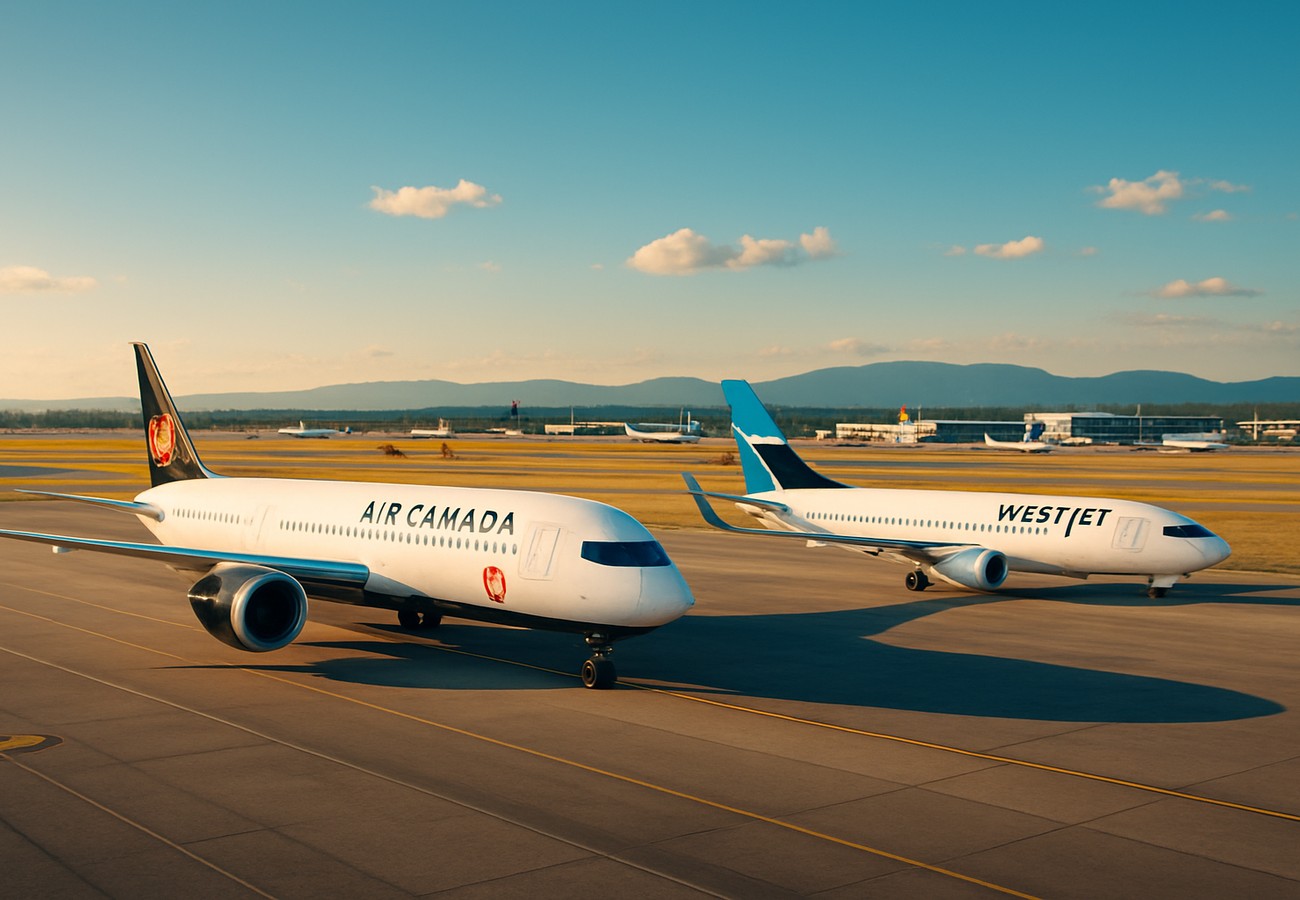
Image generated by AI
The devastating ripple effects of an aggressive US Iran conflict are no longer confined to the Middle East. As diplomatic relations collapse and a severe global energy crisis rapidly accelerates, the ensuing maritime blockade of the Strait of Hormuz has sent global oil prices into an absolute freefall of volatility. This unprecedented macroeconomic shock has now directly crashed into North American aviation markets. Facing jet fuel expenses that have explosively surged beyond 100% in recent weeks, dominant carriers including Air Canada and WestJet are being ruthlessly forced to initiate massive protective capacity cuts. Consequently, travelers spanning the United States, Canada, and Mexico are now staring down the barrel of immediate, severe flight suspensions just ahead of the peak 2026 summer travel season.
Expanded Overview: North American Connectivity Shrinks
The sheer velocity of this fuel crisis is fundamentally rewriting North American commercial aviation capacity. Air Canada has formally initiated targeted surgical strikes across its master schedule, confirming the definitive suspension of multiple core cross-border and domestic lifelines connecting key hubs like Toronto, Montreal, Vancouver, New York, Salt Lake City, Yellowknife, and Guadalajara. Defensively maneuvering through the crisis, Air Canada’s sweeping reductions statistically represent an immediate elimination of roughly 1% of its annual available seat miles (ASM). While seemingly fractional, the reduction deeply fractures secondary market access. Comparatively, WestJet is similarly retreating, formally executing a 1% capacity reduction for April and an aggressive 3% reduction slated for May.
Geopolitical Context: The Strait Under Siege
To comprehend why flights across the North American continent are suddenly stalling, one must look directly toward the ongoing Gulf tensions. The aggressive geopolitical standoff defined by strict U.S. naval pressure against Iranian logistics has forced Tehran into a defensive posture. In sheer retaliation, the physical closure of the Strait of Hormuz has effectively weaponized global energy flow. By severing access to an oceanic corridor responsible for approximately 20% of Earth’s total crude oil volume, a localized military blockade has instantly morphed into a transnational economic weapon capable of bleeding Western aviation dry.
Global Energy Impact: The 100% Price Surge
The immediate casualty of this naval gamesmanship is the stabilization of fuel pricing. Jet fuel markets have experienced a catastrophic shock, physically surging over 100% since the initial closure announcements. Because commercial aviation survives on famously razor-thin operational margins, airlines cannot possibly absorb doubled energy costs without passing the absolute financial penalty onto the consumer via heightened ticket prices or simply erasing low-margin flights. Exacerbating the panic, the International Energy Agency (IEA) has issued a terrifyingly direct warning: the broader European continent may face total, paralyzing jet fuel shortages within six weeks if global routing does not normalize.
Shipping & Trade Impact: Starving the Supply Chains
The sheer danger associated with the shipping disruption around the Persian Gulf has forced international shipping conglomerates drastically into retreat. Massive crude tankers, ordinarily bound for Western refineries that process aviation-grade kerosene, are executing punishing reroutes around the African continent. This intense logistical deviation radically inflates marine insurance costs, extends physical delivery delays by weeks, and ensures that the jet fuel ultimately reaching Western airports is priced at an astronomical, artificially scarcity-driven premium.
Regional Impact (Gulf States): A Strangled Export Engine
Despite intense geographic distance, the airspace cuts across Canada and Mexico are directly tethered to the economic stability of the Gulf States. Major diplomatic and financial players including Saudi Arabia, the UAE, Qatar, Kuwait, Oman, and Bahrain strictly rely on the unhindered flow of the Strait of Hormuz to offload their sovereign crude output. As this absolute lifeline remains squeezed, these Gulf nations are observing massive disruptions to their foundational export models while desperately accelerating back-channel diplomatic negotiations in a frantic bid to restore maritime flow and protect their interconnected petro-economies.
Industry / Expert Analysis: The Economics of 'Unviable'
Why cut routes like Montreal to New York? In the face of a 100% jet fuel spike, aviation economists point to load factors and ticket yield. Extremely short-haul routes logically burn disproportionately more fuel during takeoff relative to their cruising time, destroying profitability. Simultaneously, 'thin' routes connecting remote cities like Yellowknife or Fort McMurray simply lack the sheer density of premium-paying passengers required to subsidize massive fuel spikes. Thus, Air Canada is actively pivoting its highest-efficiency machinery onto high-yield, intercontinental trunk routes, essentially placing secondary regional connectivity firmly on the chopping block to maintain corporate solvency.
What Happens Next: Preparing for the Worst
If sustained diplomatic negotiations surrounding the US Iran conflict fail to immediately yield an open maritime passage, the 2026 summer aviation market will be drastically reshuffled. Travelers strictly reliant on secondary connections should brace for highly expensive, convoluted multi-leg bookings. Fortunately, Air Canada continues to defend heavy regional corridors; passengers heading towards New York from Toronto or Montreal will rely on ~34 daily flights successfully maintained into secondary gateways like Newark Liberty and LaGuardia. In the interim, passengers must adapt by booking flexible fares, booking exceedingly early to beat supply-crunch pricing, and remaining heavily vigilant for sudden terminal notifications.
Conclusion: An Industry Reacts
The suspension of multiple vital Air Canada and WestJet routes violently underscores exactly how interconnected global instability dictates everyday economics. When Gulf tensions boil over and constrain the world's most vital energy reserves, everyday tourism and cross-border commercial links between Canada, the United States, and Mexico bleed. Until international diplomacy stabilizes the Strait of Hormuz, travelers must navigate an extremely volatile, highly expensive, and dynamically shrinking aviation environment.
Key Takeaways
- Massive Aviation Cuts: Air Canada has immediately suspended multiple core connections to Fort McMurray, Yellowknife, Salt Lake City, and JFK, alongside canceling a planned Guadalajara launch.
- Root Cause - The Energy Shock: Jet fuel prices have exploded by over 100% due directly to severe shipping disruption heavily centered around the Strait of Hormuz.
- Additional Reductions: WestJet has also defensively activated a 1% capacity reduction targeting April and a 3% capacity slash in May to combat energy costs.
- Geopolitical Gridlock: The active, military-backed US Iran conflict has severely throttled Middle Eastern oil output, negatively impacting sovereign Gulf exporters including Saudi Arabia and the UAE.
- New York Adjustments: Flights routing from Toronto and Montreal directly into JFK are halted until October 25; commuters must instead utilize connections landing in Newark or LaGuardia.
Related Travel Guides
Disclaimer
This article is for informational and educational purposes only. It does not constitute legal, financial, or professional advice. While we strive to provide accurate and up-to-date information, travel policies, regulations, and conditions change rapidly. Always verify information with official sources before making travel decisions. Nomad Lawyer makes no representations about the accuracy, reliability, completeness, or suitability of the information provided. Readers should consult qualified professionals for advice specific to their circumstances. The views expressed in this article are those of the author and do not necessarily reflect the views of Nomad Lawyer.
Raushan Kumar
Founder & Lead Developer
Full-stack developer with 11+ years of experience and a passionate traveller. Raushan built Nomad Lawyer from the ground up with a vision to create the best travel and law experience on the web.
Learn more about our team →