
Strait of Hormuz Blockade Triggers Global Oil Shock as Saudi Arabia, UAE and Qatar Energy Crisis Destabilizes South Asian Aviation; Bhutan Fast-Tracks Gelephu International Airport Amid US-Iran Conflict in May 2026
A strategic blockade of the Strait of Hormuz has ignited a global energy crisis, sending oil prices to record highs. As Saudi Arabia, the UAE, and Qatar face export disruptions, Bhutan's Gelephu International Airport emerges as a critical resilience project during the 2026 oil shock.

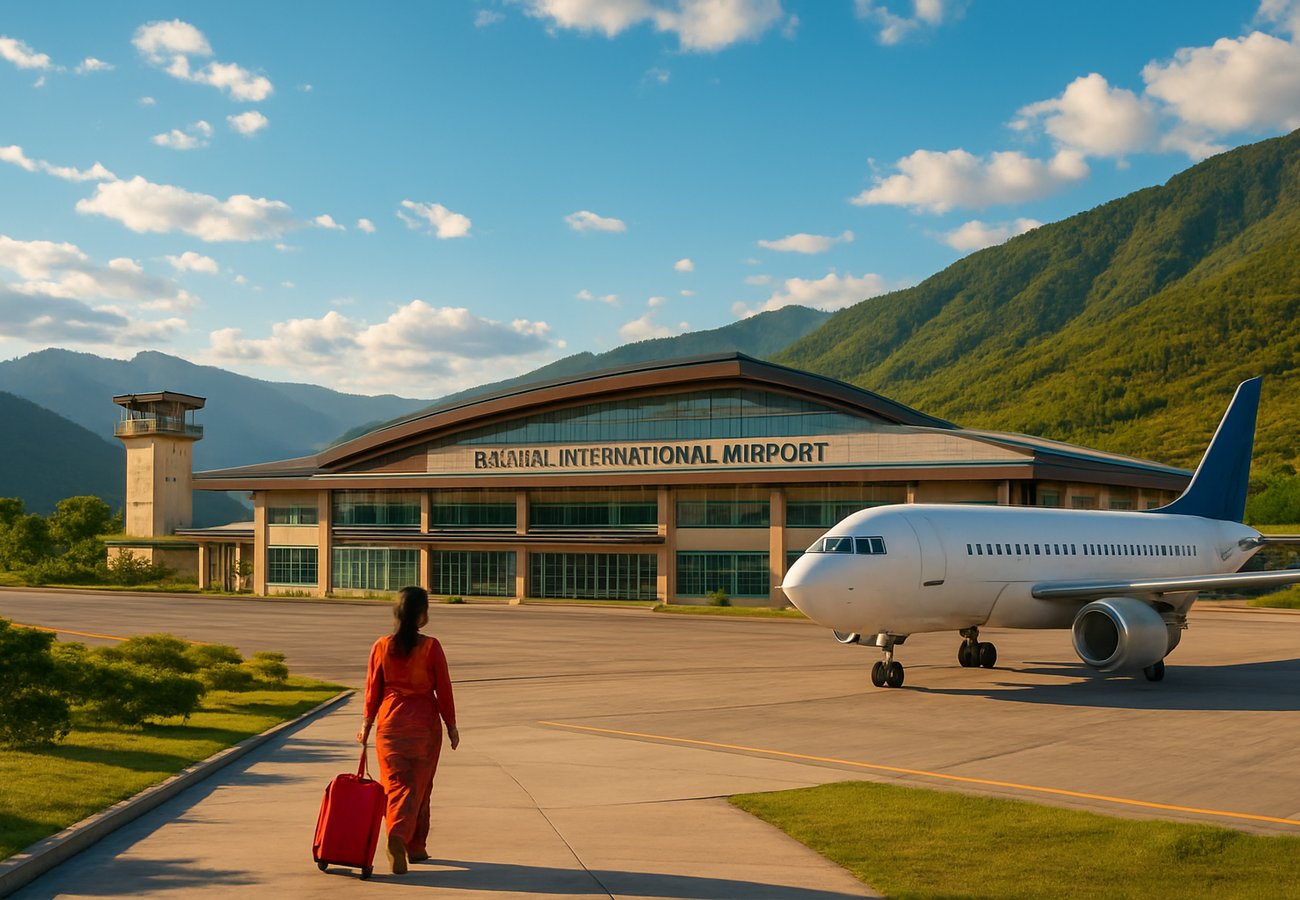
Image generated by AI
A global energy crisis of historic magnitude has erupted following the strategic blockade of the Strait of Hormuz, triggering an immediate oil price shock that is fundamentally restructuring the South Asian aviation landscape. As the United States, Iran, and Gulf Cooperation Council (GCC) nations including Saudi Arabia, the UAE, and Qatar move to the brink of military conflict, the resulting travel chaos has seen landlocked nations pivot toward "strategic isolationist resilience." Today, May 10, 2026, the Kingdom of Bhutan has confirmed the acceleration of the Gelephu International Airport project. This high-stakes infrastructure surge, set to revolutionize the Kingdom's connectivity by 2029, is being positioned as a "Southern Safe Haven" as the 2026 oil shock destabilizes global fuel supply chains and triggers widespread airport disruptions.
The blockade of the world’s most critical energy chokepoint has sent crude prices soaring toward $200/bbl, making Bhutan’s traditional reliance on expensive, technically challenging landings at Paro International a major fuel-cost liability. By developing a modernized gateway in the southern plains near the Indian border, the Kingdom is building a "resilience-focused" bridge to the world, bypassing the volatile maritime energy routes and the US-Iran military standoff.
Expanded Overview: The Fuel Shock and the Mindfulness City Pivot
The blockade of the Strait of Hormuz — a narrow chokepoint through which 21 million barrels of oil per day pass — represents a total collapse of international energy security. For Bhutan, a nation that prioritizes "Gross National Happiness" (GNH), the maritime blockade has rendered its energy-intensive import-export model unreachable. As the International Energy Agency (IEA) activates emergency protocols, the resulting jet fuel shortage has turned the Gelephu project from a "future vision" into a "strategic necessity" during the 2026 energy shock.
This aviation update confirms that the "direct maritime threat" in the Persian Gulf is driving the Kingdom to accelerate the Gelephu Mindfulness City initiative. This visionary project aims to blend economic progress with total energy independence and spiritual living. By creating an aviation hub that does not rely on the fuel-heavy mountain approaches of the north, Bhutan is effectively insulating its tourism sector from the travel chaos that is currently grounding international long-haul fleets during the US-Iran conflict.
Section-Wise Breakdown: Strategic Resilience
Gelephu International Airport: The Southern Gateway
Scheduled for completion in 2029 but prioritized in 2026, the Gelephu hub is designed to handle high-capacity narrow-body and wide-body aircraft. Unlike Paro, which is famous for its challenging mountain terrain, Gelephu offers a modernized, plains-based approach that significantly reduces fuel consumption during landing and takeoff. During the 2026 oil shock, these "efficiency gains" are the only way to sustain Bhutan's "High Value, Low Volume" tourism model.
Connectivity: Bypassing the Hormuz Deadlock
The airport’s location near the Indian border provides a direct land-based energy and trade link, reducing the Kingdom's vulnerability to maritime blockades. As a recipient of the "Future Project of the Year" award at the 2025 World Architecture Festival, Gelephu is being designed as a "Smart Airport Ecosystem" that utilizes renewable hydropower to minimize its carbon and fuel footprint during the global energy crisis.
Eco-Tourism: Unlocking Royal Manas
The expansion is being complemented by the development of the Royal Manas National Park circuit. By providing direct access to the southern subtropical landscapes—home to tigers, rhinos, and elephants—Bhutan is creating a "safe-haven" eco-tourism hub. The goal is to attract the world's most resilient travelers, who are looking to escape the airport disruptions of the West for the untouched beauty of the Himalayas during the 2026 energy shock.
Gelephu International Airport: Strategic Roadmap 2026-2029
| Phase | Strategic Priority | Primary Resilience Benefit | Status (May 2026) |
|---|---|---|---|
| Site Acceleration | Runway Stabilization | Enables plains-based fuel efficiency | FAST-TRACKED |
| Energy Integration | Hydro-Powered Infrastructure | Reduces reliance on imported fuel | ACTIVE |
| Connectivity Hub | Southern Border Access | Bypasses maritime maritime trade risks | UNDERWAY |
| Ecosystem Launch | Mindfulness City Pilot | Self-sustaining aviation economy | PLANNED 2029 |
Note: Geopolitical instability has increased project funding by 25% to ensure energy security.
Economic & Mindfulness Impact: A Kingdom Reborn
For the people of Bhutan, the Gelephu Airport represents an exit from the global energy crisis. The project is expected to create thousands of jobs in hospitality, transportation, and sustainable construction. The US-Iran conflict has effectively "re-shored" global luxury demand, as high-net-worth travelers look toward the Himalayas as a spiritual and physical refuge from the travel chaos of the Gulf-dependent international corridors.
Industry Analysis: The Himalayan Safe-Haven Model
Aviation analysts suggest that the Strait of Hormuz blockade is forcing landlocked nations to adopt a "Fortress Resilience" model. "The global oil shock has proved that you cannot rely on a single, energy-dependent maritime trade route," says one senior energy strategist. "At $200/bbl, the most valuable airports are those that offer direct access to natural resources and spiritual stability. Gelephu is the blueprint for this new reality. We are seeing a structural shift where the 'Himalayan Safe-Havens' become the most desirable assets in the global tourism portfolio during the 2026 energy crisis."
According to the IEA, building self-sustaining, hydro-powered aviation hubs is the only way for mountain nations to survive the US-Iran maritime deadlock.
Conclusion: A Vision Guarded by the Mountains
The Bhutan Gelephu International Airport project is a definitive statement of the Kingdom’s intent to maintain its sovereignty and connectivity despite the 2026 oil shock. As Saudi Arabia, the UAE, and the United States monitor the military developments in the Persian Gulf, the "Kingdom of Happiness" is redrawing the map of South Asian reliability. For the traveler of 2026, the message is clear: the Strait of Hormuz blockade may have disrupted the world’s energy, but the "Digital Safe Passage" to Bhutan is being built in the foothills of the Himalayas.
Key Takeaways
- Strait of Hormuz blockade continues to drive a global energy crisis, accelerating Bhutan's pivot toward energy-independent aviation hubs.
- Gelephu International Airport: Scheduled for 2029 but fast-tracked in 2026 to ensure Southern Border connectivity.
- US-Iran Conflict: Geopolitical instability is forcing a "Strategic Resilience" model to bypass Gulf-dependent energy routes.
- Mindfulness City: A visionary self-sustaining aviation economy designed to survive the $200/bbl oil shock.
- Eco-Tourism Surge: Royal Manas National Park positioned as a primary global destination for resilient travelers.
- Jet Fuel Crisis: Plains-based landings at Gelephu to replace the fuel-heavy, high-risk mountain approaches at Paro.
- Strategic Hedging: Bhutan's "High Value, Low Volume" policy provides a buffer against the global travel chaos induced by the energy shock.
Related Travel Guides
Strait of Hormuz Blockade Triggers Global Oil Shock: 119 Flights Delayed at LAX Airport
The Bhutan Resilience Guide: Navigating Paro and Gelephu During the 2026 Energy Shock
European Aviation Chaos: 2,233 Flights Delayed as Global Energy Crisis Hits Heathrow and Frankfurt
Disclaimer: Airport development and infrastructure data is based on official Royal Government of Bhutan reports as of May 10, 2026. Geopolitical events and their impact on global energy markets are subject to rapid change. Travelers are advised to monitor official airline schedules and government travel advisories.
Kunal K Choudhary
Co-Founder & Contributor
A passionate traveller and tech enthusiast. Kunal contributes to the vision and growth of Nomad Lawyer, bringing fresh perspectives and driving the community forward.
Learn more about our team →