
Strait of Hormuz Blockade Triggers Global Oil Shock as Saudi Arabia, UAE and Qatar Energy Crisis Destabilizes US Aviation; Denver International Airport Unveils Touchless ID Bag Drop with Southwest Airlines Amid Global Trade Security Threat in May 2026
A strategic blockade of the Strait of Hormuz has ignited a global energy crisis, sending oil prices to record highs. As Saudi Arabia, the UAE, and Qatar face export disruptions, Denver International Airport (DEN) and Southwest Airlines launch a revolutionary TSA PreCheck Touchless ID Bag Drop to enhance operational resilience and efficiency.

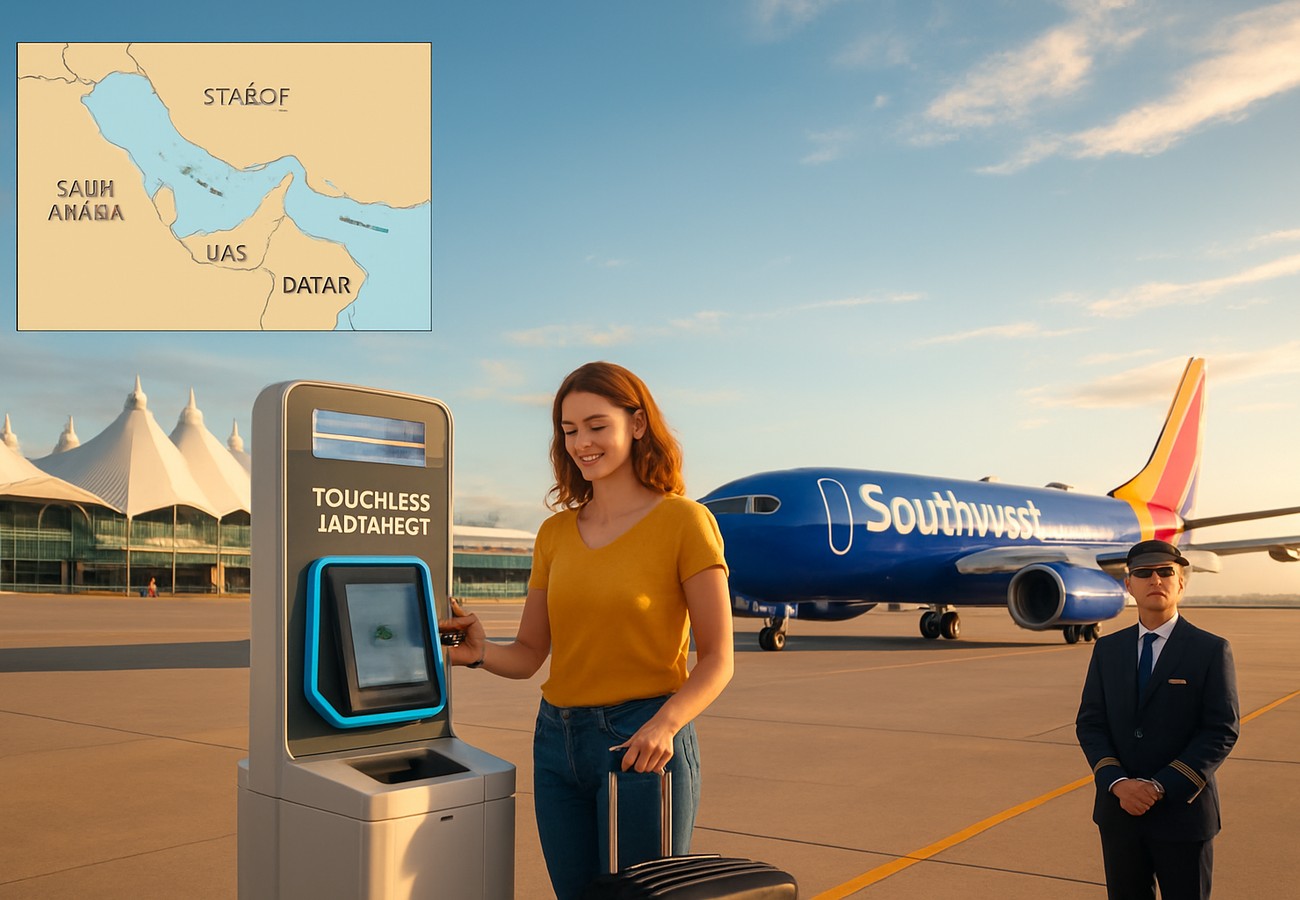
Image generated by AI
A global energy crisis of historic magnitude has erupted following the strategic blockade of the Strait of Hormuz, triggering an immediate oil price shock that is now forcing the US aviation industry into an era of accelerated automation and "resilience-first" operations. As the United States, Iran, and Gulf Cooperation Council (GCC) nations including Saudi Arabia, the UAE, and Qatar move to the brink of military conflict, the fallout has reached the heart of the American Midwest. Today, May 10, 2026, Denver International Airport (DEN) and Southwest Airlines have unveiled a revolutionary TSA PreCheck® Touchless ID Bag Drop system, a strategic deployment aimed at streamlining terminal operations as skyrocketing jet fuel costs and a collapse in global maritime security pressure the industry to eliminate every second of operational friction.
The introduction of biometric automation at Denver's Jeppesen Terminal comes at a critical juncture. With global oil prices threatening to hit $200/bbl, airlines are desperate to reduce ground-handling costs and mitigate the risk of terminal congestion. The "Touchless ID" initiative is not just a convenience; it is a defensive measure against the systemic volatility currently paralyzing global trade and travel corridors.
Expanded Overview: Automation as a Shield Against Global Instability
The blockade of the Strait of Hormuz — a narrow chokepoint through which 21 million barrels of oil per day (approximately 21% of global petroleum consumption) pass — represents a total collapse of international energy security. As the International Energy Agency (IEA) activates emergency protocols, the US aviation sector is pivoting toward technology to maintain stability.
Denver International Airport, one of the world's busiest hubs, is taking a leading role in this technological shift. By combining Southwest Airlines’ massive domestic network with the TSA PreCheck® biometric framework, the airport is creating a "hardened" passenger processing corridor. This system allows travelers to bypass traditional manual check-in hurdles, which are increasingly vulnerable to the labor shortages and operational bottlenecks caused by the ongoing energy-linked economic strain.
Section-Wise Breakdown: Denver International Airport (DEN)
Denver’s Jeppesen Terminal (Level 6): The New Biometric Frontier The Jeppesen Terminal is now the site of a revolutionary shift in US aviation security. The new Touchless ID Bag Drop is designed for Southwest Airlines passengers who are enrolled in the TSA PreCheck® program. According to DEN CEO Phil Washington, this partnership represents a significant leap forward in terminal efficiency.
The system utilizes advanced facial comparison technology to verify a passenger's identity in seconds, eliminating the need for physical documents at the bag drop station. This "hands-free" approach is particularly vital as airports across the country face heightened security alerts and operational pressure linked to the US-Iran conflict. By automating the bag drop, DEN is freeing up critical staff to handle more complex security and logistical challenges arising from the global crisis.
Flight Details and Operational Context
While this update focuses on the launch of the Touchless ID system, the broader operational environment remains extremely volatile. Travelers across the United States are currently facing thousands of delays as airlines prioritize fuel-efficient flight paths and consolidate services to conserve expensive reserves.
- Technology Integration: The Touchless ID indicator now appears on mobile boarding passes for eligible Southwest passengers.
- Dedicated Lanes: Launched originally in August 2023, the biometric lanes at the West and East Security Checkpoints have now been integrated with the bag drop area at Level 6.
- Requirement Checklist: Passengers must be 18+, have a Southwest Rapid Rewards® account, and have a valid passport on file to opt-in via the Southwest app.
Note: Due to the strategic nature of this technological rollout, no specific flight cancellations are linked directly to the system's launch; however, travelers should expect systemic delays of 30-90 minutes across all DEN operations due to the ongoing global fuel-cost crisis.
Passenger Impact: Navigating the $200/bbl Oil Reality
The impact on passengers is twofold. On one hand, the Touchless ID system offers a significant reduction in terminal waiting times, allowing savvy travelers to "skip the line" and reduce their exposure to the chaos currently engulfing the global travel industry. For business travelers and families, this efficiency is a critical asset during a time when flight schedules are increasingly unpredictable.
On the other hand, the global oil shock is translating into "emergency fuel surcharges" and reduced frequencies. The automation in Denver serves as a pressure valve, ensuring that even as the Strait of Hormuz blockade drives up the cost of every seat, the actual experience at the gate remains as frictionless as possible.
Industry Analysis: The Future of Biometric Resilience
Aviation analysts suggest that the Denver rollout is a blueprint for the future of the industry under the shadow of permanent geopolitical risk. "The era of manual, labor-intensive airport processing is ending," says one senior energy and aviation strategist. "The Strait of Hormuz blockade has proved that a single maritime chokepoint can ground a global fleet. Automation like DEN’s Touchless ID is the industry's attempt to build 'digital resilience'—ensuring that the ground operation remains stable even when the fuel supply is under attack."
According to IATA, the shift toward "One ID" biometric standards is accelerating globally as airlines seek to decouple their terminal efficiency from the volatile labor market and the energy crisis.
Conclusion: Reinforcing Security in a Time of Uncertainty
The introduction of the TSA PreCheck® Touchless ID Bag Drop at Denver International Airport is a significant milestone, but it is also a sober reminder of the world's current instability. As Saudi Arabia, the UAE, and the United States continue their high-stakes standoff with Iran, the infrastructure of global travel must evolve. Denver and Southwest Airlines are leading that evolution, proving that even in the face of a global energy crisis and a historic oil shock, the pursuit of a seamless, secure, and resilient travel experience remains a top priority.
Key Takeaways
- Strait of Hormuz blockade continues to drive a global energy crisis, pressuring US aviation to automate.
- Denver International Airport (DEN) and Southwest Airlines launch the first "Touchless ID Bag Drop."
- Biometric facial recognition replaces manual document checks for TSA PreCheck® passengers.
- Strategic efficiency: The system reduces terminal friction as fuel prices soar toward record highs.
- US-Iran conflict underscores the need for "hardened" and automated airport security.
- Eligibility: Southwest Rapid Rewards® members with valid passports and TSA PreCheck® status.
- Travelers are advised to opt-in via the Southwest app to maximize resilience during the oil shock.
Related Travel Guides
Strait of Hormuz Blockade Triggers Global Oil Shock: 119 Flights Delayed at LAX Airport
European Aviation Chaos: 2,233 Flights Delayed as Global Energy Crisis Hits Heathrow and Frankfurt
Denver Airport Survival Guide: Using Biometrics During the 2026 Global Oil Shock
Disclaimer: Operational details for the Denver Touchless ID system are based on official airport releases as of May 10, 2026. Geopolitical events and their impact on global energy markets are subject to rapid change. Travelers are advised to verify all flight details directly with Southwest Airlines and monitor official government travel advisories.
Kunal K Choudhary
Co-Founder & Contributor
A passionate traveller and tech enthusiast. Kunal contributes to the vision and growth of Nomad Lawyer, bringing fresh perspectives and driving the community forward.
Learn more about our team →