
Strait of Hormuz Blockade Triggers Global Oil Shock as Saudi Arabia, UAE, and Qatar Energy Crisis Hits US Aviation Hubs; 119 Flights Delayed at Los Angeles International Airport (LAX) as Global Trade Faces Security Threat in May 2026
The sudden closure of the Strait of Hormuz has sent oil prices to record highs, triggering a global energy crisis. As Saudi Arabia, the UAE, and Qatar scramble to manage the supply shock, US aviation hubs including Los Angeles International Airport (LAX) are reporting massive flight delays amid soaring jet fuel costs and supply chain disruptions.

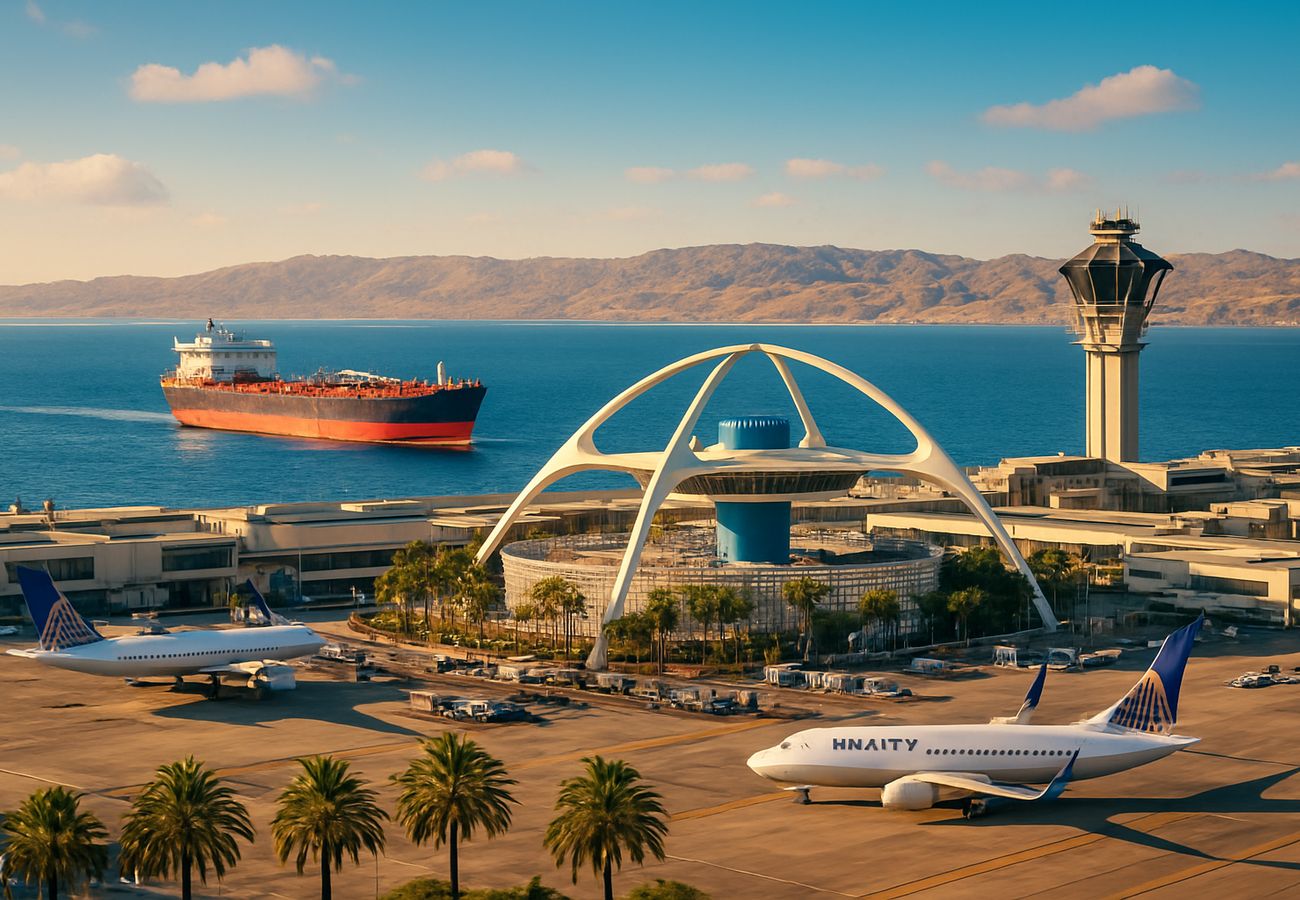
Image generated by AI
A global energy crisis of unprecedented proportions has erupted following the sudden blockade of the Strait of Hormuz, triggering an immediate oil price shock that is reverberating across the international aviation sector. As the United States, Iran, and Gulf Cooperation Council (GCC) states including Saudi Arabia, the UAE, and Qatar move to a state of high military alert, the fallout has reached the runways of the United States. Los Angeles International Airport (LAX) — a critical gateway for Pacific and domestic trade — has reported 119 flight delays and a cancellation today, May 10, 2026, as airlines grapple with skyrocketing jet fuel costs and a collapse in global logistical stability.
The disruption in Los Angeles is the first visible sign of a "cascading infrastructure failure" as the world’s most critical maritime chokepoint remains closed to commercial traffic.
Expanded Overview: The Blockade and the 20% Global Oil Threat
The crisis began in the early hours of the morning when regional security reports confirmed that the Strait of Hormuz — a narrow waterway between the Persian Gulf and the Gulf of Oman — had been effectively sealed by naval maneuvers and the deployment of advanced maritime mines.
The scale of the threat cannot be overstated. Approximately 21 million barrels of oil per day — or roughly 21% of global petroleum liquids consumption — pass through this 21-mile-wide passage. With the chokepoint now a "no-go zone" for tankers, the world’s energy supply chain has been severed. For major oil-producing nations like Kuwait, Iraq, and Bahrain, as well as the world's leading liquefied natural gas (LNG) exporter, Qatar, the blockade represents an existential threat to economic stability and global trade commitments.
Geopolitical Context: The US-Iran Flashpoint
The closure is the direct result of a rapid escalation in the US-Iran conflict. Following weeks of diplomatic friction over regional security and maritime patrols, the Iranian Revolutionary Guard Corps (IRGC) implemented what it describes as "defensive maritime exercises." The United States Central Command (CENTCOM) has condemned the move as an "unlawful blockade of international waters," promising to maintain the freedom of navigation through military force if necessary.
Saudi Arabia and the United Arab Emirates (UAE) have urged for diplomatic restraint while simultaneously activating their "East-West" pipelines to bypass the Strait. However, these pipelines can only handle a fraction of the total Gulf export volume, leaving the global market in a state of panic as the security threat to the remaining shipping lanes intensifies.
Global Energy Impact: Oil Prices and Aviation Fuel Surge
The impact on the global energy market was instantaneous. Brent Crude prices surged by over $20 per barrel within the first four hours of the blockade, reaching levels not seen since the height of the 2022 energy crisis. This price shock has been passed directly to the aviation industry.
At LAX, major carriers including American Airlines, Delta Air Lines, and United Airlines are facing a dual-threat:
- Jet Fuel Price Hikes: The sudden increase in petroleum costs has forced airlines to implement immediate "emergency fuel surcharges" and, in some cases, delay flights to optimize load factors and fuel efficiency.
- Supply Chain Risk: The disruption to maritime trade is slowing the delivery of critical components and specialized additives required for modern jet engines, creating a technical bottleneck at major US hubs.
Shipping & Trade Impact: Rerouting and Insurance Collapse
The blockade has rendered the traditional trade routes between the Middle East, Europe, and Asia unusable for major tankers.
Vessel Rerouting: Shipping firms are now forced to reroute vessels around the Cape of Good Hope, adding 10–14 days to transit times and significantly increasing operational costs. Insurance Costs: War-risk insurance premiums for vessels operating in the Arabian Peninsula have skyrocketed, with many underwriters suspending coverage entirely. Trade Delays: The delay in Los Angeles (119 flights) is just the beginning. As global trade slows, the delivery of high-value goods — including electronics from Tokyo and automotive parts from Mexico City — is facing a multi-week backlog.
Regional Impact: The GCC Under Siege
For the Gulf states — Saudi Arabia, UAE, Qatar, Kuwait, Oman, and Bahrain — the blockade is a strategic nightmare. While these nations are benefiting from high oil prices in the short term, the inability to export their primary commodity is creating a massive fiscal vacuum.
- Qatar is facing a total halt in sea-bound LNG exports, risking energy blackouts in Europe and East Asia.
- Saudi Arabia and the UAE are mobilizing their naval forces to protect the Red Sea shipping lanes, which are now the only viable exit for their petroleum products.
- Oman and Kuwait are attempting to broker a diplomatic ceasefire, fearing that a prolonged conflict will lead to long-term economic contraction across the Middle East.
Expert Analysis: Why This Matters to the US Traveler
Aviation analysts suggest that the chaos at LAX is a "warning shot" for the American consumer. "This isn't just about high prices at the pump," says one senior energy strategist. "This is about the systemic resilience of the global flight network. If the Strait of Hormuz remains closed for more than 72 hours, we are looking at a total restructuring of airline schedules and the potential for thousands of cancellations nationwide as carriers prioritize fuel security over passenger convenience."
The 119 delays at LAX are a direct reflection of the US-Iran conflict manifesting in domestic infrastructure. As fuel inventory levels at major hubs begin to drop, the pressure on the FAA and the Department of Energy to release strategic reserves will become unsustainable.
What Happens Next: Scenarios and Outlook
Scenario 1: Diplomatic Resolution: High-level talks in Muscat or Doha lead to a phased reopening of the Strait, causing oil prices to stabilize but leaving a 14-day "logistical hangover" in the global supply chain.
Scenario 2: Military Escorts: The US Navy and its allies begin escorting tankers through the Strait, leading to intermittent skirmishes and keeping oil prices at a high "war premium" for the foreseeable future.
Scenario 3: Prolonged Blockade: A multi-week closure triggers a global recession, mass flight cancellations, and a total shift toward alternative energy sources, fundamentally altering the aviation industry's cost structure.
Conclusion: Reinforcing Global Risk
The 119 flight delays at Los Angeles International Airport are not an isolated operational glitch; they are a symptom of a world on the brink of an energy catastrophe. The Strait of Hormuz remains the world’s most dangerous chokepoint, and its closure has proven that a regional conflict in the Middle East can ground travelers in Southern California within hours. As Saudi Arabia, the UAE, and Iran eye each other across the Persian Gulf, the global traveler must prepare for a period of extreme volatility and uncertainty.
Key Takeaways
- Strait of Hormuz blockade has severed 21% of the world's oil supply
- 119 flight delays and 1 cancellation hit Los Angeles International (LAX) as jet fuel prices spike
- US-Iran conflict is the primary driver of the maritime security threat
- Saudi Arabia, UAE, and Qatar face existential economic risks from the export halt
- Oil prices have surged by over $20 per barrel, triggering a global energy crisis
- Global trade faces massive delays as vessels reroute around Africa
- Travelers are advised to expect significant fare hikes and persistent delays at major US hubs
Related Travel Guides
Denver International Airport Hit by 175 Flight Delays — The National Impact of the Oil Shock
European Aviation Chaos: 2,233 Flights Delayed as Global Energy Crisis Hits Heathrow and Frankfurt
Disclaimer: Geopolitical events and their impact on aviation fuel supplies are subject to rapid change. Data regarding the Strait of Hormuz blockade and LAX flight delays is based on current reports as of May 10, 2026. Travelers should consult the U.S. Department of State and FAA for official advisories before international travel.
Kunal K Choudhary
Co-Founder & Contributor
A passionate traveller and tech enthusiast. Kunal contributes to the vision and growth of Nomad Lawyer, bringing fresh perspectives and driving the community forward.
Learn more about our team →