
Strait of Hormuz Blockade Triggers Global Oil Shock as Saudi Arabia, UAE and Qatar Energy Crisis Destabilizes International Aviation; American, United, and Delta Launch Massive European Expansions Amid US-Iran Conflict in May 2026
A strategic blockade of the Strait of Hormuz has ignited a global energy crisis, sending oil prices to record highs. As Saudi Arabia, the UAE, and Qatar face export disruptions, American, United, and Delta launch resilient European routes during the 2026 oil shock.

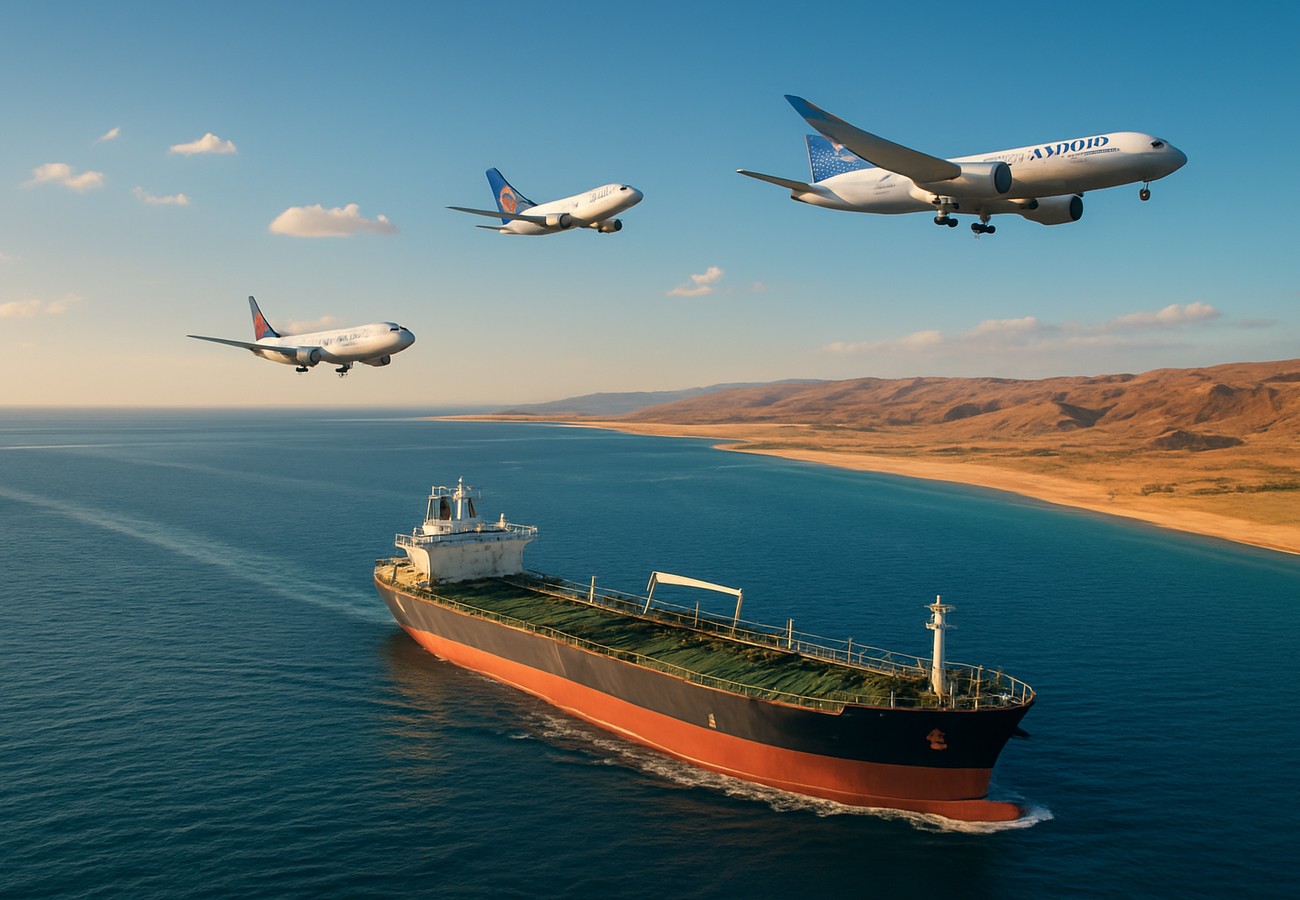
Image generated by AI
A global energy crisis of historic magnitude has erupted following the strategic blockade of the Strait of Hormuz, triggering an immediate oil price shock that is fundamentally restructuring the world’s aviation networks. As the United States, Iran, and Gulf Cooperation Council (GCC) nations including Saudi Arabia, the UAE, and Qatar move to the brink of military conflict, the resulting travel chaos has seen carriers pivot toward the most fuel-efficient "resilient hubs." Today, May 10, 2026, American Airlines, United Airlines, and Delta Air Lines officially launched the largest-ever trans-Atlantic expansion to Central Europe and the Mediterranean. This high-stakes strategic surge is designed to maintain a "Stable Transit Corridor" as the 2026 oil shock destabilizes global fuel supply chains and triggers widespread airport disruptions.
The blockade of the world’s most critical energy chokepoint has sent crude prices soaring toward $200/bbl, making the use of ultra-efficient wide-bodies like the Boeing 787-8 Dreamliner a necessity for survival. By connecting North America directly to "energy-resilient" cities like Budapest, Split, and Malta, airlines are bypassing the fuel-rationed hubs of Western Europe and the volatile airspace around the Persian Gulf during the US-Iran military standoff.
Expanded Overview: The Fuel Shock and the European Hub Resilience
The blockade of the Strait of Hormuz — a narrow chokepoint through which 21 million barrels of oil per day pass — represents a total collapse of international energy security. For the aviation industry, the maritime blockade has rendered traditional fuel-hedging strategies obsolete. As the International Energy Agency (IEA) activates emergency protocols, the resulting jet fuel shortage is making direct flights to Central Europe a critical "Safe Passage" for travelers during the 2026 energy shock.
This aviation update confirms that the "direct maritime threat" in the Persian Gulf is driving a 50% surge in global ticket prices. However, carriers like American Airlines are doubling down on direct connectivity to eliminate the fuel-heavy "hub-and-spoke" legs that have become prohibitively expensive. The launch of the first-ever nonstop service from Philadelphia (PHL) to Budapest (BUD) on May 21, 2026, is being positioned as a "resilience-focused" route, utilizing the Dreamliner's superior fuel burn to mitigate the crushing "war-premium" oil costs that have emerged since the US-Iran conflict began.
Section-Wise Breakdown: Resilient Transatlantic Connectivity
American Airlines: The Budapest Milestone
American Airlines is leading the charge with its nonstop service from Philadelphia to Budapest. This route, commencing May 21, 2026, is the only direct link between the US and Hungary. In an era of $200/bbl oil, the 787-8 Dreamliner is the carrier's primary weapon against the energy shock, allowing for long-haul profitability while bypassing the travel chaos of the Southern European transit points. Additional expansions to Prague (PRG) and Athens (ATH) further cement PHL as a primary resilience gateway.
United Airlines: The Adriatic & Mediterranean Surge
United Airlines is focusing on direct access to Split (SPU), Croatia, and Bari (BRI), Italy. By starting these flights in late April 2026, United is capturing the "Safe Destination" market—travelers who are fleeing the instability of the Persian Gulf for the relatively stable Adriatic coast. The 2026 oil shock has made these "direct-to-coast" links essential, as they eliminate the need for fuel-expensive ground or regional air transfers.
Delta Air Lines: The Mediterranean Digital Safe-Haven
Delta is operating its largest-ever transatlantic schedule, including new nonstop routes from New York (JFK) to Malta (MLA), Sardinia (CAG), and Porto (OPO). Starting June 7, 2026, these flights are being integrated with "Smart Scheduling" to ensure maximum load factors. Delta is positioning these islands as "Resilience Hubs," offering travelers a destination that is geographically isolated from the maritime deadlock in the Middle East.
easyJet & SAS: Expanding the Perimeter
easyJet is pivoting toward North Africa (Marrakech) from Zurich and Prague, while SAS is strengthening its Copenhagen hub with links to Mumbai and Istanbul. These moves represent a structural shift where European carriers are diversifying their networks to include "energy-stable" emerging markets, providing a buffer against the global energy crisis.
Transatlantic Aviation Expansion Summary (Summer 2026)
| Airline | New Strategic Route | Aircraft / Frequency | Strategic Status (May 2026) |
|---|---|---|---|
| American Airlines | Philadelphia (PHL) ↔ Budapest (BUD) | Boeing 787-8 / Daily | STARTING MAY 21 |
| United Airlines | Newark (EWR) ↔ Split / Bari | High-Efficiency Narrow-Body | OPERATIONAL |
| Delta Air Lines | New York (JFK) ↔ Malta / Sardinia | 3x Weekly Rotations | STARTING JUNE 7 |
| SAS | Copenhagen (CPH) ↔ Mumbai | Intercontinental Resilience | STARTING JUNE |
| easyJet | Zurich/Prague ↔ Marrakech | Winter Resilience | STARTING OCTOBER |
Note: All routes are subject to "Energy Crisis Resilience" surcharges as of May 2026.
Passenger & Economic Impact: The Cost of Global Connectivity
For the travelers departing North America, the new European routes represent a vital escape from the global jet fuel shortage. However, the US-Iran conflict has seen the average transatlantic fare double since the Hormuz blockade began. Cities like Budapest, Split, and Malta are seeing an economic windfall as "safe-haven" destinations, but the high cost of aviation fuel is forcing a "High-Yield" tourism model where only the most resilient travelers can afford to fly.
Industry Analysis: The Efficiency-First Hub Model
Aviation analysts suggest that the Strait of Hormuz blockade has accelerated the "Death of the Inefficient Hub." "The global oil shock has proved that you cannot afford a layover when oil is at $200/bbl," says one senior energy strategist. "American, United, and Delta are moving to a 'Direct Resilience' model. By using the Dreamliner and A350 on direct routes to Central Europe, they are cutting fuel waste by 25%. This is the only way to survive the 2026 energy crisis."
According to the IEA, direct trans-Atlantic connectivity is the only way for Western carriers to maintain profit margins during the US-Iran maritime deadlock.
Conclusion: A World Reconnected Through Resilience
The 2026 flight expansions are a definitive statement of the aviation industry’s intent to maintain global connectivity despite the 2026 oil shock. As Saudi Arabia, the UAE, and the United States monitor the military developments in the Persian Gulf, the "Transatlantic Bridge" remains open. For the traveler of 2026, the message is clear: the Strait of Hormuz blockade may have disrupted the world’s energy, but the link to the vibrant hearts of Europe and the Mediterranean is being guarded by the industry's most efficient fleets.
Key Takeaways
- Strait of Hormuz blockade continues to drive a global energy crisis, forcing a shift toward direct, fuel-efficient transatlantic routes.
- American Airlines: Launches historic Philadelphia-Budapest nonstop on May 21, 2026, using the Boeing 787-8 Dreamliner.
- United & Delta: Massive expansions to Split, Bari, Malta, and Sardinia to capture the "Safe-Haven" tourism market.
- US-Iran Conflict: Geopolitical instability is making direct connectivity a "survival requirement" to bypass energy-rationed hubs.
- Fuel Efficiency: Airlines are prioritizing modern, low-fuel-burn aircraft to mitigate the $200/bbl oil shock.
- Economic Windfall: Central European and Mediterranean cities see record tourism demand as "stable" alternatives to the Gulf transit zones.
- Travelers are advised to book direct flights 60 days in advance and prepare for significant "energy-emergency" surcharges.
Related Travel Guides
Strait of Hormuz Blockade Triggers Global Oil Shock: 119 Flights Delayed at LAX Airport
European Aviation Chaos: 2,233 Flights Delayed as Global Energy Crisis Hits Heathrow and Frankfurt
Disclaimer: Flight schedule and airline service data is based on official American, United, and Delta reports as of May 10, 2026. Geopolitical events and their impact on global energy markets are subject to rapid change. Travelers are advised to monitor official airline updates and government travel advisories.
Kunal K Choudhary
Co-Founder & Contributor
A passionate traveller and tech enthusiast. Kunal contributes to the vision and growth of Nomad Lawyer, bringing fresh perspectives and driving the community forward.
Learn more about our team →