
Strait of Hormuz Blockade Triggers Global Oil Shock as Saudi Arabia, UAE and Qatar Energy Crisis Destabilizes South Asian Aviation; Shillong Airport Expansion Accelerates Amid US-Iran Conflict in May 2026
A strategic blockade of the Strait of Hormuz has ignited a global energy crisis, sending oil prices to record highs. As Saudi Arabia, the UAE, and Qatar face export disruptions, the Shillong Airport expansion in India emerges as a critical regional connectivity hub during the 2026 oil shock.

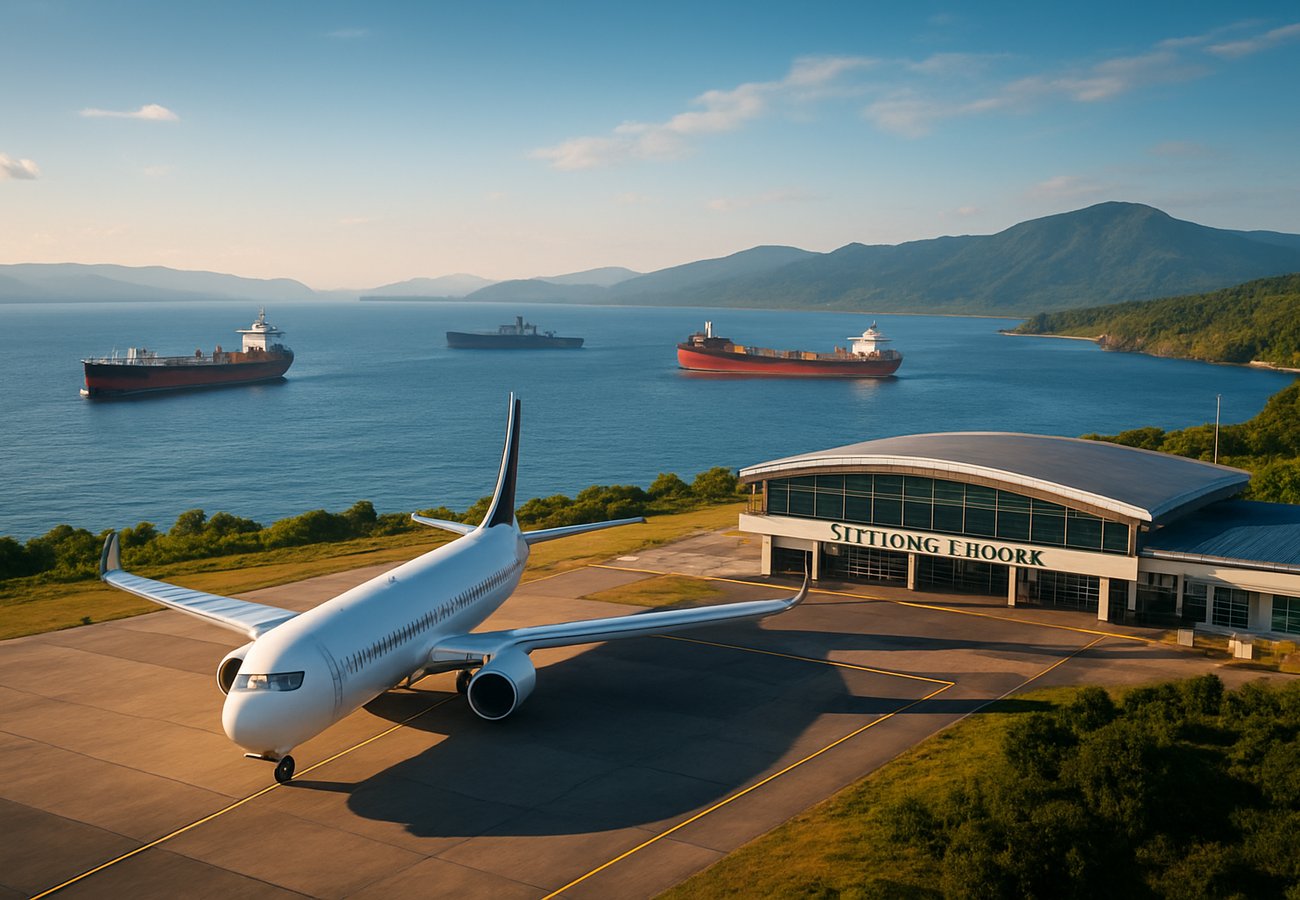
Image generated by AI
A global energy crisis of historic magnitude has erupted following the strategic blockade of the Strait of Hormuz, triggering an immediate oil price shock that is fundamentally restructuring the South Asian aviation landscape. As the United States, Iran, and Gulf Cooperation Council (GCC) nations including Saudi Arabia, the UAE, and Qatar move to the brink of military conflict, the resulting travel chaos has shifted India’s strategic focus toward internal regional resilience. Today, May 10, 2026, the Government of Meghalaya and the Airports Authority of India (AAI) have accelerated the comprehensive expansion of Shillong Airport (Umroi Airport). This high-stakes infrastructure surge is designed to transform the "Abode of Clouds" into a primary aviation hub, bypassing the energy-strapped mega-hubs as the 2026 oil shock destabilizes global fuel supply chains and triggers widespread airport disruptions.
The blockade of the world’s most critical energy chokepoint has sent crude prices soaring toward $200/bbl, making the traditional long-haul travel model through the Gulf unviable. India’s pivot toward strengthening the North East aviation circuit indicates that the "maritime export paralysis" caused by the US-Iran military standoff is forcing a radical decentralization of the nation’s air traffic. By enabling narrow-body aircraft like the Airbus A320 and Boeing 737 to land directly in the Khasi Hills, the Shillong expansion is emerging as a critical "fuel-efficiency" project during the global energy crisis.
Expanded Overview: The Fuel Shock and the North East Pivot
The blockade of the Strait of Hormuz — a narrow chokepoint through which 21 million barrels of oil per day pass — represents a total collapse of international energy security. For India, the maritime blockade has rendered its primary supply lines for refined aviation fuels from the Middle East unreachable. As the International Energy Agency (IEA) activates emergency protocols, the resulting jet fuel shortage is making the 3-hour road journey from Guwahati to Shillong economically unviable due to skyrocketing diesel prices.
This aviation update confirms that the "direct maritime threat" in the Persian Gulf is driving the Meghalaya government to fast-track the runway extension at Umroi. By allowing direct flights from Delhi, Kolkata, and Bangalore, the state is effectively insulating its tourism sector from the travel chaos of the international hubs. The global energy crisis has turned Shillong into a "safe-haven" destination for high-end domestic travelers seeking to avoid the fuel-surged international corridors during the oil shock.
Section-Wise Breakdown: Strategic Upgrades
Umroi Airport: Breaking the Topographical Barrier
Shillong Airport has long been limited by its runway length and the challenging terrain of the North East. However, the US-Iran conflict has provided the strategic impetus to overcome these hurdles. The expansion project includes a major runway extension and the installation of an advanced Instrument Landing System (ILS). These upgrades are essential for maintaining schedule reliability during the region's frequent fog and heavy rainfall, ensuring that Shillong remains a dependable hub even as the global energy crisis grounds less resilient airports.
Connectivity: Bypassing the Guwahati Bottleneck
Currently, most travelers to Meghalaya must land in Guwahati and endure a fuel-heavy road journey. The expansion will finally allow flagship carriers like IndiGo and Air India to operate direct narrow-body services to Umroi. In an era of $200/bbl oil, the "direct-to-destination" model is the only way to sustain tourism profitability. The oil shock has made the elimination of the "last-mile road leg" a critical priority for the state's economic planners.
Tourism Infrastructure: The Root Bridge Resilience
As the Strait of Hormuz blockade shutters international tourism in the Gulf, Meghalaya’s living root bridges, pristine rivers, and the "cleanest village in Asia" (Mawlynnong) are seeing a surge in high-intent interest. The airport expansion is being complemented by the development of "green corridors" to Sohra and Jowai. The goal is a seamless multi-modal transport network where visitors are whisked from the tarmac to nature within hours, minimizing the carbon and fuel footprint of the entire journey during the 2026 energy shock.
Shillong Airport (Umroi): Strategic Expansion Roadmap 2026
| Upgrade Component | Targeted Aircraft | Primary Strategic Benefit | Status (May 2026) |
|---|---|---|---|
| Runway Extension | Airbus A320 / Boeing 737 | Enables direct metro connectivity | ACCELERATED |
| ILS Installation | All Categories | Minimizes fog-related cancellations | ACTIVE |
| Terminal Expansion | High-Capacity Flow | Supports high-end tourism surge | UNDERWAY |
| UDAN Scheme Integration | Regional Turboprops | Strengthens North East hub-and-spoke | OPERATIONAL |
Note: Project priority shifted to "Critical Resilience" following the Hormuz maritime blockade.
Economic & Tourism Impact: A State Reborn
For the youth of Meghalaya, the Shillong Airport expansion represents an exit from the global energy crisis. The surge in direct arrivals is expected to generate thousands of jobs in ground handling, hospitality management, and eco-tourism. The US-Iran conflict has effectively "re-shored" Indian luxury travel, as the domestic elite look toward the North East as an alternative to the now-inaccessible European and Middle Eastern circuits.
Industry Analysis: The Regional Hub Strategy
Aviation analysts suggest that the Strait of Hormuz blockade is forcing India to adopt a "Regional Fortress" model. "The global oil shock has proved that you cannot rely on mega-hubs that are 100% dependent on Gulf transits," says one senior energy strategist. "At $200/bbl, the most valuable airports are those that offer direct access to high-yield tourism and natural resources with minimal ground logistics. Shillong is the blueprint for this new reality. We are seeing a structural shift where the North East becomes a gateway for the 'Act East' policy, bypassing the maritime chaos of the West."
According to the IEA, decentralizing aviation infrastructure is the only way for South Asian nations to survive the 2026 energy crisis.
Conclusion: A Gateway to the Clouds and the Future
The expansion of Shillong Airport is a definitive statement of Meghalaya’s resilience in the face of the 2026 oil shock. As Saudi Arabia, the UAE, and the United States monitor the military developments in the Persian Gulf, the "Abode of Clouds" is redrawing the map of South Asian reliability. For the traveler of 2026, the message is clear: the Strait of Hormuz blockade may have closed the world’s maritime gates, but the hills of Meghalaya are opening wider than ever before.
Key Takeaways
- Strait of Hormuz blockade continue to drive a global energy crisis, accelerating India's pivot toward North East regional hubs.
- Runway Extension: Shillong Airport to handle Airbus A320 and Boeing 737 direct flights from major Indian metros.
- US-Iran Conflict: Geopolitical instability is forcing a "direct-to-destination" aviation model to minimize fuel-heavy road transit.
- ILS Upgrades: Advanced navigation systems to combat weather-related flight cancellations and improve schedule reliability.
- Tourism Surge: Meghalaya emerges as a "safe-haven" luxury destination as international Gulf transits collapse.
- Jet Fuel Crisis: Eliminating the Guwahati-Shillong road leg is now a critical economic priority for sustaining tourism margins.
- Act East Policy: Shillong positioned as a strategic aviation gateway to Southeast Asia, bypassing the Persian Gulf maritime deadlock.
Related Travel Guides
Strait of Hormuz Blockade Triggers Global Oil Shock: 119 Flights Delayed at LAX Airport
The North East India Resilience Guide: Navigating Meghalaya and Assam During the 2026 Energy Shock
European Aviation Chaos: 2,233 Flights Delayed as Global Energy Crisis Hits Heathrow and Frankfurt
Disclaimer: Airport expansion and connectivity data is based on official Meghalaya Government and AAI reports as of May 10, 2026. Geopolitical events and their impact on global energy markets are subject to rapid change. Travelers are advised to monitor official airline schedules and government travel advisories.
Kunal K Choudhary
Co-Founder & Contributor
A passionate traveller and tech enthusiast. Kunal contributes to the vision and growth of Nomad Lawyer, bringing fresh perspectives and driving the community forward.
Learn more about our team →