Spain, France, Austria, and Thailand Top Global Winter Tourist Rankings as Seasonal Migration Surges

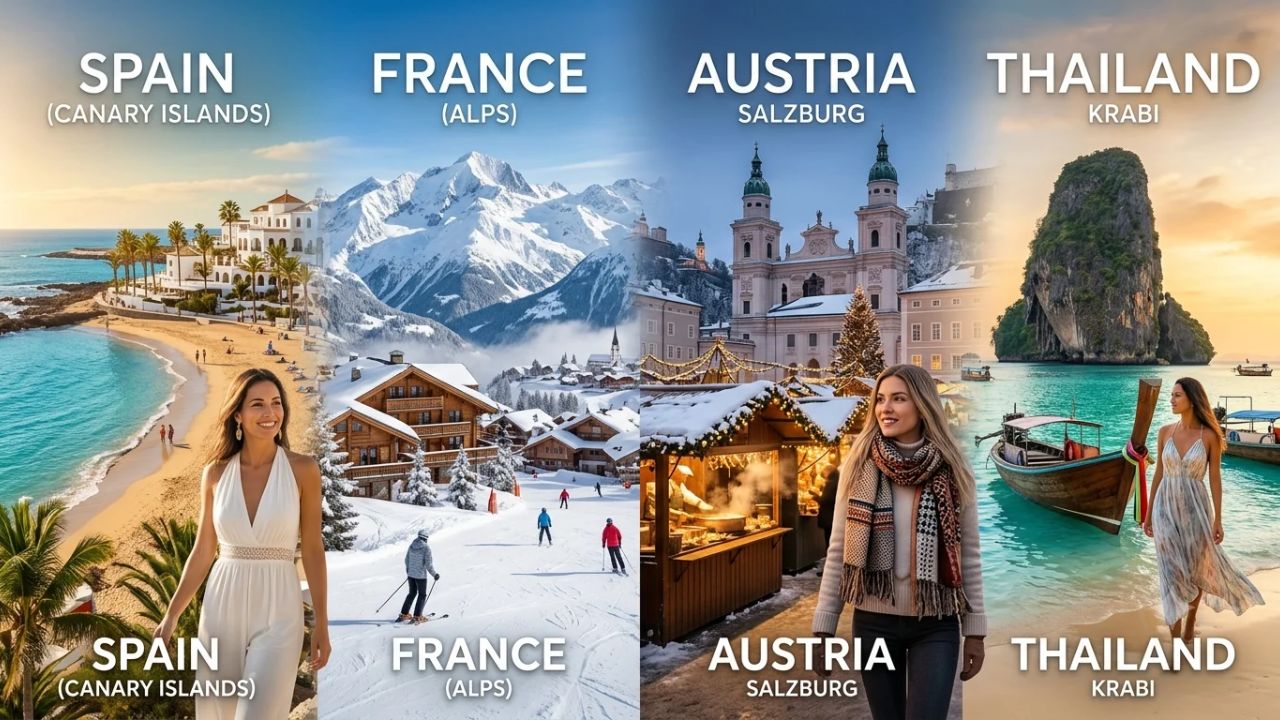
MADRID, November 4, 2026 — Driven by accelerating shifts in European travel habits, climatic adaptation, and unprecedented demand for dual-season holiday escapes, Spain has captured the undisputed number-one position in global winter tourist arrivals, headlining an international travel surge alongside France, Austria, and Thailand. As sub-zero temperatures and brief daylight hours descend across Northern Europe, North America, and Northeast Asia, millions of travellers are mobilizing in search of two distinct holiday experiences: reliable sub-tropical warmth and snow-sure alpine adventures. International booking registries and national civil aviation data confirm that the December-to-February travel quarter has transformed from a secondary shoulder period into a high-yield commercial juggernaut, generating record hotel occupancies, expanded long-haul flight networks, and substantial off-peak economic growth.
The changing patterns of global tourism demonstrate a profound structural evolution. Rather than concentrating their leisure expenditures exclusively within the congested midsummer months, consumers are spreading their annual holiday allocations across the winter calendar. Spain leads this worldwide migration by pairing the eternal spring of the Canary Islands with the cultural richness of southern Andalusia and its cosmopolitan capitals. France secures second place by orchestrating a balanced winter portfolio of legendary high-altitude ski domains and Parisian cultural elegance. Austria ranks third with the highest winter tourism density on earth, turning Tyrolean alpine valleys and Viennese imperial squares into centers of seasonal celebration. Meanwhile, Thailand commands fourth place as Southeast Asia’s premier tropical sanctuary, welcoming millions of long-haul visitors during its pristine dry-season peak.
========================================================================================
GLOBAL WINTER TOURISM ARRIVALS LEADERBOARD (DECEMBER - FEBRUARY)
========================================================================================
  [RANK 1] SPAIN     --> 18–20M Arrivals | Primary Driver: Canary Sun & Andalusian Culture
  [RANK 2] FRANCE    --> 16–18M Arrivals | Primary Driver: French Alps & Parisian Heritage
  [RANK 3] AUSTRIA   --> 14–16M Arrivals | Primary Driver: High-Density Skiing & Advent Markets
  [RANK 4] THAILAND  --> 10–12M Arrivals | Primary Driver: Peak Dry Season Island Escapes
========================================================================================
Strategic Key Indicators for the Global Winter Travel Surge
- Bifurcated Seasonal Demand: Global travelers have divided winter leisure spending into two primary categories: warm-weather sun escapes (Spain and Thailand) and guaranteed alpine snow sports (France and Austria).
- Macro Climate Realignment: Scorching summer heatwaves across the Mediterranean have prompted millions of European vacationers to shift their primary leisure journeys into the cooler, milder November-to-March window.
- Canary Islands Economic Engine: Generating more than half of Spain’s winter foreign exchange, the archipelago’s sub-tropical maritime climate provides uninterrupted beach tourism while the European mainland freezes.
- Alpine Technological Innovation: Massive investments in eco-conscious snowmaking infrastructure, high-speed lift interconnectedness, and glacier conservation ensure operational viability for high-altitude ski resorts in Savoie, Haute-Savoie, and Tyrol.
- Aviation Network Pivot: Major global airlines and charter operators have aggressively redeployed aircraft capacity from summer Mediterranean routes toward long-haul tropical corridors and specialized winter sports gateways.
The Bifurcation of Winter Travel: Macro Trends Reshaping the Global Off-Peak Season
The worldwide expansion of winter travel reflects a fundamental transformation in consumer psychology and macroeconomic planning. Historically, the global hospitality industry operated on an asymmetrical model: summer holidays generated the overwhelming majority of annual revenues, while winter served as a prolonged low-occupancy operational trough characterized by seasonal resort closures, staff redundancies, and discounted domestic pricing. Over the past five years, that conventional dynamic has unraveled. The primary catalyst is climatic. As midsummer temperatures across Southern Europe and the Middle East routinely eclipse 40 degrees Celsius, intense heatwaves have compromised the physical comfort of traditional July and August beach vacations, driving travelers to reconsider when and where they travel.
At the same time, the institutionalization of hybrid work arrangements across corporate sectors in North America and Western Europe has decoupled travel from rigid school holidays. Independent professionals, semi-retirees, and digital nomads now routinely undertake multi-week "winter migrations," relocating temporarily to warmer climes or alpine hubs where they can combine productive workdays with outdoor recreation. This lifestyle transition has created an affluent demographic of extended-stay travelers whose economic contributions far exceed those of traditional one-week summer tourists.
This macroeconomic realignment has produced a sharply bifurcated winter marketplace. On one side stands the warm-weather escape market, where tourists travel south to trade freezing rain and dreary overcast skies for ocean swimming, terrace dining, and outdoor recreation in shorts and light linen. On the other side stands the snow-and-festive heritage market, where travelers deliberately embrace the romantic drama of the cold, seeking powder-covered mountain slopes, crackling fireplace hospitality, and centuries-old Christmas markets rich with spiced wine and culinary traditions. By catering masterfully to these distinct psychological desires, the top four ranked countries have constructed resilient, year-round tourism economies.
THE DUAL AXIS OF WINTER TOURIST BEHAVIOR
| Entity / Route | Metrics | Operational Status |
|---|---|---|
| Strategic Dimension | Sun & Warmth Escape Axis | Snow & Heritage Axis |
| Primary Destinations | Spain (Canaries), Thailand | France (Alps), Austria |
| Core Motivation | Physical warmth, sun recharge, | Winter sports athleticism, |
| beach life, terrace dining | festive romance, alpine huts | |
| Average Stay Duration | 10 to 21 Days (Extended stay) | 6 to 9 Days (Intensive break) |
| Primary Accommodations | Coastal resorts, rental villas | Alpine ski-in chalets, |
| and urban boutique hotels | historic city center hotels | |
| Transport Dependency | Direct long-haul/island air | Rail networks & regional ski |
| connections and ferries | transfer flight corridors |
Spain's Subtropical Dominance: The Canary Islands Microclimate and Andalusian Urban Renaissance
Holding the top position with an estimated 18 to 20 million winter arrivals between December and February, Spain demonstrates the power of geographical diversity. While the continental landmass of Northern and Central Europe endures damp cold, Spain provides two distinct winter ecosystems that appeal directly to international travelers: the sub-tropical maritime warmth of the Canary Islands archipelago and the temperate, sunlit cultural corridors of mainland Andalusia.
========================================================================================
SPAIN'S WINTER TOURISM GEOGRAPHY & ARRIVAL DISTRIBUTION
========================================================================================
  [CANARY ARCHIPELAGO]   --> Tenerife, Gran Canaria, Lanzarote, Fuerteventura (55% Share)
  [ANDALUSIAN CORRIDOR]  --> Seville, Málaga, Granada, Córdoba (25% Share)
  [METROPOLITAN HUBS]    --> Madrid & Barcelona Cultural Circuits (15% Share)
  [BALEARIC & LEVANTE]   --> Cycling, Hiking, Active Senior Winter Retreats (5% Share)
========================================================================================
The Canary Islands, positioned in the Atlantic Ocean off the coast of northwestern Africa, operate as Europe's sole domestic warm-weather winter sanctuary. Governed by prevailing northeast trade winds and the moderating influence of the Canary Current, islands such as Tenerife, Gran Canaria, Lanzarote, and Fuerteventura enjoy daytime temperatures consistently ranging between 21 and 25 degrees Celsius throughout December, January, and February. For British, German, Scandinavian, and French holidaymakers, this geographical reality makes the archipelago an incomparable asset: a destination reachable via a direct four-hour flight within the European common aviation area that requires no visas, currency exchanges, or invasive time-zone adjustments.
In Southern Tenerife, coastal enclaves like Costa Adeje, Playa de las Américas, and Los Cristianos report winter hotel occupancy rates exceeding 88%. Visitors enjoy ocean sailing, whale-watching excursions, championship golf courses, and open-air dining along oceanfront promenades while their home countries face freezing conditions. On Gran Canaria, the sweeping sand dunes of Maspalomas and the protected coves of Mogán provide tranquil retreats for mature travelers and young families alike. The winter season also stimulates active adventure travel: hikers ascend into the volcanic caldera of Mount Teide, cyclists tackle steep alpine gradients across the island spines, and windsurfers take advantage of consistent trade winds along the eastern shorelines.
Simultaneously, mainland Spain’s southern autonomous community of Andalusia experiences an extraordinary winter urban renaissance. Cities like Seville, Córdoba, Granada, and Málaga, which frequently suffer from oppressive summer temperatures exceeding 42 degrees Celsius, become pleasant destinations during the winter months. Daytime temperatures in Seville hover around a comfortable 18 degrees Celsius with abundant sunshine, creating optimal conditions for walking tours through the Barrio de Santa Cruz, visits to the historic Alcázar palace complex, and outdoor tapas dining along the Guadalquivir riverbanks.
In Granada, winter visitors experience a spectacular geographical juxtaposition: exploring the majestic Moorish courtyards of the Alhambra Palace in the morning against a backdrop of snow-capped Sierra Nevada peaks, then driving just thirty minutes to ski at the southernmost alpine resort in Europe, or traveling one hour south to enjoy seafood on the subtropical Costa Tropical. Complementing these regional assets, Spain’s high-speed rail network (AVE and private operators Iryo and Ouigo) seamlessly connects Andalusia to Madrid and Barcelona, allowing international travelers to combine world-class museum exhibitions at the Prado and Reina Sofía with southern architectural marvels in a single journey, completely free from the exhausting queues of summer.
France's Dual-Engine Mastery: Interconnected Alpine Domains and Parisian Winter Elegance
Capturing the second position globally with 16 to 18 million winter arrivals, France deploys a balanced dual-engine tourism model that unites two of the world's most recognizable travel brands: the high-altitude ski fields of the French Alps and the timeless cultural allure of winter Paris. By delivering world-class winter sporting infrastructure alongside unparalleled urban sophistication, France captures both adrenaline-seeking athletes and discerning cultural wanderers.
========================================================================================
FRANCE'S WINTER PORTFOLIO: ALPINE SPORT VS. URBAN SOPHISTICATION
========================================================================================
  [THE NORTHERN ALPS]    --> Les Trois Vallées (Courchevel, Méribel, Val Thorens)
                             Espace Killy (Val d'Isère, Tignes) & Chamonix Mont-Blanc
  [THE HIGH-ALTITUDE EDGE]--> Glacier skiing above 3,000m ensuring snow reliability
  [THE CAPITAL ENGINE]   --> Paris: Winter lights, museum retrospectives, Haute Cuisine
  [TRANSIT INTEGRATION]  --> Direct TGV high-speed rail linking Paris to Alpine valleys
========================================================================================
The French Alps, spanning the departments of Savoie, Haute-Savoie, and Isère, represent the undisputed summit of the global winter sports industry. French ski domains are defined by their vast scale and seamless engineering. Rather than isolating individual mountains, French ski planners pioneered the concept of interconnected megadomains. Les Trois Vallées, comprising Courchevel, Méribel, and Val Thorens, forms the largest linked ski area in the world, offering more than 600 kilometers of interconnected ski runs serviced by nearly two hundred high-speed cable cars and chairlifts, all accessible on a single digital lift ticket.
High altitude provides French alpine resorts with an immense competitive advantage over lower-elevation destinations across Europe. With villages like Val Thorens situated at 2,300 meters and skiable terrain reaching above 3,200 meters, French resorts guarantee reliable snow cover from late November through early May. In prestige destinations like Courchevel 1850 and Megève, luxury hospitality reaches its absolute pinnacle. Wealthy international visitors from North America, the Gulf States, and across Europe occupy five-star palace hotels, ski-in luxury chalets, and Michelin-starred alpine restaurants that serve refined reinterpretations of traditional Savoyard gastronomy, including truffle-infused fondues, tartiflette, and Beaufort cheeses.
Simultaneously, Paris operates as a magnetic cold-weather city destination. During winter, the French capital sheds the chaotic tour-bus congestion of the midsummer Olympics period and reclaims its intimate, contemplative character. The city’s famous boulevards glow with elaborate holiday illuminations, from the glittering displays along the Avenue des Champs-Élysées and Boulevard Haussmann to the historic gas-lit lanterns of Saint-Germain-des-Prés. Major institutions like the Musée du Louvre, the Musée d'Orsay, and the Centre Pompidou launch their most prestigious annual art retrospectives during the winter quarter, drawing art connoisseurs who can view masterpieces in quiet contemplation.
The brilliance of France’s winter tourism model lies in its operational transport integration. Through the state-owned SNCF rail operator, high-speed TGV trains depart Paris Gare de Lyon several times daily, transporting passengers directly into alpine valley hubs such as Chambéry, Albertville, and Bourg-Saint-Maurice in less than four and a half hours. This rail corridor enables international holidaymakers to land at Paris Charles de Gaulle Airport, spend three nights immersing themselves in Parisian culinary culture and art, board an electric train through the French countryside, and arrive at the base of an alpine ski domain for four days of world-class skiing, all without hiring a car or boarding an expensive connecting flight.
Austria's Alpine Density: High-Yield Winter Sports and Imperial Advent Tradition
Ranking third with an estimated 14 to 16 million winter arrivals, Austria exhibits the highest winter tourism density on the planet. In Austria, winter tourism is not merely a seasonal commercial sector; it is a fundamental pillar of national identity, cultural expression, and macroeconomic stability. Across mountainous federal provinces like Tyrol, Salzburg, and Vorarlberg, winter tourism accounts for more than half of all annual overnight stays and represents a vital economic driver for remote alpine valleys.
AUSTRIA'S WINTER TOURISM ARCHITECTURE
| Entity / Route | Metrics | Operational Status |
|---|---|---|
| Province / City | Primary Attraction | Distinctive Market Strength |
| Tyrol | St. Anton am Arlberg, Kitzbühel, | Legendary freeride skiing, high- |
| Ischgl, Sölden | tech cable cars, vibrant après-ski | |
| Salzburg | Skicircus Saalbach Hinterglemm, | Family-friendly mega-circuits, |
| Zell am See-Kaprun glacier | alpine thermal wellness spas | |
| Vorarlberg | Lech Zürs am Arlberg, Montafon | Exclusive luxury chalets, deep |
| natural powder, heritage farmsteads | ||
| Vienna | Imperial Christmas Markets, | Unmatched Advent atmosphere, |
| Opera & Philharmonic Concerts | historic coffeehouse culture |
Austria’s mountain resorts have perfected the art of alpine hospitality (Gemütlichkeit). Unlike the purpose-built concrete architectural styles that characterized some mid-century French developments, Austrian ski centers developed directly out of historic farming hamlets. Destinations like Kitzbühel, St. Anton am Arlberg, and Lech Zürs feature timber-and-stone chalets, church steeples, and family-owned guesthouses where generations of the same family have welcomed guests for over a century. On the slopes, this hospitality manifests in hundreds of mountain huts (Almhütten), where skiers stop to enjoy hearty Tyrolean fare such as Tiroler Gröstl (sautéed beef, potatoes, and fried egg), warm Kaiserschmarrn (shredded caramelized pancake dusted with powdered sugar), and steaming cups of Glühwein.
Austrian mountain infrastructure also represents the pinnacle of global cable-car engineering. Working in close collaboration with domestic manufacturing powerhouses like Doppelmayr, Austrian lift operators have invested billions of euros in modernizing their uphill systems. Skiers ride in heated, enclosed gondolas equipped with Wi-Fi and panoramic glass floors, transporting thousands of skiers per hour and virtually eliminating lift lines. To counteract natural snowfall fluctuations, Austrian ski corporations have developed sophisticated, environmentally managed reservoir systems that power automated snowmaking networks, ensuring dependable surface conditions across lower valley runs from early December through Easter.
In the urban sphere, Austria’s historic cities capture immense cultural traffic during the Advent and winter concert seasons. Vienna becomes a winter wonderland anchored by historic Christmas markets (Christkindlmärkte). The grand square in front of the neo-Gothic City Hall (Rathausplatz), the imperial courtyards of Schönbrunn Palace, and the cobblestone lanes of the Spittelberg district fill with artisan wooden stalls selling handcrafted glass ornaments, beeswax candles, and roasted chestnuts. Inside Vienna’s grand concert halls, the Vienna Philharmonic and the Vienna State Opera present legendary winter seasons that draw music lovers from around the globe. In Salzburg, the birthplace of Mozart, winter snow covers the Hohensalzburg Fortress while seasonal choral performances echo through baroque cathedrals, cementing Austria’s status as Europe's premier winter cultural destination.
Thailand's Tropical Monopoly: Dry Season Escapes and Southeast Asia's Premier Sun Hub
Rounding out the top four with an estimated 10 to 12 million winter arrivals, Thailand stands as the leading long-haul tropical destination for international travelers escaping northern winters. While Mediterranean, European, and North American destinations wrestle with frost, freezing rain, and grey skies, Thailand enters its annual climatological "sweet spot." Between November and February, the northeast monsoon brings cool, dry continental air across the Indochina peninsula, producing low humidity, brilliant sunshine, calm turquoise ocean waters, and pleasant nighttime temperatures averaging 24 degrees Celsius.
========================================================================================
THAILAND'S WINTER SUN ARSENAL: REGIONAL DIVERSITY & PRODUCT APPEAL
========================================================================================
  [ANDAMAN COAST]     --> Phuket, Krabi, Koh Phi Phi, Khao Lak (World-class diving & beaches)
  [GULF ARCHIPELAGO]  --> Koh Samui, Koh Phangan, Koh Tao (Luxury villas & calm waters)
  [NORTHERN HIGHLANDS]--> Chiang Mai & Chiang Rai (Misty mountain retreats & temple culture)
  [METROPOLITAN CORE] --> Bangkok (Gastronomy, riverfront luxury, mega-shopping festivals)
  [LONG-HAUL VALUE]   --> Exceptional price-to-quality ratio across all hospitality tiers
========================================================================================
For travelers departing from Northern Europe, the United Kingdom, Scandinavia, and North America, Thailand offers a compelling value proposition. While long-haul airfares can be significant, local hospitality and daily living costs remain competitive compared to Western luxury retreats. A budget that might secure a modest three-star hotel room in an alpine ski resort buys an expansive private pool villa overlooking the Andaman Sea, complete with personalized concierge service, world-class Thai spa therapies, and fresh seafood dining.
Phuket, Thailand’s largest island, operates as the primary commercial engine of this winter influx. Phuket International Airport welcomes hundreds of direct international charter and scheduled flights weekly from hubs like London, Frankfurt, Paris, Stockholm, Doha, Dubai, and Singapore. Across west-coast beaches like Bang Tao, Surin, and Kamala, international five-star resorts achieve near-total occupancy throughout the December-to-February corridor. Luxury superyachts drop anchor in the sheltered bays of the Andaman Sea, embarking on cruises through the limestone karst formations of Phang Nga Bay and the crystal-clear diving waters of the Similan and Surin Islands national marine parks.
Across the mainland peninsula in the Gulf of Thailand, Koh Samui attracts a sophisticated wellness and leisure audience. Properties perched on the cliffs of Chaweng Noi and Bophut provide holistic wellness programs, yoga immersions, and detox retreats that appeal directly to health-conscious winter travellers seeking to reset after a demanding corporate year. For more active explorers, Krabi’s dramatic limestone cliffs at Railay Beach offer world-renowned rock climbing, while Koh Tao serves as the preeminent scuba diving certification center of Southeast Asia.
Beyond coastal relaxation, winter visitors gravitate toward the cultural and culinary treasures of northern and central Thailand. In Bangkok, comfortable dry-season weather encourages walking tours through the Grand Palace, canal boat journeys along the Chao Phraya River, and visits to Michelin-starred street food stalls in Chinatown. In the northern highlands of Chiang Mai and Chiang Rai, cool morning mists blanket forested mountains, providing pleasant conditions for temple explorations, ethical elephant sanctuary visits, and artisan craft shopping. The warmth and hospitality of the Thai people, encapsulated in the national philosophy of sanuk (finding joy in everyday life), creates a welcoming atmosphere that transforms first-time winter visitors into lifelong annual returnees.
Comparative Global Arrival & Economic Metrics Table
The following comparative matrix synthesizes the operational, demographic, and financial dynamics that define the top four winter tourism powerhouses in 2026:
GLOBAL WINTER TOURISM BENCHMARKING MATRIX (2026 SEASON)
| Country Metric | Spain | France | Austria | Thailand |
|---|---|---|---|---|
| Est. Winter | 18.0 – 20.0 | 16.0 – 18.0 | 14.0 – 16.0 | 10.0 – 12.0 |
| Arrivals (M) | Million | Million | Million | Million |
| Primary Feeder | UK, Germany, | UK, Netherlands, | Germany, CEE, | Russia, UK, China, |
| Markets | France, Nordics | Belgium, US, Gulf | UK, Switzerland | Germany, Australia |
| Average Stay | 9.4 Days | 7.2 Days | 6.8 Days | 14.6 Days |
| Duration | (Canaries: 12.1d) | (Alps: 7.5d) | (Tyrol: 7.1d) | (Islands: 16.2d) |
| Primary Travel | Sub-tropical sun, | High-altitude ski, | Alpine ski sports, | Tropical dry sun, |
| Archetype | urban architecture | Parisian heritage | Advent culture | diving & wellness |
| Transport | Intra-EU low-cost | High-speed TGV | Nightjet rail, ski | Long-haul direct |
| Backbone | & charter air | & Geneva flights | transfers, autobahn | & Gulf hub bridges |
| Avg. Daily Spend | €168 | €225 | €195 | €142 |
| Per Visitor | ($182 USD) | ($244 USD) | ($211 USD) | ($154 USD) |
| Key Climatic | 20°C to 24°C | -5°C to 2°C (Alps) | -6°C to 1°C (Alps) | 28°C to 32°C |
| Profile | (Canary Islands) | 5°C to 9°C (Paris) | 2°C to 6°C (Vienna) | (Low humidity) |
This performance data underscores how different market structures produce distinct economic benefits. While France and Austria command higher average daily spending driven by premium ski equipment rentals, mechanical lift passes, and luxury mountain lodging, Spain and Thailand benefit from significantly longer lengths of stay. The extended duration of winter stays in the Canary Islands and Thai beach resorts generates continuous, reliable revenue streams for residential landlords, local grocery markets, private transport services, and neighborhood restaurants, sustaining local economies throughout months that were once commercially dormant.
Aviation and Rail Dynamics: The Logistics of Winter Mass Mobility
The realization of these massive arrival figures requires intricate, highly coordinated transportation logistics. Moving tens of millions of international holidaymakers across continents during the most weather-compromised months of the year demands careful planning across airlines, airport operators, rail systems, and maritime authorities.
In the aviation sector, European low-cost carriers such as Ryanair, easyJet, Jet2, and Vueling execute an annual fleet redeployment each November. Aircraft that spend the summer flying sunbathers from London, Manchester, and Berlin to the Balearic Islands and Greek archipelagos are shifted to winter sun corridors connecting Northern Europe to Tenerife South, Gran Canaria, Lanzarote, and Fuerteventura. Simultaneously, airlines launch seasonal "ski flights" connecting secondary British and Scandinavian cities directly to specialized alpine gateway airports, including Geneva, Chambéry, Lyon, Grenoble, Innsbruck, and Salzburg. On peak winter Saturdays, airports like Geneva and Innsbruck operate at absolute runway and terminal capacity, handling aircraft arrivals every two minutes while ground crews manage complex de-icing procedures and transport thousands of ski bags and snowboards.
========================================================================================
LOGISTICAL CHANNELS ENABLING WINTER TOURISM MOBILITY
========================================================================================
  [AVATION REDEPLOYMENT] --> Summer Mediterranean fleets shifted to Canaries and Alps
  [ALPINE AIR CORRIDORS] --> Geneva, Innsbruck, Salzburg, Lyon handle peak weekend ski hops
  [SUSTAINABLE NIGHTJET] --> ÖBB sleeper trains connect Vienna/Tyrol with Germany & Benelux
  [TGV ALPINE ARTERIES]  --> Paris Gare de Lyon connects directly to Savoie valley ski hubs
  [LONG-HAUL AIR BRIDGES]--> Direct European/North American flights to Bangkok and Phuket
========================================================================================
At the same time, rail travel is experiencing a renaissance as an environmentally conscious, weather-resilient alternative for winter transit. Austria’s federal railway operator, ÖBB, has led this movement through the aggressive expansion of its Nightjet sleeper train network. Passengers boarding in Amsterdam, Brussels, Hamburg, or Berlin can sleep in private couchette compartments and wake up directly at alpine stations in Tyrol, Vorarlberg, or Salzburg, avoiding icy highway driving and airport security lines. In France, high-speed TGV corridors provide swift, low-carbon connections between metropolitan centers and alpine foothills, transporting skiers directly to waiting resort shuttles.
For long-haul travel to Thailand, winter capacity is driven by the expansion of direct scheduled flights and the operations of Middle Eastern mega-hub carriers. Airlines such as Emirates, Qatar Airways, and Etihad operate numerous daily wide-body flights connecting hundreds of European and North American cities through Dubai, Doha, and Abu Dhabi directly into Bangkok and Phuket. In addition, European carriers like Lufthansa, British Airways, Finnair, and Scandinavian Airlines (SAS) expand seasonal nonstop services to Thailand to capture lucrative winter leisure demand. The result is a smooth transit pipeline that delivers travelers directly from frozen northern cities into the tropical warmth of Southeast Asia.
Environmental Pressures and Climate Realities: Adaptation Across Sun and Snow
Despite these impressive arrival numbers, the surge in winter tourism brings notable environmental and social challenges. Both warm-weather sanctuaries and alpine mountain ecosystems are vulnerable to climate disruption, necessitating proactive policy interventions to ensure long-term sustainability.
In the European Alps, rising average winter temperatures represent an ongoing challenge for low- and mid-altitude ski resorts. Below 1,500 meters, natural snowfall has become increasingly unpredictable, forcing ski domain operators to invest heavily in mechanical snowmaking. While contemporary snow cannons utilize clean water and air without chemical additives, the construction of high-altitude water storage reservoirs and the energy required to pump water up mountain slopes have sparked environmental debates across France and Austria. In response, resorts are increasingly powering snow systems with local renewable energy, including mountain hydro plants and high-altitude solar arrays, while focusing on summer environmental restoration to protect delicate alpine meadows from erosion.
In sunny destinations like the Canary Islands, the primary challenge stems from carrying capacity and local community well-being. The sustained influx of millions of winter tourists places immense pressure on municipal freshwater supplies, waste management infrastructure, and energy grids on volcanic islands with limited natural resources. Compounding this strain, the rapid growth of short-term vacation rentals has constrained housing supply in urban centers like Santa Cruz de Tenerife and Las Palmas de Gran Canaria, leading to rising rental rates for local hospitality employees and civic protests calling for sustainable tourism management. Regional governments have responded by introducing stricter licensing regulations for holiday homes, establishing visitor carrying-capacity limits for sensitive natural areas like Mount Teide National Park, and requiring tourism properties to fund regional conservation initiatives.
In Thailand, the intense concentration of winter visitors in coastal marine environments has prompted the Department of National Parks, Wildlife and Plant Conservation to enforce strict environmental protections. Following the successful ecological regeneration of Maya Bay in the Phi Phi archipelago—which was closed to tourists for several years to allow coral reefs and blacktip reef shark populations to recover—authorities have instituted seasonal closures, daily visitor caps, and bans on single-use plastics and harmful chemical sunscreens across all national marine parks. By balancing tourist access with ecological conservation, destination managers aim to safeguard the natural beauty that attracts global travelers in the first place.
Strategic Industry Outlook: The Future of Four-Season Destination Management
As destinations adapt to changing global travel patterns, national tourism authorities—including Turespaña in Spain, Atout France, Österreich Werbung in Austria, and the Tourism Authority of Thailand (TAT)—are revising their operational strategies. The historic obsession with setting annual records for raw arrival numbers is gradually being replaced by more sophisticated metrics: spending yield per visitor day, off-peak seasonal dispersion, carbon efficiency per passenger kilometer, and community satisfaction indicators.
========================================================================================
STRATEGIC TRANSFORMATION IN WINTER DESTINATION MANAGEMENT
========================================================================================
  [FROM VOLUME TO VALUE]  --> Prioritizing per-day tourist yield over aggregate headcount
  [GEOGRAPHIC DISPERSION]--> Directing coastal & alpine crowds into rural, inland villages
  [CARBON EFFICIENCY]    --> Expanding electric rail, green lodging, and solar microgrids
  [HERITAGE PROTECTION]  --> Preserving local foodways, artisan crafts, and civic spaces
  [YEAR-ROUND RESILIENCE]--> Transitioning single-season operations into 365-day models
========================================================================================
For Spain, the strategic focus centers on using winter momentum to encourage visitors to explore lesser-known inland destinations across Extremadura, Castilla-La Mancha, and rural Andalusia, relieving pressure on coastal resorts while spreading economic benefits to depopulated rural areas. For France and Austria, destination managers are positioning mountain resorts as four-season alpine wellness sanctuaries, ensuring that investments in cable cars, hotels, and restaurants deliver commercial returns across all twelve months of the year through summer hiking, mountain biking, and nature retreats.
For Thailand, the winter strategy focuses on encouraging visitors to extend their stays beyond the beaches to discover the rich cultural traditions, culinary diversity, and wellness practices of secondary provinces like Nan, Pai, and Phetchaburi. By incentivizing longer stays and higher-value experiences, tourism authorities help ensure that the financial rewards of the winter travel season flow directly to family-owned farms, independent restaurateurs, and local guide cooperatives.
Practical Field Guide for Winter Travellers
For travelers planning a getaway during the peak winter travel window between December and February, strategic preparation can transform a good trip into an exceptional experience. The following recommendations provide practical guidance for navigating the global winter travel surge:
PRACTICAL FIELD PROTOCOL: NAVIGATING THE PEAK WINTER SEASON
| Category / Entity | Details / Impact |
|---|---|
| Planning Factor | Operational Guidance |
| Booking Lead Times | Reserve Canary Island beach villas and high-altitude ski chalets |
| at least 4 to 6 months in advance to avoid steep rate hikes. | |
| Flight Scheduling | Avoid peak Saturday travel days in alpine corridors; choose |
| Tuesday or Wednesday departures to secure lower fares and seats. | |
| Rail Integration | Utilize European rail passes and Nightjet sleeper services to |
| connect cultural city breaks directly with alpine mountain hubs. | |
| Dual-Climate Gear | Pack lightweight merino wool layers, breathable shells, and UV |
| protection suitable for both mountain heights and sunny shores. | |
| Marine Etiquette | When visiting Thailand or the Canaries, use reef-safe mineral |
| sunscreen and respect designated carrying-capacity limits. |
Travelers heading to alpine resorts in France or Austria should monitor snow conditions using dedicated high-altitude webcams and purchase multi-day lift passes online in advance to benefit from dynamic pricing discounts. When selecting accommodations, choosing ski-in/ski-out properties or lodging situated adjacent to electric ski bus routes eliminates the logistical headache of navigating snowy mountain roads in rental vehicles.
For those journeying south to the Canary Islands or Thailand, booking table reservations at top regional restaurants and securing permits for protected nature preserves—such as the Teide cable car in Tenerife or diving permits for the Similan Islands—well before arrival is essential. By approaching winter travel with thoughtful planning and environmental awareness, visitors can enjoy the very best that these world-leading destinations have to offer, discovering why the winter season has become the most exciting travel window of the year.
Related Travel Guides and Analysis
- Tunisia Asian Tourism Expansion and UNESCO Heritage Strategy (2026)
- Dominica 48th Independence and Creole Heritage Tourism Resilience
- Marriott Luxury Resorts Unveil 2026 Festive Season Across the Americas
- Puerto Rico and Grenada Lead Caribbean Island Getaways for 2027
- Cape Town Table View Beachfront Coastal Upgrade and Sustainable Tourism
- Ultra-Luxury World Cruises Economics and Land Travel Cost Comparison
- Thailand Tourism Slowdown and High-Value Community Travel Strategy
This article is for informational purposes. Flight routes, passenger regulations, visa rules, and transit advisories are subject to change by airlines and aviation authorities. Readers are advised to verify schedules and travel documentation with relevant carriers and border agencies before departure.
Related Stories

Thailand Tourism Slowdown Tests Small Businesses as Kingdom Pivots to High-Yield Travel and Secondary Provinces

Spain and France Lead Global Winter Tourism Rankings 2026 as Seasonal Travel Shifts