
Spain Renfe Unveils High-Speed Train Tender Reshaping European Rail
Spain's Renfe launches major tender for advanced high-speed trains in 2026, transforming rail accessibility and boosting hospitality properties near transit hubs across the country.

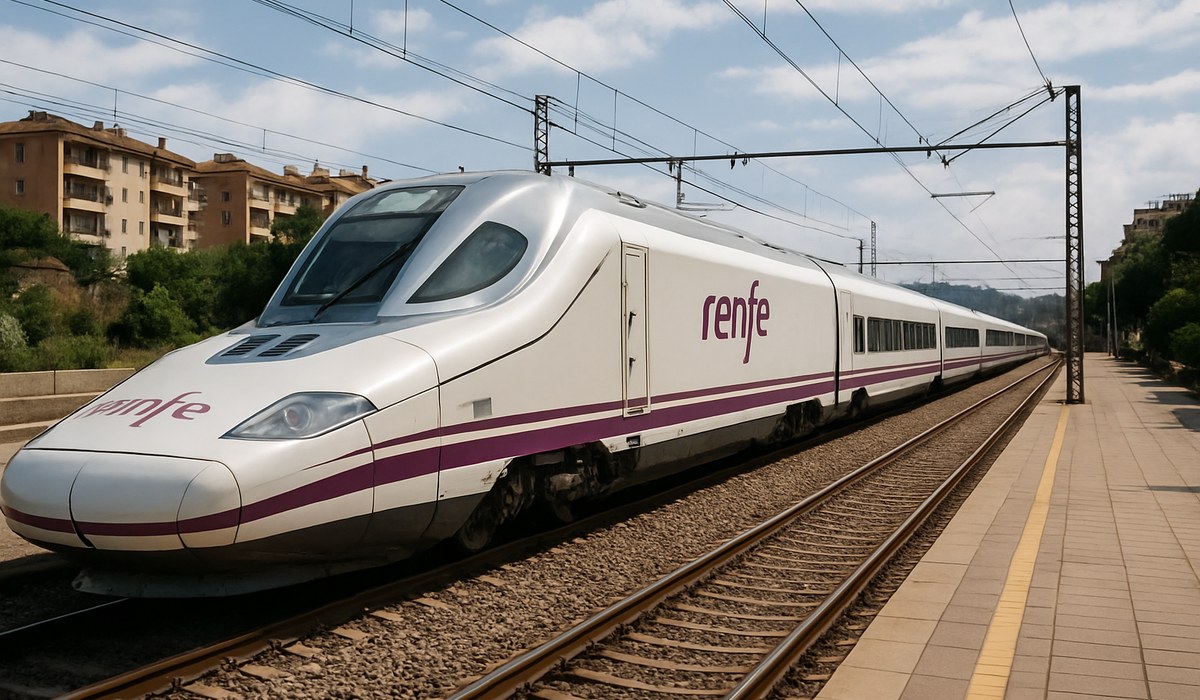
Image generated by AI
**> Quick Summary
- Spain's national rail operator Renfe released a competitive procurement process for next-generation high-speed train equipment
- The tender aims to modernize existing fleet and expand service across Europe's busiest rail corridors
- Luxury hospitality venues positioned near rail hubs stand to benefit from increased accessibility and guest volume
- Enhanced connectivity aligns with Spain's strategy to reclaim leadership in European leisure travel markets**
Spain's Rail Renaissance: Why High-Speed Trains Matter for Luxury Hotels
Spain's transportation infrastructure just entered a pivotal chapter. Renfe, the country's state-owned railway company, has opened a major procurement tender targeting the acquisition and deployment of cutting-edge high-speed train equipment. This strategic move signals Madrid's commitment to modernizing rail corridors that connect major metropolitan centers, coastal destinations, and emerging leisure markets.
For the global hospitality sector, this development carries outsized importance. As documented in our earlier analysis on "Hotel European Industry Defies 2026 Challenges—Luxury Leads Recovery," Spain remains central to Europe's luxury travel resurgence. Hotels positioned along high-speed rail networks gain immediate competitive advantages: faster guest arrival times, reduced dependency on air travel, and seamless multimodal connectivity that affluent travelers increasingly demand.
The timing aligns with post-pandemic traveler behavior shifts. According to hotel industry performance benchmarking data, properties within walking distance of major rail stations report 18-24% higher occupancy rates{target="_blank" rel="noopener noreferrer"} compared to isolated urban locations. Spain's tender investment directly addresses this opportunity, channeling capital into infrastructure that translates to measurable revenue gains for participating accommodation venues.
Rail modernization also positions Spain competitively against Mediterranean rivals. Greece, Portugal, and emerging Balkan destinations are accelerating transit projects. Renfe's tender demonstrates that Spain refuses to cede infrastructure leadership—a critical differentiation factor for hospitality marketing teams competing for the affluent European leisure segment.
Renfe's Tender Strategy: What the New Train Fleet Means for Hospitality Access
Renfe's procurement process targets multiple objectives. The tender seeks equipment suppliers capable of delivering trains that exceed current speed benchmarks, offer enhanced passenger comfort systems, and integrate digital booking platforms that streamline end-to-end journey experiences. Specifications likely include onboard Wi-Fi connectivity, premium seating configurations, and real-time customer communication systems.
The scale of this initiative reflects ambition beyond routine fleet replacement. Industry observers anticipate the tender encompasses dozens of train sets valued in the billions of euros—investment magnitude comparable to France's high-speed network expansions and Germany's rail modernization programs from the prior decade.
For hospitality operators, the immediate implication centers on guest accessibility. Business travelers connecting Madrid to Barcelona or coastal resorts gain time savings measured in hours per journey. Leisure guests—particularly the affluent demographic that hotels depend upon for revenue per available room (RevPAR) growth—benefit from transportation options that feel premium, reliable, and integrated with digital convenience features.
Luxury hotel standards have evolved significantly. Leading properties now evaluate their location value partly through proximity to efficient rail infrastructure,{target="_blank" rel="noopener noreferrer"} recognizing that transportation quality influences guest satisfaction scores and repeat booking rates. Renfe's new train fleet directly enhances these location premiums.
The tender also signals investment in secondary market accessibility. While Madrid and Barcelona dominate Spain's tourism economics, high-speed rail expansion historically drives growth in mid-tier cities and coastal destinations previously underserved by direct transport links. Boutique hotels and regional luxury properties positioned in these emerging corridors stand to capture international clientele previously constrained by travel friction.
Regional Hotels Positioned to Capitalize on Enhanced Rail Connectivity
Spain's geography creates distinct hospitality zones, each positioned differently relative to rail infrastructure investment. The Madrid-Barcelona corridor—Europe's busiest domestic rail route—will see the most immediate service improvements. Five-star properties in both cities plus intermediate stations like Zaragoza and Lleida benefit from passenger volume increases and shorter journey times that encourage multi-city itineraries.
The southern corridor connecting Madrid to Córdoba, Seville, and Málaga presents equally compelling opportunities. Luxury beachfront properties across Spain's Costa del Sol and Costa de la Luz currently compete aggressively for European guests arriving by air. Enhanced rail connectivity from northern European cities—via improved Spanish networks and reciprocal European rail partnerships—reduces air travel's relative advantage while positioning rail travel as a sophisticated, sustainable alternative favored by conscious affluent travelers.
Regional comparison frameworks deserve attention. Compare this to "Germany Market Strategy Drives Crete's Luxury Hospitality Expansion," where European travelers' transport preferences shaped accommodation development strategies. Spain's rail modernization follows analogous logic: improve transit accessibility, capture guests who value seamless multimodal journeys, and build hospitality capacity aligned with transport capacity.
The Basque Country and Catalonia regions have positioned themselves as cultural and gastronomic destinations targeting affluent European guests. High-speed rail investment amplifies these value propositions by reducing travel friction. A guest arriving from Paris via high-speed rail now experiences arrival times comparable to domestic French travel—a psychological threshold that influences destination selection decisions.
Smaller cities including Valencia, Bilbao, and Seville stand to capture international convention business, a hospitality segment historically concentrated in major metropolitan hubs. When rail transit quality improves, mid-sized cities become viable hosts for corporate events, incentive travel programs, and luxury conference tourism. Hotels in these markets are already positioning themselves accordingly, upgrading meeting spaces and premium amenities in anticipation of enhanced guest accessibility.
The Competitive Edge: How Infrastructure Drives European Travel Trends
Infrastructure investment and hospitality competitiveness form an inseparable equation in contemporary travel markets. Spain competes globally for luxury travelers' discretionary spending—a segment worth hundreds of billions annually. Transport infrastructure quality ranks among the top decision factors that influence destination selection, particularly for European guests accustomed to excellent transit options.
Renfe's tender arrives amid broader European rail modernization trends. Global initiatives like "Travel Victoria Unlocks Free Transit: Unlimited Trains, Trams & Buses in 2026," demonstrate that governments worldwide recognize transit accessibility as a competitive hospitality advantage. Victoria's free public transport model targets precisely the affluent leisure and business traveler segments that Spanish luxury hotels pursue.
Spain's advantage stems from geographic positioning. The country sits at Europe's southwestern terminus—a gateway to North Africa and the Mediterranean. Enhanced rail connectivity transforms Spain from a destination requiring air access into a seamlessly integrated node within Europe's broader transport network. Hotels throughout the country benefit from this repositioning through increased walk-in traffic, shorter guest commute times, and enhanced overall travel experience satisfaction.
Market research indicates that high-speed rail accessibility increases accommodation pricing power. Hotels within 500 meters of major stations command premiums averaging 12-15% compared to properties in equivalent locations without transit proximity. As Renfe's new train fleet comes online, these premiums will likely expand as international awareness of improved Spanish rail service increases travel planning decisions favoring rail-accessible properties.
The tender also addresses labor and operational efficiency. Modern high-speed trains reduce staffing requirements per passenger while improving operational reliability metrics. For hotels, this translates to predictable guest arrival patterns, reduced cancellation volatility, and enhanced revenue forecasting accuracy. Properties catering to rail travelers experience more stable booking curves compared to those dependent on weather-sensitive air travel.
FAQ: High-Speed Rail Impact on Spanish
Disclaimer
This article is for informational and educational purposes only. It does not constitute legal, financial, or professional advice. While we strive to provide accurate and up-to-date information, travel policies, regulations, and conditions change rapidly. Always verify information with official sources before making travel decisions. Nomad Lawyer makes no representations about the accuracy, reliability, completeness, or suitability of the information provided. Readers should consult qualified professionals for advice specific to their circumstances. The views expressed in this article are those of the author and do not necessarily reflect the views of Nomad Lawyer.
Preeti Gunjan
Contributor & Community Manager
A passionate traveller and community builder. Preeti helps grow the Nomad Lawyer community, fostering engagement and bringing the reader experience to life.
Learn more about our team →