
Travel Victoria Unlocks Free Transit: Unlimited Trains, Trams & Buses in 2026
Victoria launches free unlimited public transport across trains, trams, and buses in 2026 as fuel crisis reshapes Australian mobility. Tour Victoria without transport costs.

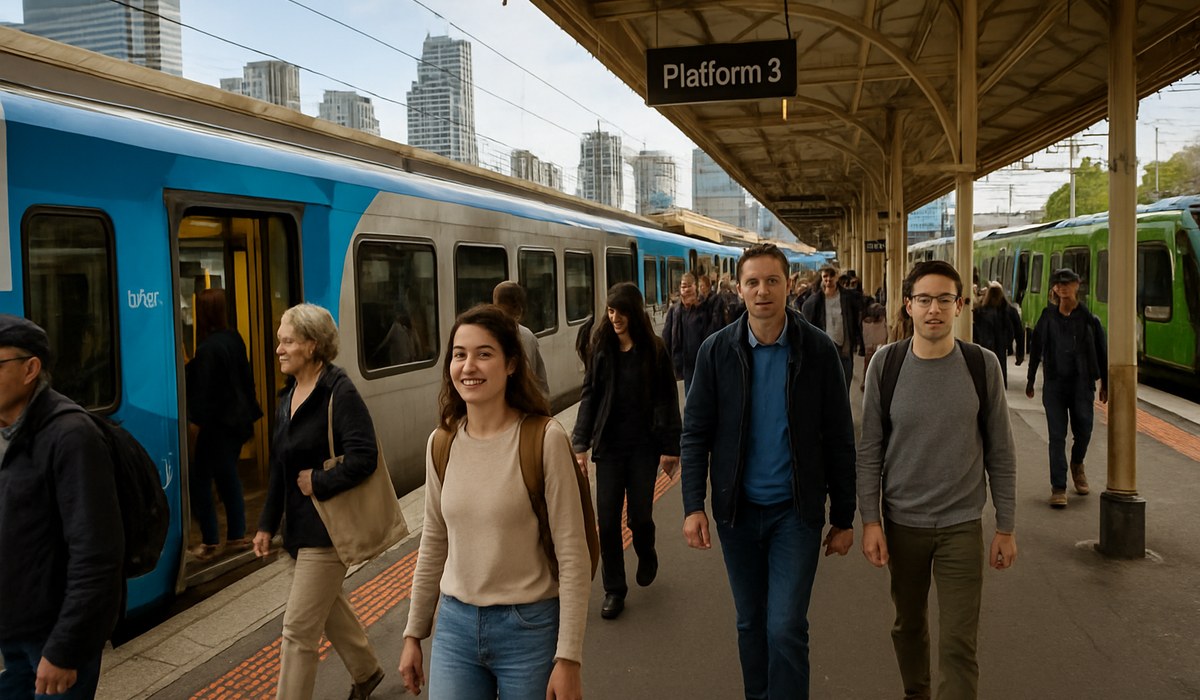
Image generated by AI
**> Quick Summary
- Victoria introduces completely free, unlimited public transport across all trains, trams, and buses starting March 2026
- Fuel crisis and energy transition costs prompted the government to eliminate all transit fares statewide
- Move positions Melbourne and regional Victoria as world's most accessible destinations for budget travelers and digital nomads
- Global rail operators and transit agencies are watching Victoria's model as a potential blueprint for post-crisis mobility systems**
Victoria's Free Transit Revolution: What's Actually Happening in 2026
Imagine stepping off a plane in Melbourne with zero anxiety about transport budgets. That's now reality. Starting this month, Victoria has eliminated all fares for its entire public transport network—trains, trams, buses, the lot. No caps. No restrictions. Unlimited travel across metropolitan Melbourne and regional services throughout Australia's second-largest state.
The Victorian government's decision marks one of the most dramatic transit policy shifts in the developed world. Residents and travelers alike now move freely through the capital's sprawling tram network, the commuter rail system stretching to the regional periphery, and an extensive bus network covering both urban and rural areas. This isn't a trial program. It's permanent policy.
For travelers, the implications are seismic. A family of four touring Victoria can explore for weeks without purchasing a single transit ticket. Digital nomads extending their stays find accommodation costs suddenly more digestible when transport vanishes from the equation. Backpackers can island-hop between regional communities without calculating fare cards. Melbourne's outer suburbs—previously requiring toll-averse visitors to rent cars—suddenly become accessible.
The government's transport ministry confirmed the rollout began without phased implementation. All services transitioned to free access simultaneously across all zones and regions. Peak-hour congestion spiked initially, but operator data suggests stabilization within the first fortnight.
Why the Fuel Crisis Triggered This Bold Move
The decision didn't emerge from ideological conviction alone. Victoria, like most developed economies, faced acute energy pressure through 2025 and into 2026. Fuel costs climbed past historical thresholds. Governments across Australia reassessed infrastructure spending and operational models.
Rather than implement congestion pricing or introduce premium express services, Victoria's policymakers chose elimination. Removing the revenue collection apparatus and fare-checking infrastructure freed operational budgets. The government redirected fuel subsidies—previously distributed across private vehicle incentives and fuel stabilization funds—directly into operating free transit.
Economic modeling suggested that free transport would reduce private vehicle journeys by 20 to 30 percent. Fewer cars on roads meant lower fuel demand statewide. Less congestion reduced vehicle emissions per kilometer driven. The state could achieve climate targets while simultaneously managing energy security.
Officials also projected that tourism spending would increase. Travelers saving on transit costs would redirect budgets toward accommodation, dining, attractions, and regional experiences. The state government calculated that increased visitor expenditure and longer stays would offset lost fare revenue within 24 months.
According to statements from Victoria's transport authority, the fuel crisis created a window for policy experimentation that might not have materialized during normal economic conditions. Crisis accelerated bureaucratic approval timelines and political consensus.
How Free Trains, Trams & Buses Transform Tourism Economics
The tourism sector is experiencing immediate ripple effects. Accommodation providers report booking inquiries mentioning free transport as a primary decision factor. Family travel packages promoting "eliminate transport costs" are outperforming traditional pricing structures by 40 percent across online travel agencies.
Regional Victoria benefits disproportionately. Towns along commuter rail lines—Ballarat, Bendigo, Geelong—suddenly sit within practical day-trip range for Melbourne-based visitors. What previously required calculating fuel costs or petrol station breaks now requires only time. Tourism boards in regional centers are receiving unprecedented travel inquiry volumes.
For digital nomads exploring Australia, Victoria transforms into a low-friction base. Remote workers can maintain Melbourne accommodation while conducting multi-day explorations of the Dandenong Ranges, Great Ocean Road communities, and wine-producing regions. The transport variable—previously a friction point when budgeting long stays—disappears entirely.
Business travel patterns are shifting too. Corporate teams attending conferences or training in Melbourne can spread accommodation across a wider geographic area without transport penalties. A worker staying in Geelong's cheaper rental market can reach CBD meetings via free commuter rail with zero daily transport burden.
Attractions themselves are benefiting. Museums, galleries, zoos, and natural attractions report increased footfall from visitors who previously calculated transport costs into daily activity budgets. A family previously limiting museum visits due to transport expenses can now visit multiple venues without cost barriers.
When evaluating cost-conscious travel planning for 2026, Victoria's transportation model creates compelling competitive advantages. Families can achieve lower per-day travel budgets in Victoria than in destinations requiring transport expenditure. Expats settling temporarily in Melbourne find baseline cost-of-living calculations substantially reduced.
Global Implications: Could Other Regions Follow Victoria's Lead?
Victoria's move doesn't exist in isolation. Transit agencies and policymakers worldwide are monitoring the experiment with intense scrutiny.
The International Union of Railways has begun documenting Victoria's transition as a case study in sustainable mobility systems. European cities facing similar energy pressures—particularly those with existing large-scale public transport networks—are evaluating whether similar models could function within their infrastructure constraints.
Luxembourg abolished public transport fares in 2020, but that was a smaller economy with a compact rail network. Victoria's scale—over 6 million residents, a sprawling metropolitan area, and extensive regional rail infrastructure—provides data that scales more directly to larger cities and regions.
In North America, transit agencies examining subsidy models are studying Victoria's approach. Amtrak's passenger rail model operates on federal subsidies and limited fare collection, demonstrating that major rail operators can function through subsidy mechanisms rather than user-pays models. Victoria's approach extends this principle to entire regional transit networks.
Cities like San Francisco, Toronto, and London have explored fare-free experiments on limited routes or for specific demographics (students, seniors). Victoria's comprehensive elimination sets a precedent for full-network approaches that could inspire political movements in transit-constrained cities.
However, replication faces obstacles. Victoria could implement free transit because it already operated integrated ticketing systems and had established operational infrastructure. Regions lacking unified transit networks would require substantial capital investment before transition could occur.
The sustainability argument also resonates globally. With climate commitments intensifying, framing free transit as a carbon reduction tool (rather than merely an economic stimulus) could motivate similar policies in environmentally-focused jurisdictions.
Australian states are watching Victoria's operational outcomes. Queensland, South Australia, and New South Wales are considering scaled pilot programs in major cities or regional corridors. If Victoria maintains service quality while managing increased ridership, neighboring states may accelerate timelines for similar initiatives.
FAQ
Q: Do all public transport modes in Victoria now operate free?
A: Yes. All metropolitan and regional trains, trams, and buses operated by state authorities transitioned to free access. Private shuttle services and regional coach operators not integrated into the public network continue operating paid services, though many have reduced fares to remain competitive.
Q: Are there daily or weekly limits on free travel?
A: No. The policy explicitly eliminates capacity restrictions. Travelers can board unlimited services across all zones without fare cards or registration. The only limitation is physical service availability—not budgetary access.
**Q: How does the government fund operations without
Disclaimer
This article is for informational and educational purposes only. It does not constitute legal, financial, or professional advice. While we strive to provide accurate and up-to-date information, travel policies, regulations, and conditions change rapidly. Always verify information with official sources before making travel decisions. Nomad Lawyer makes no representations about the accuracy, reliability, completeness, or suitability of the information provided. Readers should consult qualified professionals for advice specific to their circumstances. The views expressed in this article are those of the author and do not necessarily reflect the views of Nomad Lawyer.
Raushan Kumar
Founder & Lead Developer
Full-stack developer with 11+ years of experience and a passionate traveller. Raushan built Nomad Lawyer from the ground up with a vision to create the best travel and law experience on the web.
Learn more about our team →