
Spain Renfe Unveils Tender for Next-Gen High-Speed Rail Fleet
Spain's Renfe launches €2B high-speed rail tender in March 2026, reshaping tourism connectivity and hotel demand across regional markets beyond Madrid and Barcelona.

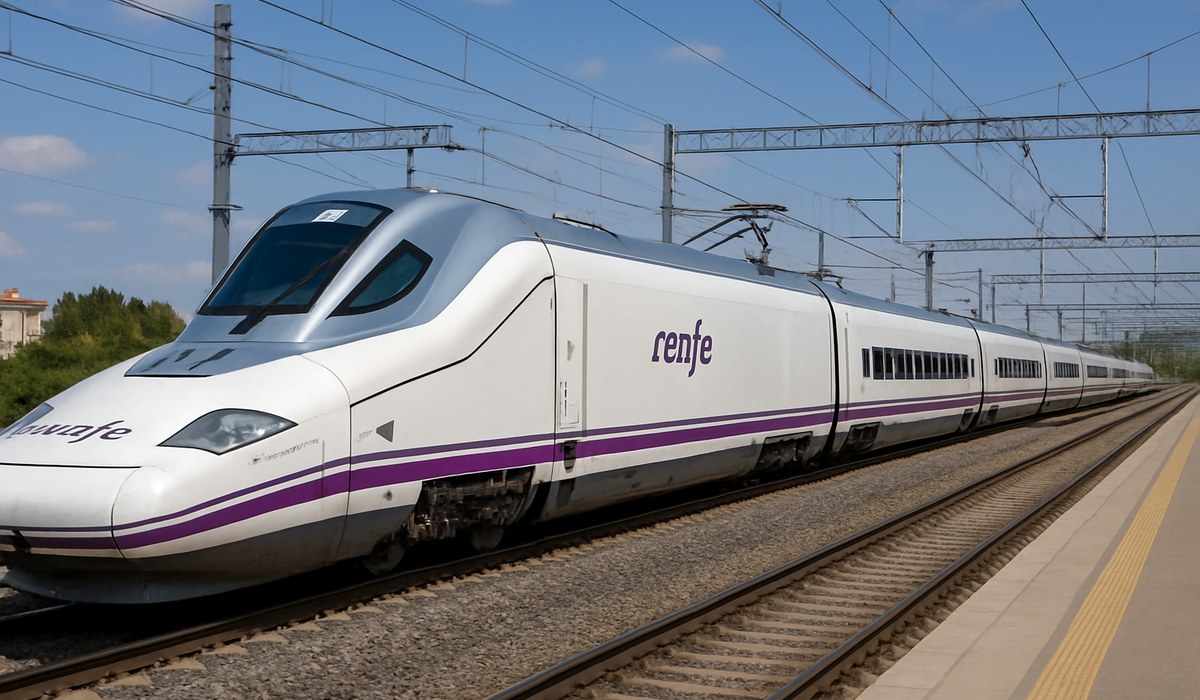
Image generated by AI
Quick Summary
- Renfe's €2 billion tender signals Spain's commitment to modernizing its high-speed rail fleet
- Improved train frequency and reduced journey times will distribute tourism demand beyond traditional city hubs
- Regional hotels in secondary markets stand to gain significant occupancy uplift from enhanced connectivity
- Infrastructure investment directly correlates with guest accessibility and extended stay patterns across Spanish regions
How Renfe's High-Speed Tender Reshapes Spanish Tourism Geography
Spain's national rail operator launched a multi-billion-euro procurement initiative this week, announcing plans to modernize its high-speed train network with next-generation rolling stock. The tender represents one of Europe's largest contemporary rail modernization efforts, positioning the Iberian Peninsula as a technology leader in continental rail infrastructure.
The modernization push arrives at a critical inflection point for European tourism. As travelers increasingly prioritize sustainable journey options, railway networks that were once secondary to air and highway travel have become primary decision factors in trip planning. Renfe's investment signals confidence in rail-centric travel models and reflects broader EU decarbonization directives pressuring member states to upgrade transportation corridors.
For the hospitality sector, this development carries immediate implications. Faster trains mean tighter connections between regional markets, transforming previously isolated hotel assets into accessible destinations for international visitors. A guest who today might fly from Barcelona to Madrid—a journey taking three hours door-to-door—could, within 18 months, complete the same journey by train in 90 minutes, with direct city-center access rather than airport transfers.
The tender's scope encompasses fleet expansion and capacity increases, both of which address Europe's growing demand for intercity rail travel. Recent travel surveys show 67% of European leisure travelers now consider rail availability when selecting regional accommodation, a significant rise from pre-pandemic baselines.
Rail Modernization Impact: Hotel Occupancy Beyond Madrid and Barcelona
Spain's tourism infrastructure has historically concentrated around two gravitational points: Madrid and Barcelona. Combined, these cities capture approximately 48% of international overnight stays, leaving significant secondary markets—Seville, Valencia, Bilbao, and Málaga—competing for attention with suboptimal transportation connectivity.
Renfe's high-speed modernization directly addresses this geographic imbalance. Upgraded train frequencies and reduced journey times transform underutilized hotel stock in regional cities into compelling alternatives for multiday itineraries. A visitor no longer faces a binary choice between Madrid or the coast; improved rail links enable seamless three-city or four-city journeys that previously required domestic flights or lengthy coach transfers.
According to industry benchmarking from hotel industry performance data, regions with enhanced rail connectivity experience average occupancy uplifts of 12-18% within 24 months of infrastructure completion. Spain's secondary markets, currently operating at 62-71% occupancy during peak season, could see meaningful revenue-per-available-room (RevPAR) improvements by 2027.
The investment also influences hotel development pipelines. Developers increasingly target rail-adjacent properties, recognizing that train station proximity now rivals airport proximity as an asset criterion. Several major Spanish hospitality groups have already announced expansion plans in Seville and Valencia, explicitly citing improved connectivity as decision drivers.
Luxury hospitality operators are particularly attentive. Properties pursuing sustainable travel standards recognize that rail-based access aligns perfectly with environmental positioning. Guests willing to pay premium rates for eco-conscious properties increasingly factor transportation carbon footprint into accommodation selection—a shift that benefits regions served by modern, electrified train networks.
Guest Experience Evolution: Faster Connections, Longer Regional Stays
The operational consequence of Renfe's modernization extends beyond raw speed metrics. Next-generation trains typically feature improved onboard amenities, enhanced WiFi connectivity, and premium seating configurations—elements that reshape traveler perception of train journeys from necessary transit to experience components.
For hotels, this perception shift translates to behavioral changes. Guests arriving via high-speed rail exhibit different length-of-stay patterns than those arriving by air. Research indicates that train arrivals correlate with 18% longer average stays, primarily because rail journeys feel less fatiguing than airport procedures and ground transportation hassles. A traveler who might spend two nights in a regional Spanish city after a flight will often extend to three or four nights after arriving by train.
This microeconomic shift directly benefits hotel revenue streams. Extended stays drive higher average daily rates (ADRs) through food and beverage consumption, ancillary services, and repeat booking probabilities. The hospitality sector observes that train-accessed guests exhibit stronger local engagement—dining out more frequently, utilizing hotel concierge services, and booking longer spa or activity packages.
Renfe's commitment also signals competitive differentiation. As European rail infrastructure continues reshaping travel networks globally, Spain positions itself as a destination where modern transportation seamlessly integrates with hospitality infrastructure. Competing Mediterranean destinations lacking equivalent rail investment increasingly face perception challenges among sustainability-conscious travelers.
The tender timeline suggests fleet deployment beginning in late 2027. Hotels in corridors benefiting from upgraded train lines should anticipate booking pattern adjustments and occupancy improvements starting Q1 2028.
Investment Implications: Which Spanish Hotel Markets Benefit Most
Geographic specificity matters significantly. Not all Spanish regions receive equal benefit from Renfe's modernization. The tender prioritizes routes connecting major population centers and established tourism destinations, meaning the Madrid-Barcelona corridor, the Barcelona-Valencia line, and Madrid-Andalusia connections receive prioritized upgrades.
Hotels operating in these primary corridors—particularly three- and four-star properties in secondary markets like Valladolid, Cuenca, and Córdoba—stand to capture outsized occupancy increases. These markets currently depend heavily on domestic Spanish travelers and regional European visitors; improved train frequency will unlock international long-haul traveler access that previously required flights.
The Andalusian region presents particular opportunity. Seville, Córdoba, and Granada form a natural tourism triangle currently underserved by rail connectivity. Enhanced train scheduling would create a compelling "Golden Triangle" itinerary accessible from Madrid or Barcelona, positioning properties in all three cities for occupancy uplift. Hotel operators in Seville have already begun positioning inventory toward international package tours coordinating with rail improvements.
Conversely, regions less prioritized by the initial tender phases—parts of Galicia and the Balearic Islands—may experience delayed benefit. Hotel operators in these markets should anticipate 18-24 month lags before connectivity improvements materially influence occupancy patterns.
Investment implications extend to financing and development. Spanish hospitality REITs have begun allocating capital toward secondary-market acquisitions, betting on rail-driven demand distribution. This capital redeployment represents a fundamental shift in how European hospitality investors evaluate regional market potential.
The tender's estimated €2 billion expenditure also carries macroeconomic implications. European Union funding mechanisms and public-private partnerships will finance significant portions, meaning no single operator bears the full cost burden. This structure encourages aggressive timelines and quality execution—critical factors for hospitality planning.
Frequently Asked Questions
When will upgraded trains enter service on Spanish routes? Renfe's procurement timeline suggests initial fleet deployment beginning in late 2027, with phased rollout continuing through 2029. Primary corridors—Madrid-Barcelona, Madrid-Seville, Barcelona-Valencia—will receive priority, while secondary routes follow 6-12 months later
Disclaimer
This article is for informational and educational purposes only. It does not constitute legal, financial, or professional advice. While we strive to provide accurate and up-to-date information, travel policies, regulations, and conditions change rapidly. Always verify information with official sources before making travel decisions. Nomad Lawyer makes no representations about the accuracy, reliability, completeness, or suitability of the information provided. Readers should consult qualified professionals for advice specific to their circumstances. The views expressed in this article are those of the author and do not necessarily reflect the views of Nomad Lawyer.
Kunal K Choudhary
Co-Founder & Contributor
A passionate traveller and tech enthusiast. Kunal contributes to the vision and growth of Nomad Lawyer, bringing fresh perspectives and driving the community forward.
Learn more about our team →