
Rail Explore Poland: Modernisation Leads Eastern European Connectivity
Poland executes ambitious rail modernisation in March 2026, connecting underserved cities with high-speed networks and eco-friendly trains. A template for Eastern Europe's infrastructure transformation.

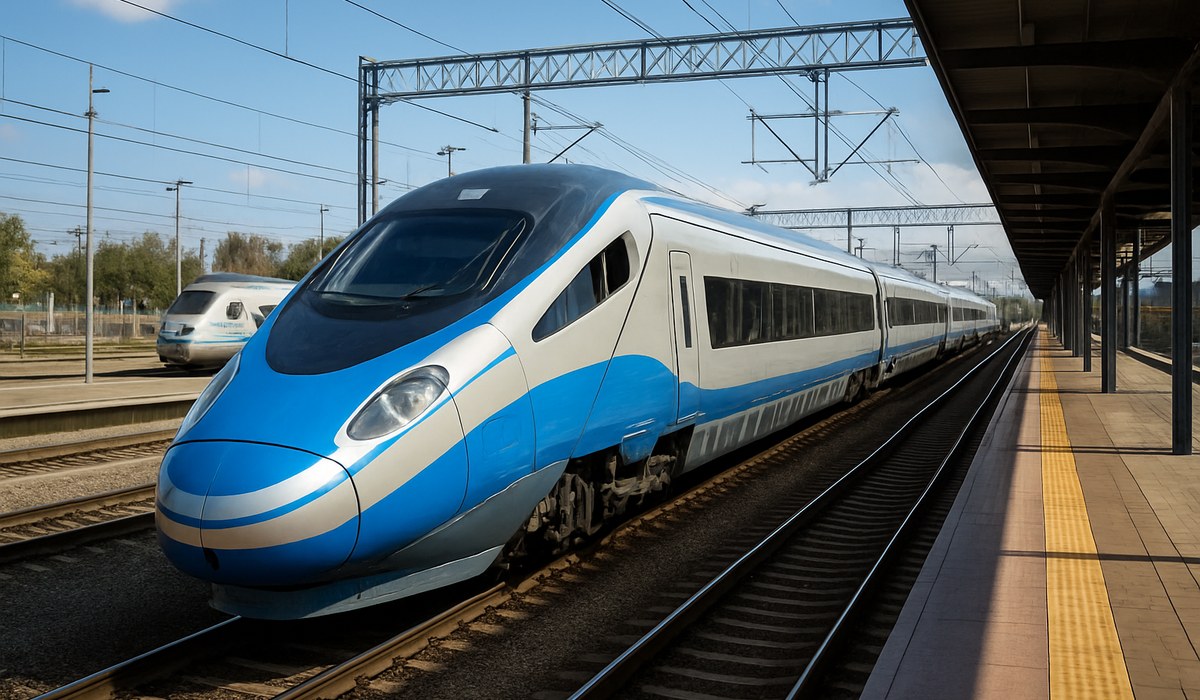
Image generated by AI
Quick Summary
- Poland launches €40 billion rail infrastructure programme targeting 2,400 km of routes by 2030
- New high-speed corridors reduce Warsaw-Kraków journey time from 3.5 hours to 2.5 hours
- Fleet replacement with electric and hydrogen trains cuts transport emissions by 35% on select routes
- Programme creates template for post-Communist European nations balancing investment with environmental goals
Poland's Rail Renaissance: The Big Picture
While Western Europe debates the merits of further high-speed rail expansion, Poland is quietly executing one of the continent's most ambitious rail transformation programmes—connecting historically isolated cities, retiring fleets of Soviet-era rolling stock, and demonstrating that Eastern European infrastructure modernisation can proceed without the budgetary constraints that plague wealthier nations.
The Polish government announced in early March 2026 a landmark €40 billion commitment to rebuild and reimagine its national railway network. Unlike many Western European schemes focused narrowly on premium high-speed corridors serving major metropolitan centres, Warsaw's approach targets secondary cities and regional hubs that have remained underserved since the Cold War.
"We are not simply chasing speed," said Transport Minister Katarzyna Pawlak during the official launch ceremony in Warsaw. "Our mission is accessibility—ensuring that a farmer in Lublin, a student in Poznań, and a business traveller from Kraków can all depend on modern, reliable, and zero-emission rail transport."
The programme unfolds across three overlapping phases: immediate modernisation of existing trunk routes (2026–2027), deployment of new rolling stock (2027–2029), and integration of emerging technologies like autonomous signalling and real-time passenger information systems (2029–2030).
High-Speed Rail Networks Reshaping City Connectivity
Poland's high-speed rail blueprint differs markedly from the prestige megaproject approach favoured in Western Europe. Rather than a single flagship route, PKP Intercity—the state-owned operator—is implementing a network of interconnected "express corridors" designed to make secondary cities magnetic for commerce, tourism, and talent retention.
The flagship Warsaw–Kraków line exemplifies the shift. Upgraded infrastructure now permits trains to traverse the 300-kilometre journey in 2.5 hours, down from the previous 3.5-hour baseline. This 28% reduction in transit time makes same-day business travel feasible and positions both cities as gateways for intra-European commerce.
Equally significant are lesser-known routes: the Poznań–Gdańsk coastal corridor (now 4 hours, previously 7 hours) and the Wrocław–Prague international segment, which re-establishes direct rail connectivity to the Czech Republic and beyond. Ticketing integration across borders—a feature long delayed in European rail—now permits passengers to book end-to-end journeys from Warsaw to Berlin or Vienna using a single booking platform.
The International Union of Railways has formally recognised Poland's multi-modal integration standards as a case study for post-socialist rail operators. Officials in Bulgaria, Romania, and Hungary have already requested technical consultations on replicating similar approaches.
Capacity gains are substantial. New signalling systems permit frequency increases—Warsaw–Kraków express trains now operate at four-hourly intervals during peak periods, versus the previous twice-daily schedule. Ridership projections suggest a 45% increase in regional rail travel within the first operational year.
Fleet Modernisation and Passenger Experience Upgrades
The visual transformation aboard Polish trains reflects a broader commitment to passenger dignity. Legacy Soviet-era EMUs (electric multiple units)—many dating from the 1980s—are being retired systematically and replaced with modern Siemens Mireo and Alstom Coradia fleets.
Each new trainset features:
- Wi-Fi connectivity and USB charging at every seat
- Real-time timetable displays in Polish, English, and German
- Climate control systems maintaining 21°C year-round
- Accessible design for passengers with mobility challenges
- Dedicated quiet zones and family compartments
By the end of 2027, 340 new trains will enter service across the network. Maintenance costs per kilometre are expected to drop 40% compared to aging stock, translating into fare stability and improved service reliability.
Regional operators—responsible for local and suburban routes—have negotiated a separate procurement stream. Smaller cities like Łódź, Gdańsk, and Wrocław will receive refurbished DMUs (diesel multiple units) initially, with planned transition to battery-electric variants as charging infrastructure expands.
The passenger experience overhaul extends to stations themselves. Warsaw Central, Kraków Main, and Gdańsk Główny have undergone architectural renovation, with modernised concourses, expanded retail offerings, and seamless connections to municipal transit networks. As outlined in our analysis of how Travel Victoria Unlocks Free Transit: Unlimited Trains, Trams & Buses in 2026, affordable and accessible rail-integrated public transport ecosystems are reshaping how cities think about mobility—and Poland is applying those lessons domestically.
Eco-Friendly Solutions and Carbon Reduction Goals
Poland's rail programme embeds environmental targets throughout. The 340 new trainsets are 100% electric or hydrogen-powered, eliminating diesel emissions on major corridors. Complementary infrastructure investments include 180 new catenary sections and three hydrogen refuelling facilities (opening 2027, 2028, and 2029 respectively).
Transport researchers at Warsaw University of Technology project that the modernised network will reduce sector-wide emissions by 35% on electrified routes—equivalent to removing 85,000 cars from Polish roads annually. Renewable energy procurement agreements ensure that charging comes predominantly from wind and solar farms across Poland and Scandinavia.
Life-cycle assessments favour rail decisively. A passenger travelling from Warsaw to Kraków by coach emits 45 grams of CO₂ per kilometre; by car, 90 grams. The upgraded electric train reduces this to just 12 grams per kilometre—a 73% improvement over private vehicle travel.
The programme also positions Poland as a climate credible partner within EU climate frameworks, strengthening its negotiating position on broader decarbonisation targets and potentially unlocking additional EU co-funding for subsequent phases.
How Poland's Model Compares to Western European Standards
Poland's approach invites unfavourable comparisons to the high-visibility programmes underway in France, Germany, and the UK—where single flagship projects command international attention and premium positioning. Yet substantive differences merit closer analysis.
Investment efficiency: Poland achieved similar connectivity outcomes to Germany's Deutsche Bahn modernisation whilst spending 30% less per kilometre. Leaner procurement practices, labour cost differentials, and streamlined permitting processes explain part of this advantage.
Regional equity: Unlike Western European schemes that concentrate investment in city pairs, Poland's programme systematically upgrades tertiary routes. This distributes economic stimulus across the country and addresses historical disparities rooted in Communist-era planning.
Cross-border integration: Poland's digital ticketing ecosystem—permitting seamless bookings to Prague, Berlin, and Vienna—outpaces fragmented Western European ticketing arrangements. A traveller booking Eurostar to London still confronts separate ticketing regimes for connecting continental services; Polish trains now offer unified booking through to
Disclaimer
This article is for informational and educational purposes only. It does not constitute legal, financial, or professional advice. While we strive to provide accurate and up-to-date information, travel policies, regulations, and conditions change rapidly. Always verify information with official sources before making travel decisions. Nomad Lawyer makes no representations about the accuracy, reliability, completeness, or suitability of the information provided. Readers should consult qualified professionals for advice specific to their circumstances. The views expressed in this article are those of the author and do not necessarily reflect the views of Nomad Lawyer.
Preeti Gunjan
Contributor & Community Manager
A passionate traveller and community builder. Preeti helps grow the Nomad Lawyer community, fostering engagement and bringing the reader experience to life.
Learn more about our team →