
Spain High-Speed Rail Passenger Numbers Plunge 21% in 2026 as Travel Disruptions Shake Key Tourism Routes
Spain High-Speed Rail Passenger Numbers Plunge 21% in 2026 as Travel Disruptions Shake Key Tourism Routes

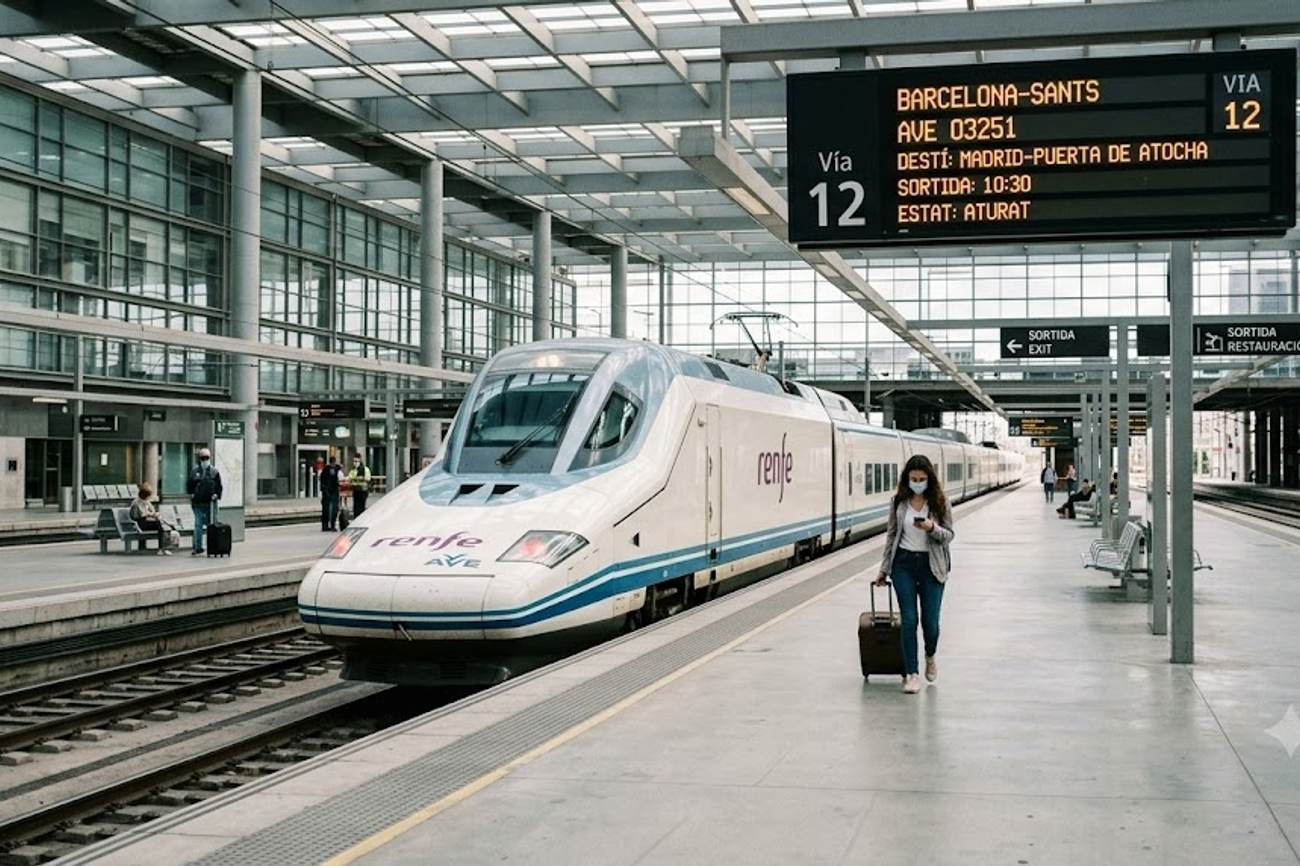
Image generated by AI
[Madrid, March 2026] — Spain's high-speed rail network has suffered a severe passenger collapse in the first quarter of 2026, recording a 21% year-on-year decline. A total of 8.05 million passengers utilized commercial high-speed services during this period, marking a sharp reversal for a system that had previously served as the primary backbone for domestic and international transit across the Iberian Peninsula.
The downturn stems from a series of catastrophic infrastructure failures and safety incidents that crippled travel corridors linking Madrid to Spain's most vital economic and tourism hubs. These disruptions include temporary route closures, mandatory speed restrictions, and a systemic reduction in seat availability, which together eroded passenger confidence and forced travelers to seek alternative transportation.
Infrastructure Failures and Safety Incidents
The current crisis was triggered by a combination of operational accidents and environmental hazards. In January 2026, a high-speed train accident occurred near Adamuz in Córdoba, paralyzing one of the nation's most heavily trafficked corridors. This event caused immediate service suspensions and forced a total overhaul of operational schedules between the capital and southern Spain.
Following the Adamuz accident, the network faced further degradation due to a landslide in the Málaga province, which caused prolonged interruptions to rail traffic. In response, rail authorities implemented stringent safety inspections and maintenance protocols. While necessary for passenger safety, these measures resulted in widespread speed restrictions that increased journey times and reduced the overall frequency of available trains.
The impact was exacerbated by a 12% reduction in total seat capacity compared to the first quarter of 2025. This capacity crunch affected both state-run and private operators, leaving many passengers unable to secure bookings on preferred dates and times.
Impacted Corridors and Passenger Losses
The decline in ridership was not uniform across the network; rather, it was concentrated in the corridors most vital to the tourism sector. The routes connecting Madrid to the south experienced the most drastic failures.
The following table outlines the passenger impact by specific route during the Q1 2026 period:
| Route | Passenger Decline | Primary Cause of Disruption |
|---|---|---|
| Madrid–Málaga/Granada | 61% | Adamuz accident & Málaga landslide |
| Madrid–Seville | 27% | Infrastructure restrictions |
| Madrid–Barcelona | 17% | Service changes & capacity drops |
| Madrid–Valencia | 8% | Schedule adjustments |
| Madrid–Alicante | 6% | General network instability |
These figures highlight a critical vulnerability in Spain's transport strategy. Because the Adif (Administrador de Infraestructuras Ferroviarias) manages the tracks used by multiple operators, a single infrastructure failure in a key bottleneck like Córdoba can ripple across the entire national schedule, affecting millions of journeys.
What This Means for Travelers
For the average traveler, the "seamless" experience traditionally associated with Spanish rail has vanished for the first quarter of 2026. The corporate language of "operational adjustments" and "maintenance measures" translates to several practical hardships for those currently booking travel:
Extreme Booking Pressure: With a 12% drop in available seats, the window for securing affordable or available tickets has shrunk. Travelers can no longer rely on last-minute bookings and must reserve seats weeks in advance to avoid being stranded.
Unreliable Itineraries: The 61% drop in passengers on the Madrid–Málaga/Granada route indicates that these services are either cancelled or profoundly unreliable. Travelers planning multi-city tours—a staple of Spanish tourism—should expect significant delays or the need to pivot to rental cars or domestic flights.
Increased Travel Times: Speed restrictions mean that the "high-speed" element of the rail network is currently compromised. Journeys that previously took a few hours are now subject to unpredictable delays, making tight connections at major hubs like Madrid-Puerta de Atocha highly risky.
Shift to Air Travel: As confidence in the rail network wavers, there is an immediate shift back toward domestic aviation. Travelers who previously avoided short-haul flights in favor of the sustainable rail option are returning to airports to ensure their schedules are maintained.
Recovery Path and Long-Term Outlook
Despite the current volatility, industry analysts suggest this is a temporary correction rather than a systemic collapse. Spain's rail market remains significantly larger than it was in 2019, and the underlying demand for high-speed transit remains high. The decline is attributed to "capacity and confidence" rather than a lack of interest in the service.
The Spanish government and rail operators are now under pressure to accelerate infrastructure repairs and restore the reliability of the southern corridors. The long-term goal remains the reduction of short-haul flights to meet European climate targets, a mission that depends entirely on the stability of the rail network.
To restore passenger trust, operators are expected to introduce more flexible ticketing policies and provide real-time, transparent communication regarding speed restrictions. The focus now shifts to the second quarter of 2026, where the industry hopes to see a rebound as the Ministerio de Transportes, Movilidad y Agenda Urbana completes its emergency safety audits.
FAQ: Spain Rail Crisis 2026
Why are passenger numbers dropping so sharply on the Madrid–Málaga route? The route suffered a "double hit": first from a major train accident near Adamuz in Córdoba and subsequently from a landslide in Málaga province. This combination caused a 61% drop in ridership due to suspensions and long delays.
Are all high-speed trains in Spain currently affected? No. While the southern routes (Málaga, Granada, Seville) are the hardest hit, routes to Barcelona, Valencia, and Alicante have seen much smaller declines (6% to 17%), though they still face some capacity reductions.
Should I book a train or a flight for my 2026 Spain trip? If your itinerary involves Andalusia (Málaga/Seville), consider flights or car rentals for guaranteed timing. For routes to Barcelona or Valencia, rail remains viable, but advance booking is mandatory due to a 12% seat reduction.
Is the Spanish rail network permanently failing? No. The sector is still much larger than its pre-pandemic 2019 levels. Experts view the Q1 2026 decline as a temporary setback caused by specific infrastructure incidents rather than a permanent shift in travel behavior.
Reliability is the only currency that matters in high-speed transit; Spain is currently bankrupt.
#SpainRail2026 #Adif #MadridMálagaRoute #SpanishTourismCrisis #HighSpeedRailFailures #TransportSpain2026
Related Travel Guides
- Scotland’s Railway Strengthens Autumn Defences With Leaf Busting Technology To Protect Passenger Journeys
- Netherlands Rail Services Shake Up Travel Plans After Possible Sabotage Causes Widespread Delays
- Etihad Airways and Etihad Rail Partnership Set to Reshape UAE Tourism with Smarter Air-Rail Journeys
Disclaimer
This article is for informational and educational purposes only. It does not constitute legal, financial, or professional advice. While we strive to provide accurate and up-to-date information, travel policies, regulations, and conditions change rapidly. Always verify information with official sources before making travel decisions. Nomad Lawyer makes no representations about the accuracy, reliability, completeness, or suitability of the information provided. Readers should consult qualified professionals for advice specific to their circumstances. The views expressed in this article are those of the author and do not necessarily reflect the views of Nomad Lawyer.
Kunal K Choudhary
Co-Founder & Contributor
A passionate traveller and tech enthusiast. Kunal contributes to the vision and growth of Nomad Lawyer, bringing fresh perspectives and driving the community forward.
Learn more about our team →