
Scotland’s Railway Strengthens Autumn Defences With Leaf Busting Technology To Protect Passenger Journeys
Scotland’s Railway Strengthens Autumn Defences With Leaf Busting Technology To Protect Passenger Journeys

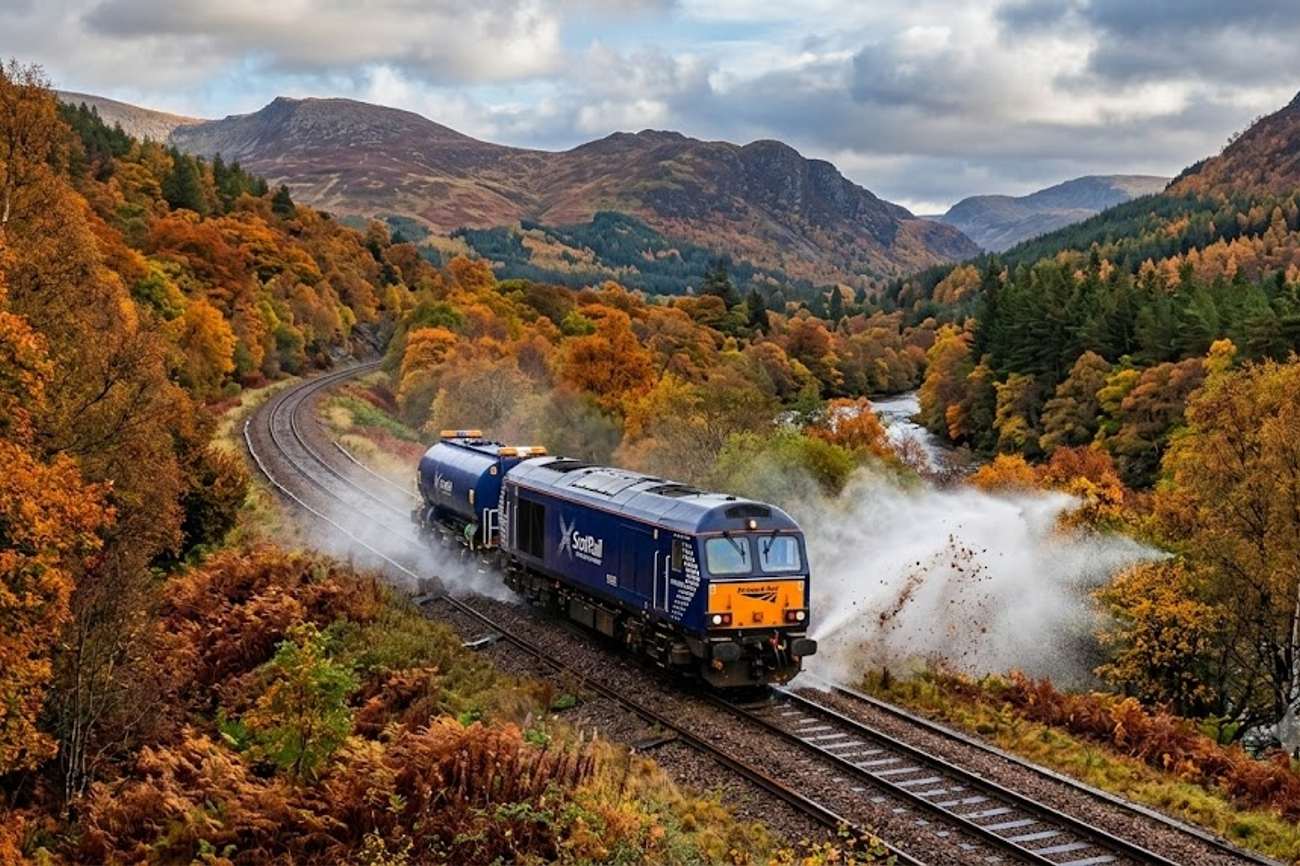
Image generated by AI
Are you planning a rail journey through the Scottish Highlands or between major cities this autumn? Here is exactly how seasonal track conditions will impact your travel and what you need to know to avoid delays.
The Autumn Rail Friction Crisis
Every autumn, Scotland’s railway network faces a recurring technical battle against "leaf mulch." When falling leaves are crushed by heavy trains, the combination of pressure, heat, and moisture creates a slippery film on the rails. Network Rail describes this phenomenon as the rail equivalent of black ice, which significantly impairs the ability of trains to accelerate or brake efficiently.
To combat this, Network Rail Scotland has implemented a massive preventative maintenance program for the 2026 season. The strategy moves away from reactive repairs toward a preventative model, utilizing high-pressure water jets and chemical treatments to clear the lines before the mulch can build up. This is particularly vital for routes passing through heavily wooded rural areas and the Highlands, where vegetation density is highest.
Route and Schedule Details
While the autumn program is designed to maintain standard schedules, the following technical deployments are in place to ensure reliability across the network.
| Route Focus | Frequency/Scale | Technology/Equipment | Duration/Scope | Status |
|---|---|---|---|---|
| National Network | 370 Treatment Circuits | High-pressure water jets | 80,000+ miles of track | Active |
| Highland & North-East | Fleet-wide (Class 158) | Double Variable Rate Sanding (DVS) | Ongoing seasonal | Active |
| Rural/Wooded Lines | Weather-dependent | 155 tonnes of sand | Seasonal Peak | Active |
Traveler Logistics Guide
Navigating the Scottish rail network during the autumn months requires a different approach than summer travel. Because braking distances are increased on slippery rails, you may experience "cautionary speeds" even if no official delay is posted on the boards.
1. Connection Strategy and Layover Times If you are transferring between services—particularly when moving from a main line to a rural branch line in the Highlands—increase your planned connection window. While the ScotRail network is seeing a reduction in autumn delays, the risk of minor slippage-related timing issues remains. I recommend a minimum of 30 minutes for major hub connections to account for slower approach speeds into stations.
2. Digital Monitoring and Real-Time Updates Do not rely solely on printed timetables. Use the official National Rail Enquiries app to monitor live train movements. If you see a train "crawling" toward your station, it is likely due to the rail adhesion issues mentioned above.
3. Booking Tips for High-Risk Routes Routes through the Highlands and North-East are the most susceptible to leaf fall. If your travel is time-critical (e.g., a flight connection from Inverness), book the earliest possible departure. The "leaf mulch" effect often compounds throughout the day as more trains compress the fallen leaves into the rail head.
4. Baggage and Boarding There are no specific changes to baggage policies during the autumn season; however, be aware that if a train is forced to stop slightly short of the platform marker due to braking challenges, boarding and alighting may take a few extra minutes as the conductor ensures the train is perfectly aligned.
Regional Connectivity Impact
The deployment of Double Variable Rate Sanding (DVS) on the Class 158 fleet is a game-changer for regional connectivity. Historically, the North-East and Highland lines suffered the most disruption because their slower, more rural nature made them more prone to adhesion loss. The DVS system automatically calculates the precise amount of sand needed based on the train's speed, meaning these remote communities are less likely to be cut off by seasonal weather.
From a broader logistics perspective, the reduction in delays by more than 25% compared to the previous year indicates that the infrastructure is becoming more resilient. However, the financial cost of autumn disruption remains high, at approximately £1 million annually. For the traveler, this means that while the "worst-case scenarios" of the past are becoming rarer, the system is still operating under significant seasonal stress.
FAQ: Scotland’s Railway Autumn 2026
Do I need a special ticket for autumn travel? No, standard ticketing applies. However, if your journey is delayed by more than 15 or 30 minutes due to seasonal track conditions, you may be eligible for "Delay Repay" compensation through the operator.
How long are the typical autumn delays? While delays have fallen by over 25%, slippage usually causes minor delays of 5 to 15 minutes per journey rather than total line closures.
Can I still rely on connections in the Highlands? Yes, but exercise caution. The use of DVS sanding technology on Class 158 trains has improved reliability on these specific routes significantly.
Will the trains be slower during the autumn? In some sections, yes. Drivers may reduce speeds when approaching stations or navigating wooded areas to ensure safe braking distances on slippery rails.
Stay flexible with your timings and keep your digital tickets ready for a smoother journey through the Highlands.
#ScotRail2026 #NetworkRailScotland #HighlandLineLogistics #Class158DVS #ScotlandRailAdhesion
Related Travel Guides
- Netherlands Rail Services Shake Up Travel Plans After Possible Sabotage Causes Widespread Delays
- Etihad Airways and Etihad Rail Partnership Set to Reshape UAE Tourism with Smarter Air-Rail Journeys
- Northern Railway Strengthens Festival Connectivity With New Special Trains Linking Punjab and Eastern India
Disclaimer
This article is for informational and educational purposes only. It does not constitute legal, financial, or professional advice. While we strive to provide accurate and up-to-date information, travel policies, regulations, and conditions change rapidly. Always verify information with official sources before making travel decisions. Nomad Lawyer makes no representations about the accuracy, reliability, completeness, or suitability of the information provided. Readers should consult qualified professionals for advice specific to their circumstances. The views expressed in this article are those of the author and do not necessarily reflect the views of Nomad Lawyer.
Kunal K Choudhary
Co-Founder & Contributor
A passionate traveller and tech enthusiast. Kunal contributes to the vision and growth of Nomad Lawyer, bringing fresh perspectives and driving the community forward.
Learn more about our team →