
Spain's Cultural City Breaks Surpass Gateways as Valencia, Seville, and Palma Drive Record Tourist Spending: Latest Update
Spain welcomed 5.1 million international tourists in January 2026 as cultural city breaks in Valencia, Seville, and Palma expand beyond Madrid and Barcelona.

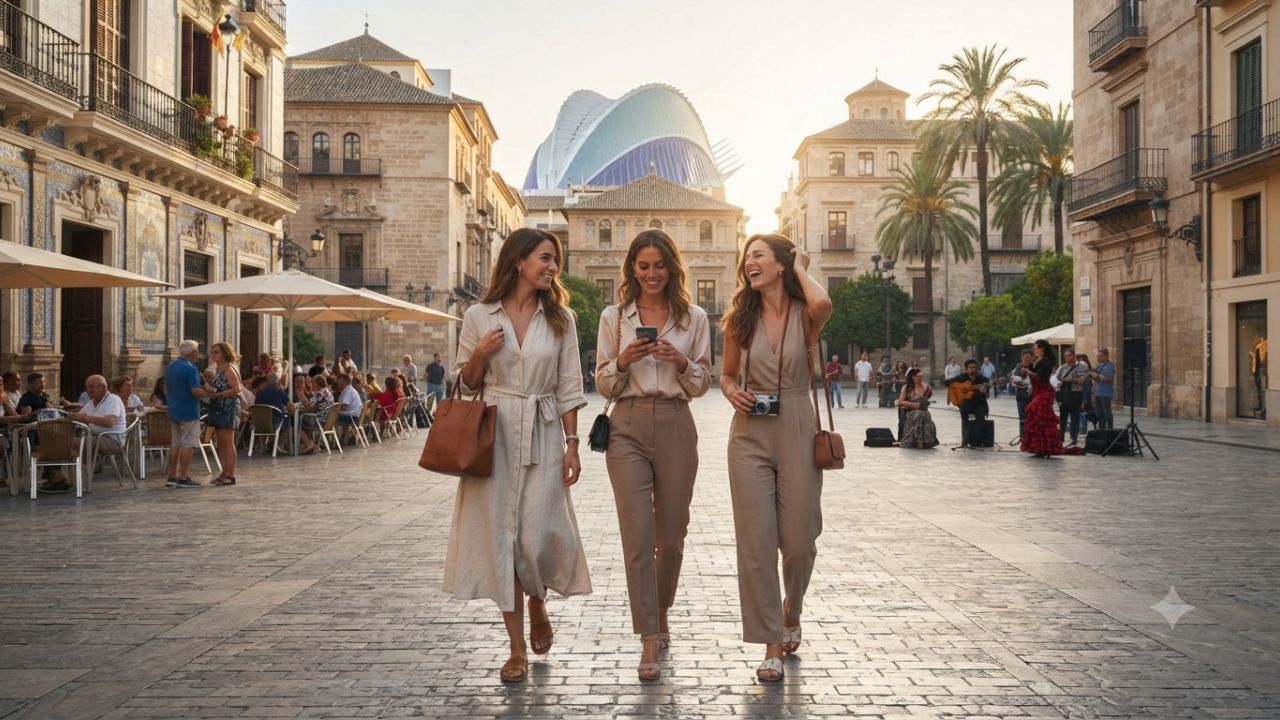
Image generated by AI
Spain welcomed 5.1 million international tourists in January 2026 as cultural city breaks in Valencia, Seville, and Palma experience demand beyond traditional gateways.
[MADRID, Spain] — International travel to Spain is undergoing a structural realignment as secondary cultural hubs capture an increasing share of European leisure transit. Published on September 27, 2026, official data from Spain’s Instituto Nacional de Estadística (INE) confirms that the nation recorded 5.1 million international arrivals in January 2026, generating €7.8 billion in foreign tourist expenditure. Cities such as Valencia, Seville, and Palma are leveraging architecture, historic landmarks, and culinary heritage to attract high-yield European travelers seeking alternatives to traditional metropolitan gateways.
Quick Summary: Key Facts & Data Highlights
- January 2026 International Arrivals: 5.1 million foreign tourists visited Spain (+1.2% year-on-year increase compared with January 2025).
- January 2026 Expenditure: Foreign tourist spending reached €7.8 billion, representing a 9.3% annual increase.
- Full-Year 2025 Baseline: Spain hosted 96.8 million international visitors in 2025, generating €134.7 billion in total expenditure (+6.8% over 2024).
- Top Regional Drivers: Valencia, Seville, and Palma led cultural city-break expansion beyond Madrid and Barcelona.
- Key Source Markets: UK (€23.65B spent in 2025; 897,095 visitors in Jan 2026), Germany (€15.83B spent in 2025; 527,327 visitors in Jan 2026), and France (€11.61B spent in 2025; 517,788 visitors in Jan 2026).
Context: National Tourism Expansion and INE Statistical Foundation
The latest statistical release from Spain's National Statistics Institute (INE) demonstrates that European travel patterns are diversifying into year-round heritage travel. Following a record 2025 performance during which 96.8 million international visitors expended €134.7 billion across Spanish autonomous communities, early 2026 metrics indicate robust visitor valuation.
While coastal beach resorts historically dominated non-resident itineraries, growing tourist volume is directing visitors into urban centers. Metropolitan authorities are promoting seasonal festivals, museum corridors, and historic preservation areas to distribute foot traffic and expand economic benefits across local commercial sectors.
| Spain Tourism Indicator | Official INE Figure | Annual Growth & Context |
|---|---|---|
| Full-Year 2025 International Arrivals | 96.8 million tourists | Baseline record for annual foreign travel |
| Full-Year 2025 Tourist Expenditure | €134.7 billion | 6.8% increase compared with 2024 |
| January 2026 International Arrivals | 5.1 million tourists | 1.2% increase compared with January 2025 |
| January 2026 Tourist Expenditure | €7.8 billion | 9.3% year-on-year increase |
| Top Source Market (January 2026) | United Kingdom | 897,095 visitors (+3.3% YoY) |
Event & Regional Breakdown: Valencia, Seville, and Palma Cultural Growth
The expansion of Spain's cultural travel segment is centered on three core regional capitals, each offering specialized heritage infrastructure:
1. Valencia: Modern Innovation and Heritage Integration
Valencia combines contemporary architectural design with traditional regional customs. The City of Arts and Sciences functions as a premier educational and architectural anchor, attracting science-minded travelers and families. Simultaneously, the city preserves its folkloric identity through the Fallas Museum, which houses historic ninots (sculpted figures) associated with the annual UNESCO-recognized Las Fallas festival.
| Valencia Landmark | Travel Category | Strategic Tourism Impact |
|---|---|---|
| City of Arts and Sciences | Science & modern architectural tourism | Expands year-round city-break capacity |
| Fallas Museum | Intangible cultural heritage | Highlights Valencian festival traditions |
| Historic District | Urban walking tourism | Supports local hospitality & retail trade |
2. Seville: Andalusian Heritage and UNESCO Performing Arts
Seville maintains its position as a primary southern European heritage destination through iconic architectural landmarks, including the Royal Alcázar of Seville, Plaza de España, and the Giralda tower. The city’s cultural positioning relies on traditional Flamenco, inscribed on UNESCO’s Representative List of the Intangible Cultural Heritage of Humanity. In addition to historic monuments, Seville’s growing network of contemporary art galleries and creative hubs encourages extended stays.
| Seville Experience | Cultural & Tourism Value |
|---|---|
| Royal Alcázar of Seville | Historic & architectural exploration |
| Flamenco Performances | Authentic UNESCO-inscribed Andalusian art form |
| Plaza de España | Iconic public landmark & urban tourism hub |
| Contemporary Art Galleries | Modern creative space & exhibition tourism |
3. Palma: Expanding Balearic Islands Beyond Seasonal Beaches
Palma is transforming travel perceptions across the Balearic Islands by promoting year-round urban tourism. Anchored by the Cathedral of Palma (La Seu), the city offers access to historic courtyards, religious architecture, and performing arts venues. This strategy enables the island region to attract non-beach travelers during winter and shoulder seasons.
| Palma Cultural Attraction | Tourism Focus & Importance |
|---|---|
| Cathedral of Palma (La Seu) | Gothic religious architecture & heritage tourism |
| Historic Old Town Districts | Cultural walking tours & architectural exploration |
| Opera & Performing Arts | Year-round arts events & cultural staging |
Risk & Disruption Impact: Overtourism Mitigation and Visitor Redistribution
The rapid growth of urban city breaks presents both logistical opportunities and management challenges for municipal authorities:
- Overtourism Pressure in Historic Cores: Concentrated pedestrian movement around sensitive heritage monuments—such as Seville’s Alcázar or Palma’s cathedral district—requires active crowd management and timed entry ticketing systems.
- Shift in Short-Term Housing: Rising demand for city breaks can inflate municipal residential rents if residential properties are converted into unlicensed tourist apartments.
- Strain on Public Transport Nodes: Elevated weekend tourist volume places added demand on municipal bus networks, metro systems, and regional train links connecting airports to historic town centers.
What Authorities and INE Data Indicate
Official reporting from the Instituto Nacional de Estadística highlights a sustained trend toward higher spending per visitor. While arrival numbers in January 2026 grew by 1.2%, total expenditure expanded by 9.3%, indicating that international travelers are selecting higher-tier accommodations, fine dining, and paid cultural activities.
Tourism ministries across Spain’s autonomous regions are aligning municipal marketing with experience-led travel. By emphasizing gastronomy, performing arts, and historical preservation, authorities aim to build economic resilience across secondary and tertiary cities.
Practical Traveler Advice: Planning Spanish Cultural City Breaks
Travelers organizing cultural itineraries in Valencia, Seville, or Palma should follow key operational guidelines:
- Advance Monument Reservations: Secure timed-entry tickets online for major monuments, including the Royal Alcázar of Seville and the City of Arts and Sciences in Valencia, to bypass long queues.
- Utilize High-Speed Rail Connections: Take advantage of Spain’s extensive AVE and high-speed rail network connecting Madrid and Barcelona to Valencia and Seville, avoiding internal domestic flights.
- Explore Off-Peak Seasonal Windows: Visit cultural capitals between October and April to experience milder temperatures, fewer crowds, and lower accommodation rates.
- Engage with Local Heritage Routes: Look for official municipal walking passes and heritage trails that grant entry to secondary museums and art galleries.
Broader Context: European Source Markets and High-Value Expenditure
European proximity markets continue to provide the volume and financial backing for Spain’s tourism economy. According to INE full-year 2025 financial figures, visitors from the United Kingdom led all nationalities in total expenditure, contributing €23.65 billion. Germany ranked second with €15.83 billion, followed by France at €11.61 billion.
In January 2026, incoming travel from Italy recorded notable growth, with 367,717 Italian tourists entering Spain—an 8.1% surge over January 2025. French arrivals totaled 517,788, while German visitors reached 527,327, underscoring strong cross-border travel demand across Western Europe.
| European Source Country | 2025 Total Expenditure | January 2026 Arrival Volume | Primary Travel Motivation |
|---|---|---|---|
| United Kingdom | €23.65 billion | 897,095 visitors (+3.3% YoY) | Cultural breaks, coastal resorts & city stays |
| Germany | €15.83 billion | 527,327 visitors | Heritage exploration & Mediterranean travel |
| France | €11.61 billion | 517,788 visitors | Regional cultural routes & culinary tourism |
| Italy | Regional breakdown | 367,717 visitors (+8.1% YoY) | Short-break urban breaks & architecture |
Looking Ahead: Shifting Regional Trajectories in European City Tourism
The continued expansion of cultural city breaks in Valencia, Seville, and Palma marks a broader evolution in European destination dynamics. By highlighting regional traditions, architectural preservation, and performing arts, Spain is establishing a sustainable model for urban tourism growth that balances economic expansion with local community heritage.
Frequently Asked Questions: Spain Cultural City Breaks 2026
What do the latest INE statistics reveal about Spain's tourism growth in 2026?
According to Spain's National Statistics Institute (INE), Spain received 5.1 million international tourists in January 2026 (+1.2% year-on-year), with total foreign expenditure rising 9.3% to €7.8 billion.
Which Spanish cities are leading the growth in cultural city breaks?
Valencia, Seville, and Palma are experiencing strong growth as travelers seek heritage, architecture, festivals, and culinary experiences beyond Madrid and Barcelona.
What are the main cultural attractions in Valencia?
Valencia's key attractions include the futuristic City of Arts and Sciences, the Fallas Museum (ninots figures), and its historic old town.
How did major European source markets perform in Spain?
In 2025, UK visitors generated the highest tourist expenditure in Spain at €23.65 billion, followed by Germany (€15.83 billion) and France (€11.61 billion). In January 2026, Italian arrivals grew by 8.1% year-on-year to 367,717 visitors.
Related Travel Guides
Barcelona and Madrid Experience Massive Surge in US Tourist Arrivals Across Spain
Italy Joins France and Spain as Europe Autumn Travel Grows Through Wine Harvests
The 10 Best Cultural City Breaks in Spain, According to Travelers
Disclaimer
This article is for informational and educational purposes only. It does not constitute legal, financial, or professional advice. While we strive to provide accurate and up-to-date information, travel policies, regulations, and conditions change rapidly. Always verify information with official sources before making travel decisions. Nomad Lawyer makes no representations about the accuracy, reliability, completeness, or suitability of the information provided. Readers should consult qualified professionals for advice specific to their circumstances. The views expressed in this article are those of the author and do not necessarily reflect the views of Nomad Lawyer.
Kunal K Choudhary
Co-Founder & Contributor
A passionate traveller and tech enthusiast. Kunal contributes to the vision and growth of Nomad Lawyer, bringing fresh perspectives and driving the community forward.
Learn more about our team →