
Barcelona and Madrid Lead Massive Surge in US Tourist Arrivals to Spain in 2026
US tourist arrivals in Spain have spiked in 2026, with Cataluña and Madrid surpassing previous year records in just six months due to increased air connectivity.

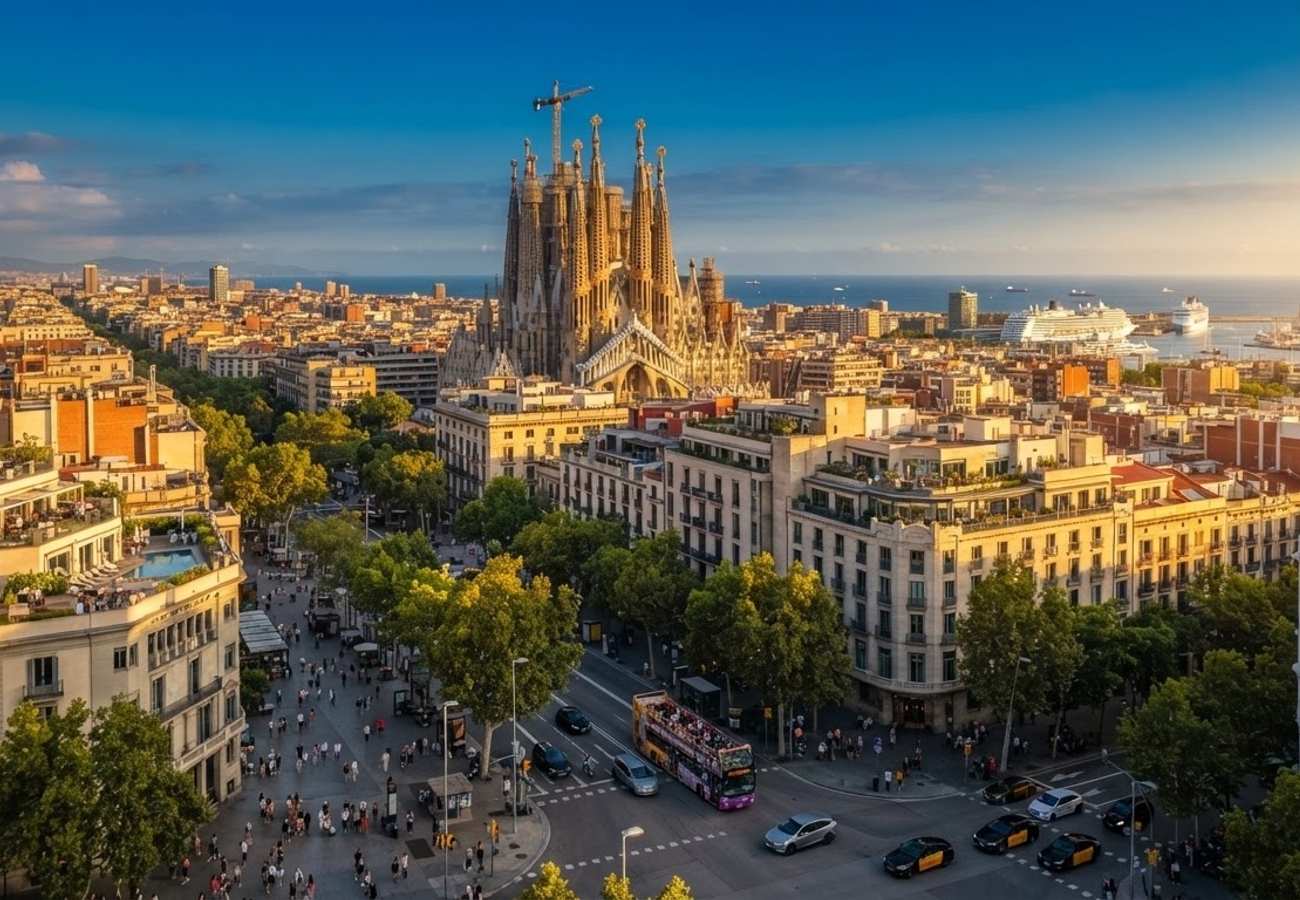
Image generated by AI
Spain is experiencing a dramatic influx of American visitors in 2026, with key hubs like Barcelona and Madrid reporting arrival numbers that eclipse previous annual benchmarks. Driven by expanded flight networks and a high demand for luxury experiential travel, the country is seeing a strategic shift in how US tourists engage with both urban centers and coastal retreats.
The current trajectory suggests a fundamental shift in transatlantic travel patterns. Reports indicate that the allure of Spain's diverse offerings—ranging from the architectural marvels of Cataluña to the year-round warmth of the Canary Islands—is resonating more deeply with the American demographic than in previous cycles.
Cataluña Outpaces 2025 Records in Six Months
The region of Cataluña has established itself as the primary magnet for US citizens visiting Spain. In a startling display of growth, the region welcomed 1,122,770 American visitors between January and June 2026. To put this into perspective, this six-month figure already exceeds the 1,020,700 visitors recorded during the first seven months of 2025. This represents a net gain of 102,070 travelers despite having one less month of data.
While Barcelona remains the central engine of this growth—drawing crowds to the Sagrada Família, the Gothic Quarter, and the works of Gaudí—there is a noticeable trend toward regional diversification. American travelers are increasingly venturing into Girona, Tarragona, Lleida, and the Costa Brava to pursue wine tourism and authentic Catalan heritage.
Logistically, air travel is the dominant entry point, accounting for 72.42% of all arrivals. Road travel follows at 15.97%, with maritime connections (ferry/boat) at 8.62% and rail at 3.00%. The vast majority of these visitors are traveling for leisure, totaling 856,798 individuals. Business travel accounted for 34,919 visitors, while personal reasons (health/family) drew 15,955, and academic pursuits brought in 11,823 travelers.
Madrid Accelerates as a Cultural and Business Hub
The Comunidad de Madrid is witnessing a similar acceleration, cementing its status as a top-tier destination for the US market. From January to June 2026, the region hosted 756,842 US visitors, a significant jump from the 688,038 recorded between January and July 2025. This increase of 68,804 visitors in a shorter timeframe underscores the capital's growing prestige.
The attraction is centered on the high-density cultural offerings of Madrid city, including the Prado Museum and the Royal Palace. However, the "beyond-the-city" appeal is growing, with UNESCO sites like San Lorenzo de El Escorial and Aranjuez seeing increased interest.
Madrid's growth is almost entirely dependent on its status as an aviation powerhouse, with 99.17% of US visitors arriving by air. Leisure remains the primary driver with 449,116 visitors, but the region also sees a healthy mix of personal (52,024), study-related (43,933), and business (39,012) travelers.
Luxury Island Tourism in Illes Balears
The Balearic Islands—specifically Mallorca, Ibiza, and Menorca—continue to refine their appeal through high-end, experiential luxury. Between January and June 2026, the region recorded 198,501 US visitors, surpassing the 189,049 arrivals seen in the first seven months of 2025.
Mallorca continues to lead the trio with its blend of nature and luxury hospitality, while Ibiza remains the premier choice for wellness retreats and exclusive nightlife. Menorca is carving out a niche for those seeking serenity and authentic island culture.
Air transport is the nearly exclusive method of arrival here, representing 98.41% of visitors. The leisure segment is overwhelmingly dominant, with 137,699 holidaymakers visiting the islands.
Year-Round Appeal of the Canarias
The Canary Islands are successfully positioning themselves as a non-seasonal alternative for Americans. Between January and June 2026, the islands welcomed 32,399 US visitors, an increase over the 30,856 visitors recorded from January to July 2025.
Tenerife, anchored by Mount Teide, and Gran Canaria, known for Las Palmas and wellness tourism, are the primary drivers. Additionally, the volcanic landscapes of Lanzarote and Fuerteventura are attracting adventure-seeking travelers.
Interestingly, the Canarias see a higher percentage of maritime arrivals compared to the mainland, with ferry and boat access accounting for 12.20% of entries, while air travel remains primary at 87.80%.
US Visitor Distribution and Accommodation Data 2026
The following data summarizes the arrival and accommodation trends for US tourists across the four primary Spanish regions during the first half of 2026.
| Region | US Visitors (Jan-June 2026) | Primary Entry Method | Leisure Visitors | Hotel Stays | Other Accommodation |
|---|---|---|---|---|---|
| Cataluña | 1,122,770 | Air (72.42%) | 856,798 | 779,751 | 141,590 |
| Madrid | 756,842 | Air (99.17%) | 449,116 | 396,780 | 195,492 |
| Illes Balears | 198,501 | Air (98.41%) | 137,699 | 121,633 | 33,517 |
| Canarias | 32,399 | Air (87.80%) | 42,625* | 46,968 | 13,123 |
*Note: Data reflects specific category reporting as per regional records.
Why This Matters: The Shift in Transatlantic Travel
For the modern traveler, these statistics signal a shift toward "deep travel." US visitors are no longer simply stopping in Madrid or Barcelona for a few days; they are diversifying their itineraries to include secondary cities and remote islands.
From a logistical standpoint, the overwhelming reliance on air travel (nearly 100% in Madrid and the Balearics) creates a high-dependency environment. Any disruption in transatlantic flight corridors would immediately impact these regions. However, the rise in "other accommodation" (such as luxury villas and boutique rentals) suggests that American tourists are moving away from standardized hotel chains in favor of localized, authentic experiences.
For those planning a trip, the data suggests that while the major cities are more crowded than ever, the "hidden" gems of the Costa Brava or the volcanic trails of the Canarias offer a viable escape from the urban surge. The trend toward year-round travel in the Canarias also means that the traditional "summer holiday" window is expanding, allowing for more flexible travel planning.
Spain's 2026 tourism data confirms a robust and diversifying appetite for Spanish culture among American travelers.
Related Travel Guides
Disclaimer
This article is for informational and educational purposes only. It does not constitute legal, financial, or professional advice. While we strive to provide accurate and up-to-date information, travel policies, regulations, and conditions change rapidly. Always verify information with official sources before making travel decisions. Nomad Lawyer makes no representations about the accuracy, reliability, completeness, or suitability of the information provided. Readers should consult qualified professionals for advice specific to their circumstances. The views expressed in this article are those of the author and do not necessarily reflect the views of Nomad Lawyer.
Kunal K Choudhary
Co-Founder & Contributor
A passionate traveller and tech enthusiast. Kunal contributes to the vision and growth of Nomad Lawyer, bringing fresh perspectives and driving the community forward.
Learn more about our team →