Spain Beats Italy and All Other European Countries with Record Tourism Demand in Back-to-Back Quarters in 2026

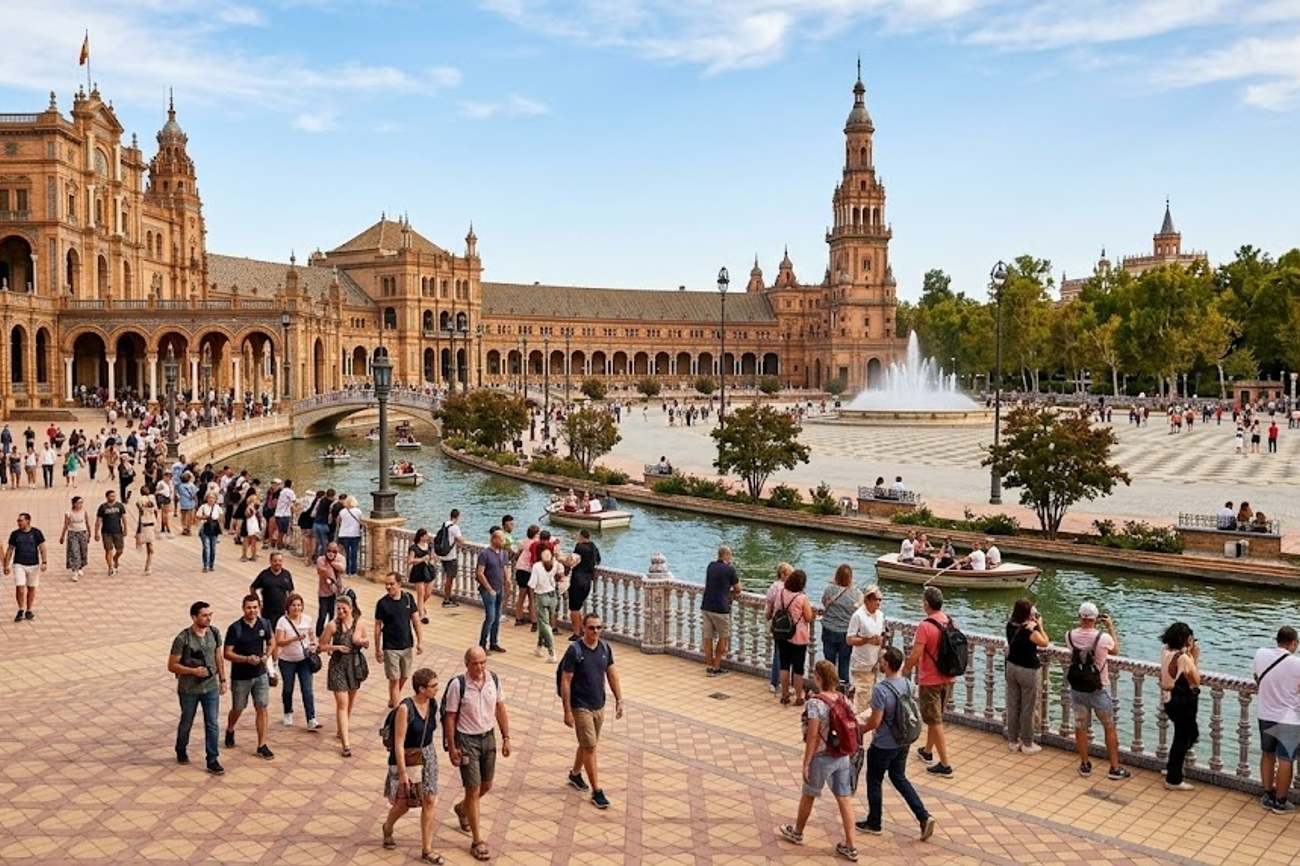
Image generated by AI
Spain has officially secured its spot as Europe's most demanded tourism destination for the first half of 2026, narrowly edging out Italy by a margin of just 3.3 million tourist nights. While Italy staged a massive comeback in the second quarter, Spain's ability to maintain high volume during the winter months proved to be the deciding factor in the race for the continental crown.
The Battle for the Mediterranean Crown
The first six months of 2026 have revealed a fierce rivalry between the Mediterranean's two heavyweights. Spain recorded 222,797,553 tourist nights between January and June, maintaining its lead over Italy, which followed with approximately 219.5 million nights. Germany and France remained competitive but trailed behind, recording 195.8 million and 193 million nights, respectively. Austria rounded out the top five with 65.7 million nights.
The competition was not linear. Spain dominated the first quarter (Q1) with 80,927,976 nights, outperforming Germany (73 million) and Italy (71.6 million). However, the second quarter (Q2) saw a dramatic shift. Italy surged to first place with 147,873,640 nights—a year-on-year increase of about 5.5 million. Spain remained powerful with 141,869,577 nights but slipped to second. Despite this late-season surge from Italy, Spain's early-year lead was sufficient to claim the H1 title.
This volatility highlights the shifting nature of European travel. While Germany dropped from second in Q1 to fourth in Q2 (122,794,898 nights), and Austria fell from fifth to seventh (26,920,934 nights), the southern latitudes strengthened as summer approached. Across the entire EU, accommodation demand hit approximately 1.321 billion nights in the first half of the year, a 1.7% increase over the previous year.
What Makes Spain Different
Spain's resilience stems from a diversified tourism product that resists the traditional "summer-only" slump. While many European destinations rely on the June-August window, Spain leverages its Canary Islands and southern coastal regions to attract international winter demand. This strategic geographic advantage is why Spain could generate over 80 million nights in Q1 while others were still waking up from hibernation.
The draw is not just the weather, but the scale of the infrastructure. In Q2 alone, international visitors accounted for 91.7 million nights—nearly matching Italy's 91.1 million. Between January and June, approximately 46.6 million international tourists entered the country, a 4.6% increase year-on-year. June was a particularly explosive month, bringing in 9.75 million international visitors.
The economic profile of the visitor is also evolving. Spain is no longer just a destination for budget beach holidays; it is extracting significantly more value per person. International spending reached €63.84 billion in the first half of 2026, a 7% rise that outpaced the growth in actual arrival numbers. In June, international expenditure hit roughly €13.58 billion, with the average tourist spending approximately €1,393 per trip, or about €211 daily.
This shift toward higher-value tourism is reflected in the hotel sector. The Hotel Price Index rose approximately 5.6% year-on-year in June 2026. The average revenue per occupied hotel room climbed to €137.10, while the revenue per available room reached approximately €101.60. For those planning a visit, these numbers indicate a market that is pricing itself as a premium global destination.
Visitor Insider Tips
To navigate Spain during these record-breaking volumes, you have to move differently than the crowds. The data shows that the Balearic Islands (34% of foreign hotel nights in June), Catalonia (18.4%), and the Canary Islands (17.9%) are the primary magnets. To avoid the peak congestion, consider these local strategies:
Timing the Visit Avoid June if you are visiting Mallorca, which alone saw over 7.2 million hotel nights in that month. Instead, aim for the "shoulder" months of May or September. If you want the coastal experience without the Q2 madness, the Canary Islands offer a stable climate year-round and are far less congested in the early spring.
Neighborhood Basing In Barcelona, avoid staying directly on Las Ramblas. Move toward Gràcia for a more authentic, village-like feel with local plazas and independent boutiques. In Madrid, look beyond the Puerta del Sol and explore the neighborhood of Chamberí, where you will find traditional taverns that haven't been converted into tourist traps.
Transport Hacks The high volume of visitors puts immense pressure on rental car markets. Use the extensive rail network provided by Renfe to move between Madrid and Barcelona. For inter-city travel, booking high-speed trains (AVE) several weeks in advance is the only way to ensure a seat during the Q2 surge.
Local Etiquette Remember that the Spanish rhythm is slower. Dinner rarely starts before 9:00 PM. If you show up at a local restaurant at 6:00 PM, you will likely find it empty or closed. Embrace the sobremesa—the tradition of lingering at the table long after the meal is finished to talk and drink coffee.
Cultural and Environmental Context
The sheer volume of 222.8 million tourist nights brings significant pressure to Spain's heritage sites and natural ecosystems. In regions like Catalonia and the Balearics, the tension between economic gain and livability has become a central political issue. The rise in hotel prices and the proliferation of short-term rentals have pushed local residents out of city centers in Barcelona and Palma.
However, this influx of capital is also funding the preservation of world-class heritage. Spain continues to invest heavily in the upkeep of its UNESCO World Heritage sites, ensuring that the architectural legacy of the Moors and the Gothic era survives the foot traffic of millions.
Environmentally, the focus has shifted toward the islands. The Balearics have implemented stricter water management and waste protocols to handle the 34% share of foreign hotel nights they host in June. Visitors are encouraged to support "slow tourism"—staying longer in one place rather than hopping between cities—to reduce the carbon footprint associated with internal transport. You can find more guidance on traveling responsibly through the official Spain.info portal.
FAQ: Visiting Spain 2026
What is the best time to visit? To avoid the massive Q2 crowds (April–June), visit in May or September. For winter sun without the summer prices, the Canary Islands are the ideal choice between January and March.
Do I need a visa? Depending on your nationality, you may need a Schengen visa. US, Canadian, and UK citizens typically do not need one for short stays, but always check current ETIAS requirements for 2026.
How do I get there from major hubs? Most international travelers fly into Madrid-Barajas or Barcelona-El Prat. From there, the AVE high-speed train is the most efficient way to reach other major cities.
Is it safe for solo travelers? Yes, Spain is generally very safe. Use common sense regarding pickpockets in high-density areas like Barcelona's Gothic Quarter or Madrid's Sol district.
Spain isn't just winning the numbers game; it's redefining what it means to be Europe's premier destination.
Related Travel Guides
- Africa’s Forest Tourism Enters a New Era as Rwanda, Uganda and DRC Strengthen Wildlife Conservation
- South Korea Teams Up With Taiwan and Eight More Countries to Fuel Japan Tourism Growth Despite a Nearly 60% Drop in Chinese Tourists in 2026
- Costa Brava Goes Beyond Beaches with Film, Jazz, Fine Arts and Catalan Culture This October
This article is for informational purposes. Flight routes, passenger regulations, visa rules, and transit advisories are subject to change by airlines and aviation authorities. Readers are advised to verify schedules and travel documentation with relevant carriers and border agencies before departure.
Related Stories

Beyond Green Expands Sustainable Luxury Portfolio to 22 Countries with New Costa Rica and Spain Hotels 2026

Thailand Tourism Slowdown Tests Small Businesses as Kingdom Pivots to High-Yield Travel and Secondary Provinces