
Spain and South America Gain Stronger Air Links as Madrid-Barajas Expands European Flight Network
Spain and South America Gain Stronger Air Links as Madrid-Barajas Expands European Flight Network

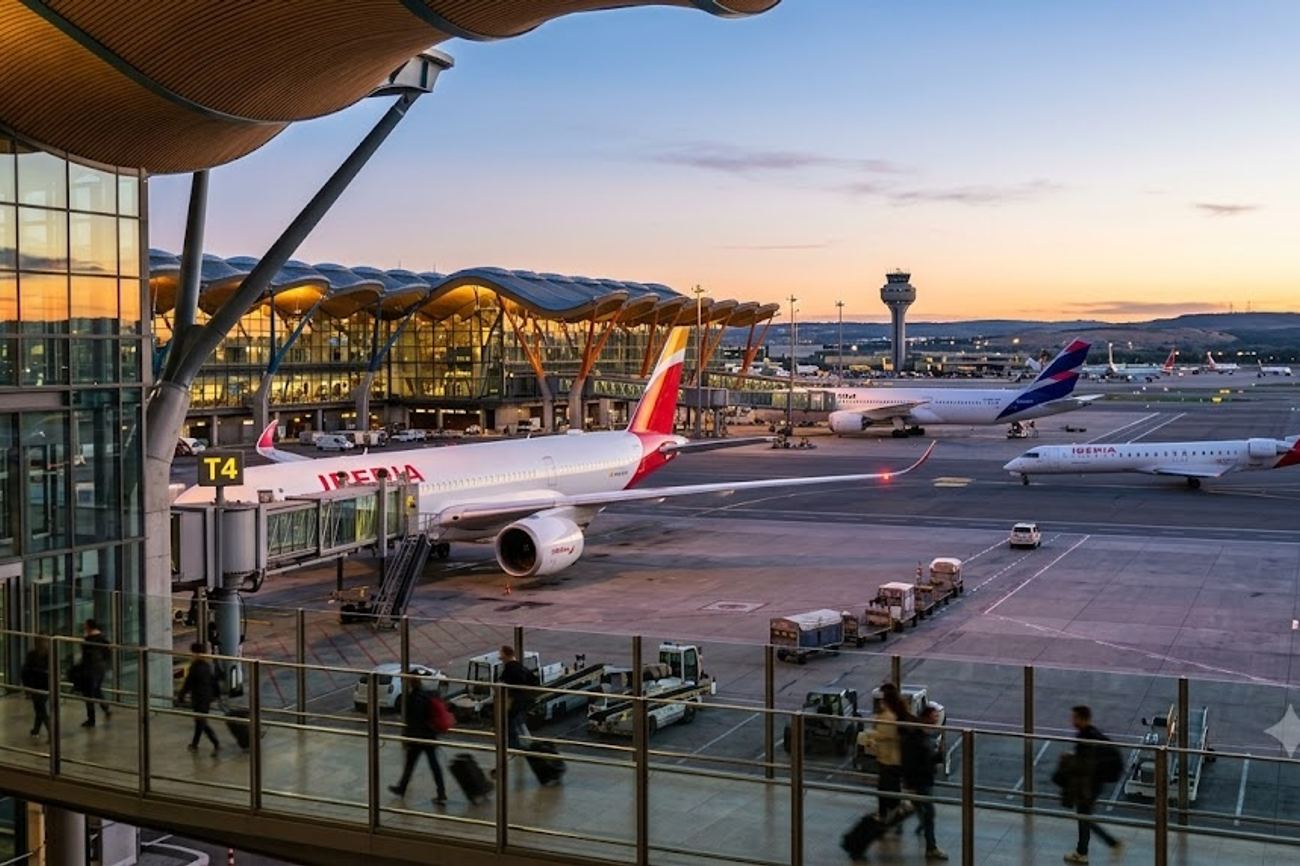
Image generated by AI
47,072,394 passengers passed through Adolfo Suárez Madrid-Barajas Airport between January and August 2026, marking a 4.4% increase in traffic. This surge underscores the Spanish capital's aggressive consolidation as the primary gateway between the European Union and the Americas. While the broader European aviation market has struggled with uneven recovery and geopolitical instability, Madrid is leveraging a specific combination of linguistic ties and aggressive capacity expansion by Iberia, Air Europa, and LATAM to capture a larger share of the transatlantic corridor.
The Strategic Pivot of Madrid-Barajas
The growth observed at Madrid-Barajas is not a random spike in tourism but a calculated expansion of the airport's role as a "super-hub." According to data from Aena, the airport handled 6,544,815 passengers in August 2026 alone, a 4.8% rise over August 2025. More telling is the increase in aircraft movements, which rose by 6.5% to 39,606 during that same month.
This operational growth is driven by a shift in airline strategies. Rather than relying solely on existing high-traffic routes, carriers are diversifying their destinations to capture secondary markets in Latin America. For instance, the introduction of services to Monterrey, Mexico, and Barranquilla, Colombia, indicates a move toward business-centric and regional hubs rather than just capital cities. This strategy reduces the reliance on a few "mega-routes" and spreads the risk across a wider geographic footprint.
Capacity Breakdown and Route Expansion
The current expansion is led by a tripartite synergy between Iberia, Air Europa, and LATAM. Iberia, in particular, has pushed its summer 2026 capacity to record levels, scheduling 3,354,159 seats between Europe and Latin America—a 7.6% jump from the previous summer.
The following table details the specific capacity shifts across key markets:
| Route/Market | Metric | 2026 Data | Year-on-Year Change |
|---|---|---|---|
| Buenos Aires | Weekly Flights (June-Aug) | 23 | +12% (Seats) |
| Brazil | Total Summer Capacity | ~400,000 seats | +15% |
| Santiago de Chile | Weekly Services | 12 | +7% (Seats) |
| Barranquilla | Annual Seat Projection | 92,000+ | New Route |
| Monterrey | Weekly Frequency | 3 | New Route |
| Total Madrid Traffic | Jan-Aug Passengers | 47,072,394 | +4.4% |
Air Europa is mirroring this aggression, announcing 9.3 million seats for the period of June through September 2026, a 5.9% increase over 2025. Their network expansion is particularly focused on Central America and Colombia, with the launch of the Madrid-San Salvador route and the addition of Barranquilla on 18 December 2026. Meanwhile, LATAM continues to provide the critical South-to-North link, utilizing Madrid as a transit point for passengers moving from South American hubs into the wider European network.
Expert Analysis: The "Madrid Moat" and Pricing Dynamics
For the seasoned traveler or the corporate nomad, the expansion of Madrid-Barajas creates a "network effect" that functions as a competitive moat. By concentrating a massive volume of flights from various Latin American cities into one hub, these airlines are creating a monopoly on convenience. When three major carriers simultaneously increase capacity—as seen with the 7.6% increase in Iberia's seat supply—the immediate result is typically a stabilization or reduction in ticket prices due to increased competition.
However, there is a deeper regulatory and logistical force at play. The International Air Transport Association (IATA) often notes that hub-and-spoke efficiency depends on "connectivity windows"—the time between an arriving long-haul flight and a departing short-haul flight. By increasing frequencies (such as the 23 weekly flights to Buenos Aires), Iberia is shortening these windows, making Madrid a more attractive transit point than Paris or Frankfurt for those heading to secondary European cities.
The pricing pressure this creates means that passengers booking routes to Brazil or Argentina may find more competitive fares during the summer peak, as the 15% capacity increase in Brazil specifically prevents the usual price gouging associated with high-demand seasons. For the business traveler, the new Monterrey and Barranquilla routes eliminate the need for cumbersome connections through the United States, bypassing the rigorous and often time-consuming US Customs and Border Protection process.
Key Takeaways
- Aggressive Capacity Growth: Iberia has increased its Europe-Latin America seat capacity by 7.6%, totaling over 3.3 million seats for the summer 2026 season.
- New Market Penetration: Direct links to Monterrey (Mexico) and Barranquilla (Colombia) signal a shift toward diversifying destination portfolios beyond traditional capitals.
- Resilience Amid Volatility: While European traffic dipped 0.7% in April 2026, Madrid maintained growth, with May traffic rising 4.8%, outperforming many of its regional peers.
- Brazil as a Growth Engine: Iberia's capacity in Brazil grew by 15%, supported by new services to Recife and Fortaleza.
- Strategic Hubbing: The combined efforts of Air Europa, Iberia, and LATAM are positioning Madrid as the indispensable bridge for transatlantic travel, reducing reliance on North American transit hubs.
FAQ: Madrid-Barajas Connectivity 2026
Will flight prices to South America decrease with more seats? Generally, yes. The 15% increase in seats to Brazil and 12% to Argentina suggests higher supply, which typically leads to more competitive pricing and more availability during peak summer months.
What are the new direct routes available from Madrid in late 2026? Air Europa is launching direct flights to Barranquilla, Colombia, and San Salvador in December 2026, expanding options for travelers heading to Colombia and Central America.
How does Madrid compare to other European hubs like London or Istanbul? While Madrid is growing rapidly, it is not the busiest. ACI Europe data indicates that London Heathrow and Istanbul still lead in total passenger volume.
Why should I fly through Madrid instead of a US hub for Latin America? Flying through Madrid avoids the need for a US transit visa or the lengthy customs process required when connecting through US airports, providing a more streamlined entry into Europe.
The transatlantic corridor is no longer just about the biggest cities; it is about who owns the most efficient bridge.
Tags: Iberia, Air Europa, LATAM, Madrid-Barajas, Latin America Aviation 2026, Aena
Related Travel Guides
- Riviera Travel Offers Exclusive River Cruise Savings As Travellers Plan 2027 Holiday Adventures
- United States Turns Up the Heat with Las Vegas Sale Offering 180+ Travel Deals from September 22
- UK Cheshire West and Chester Launches £1 NextGenTravel Pass to Transform Youth Bus Travel and Boost Sustainable Mobility
Disclaimer
This article is for informational and educational purposes only. It does not constitute legal, financial, or professional advice. While we strive to provide accurate and up-to-date information, travel policies, regulations, and conditions change rapidly. Always verify information with official sources before making travel decisions. Nomad Lawyer makes no representations about the accuracy, reliability, completeness, or suitability of the information provided. Readers should consult qualified professionals for advice specific to their circumstances. The views expressed in this article are those of the author and do not necessarily reflect the views of Nomad Lawyer.
Preeti Gunjan
Contributor & Community Manager
A passionate traveller and community builder. Preeti helps grow the Nomad Lawyer community, fostering engagement and bringing the reader experience to life.
Learn more about our team →