
Southwest Airlines Flight WN2445 From Lubbock to Dallas Diverts to Houston Hobby Airport, Prompting Precautionary Safety Measures and Schedule Disruptions for Texas Passengers: New Travel Alert
Southwest Airlines Flight WN2445, a Boeing 737 MAX 8 from Lubbock to Dallas, diverted to Houston Hobby Airport. Learn about the delays and passenger advice.

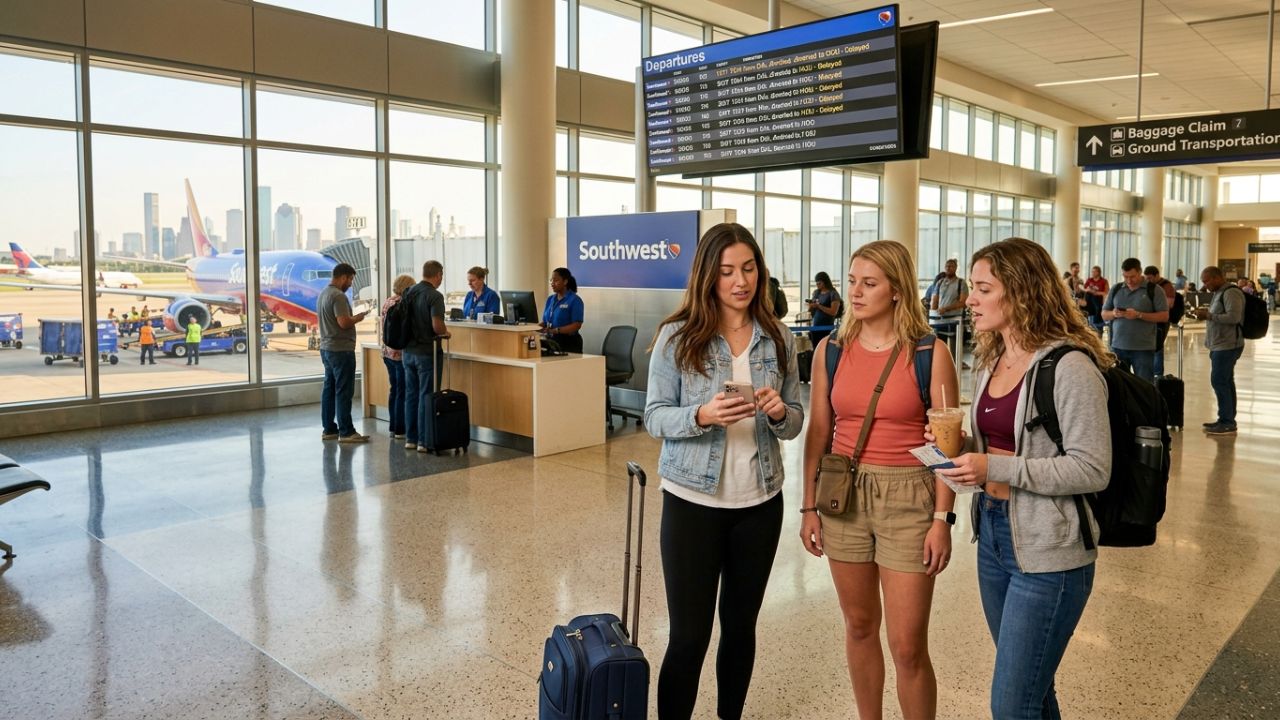
Image generated by AI
Published on June 20, 2026
On June 19, 2026, Southwest Airlines flight WN2445, operating a Boeing 737 MAX 8 from Lubbock to Dallas, unexpectedly changed course and diverted to William P. Hobby Airport in Houston, Texas. While details regarding the operational route change remain unconfirmed, passengers faced scheduling delays and rebooking procedures at the major regional hub. Travelers impacted by this unscheduled landing are urged to stay informed through official carrier channels and verify their ongoing flight details.
Quick Summary
- Unexpected Route Change: Southwest Airlines flight WN2445 from Lubbock Preston Smith International Airport to Dallas Love Field diverted to Houston.
- Aircraft Details: The flight was operated using a Boeing 737 MAX 8 aircraft on June 19, 2026.
- Hub Diversion: The flight safely landed at Houston's William P. Hobby Airport (HOU), a major hub for Southwest Airlines operations.
- Precautionary Measure: Officials have not declared an emergency, suggesting the diversion was a precautionary safety decision.
- Passenger Support: Rebooking and luggage operations were coordinated at the Houston terminal for all affected travelers.
The unexpected route change occurred after the aircraft departed normally, before the flight crew decided not to continue towards the scheduled destination in Dallas. Currently, Southwest Airlines has not published an official explanation detailing the cause of this diversion, leaving passengers and aviation commentators to watch for updates. While flight diversions occur regularly across the global aviation sector, the lack of immediate details regarding the carrier's decision highlights the caution airlines take during transit operations.
Context and Background: Understanding Flight Safety Decisions
Commercial flight paths are carefully planned to ensure optimal operations, but flight crews must remain flexible when unexpected situations arise. For Southwest Airlines flight WN2445, the sudden change in flight path occurred during its scheduled service between two major Texas cities. While the flight proceeded normally after its morning departure, the decision to redirect the aircraft to Houston reflects standard safety protocols.
Airline safety protocols dictate that flight crews must prioritize passenger and aircraft security above scheduled arrival times. The Federal Aviation Administration (FAA) and other safety bodies encourage precautionary deviations whenever flight parameters indicate potential issues. By redirecting the aircraft to a major base, the crew ensured that the flight could land safely where resources are readily available.
Event and Incident Details: Southwest Airlines Flight WN2445 Diverts to Houston
On June 19, 2026, Southwest Airlines flight WN2445 took off from Lubbock Preston Smith International Airport (LBB) with an intended destination of Dallas Love Field (DAL). The flight was operated using a modern Boeing 737 MAX 8 aircraft. However, shortly after entering the cruise phase of the journey, the flight crew made the operational decision to discontinue the flight path to Dallas.
Instead of continuing north towards Dallas Love Field, the aircraft changed its path and headed south towards Houston. The flight safely touched down at William P. Hobby Airport (HOU) instead of completing its scheduled route. Both Southwest Airlines and local aviation administrations have not classified the landing as an emergency landing, and no public declaration of an emergency was issued during the flight.
| Flight Identifier | Aircraft Type | Departure Airport | Scheduled Arrival | Actual Arrival | Date of Incident |
|---|---|---|---|---|---|
| Southwest Airlines flight WN2445 | Boeing 737 MAX 8 | Lubbock Preston Smith International Airport (LBB) | Dallas Love Field (DAL) | William P. Hobby Airport (HOU), Houston | June 19, 2026 |
The Boeing 737 MAX 8 aircraft departed shortly after its scheduled morning departure time before crews decided to discontinue the original journey. The absence of an immediate operational statement from Southwest Airlines has raised questions among passengers and aviation observers, who are waiting for verified information.
Risk and Impact: How the Southwest Airlines Flight WN2445 Diversion Affects Travelers
A sudden route change introduces operational risks and passenger inconveniences that travelers must navigate. For passengers onboard Southwest Airlines flight WN2445, the sudden landing in Houston created several disruptions:
- Missed Flight Connections: Delays caused by the unscheduled landing can cause travelers to miss onward connecting flights in Dallas.
- Schedule Alterations: Passengers faced significant schedule changes, impacting their arrival times and travel arrangements.
- Baggage and Logistical Delays: Ground crews had to coordinate bag transfers and inspections at the alternative airport.
- Precautionary Safety Checks: Technicians must inspect the aircraft before it can be cleared to resume normal flight operations.
- Weather and Congestion Vulnerability: Texas summer weather can shift rapidly, bringing thunderstorms or airspace congestion that complicates rescheduled routes.
Operational disruptions also affect airline crew scheduling, as pilots and flight attendants have strict duty-hour limits. If a crew exceeds their allowable duty hours due to a diversion, the airline must source a replacement crew, which can cause further delays.
What Authorities and Airlines Are Saying
At present, Southwest Airlines has not publicly released an operational statement explaining the diversion of Southwest Airlines flight WN2445. Aviation experts generally advise waiting for official statements before attributing diversions to mechanical failures or safety threats. It is important to separate verified facts from speculation while understanding how airlines manage unforeseen operational disruptions.
Aviation representatives emphasize that pilots are trained to prioritize safety whenever conditions arise that could affect the planned operation. Because no emergency declaration has been publicly confirmed, it would be inaccurate to describe the event as an emergency landing. Airlines deliberately adopt a cautious approach because preventing problems is always preferable to responding after a situation escalates.
Practical Traveler Advice: Steps to Take During Flight Cancellations and Diversions
Encountering flight disruptions can be frustrating, but taking systematic steps can help you manage travel adjustments smoothly. If your flight is affected by a route diversion, follow these actionable tips:
- Monitor Communications Regularly: Keep a close eye on your email, phone messages, and airline app notifications for rebooking confirmations or flight updates.
- Stay Calm and Verify Updates: If your flight is diverted, stay calm. Check the airline's website or app to review status updates and verify alternative travel options.
- Contact the Airline Promptly: Reach out to customer service agents at the airport service desk if you are already at the terminal. If you are off-site, call the helpline or use the online chat system to skip physical queues.
- Know Your Passenger Rights: Familiarize yourself with Southwest's cancellation and diversion policies. While airlines offer rebooking options, passenger compensation rules can vary, and flights subject to specific regions have structured passenger protections.
- Consider Alternative Flights and Transport: Ask agents about the next available flight. If options are limited, check for tickets on other airlines, or explore ground transport alternatives such as trains and buses.
Relying on verified information from official sources is crucial during operational changes, as speculation on social media can lead to confusion.
Broader Context: Why Flights Divert to Houston Hobby Airport
The choice of Houston’s William P. Hobby Airport as the diversion destination highlights the strategic organization of Southwest Airlines' network. Houston Hobby is one of the carrier’s largest operational centres, serving as a primary hub for maintenance, engineering, and passenger support.
Choosing Houston instead of continuing to Dallas Love Field provides the carrier with several operational advantages:
- Engineering Capabilities: Houston Hobby has extensive maintenance hangars where technicians can inspect aircraft.
- Crew Resources: The hub has a large pool of standby pilots and flight attendants who can be deployed if the original crew reaches duty-hour limits.
- Customer Support: The large terminal staff can manage the passenger backlog, coordinating hotel vouchers, meals, and rebooking options more efficiently.
- Fleet Routing: A diversion to a major hub allows the airline to easily swap aircraft if the original Boeing 737 MAX 8 requires extended maintenance.
This operational flexibility explains why flight crews frequently select major hubs when managing flight path adjustments.
What to Expect Next / Looking Ahead
Southwest Airlines operations teams will continue coordinating the passenger backlog from Southwest Airlines flight WN2445. Technicians will perform standard safety inspections on the Boeing 737 MAX 8 to identify any technical anomalies that may have prompted the diversion. Once the aircraft is cleared, it will return to regular commercial service.
Passengers will be rebooked onto alternative flights or continue their journey on the same aircraft once inspections are complete. Aviation analysts will monitor Southwest's flight records for any official statements explaining the route change.
Conclusion
While unexpected flight diversions can cause frustration and delays, they demonstrate that airline safety procedures are working to protect passenger welfare. Staying proactive, monitoring flight statuses, and coordinating with terminal staff remain key to managing sudden schedule adjustments. As aviation networks maintain their cautious safety standards, travelers should remain patient and prepared for potential route updates.
Related Travel Guides
- Dallas Love Field Airport Travel Disruptions Erupt as Southwest Airlines Cancels Flights and Logs Numerous Delays: New Travel Alert
- Houston IAH Airport Flight Cancellations and Delays
- Why Do Flights Divert to Houston, According To Reddit
FAQ
Why did Southwest Airlines flight WN2445 divert to Houston Hobby Airport?
The exact reason for the diversion is currently unknown because Southwest Airlines has not publicly released an operational statement. Possible causes include weather, medical situations, or technical issues.
What aircraft was operating Southwest Airlines flight WN2445?
The flight was operated using a Boeing 737 MAX 8 aircraft on June 19, 2026.
Was the landing of flight WN2445 classified as an emergency landing?
No, neither Southwest Airlines nor aviation authorities have declared the landing at William P. Hobby Airport as an emergency landing.
What happens to passengers when a flight is diverted?
Passengers receive support from the airline's operations teams, who coordinate baggage handling, rebooking procedures, and onward travel arrangements to their destination.
Disclaimer
This article is for informational and educational purposes only. It does not constitute legal, financial, or professional advice. While we strive to provide accurate and up-to-date information, travel policies, regulations, and conditions change rapidly. Always verify information with official sources before making travel decisions. Nomad Lawyer makes no representations about the accuracy, reliability, completeness, or suitability of the information provided. Readers should consult qualified professionals for advice specific to their circumstances. The views expressed in this article are those of the author and do not necessarily reflect the views of Nomad Lawyer.
Raushan Kumar
Founder & Lead Developer
Full-stack developer with 11+ years of experience and a passionate traveller. Raushan built Nomad Lawyer from the ground up with a vision to create the best travel and law experience on the web.
Learn more about our team →