
Southwest Airlines Flight 4013 Memphis-to-Las Vegas Journey Thrown Into Four-Hour Airport Ordeal After Ground Vehicle Strikes Jet During Boarding, Forcing Passengers Onto Replacement Aircraft
Southwest Airlines Flight 4013 from Memphis to Las Vegas was delayed 4 hours after a ground vehicle struck the jet durin

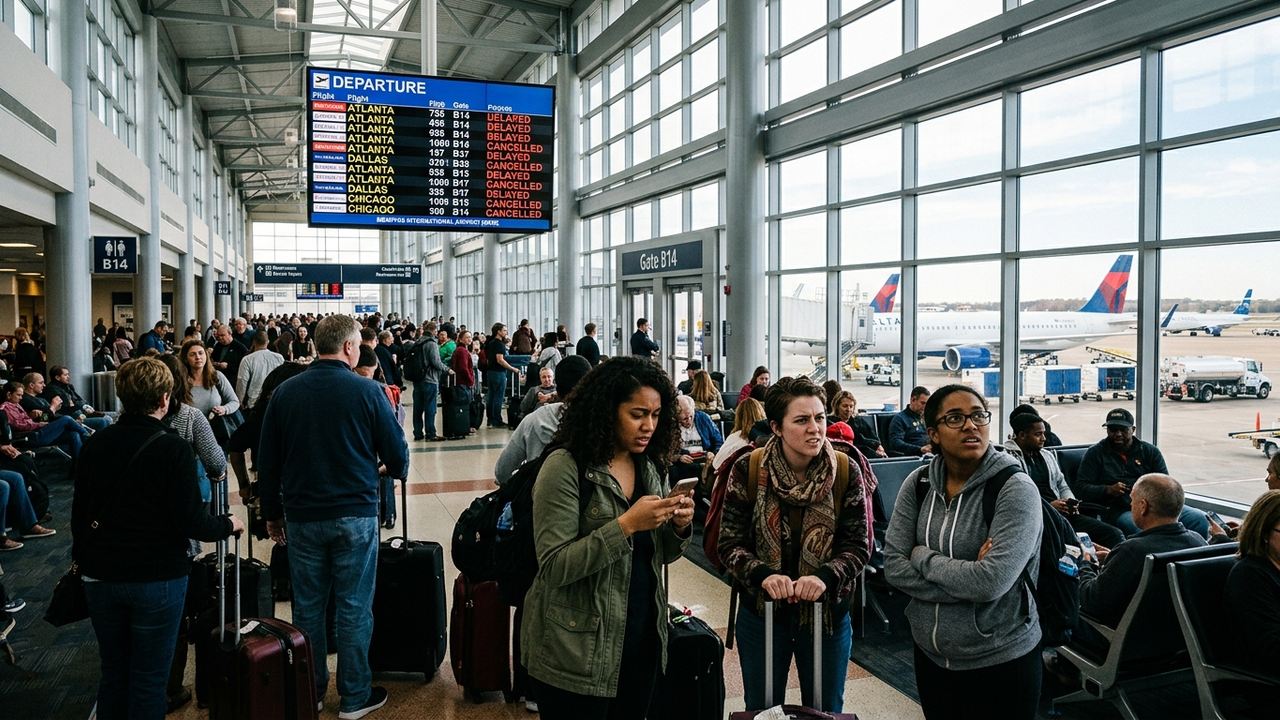
Image generated by AI
[Memphis, June 22, 2026] — A scheduled journey from Tennessee to Nevada was derailed on Sunday afternoon after a ground service vehicle collided with a Southwest Airlines aircraft during the boarding process. The incident involving Flight 4013 at Memphis International Airport resulted in a nearly four-hour delay, forcing all passengers to evacuate and transfer to a replacement jet before continuing to Las Vegas.
The collision occurred while passengers were actively entering the cabin and ground crews were conducting standard pre-flight operations. While the aircraft was stationary at its gate, the impact from the ground equipment necessitated an immediate halt to all boarding activities. According to reports, no injuries were sustained by passengers, flight crew, or airport personnel.
Ground Collision Interrupts Boarding at Memphis International Airport
The disruption took place in the high-traffic ramp area, where various support vehicles—including baggage tugs, catering trucks, and belt loaders—operate in close proximity to aircraft. Industry sources indicate that the specific type of equipment involved in the strike has not yet been publicly identified by airport officials.
Following the impact, the aircraft was immediately withdrawn from active service. Because the collision occurred during the boarding phase, passengers who had already entered the plane were required to deplane to allow for a comprehensive safety evaluation. The Memphis-Shelby County Airport Authority has categorized the event as an isolated incident, noting that it did not impact overall airport operations, runway availability, or other scheduled arrivals and departures.
Passenger Transfer and Operational Delays for Flight 4013
To minimize further disruption, Southwest Airlines coordinated the deployment of a replacement aircraft. This process involves several complex operational steps, including the relocation of checked luggage from the damaged jet, the reassignment of flight crews, and the preparation of a new airframe for departure.
The logistical requirements of the aircraft swap pushed the departure time back significantly. Flight 4013 eventually departed for Harry Reid International Airport, but the total delay approached four hours. This late arrival in southern Nevada disrupted the travel itineraries of numerous passengers, potentially affecting pre-arranged hotel check-ins, rental car pickups, and scheduled entertainment bookings in the Las Vegas metropolitan area.
Strategic Importance of the Memphis to Las Vegas Route
The affected flight operates on a key nonstop corridor connecting the Mid-South region with Nevada. Since the launch of this specific service in 2024, Las Vegas has emerged as the third-most popular destination for travelers departing from Memphis International Airport.
Given the high volume of leisure travelers, convention attendees, and short-term vacationers using this route, the reliability of this link is vital for regional tourism. While the use of a replacement aircraft ensured that the direct nature of the flight was preserved, the significant time loss impacted the initial phase of many travelers' trips.
Safety Protocols Following Ramp Equipment Contact
Aviation safety regulations mandate that any aircraft involved in a collision—regardless of how minor the contact appears—must undergo a rigorous technical inspection. Maintenance teams are required to verify that the fuselage, sensors, door seals, and structural panels remain intact.
Under federal guidelines, the areas surrounding gates and parking stands are designated as "non-movement areas." Safety management systems in these zones are designed to mitigate risks associated with the movement of heavy machinery around fragile aircraft skins. A visual inspection is insufficient; a formal engineering sign-off is required before a plane is deemed airworthy again.
Investigation into Ground Handling Procedures
An official review is currently underway to determine the cause of the collision. Investigators are expected to analyze the sequence of events, including the vehicle's trajectory, the driver's authorization and training records, and the general congestion levels at the gate at the time of the accident.
While the investigation is ongoing, reports have not yet confirmed whether the incident was caused by mechanical failure, such as brake malfunction, or human error resulting from poor visibility or communication lapses. The identity of the vehicle operator and the ownership of the equipment remain undisclosed.
Passenger Rights and Compensation Framework
Under U.S. Department of Transportation (DOT) regulations, passengers are afforded specific protections when flights are significantly delayed or canceled. If a traveler chooses not to fly due to a major schedule change, they may be eligible for a refund. However, in cases like Flight 4013, where passengers accept a replacement aircraft and complete their journey, the standard itinerary remains in effect.
Additional compensation or assistance typically depends on the airline's internal customer service commitments and the specific cause of the delay.
Summary of Flight Disruption
| Flight Detail | Information |
|---|---|
| Flight Number | Southwest Airlines 4013 |
| Departure Point | Memphis International Airport (MEM) |
| Destination | Harry Reid International Airport (LAS) |
| Date of Incident | June 21, 2026 |
| Nature of Incident | Ground vehicle strike during boarding |
| Total Delay | Approximately 4 hours |
| Injuries Reported | None |
| Resolution | Aircraft replacement and delayed departure |
Why This Matters: The Risk of Ramp Incidents
This incident highlights a critical vulnerability in aviation logistics: the "last mile" of the boarding process. While mid-air safety is statistically incredibly high, the ramp environment remains a high-risk zone where human error and mechanical failure can lead to significant operational cascading failures.
The requirement to replace an entire aircraft for a ground strike—even one that may have caused only superficial damage—demonstrates the industry's zero-tolerance policy toward structural uncertainty. For airlines, the cost of a four-hour delay and the deployment of a spare aircraft far exceeds the cost of the initial collision, emphasizing the financial imperative for stricter ground-handling training and potentially the integration of more advanced proximity-sensor technology on ramp vehicles to prevent such occurrences.
Related Travel Guides
Disclaimer
This article is for informational and educational purposes only. It does not constitute legal, financial, or professional advice. While we strive to provide accurate and up-to-date information, travel policies, regulations, and conditions change rapidly. Always verify information with official sources before making travel decisions. Nomad Lawyer makes no representations about the accuracy, reliability, completeness, or suitability of the information provided. Readers should consult qualified professionals for advice specific to their circumstances. The views expressed in this article are those of the author and do not necessarily reflect the views of Nomad Lawyer.
Preeti Gunjan
Contributor & Community Manager
A passionate traveller and community builder. Preeti helps grow the Nomad Lawyer community, fostering engagement and bringing the reader experience to life.
Learn more about our team →