
Middle East Turmoil Grounds Thousands of Flights Globally
Since late February 2026, escalating Middle East conflict has shuttered vital air corridors, grounding tens of thousands of flights and cascading into a global aviation crisis affecting travelers worldwide.

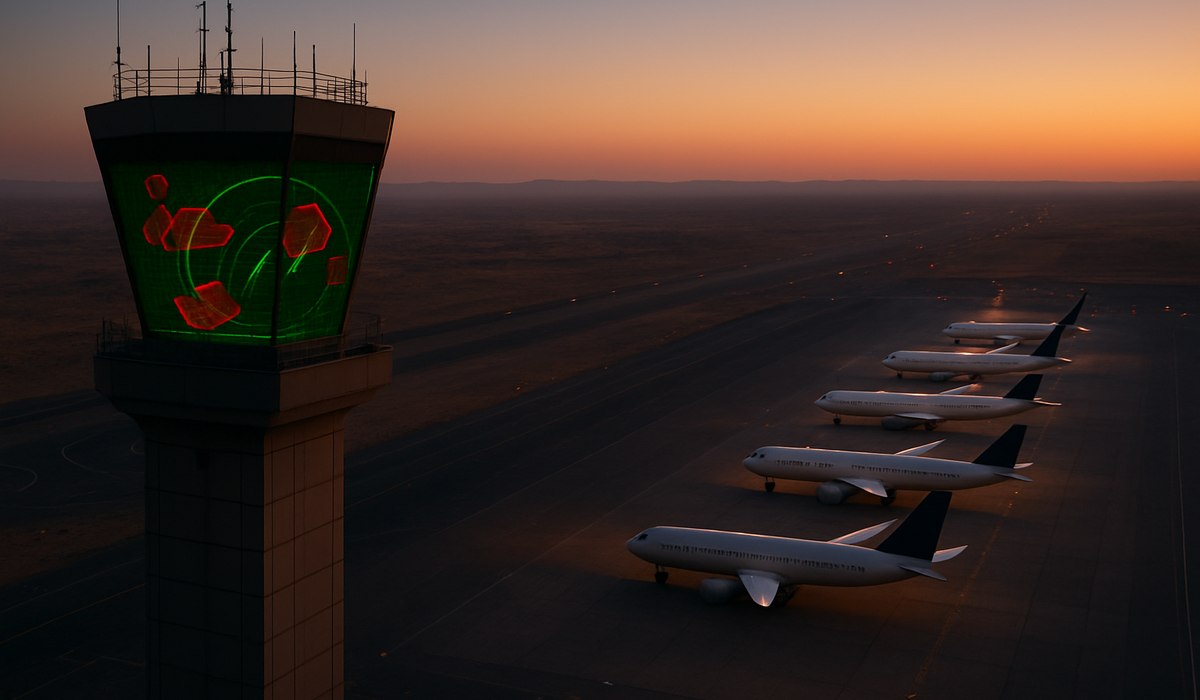
Image generated by AI
Regional Airspace Closures Turn Military Conflict Into Global Travel Chaos
Since February 28, 2026, military escalation across the Middle East has triggered one of aviation's most severe disruptions in recent memory. Iran, Israel, their regional allies, and multiple Gulf states have imposed sweeping airspace restrictions, severing critical flight corridors that connect Europe, Asia, and Africa. Data from aviation analytics firms confirms that tens of thousands of flights have been canceled, delayed, or rerouted as carriers scramble to navigate this unprecedented crisis.
The closure of airspace over Iran, Iraq, Jordan, Israel, and portions of the Persian Gulf has eliminated some of the shortest and most economically efficient routes for international traffic. Airlines face a bitter choice: accept multi-hour delays via longer detours or suspend operations entirely. This middle east turmoil has transformed a regional conflict into a worldwide travel emergency, with disruptions radiating from London to Sydney.
According to operational tracking systems, large swaths of the eastern Mediterranean and Gulf region now display restricted or closed airspace. The bottleneck is so severe that Saudi Arabian airspace has become the primary east-west lifeline, forcing unprecedented congestion over the kingdom's skies and overwhelming air traffic control capacity.
Which Routes Are Most Affected and Why Saudi Arabia Has Become the Lifeline
Major aviation hubs including Dubai International, Abu Dhabi International, and Doha's Hamad International have experienced waves of disruption. Dubai suffered physical damage from missile debris and security incidents, forcing operational cutbacks. Abu Dhabi and Doha implemented skeletal schedules as regional uncertainty persisted.
With traditional Gulf routes blocked or restricted, airlines have no choice but to reroute flights through Saudi Arabian airspace. This concentration of diverted traffic has created historic congestion levels over Riyadh and Jeddah. Aircraft that once transited Iraq, Iran, or Israel now arc north or south, adding 2–4 hours to typical routing and consuming additional fuel.
Airports in Bahrain, Kuwait, and Syria remain under heavy restrictions or full closures. This cascading closure pattern has isolated several major regional carriers from their traditional hub operations. Check FlightAware for real-time tracking of affected routes and active diversions.
How Airlines Are Adapting: Longer Routes, Hours of Delays, and Schedule Overhauls
Major carriers have responded with aggressive schedule cuts and operational restructuring. Qatar Airways, Etihad Airways, and flydubai have dramatically reduced frequencies on affected routes. Several wide-body aircraft were ferried to remote storage as demand collapsed and fuel surcharges mounted.
International carriers including British Airways, Lufthansa, Cathay Pacific, Virgin Atlantic, and Wizz Air have suspended or curtailed Middle East operations. Vietnamese Airlines and European leisure operators announced significant cuts to long-haul Asia-Europe routes, citing fuel costs and extended flight times as prohibitive factors.
Airlines have deployed flexibility waivers, allowing passengers to rebook without penalties. However, rebooking queues at European and Asian transfer hubs have grown chaotic. Passengers report waits exceeding six hours at major connection points as agents manually process thousands of alternative itineraries daily.
The aviation sector has absorbed an estimated 14,000+ flight cancellations directly attributable to Middle East closures in February and March alone. Knock-on disruptions continue rippling through North American, European, and East Asian networks. Check the FAA for official airspace notices and guidance.
What This Means for Nomadic Professionals and Frequent Travelers
For digital nomads and business travelers, this crisis disrupts carefully planned itineraries. Routes that once offered affordable connections through Doha or Dubai now require 8–12 hour repositioning flights via European hubs, significantly increasing journey duration and cost.
Travel insurance with specific coverage for geopolitical events becomes critical. Nomadic professionals should review their policies immediately to confirm coverage for airspace closure–related cancellations and delays. Standard policies often exclude war or military action coverage.
Visa and work-permit planning may be affected. Travelers headed to Southeast Asia, South Asia, or Australia should anticipate 20–30% longer journey times and book extra buffer days before critical work commitments.
Business class and premium cabin passengers face severe capacity constraints. Many airlines have consolidated operations to fewer aircraft, eliminating premium inventory on surviving flights. Premium frequent-flyer passengers should contact airlines immediately to secure seat availability.
Traveler Action Checklist
-
Check your flight immediately on FlightAware or your airline's website for cancellation or delay status.
-
Contact your airline directly via phone or official customer service channels—do not rely on email for urgent rebooking.
-
Request airline compensation under US DOT rules if your flight was canceled or significantly delayed due to this crisis.
-
Verify your travel insurance covers airspace closures, military action, and geopolitical events; standard policies may exclude these scenarios.
-
Rebook via alternative hubs (European airports like Frankfurt, Amsterdam, or London) rather than Gulf or Middle Eastern connection points.
-
Budget extra travel time—expect 4–6 additional hours compared to your pre-February routing.
-
Monitor your airline's operational updates daily; the situation remains fluid as airspace restrictions change frequently.
-
Document all expenses (hotels, meals, rebooking fees) incurred due to cancellations or extended delays for reimbursement claims.
-
Review your passport validity if your trip extends beyond original dates due to rescheduling.
-
Notify your destination (employer, accommodation provider, visa sponsor) immediately of any delays exceeding 24 hours.
Key Data: Middle East Turmoil Flight Impact (As of Early April 2026)
| Metric | Figure | Status |
|---|---|---|
| Total flights canceled/delayed (Feb 28–Apr 7) | 40,000+ | Confirmed |
| Estimated passengers affected | 6.5 million | Ongoing |
| Primary closed airspaces | Iran, Iraq, Israel, Jordan, Gulf states | Active |
| Primary alternative hub | Saudi Arabia | Congested |
| Longest route additions | 2–4 hours per flight | Persistent |
| Major airlines suspending routes | 15+ international carriers | Ongoing |
| Airports with damage/restrictions | Dubai, Abu Dhabi, Doha, Beirut | Partial operations |
| Estimated additional fuel costs | $200–400 million (industry-wide) | Estimated |
Frequently Asked Questions
Q: Which airlines are still flying to/from the Middle East? A: Saudi Arabian carriers, some Turkish Airlines routes, and limited operations by Gulf-based carriers remain active. Most European and Asian airlines have suspended direct Middle East service. Check your specific airline's website for real-time route status and official travel advisories.
Q: Am I entitled to compensation if my flight was canceled? A: US-regulated airlines must offer rebooking or refunds for cancellations. EU261 rules apply to flights departing EU airports, offering up to €600 compensation. Consult US DOT guidelines for your specific route and airline policies.
Q: How long will these airspace closures remain in effect? A: No firm timeline has been announced. Closures have persisted for over five weeks with no clear resolution. Plan travel flexibly and monitor official state aviation authorities and FAA notices for updates on airspace reopenings.
**Q: Should I postpone my Middle East trip entirely?
Disclaimer
This article is for informational and educational purposes only. It does not constitute legal, financial, or professional advice. While we strive to provide accurate and up-to-date information, travel policies, regulations, and conditions change rapidly. Always verify information with official sources before making travel decisions. Nomad Lawyer makes no representations about the accuracy, reliability, completeness, or suitability of the information provided. Readers should consult qualified professionals for advice specific to their circumstances. The views expressed in this article are those of the author and do not necessarily reflect the views of Nomad Lawyer.
Raushan Kumar
Founder & Lead Developer
Full-stack developer with 11+ years of experience and a passionate traveller. Raushan built Nomad Lawyer from the ground up with a vision to create the best travel and law experience on the web.
Learn more about our team →