
Southern Railway Achieves 100% Network Electrification Across 5,068 km Broad Gauge Lines in 2026
Southern Railway completes full electrification of its 5,068 km Broad Gauge network, eliminating diesel traction changes and improving transit efficiency across Tamil Nadu and beyond.

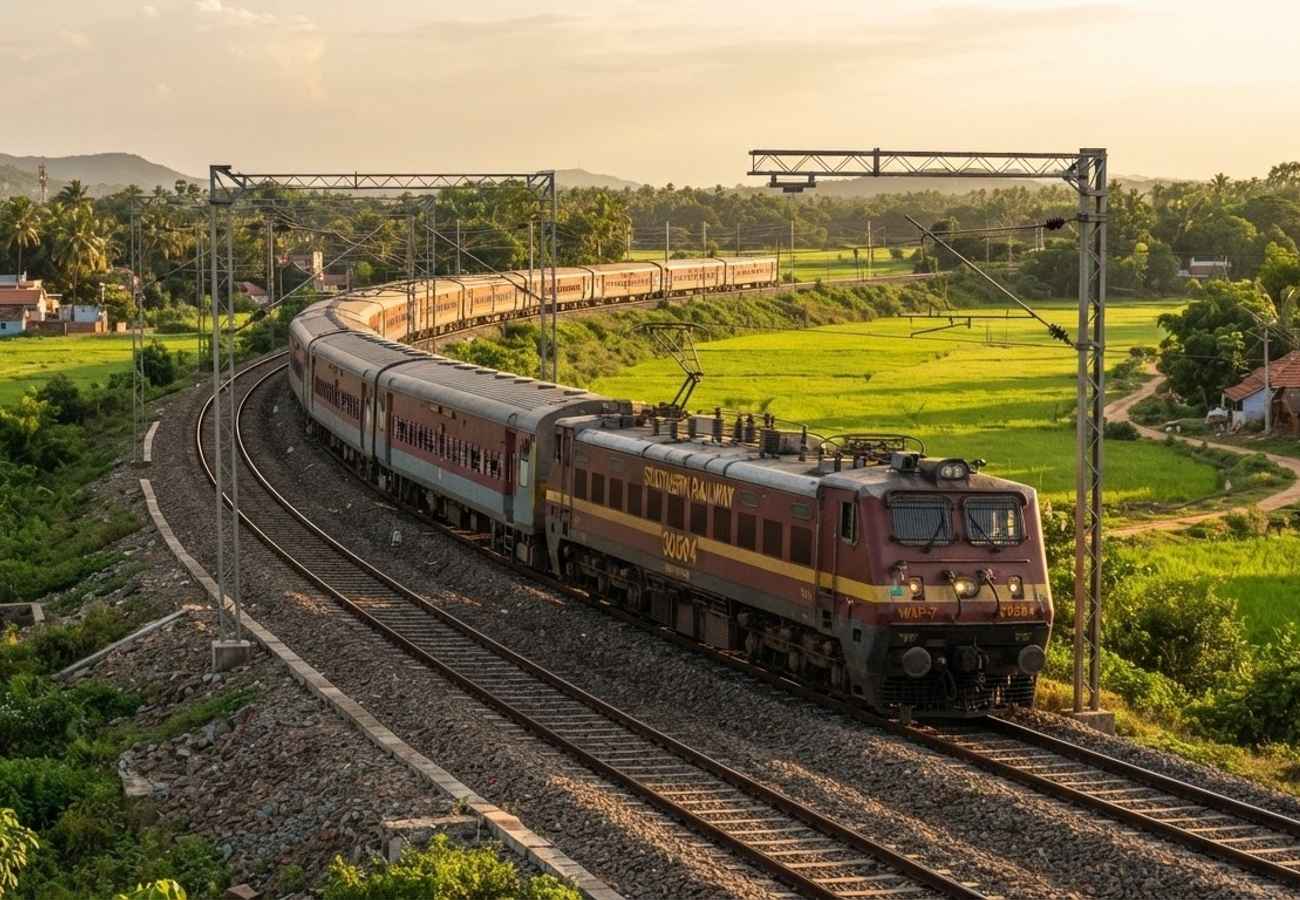
Image generated by AI
Are you planning a rail journey through South India and wondering if your route still requires slow locomotive swaps? Starting September 2026, the Southern Railway network has officially eliminated the need for diesel-to-electric traction changes across its entire Broad Gauge system.
The End of Diesel Traction in Southern Railway
Southern Railway has reached a historic infrastructure milestone by completing the electrification of its entire 5,068 km Broad Gauge (BG) network. This transition is finalized following the electrification of the remaining 71-kilometre stretch connecting Pattukkottai and Karaikkudi in Tamil Nadu. By removing the final gaps in overhead electrical infrastructure, the railway has effectively ended its reliance on diesel engines for these primary routes.
This achievement is the culmination of a process that began in 1931 in the Madras region. For nearly a century, the network expanded in phases, but the 2026 completion means that the entire zone now operates under a unified electric traction system. For the traveler, this means the removal of "traction change" stops—those frustrating delays where a train must stop to swap a diesel locomotive for an electric one, or vice versa.
Route and Schedule Details
The impact of this electrification is most visible on routes that previously transitioned between electrified and non-electrified zones. The final link in the chain ensures that seamless travel is now the standard across the zone.
| Route Section | Total Network Length | Final Link Length | Traction Type | Status |
|---|---|---|---|---|
| Southern Railway BG Network | 5,068 km | N/A | 100% Electric | Completed |
| Pattukkottai–Karaikkudi | N/A | 71 km | Electric | Completed |
| Madras Region (Initial) | N/A | N/A | Electric | Operational since 1931 |
Traveler Logistics Guide
Navigating a fully electrified network changes how you should plan your transit, particularly regarding timing and booking. Here is the practical breakdown of what this means for your itinerary.
Optimal Connection Planning Previously, schedules often padded in extra time for locomotive changes at junction stations. With 100% electrification, these operational bottlenecks are removed. When booking via Indian Railways (IRCTC), you may notice tighter connection windows and more consistent arrival times. I recommend checking the "Live Train Status" on the official app to see if these time savings are already reflected in current schedules.
Booking and Digital Check-in To avoid queues at the station, utilize Digi Yatra for seamless biometric boarding where available. While electrification happens on the tracks, the station experience is moving toward full digitization. Ensure your tickets are linked to your mobile device to expedite your movement through the terminal.
Baggage and Boarding Strategies Because trains no longer need to stop for traction swaps in the Pattukkottai–Karaikkudi sector, "technical halts" are becoming less frequent. If you were previously relying on these short stops to stretch or manage luggage, be aware that the train may now move directly through these points. Plan your onboard refreshments and restroom breaks accordingly.
Customs and Transit Notes For international nomads entering India via Chennai or other Southern ports, the transition to electric rail makes regional travel more predictable. If you are traveling with heavy equipment or freight, the increased efficiency of electric locomotives means more reliable cargo movement and fewer delays in the transit of goods.
Regional Connectivity Impact
The shift to a fully electric Broad Gauge network fundamentally reshapes how travelers move through Tamil Nadu and the surrounding southern states. By eliminating the diesel gap, Southern Railway has created a "unified electric zone."
From an operational standpoint, this means the railway can now optimize locomotive allocation. Instead of keeping a fleet of diesel engines on standby for short, non-electrified stretches, they can deploy high-performance electric locomotives across the entire 5,068 km span. This results in faster acceleration and higher average speeds for both passenger and freight services.
Environmentally, this is a massive win for the region. The removal of diesel combustion across thousands of kilometers significantly lowers the carbon footprint of every ticket sold. For the environmentally conscious traveler, rail travel in South India is now one of the greenest transit options available globally.
Furthermore, this modernization sets the stage for future upgrades, such as the introduction of more high-speed trains and improved frequency of services between major hubs and smaller towns like Karaikkudi. The infrastructure is now "future-ready," meaning the tracks can handle more advanced rolling stock without needing further major overhead work.
FAQ: Southern Railway Electrification 2026
Do I need a different ticket for electric trains? No. Your standard ticket booked via IRCTC remains valid. The electrification is an infrastructure change to the locomotives and tracks, not a change in the ticketing or fare system.
How does this affect my travel time? You will likely see a reduction in total travel time, especially on routes through Tamil Nadu. The elimination of locomotive swaps (traction changes) removes 15 to 30 minutes of idling time per swap.
Are all trains on this network now electric? While the network is 100% electrified, some older diesel trains may still operate during the transition period. However, the infrastructure now allows all trains to be electric, leading to smoother and quieter journeys.
Can I check my bags through to the final destination? Yes. Baggage policies remain unchanged. However, because the trains are more efficient and stop less for technical reasons, ensure your luggage is securely stowed before departure.
The era of the diesel swap is over; South India is now moving at the speed of electricity.
Related Travel Guides
Disclaimer
This article is for informational and educational purposes only. It does not constitute legal, financial, or professional advice. While we strive to provide accurate and up-to-date information, travel policies, regulations, and conditions change rapidly. Always verify information with official sources before making travel decisions. Nomad Lawyer makes no representations about the accuracy, reliability, completeness, or suitability of the information provided. Readers should consult qualified professionals for advice specific to their circumstances. The views expressed in this article are those of the author and do not necessarily reflect the views of Nomad Lawyer.
Kunal K Choudhary
Co-Founder & Contributor
A passionate traveller and tech enthusiast. Kunal contributes to the vision and growth of Nomad Lawyer, bringing fresh perspectives and driving the community forward.
Learn more about our team →