
Southeast Asia Rail Revival 2026: Thailand, Vietnam, and Indonesia Redefine Slow Travel
Southeast Asia is transforming colonial-era rail infrastructure into luxury cultural corridors, driving economic growth in rural Thailand, Vietnam, and Indonesia through high-yield slow travel.

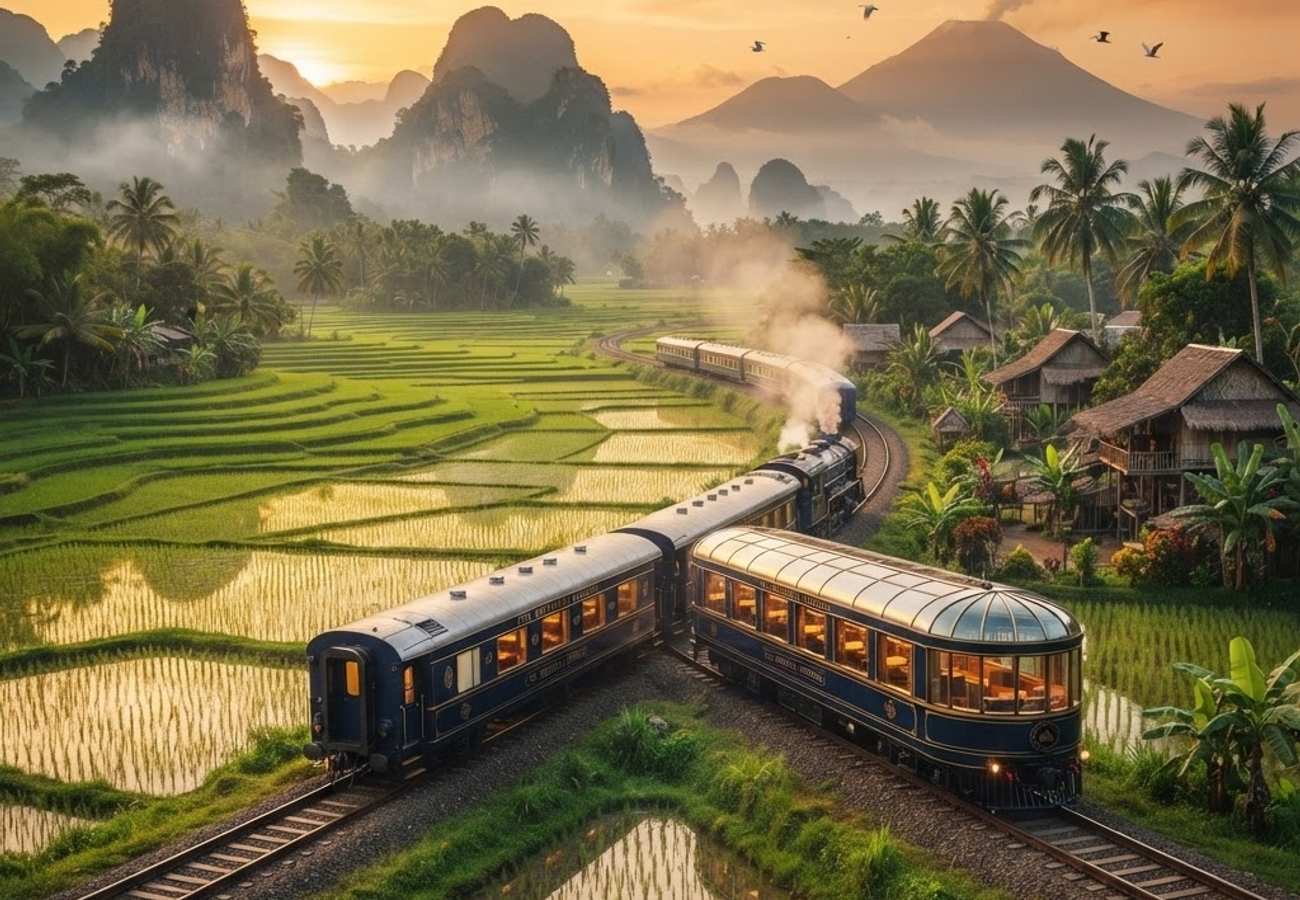
Image generated by AI
The era of rapid-fire transit is yielding to a "slow travel" movement across Southeast Asia, where historic rail networks are being reimagined as mobile cultural sanctuaries. By shifting the focus from mere transportation to immersive experiences, Thailand, Vietnam, and Indonesia are decoupling tourism from overcrowded hubs and injecting capital directly into rural heartlands.
The Macroeconomics of Mindful Transit
The pivot toward rail is a direct response to global traveler burnout. Modern voyagers are increasingly eschewing the stress of airports for scenic carriages that encourage longer stays and a reduced environmental footprint. This shift is not merely a lifestyle preference; it is a strategic economic realignment.
By establishing dedicated layovers in remote regions, rail networks are decentralizing tourism spending. Local artisans, family-operated guesthouses, and heritage sites that were previously bypassed by air travel are now receiving steady streams of high-spending international visitors. This model effectively mitigates urban overtourism while providing an equitable distribution of foreign capital across non-metropolitan districts.
Indonesia: Blending High-Speed Efficiency with Bespoke Luxury
Indonesia is demonstrating that high-speed infrastructure and heritage rail can coexist to serve different market segments. While the Whoosh high-speed network handles time-sensitive business and tourist traffic between major cities, the state railway is investing heavily in "slow" luxury.
The Balai Yasa Surabaya Gubeng is currently constructing the Nusantara Explorer Luxury Sleeper Train. This 12-car flagship will feature:
- Private Signature, Advance, and Compact cabins.
- A Grand Restaurant and live entertainment lounge.
- Neoclassical interiors inspired by Batik Lasem, Wayang Kulit, and Balinese art.
This luxury push complements the existing Kereta Panoramic services, which utilize oversized windows and retractable glass sunroofs to connect Jakarta, Bandung, Garut, Surabaya, Yogyakarta, Semarang, and Banyuwangi.
Java Network Passenger Growth
| Period | International Passenger Volume | Growth/Details |
|---|---|---|
| 2024 (Full Year) | 669,226 | Base volume |
| 2025 (Full Year) | 694,123 | Steady YoY increase |
| 2025 (Jan–July) | 405,814 | 3.86% increase over 2024 same period (390,745) |
Vietnam: High-Yield Cultural Charters and Heritage Links
Vietnam has successfully monetized the intersection of scenic beauty and operational reliability. In the first half of the year, railway operations served nearly 3.9 million travelers, with specific heritage routes seeing massive revenue spikes.
The Central Heritage Connection (Hue to Da Nang) reported an 11% increase in passengers and a 41% surge in operating revenue. Similarly, the Five City Gates route from Hanoi maintained an 80% occupancy rate across 400 trips, with 13 premium charters alone generating over VND 16 billion (approximately $465,000).
To further integrate ecological sites with urban centers, the Wonder Journey, World Heritage train has been launched. This 8-carriage service carries 304 passengers between Hue and Phong Nha in Quang Tri Province, featuring:
- A 24-seat VIP carriage.
- Rotating seats and community lounges.
- Direct access to the Quang Tri Ancient Citadel and Phong Nha-Ke Bang caves.
Other notable routes include the Indochine-inspired Red Flamboyant (Hanoi to Hai Phong) and the Thang Long Kinh Bac (Hanoi to Bac Ninh), which integrates traditional live music into the journey.
Thailand and Malaysia: Infrastructure Reform and Colonial Legacies
Thailand is leveraging rail as a pillar of its Thailand Connected Tourism 2030 plan. The government has set ambitious tourism revenue targets between 2.58 trillion and 2.8 trillion THB, with long-haul foreign visitors expected to contribute over 700 billion THB.
By allowing private operators to charter services across a 4,044 km network spanning 47 provinces, Thailand has introduced highly specialized experiences:
- SRT Royal Blossom and KIHA 183: Restored Japanese carriages running day trips from Bangkok to Lopburi.
- Historical Excursions: Specialized routes covering the Bridge on the River Kwai, the Tham Krasae Viaduct, and the Death Railway in Kanchanaburi.
In Malaysia, the Ekspres Rakyat Timuran (the Jungle Railway) continues to serve as a critical economic lifeline and tourist draw. Stretching 526 kilometers from Gemas to Tumpat, this route traverses the 1925 Guillemard Bridge, limestone karsts, and dense rainforests, preserving the colonial-era charm of the region.
Key Takeaways for the Modern Traveler
- Economic Impact: Rail travel is shifting wealth from saturated cities to rural artisans and guesthouses.
- Luxury Integration: New fleets like the Nusantara Explorer are treating trains as "moving museums" of local art.
- Strategic Connectivity: Vietnam is using "Wonder Journey" services to link fragmented heritage sites into unified itineraries.
- Diverse Options: The region now offers a spectrum from ultra-fast transit (Whoosh) to slow, immersive heritage charters.
Frequently Asked Questions
What is "Slow Travel" in the context of Southeast Asia? It is a movement prioritizing the journey over the destination, utilizing rail to reduce environmental impact and engage more deeply with rural cultures.
Which trains offer the most luxury in Indonesia? The upcoming Nusantara Explorer Luxury Sleeper Train and the current Kereta Panoramic are the premier options for luxury and scenic viewing.
How has Vietnam improved its rail tourism? By introducing high-end charters like the Wonder Journey and focusing on high-yield routes like the Central Heritage Connection.
The transformation of iron tracks into cultural corridors marks a new era where the journey is the destination.
Related Travel Guides
Disclaimer
This article is for informational and educational purposes only. It does not constitute legal, financial, or professional advice. While we strive to provide accurate and up-to-date information, travel policies, regulations, and conditions change rapidly. Always verify information with official sources before making travel decisions. Nomad Lawyer makes no representations about the accuracy, reliability, completeness, or suitability of the information provided. Readers should consult qualified professionals for advice specific to their circumstances. The views expressed in this article are those of the author and do not necessarily reflect the views of Nomad Lawyer.
Preeti Gunjan
Contributor & Community Manager
A passionate traveller and community builder. Preeti helps grow the Nomad Lawyer community, fostering engagement and bringing the reader experience to life.
Learn more about our team →