
South Korean Airlines Expand China Routes as Passenger Growth Outpaces Flight Supply in 2026
South Korean carriers are aggressively expanding China networks as passenger demand surges by 22.2%, significantly outpacing a 7.4% increase in flight capacity.
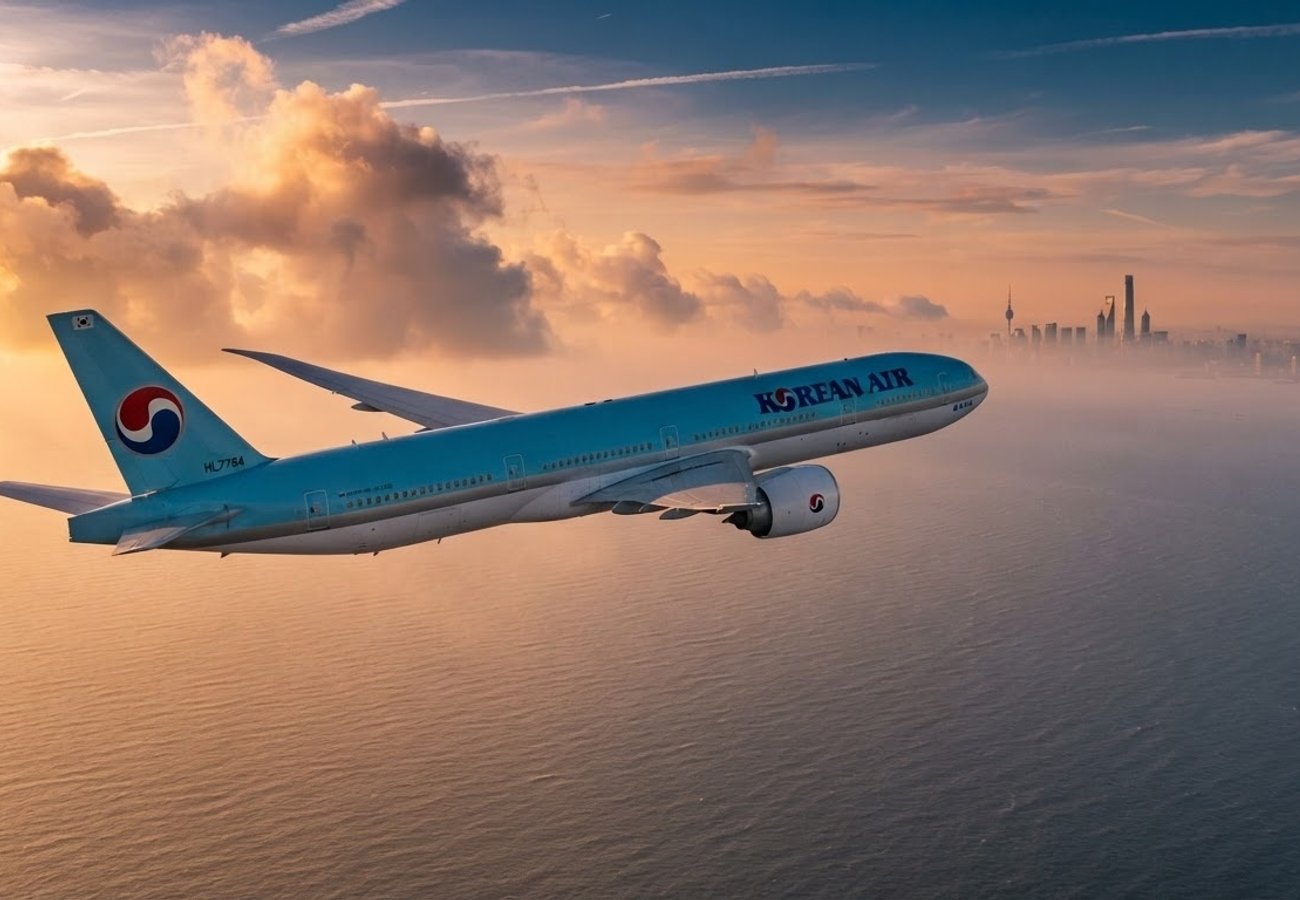
Image generated by AI
South Korean aviation carriers are escalating competition for China-bound routes as passenger demand surges far beyond current flight availability. This supply-demand imbalance is triggering a strategic shift toward regional Chinese cities and a battle for limited traffic rights.
China Travel Demand Outpaces Capacity
Data from South Korea’s Ministry of Land, Infrastructure and Transport reveals a significant disparity between passenger growth and operational capacity during the first half of the year.
Passenger volume on routes to China reached 11,486,154, marking a 22.2% increase over the 9,396,686 passengers recorded during the same period the previous year. In contrast, flight capacity grew by only 7.4%, rising from 69,357 to 74,497 operations.
This indicates that passenger demand is growing at nearly three times the rate of available flights, creating a high-value environment for carriers seeking to maximize international revenue.
The expansion is focused on both primary hubs and secondary regional cities to capture diverse passenger segments, including corporate travelers and leisure tourists.
- Major Hubs: Increased focus on Beijing, Shanghai, and Guangzhou due to their roles in finance, technology, and trade.
- Incheon-Beijing: Identified as a priority route with 14 additional weekly flights allocated.
- Secondary Markets: Additional weekly flights (7 each) allocated for Shanghai, Guangzhou, and Dalian.
- Regional Expansion: New connectivity emerging from Busan and Cheongju to reduce reliance on Seoul's main hubs.
Low-Cost Carrier (LCC) Network Expansion
South Korean LCCs are utilizing newly allocated traffic rights from April to diversify their portfolios beyond traditional Japan and Southeast Asia markets.
Eastar Jet
- Launched Incheon-Hohhot route on August 6 (exclusive operator).
- Planned expansion into Ningbo, Xiamen, Shanghai, Beijing, and Hangzhou.
Jeju Air
- Launching Busan-Guilin route on September 23 (4 weekly flights).
- Increasing frequencies on Busan-Shanghai.
- Preparing connections between Jeju and Chengdu/Chongqing.
Aero K
- Cheongju-Chengdu services scheduled for November.
- Cheongju-Beijing flights scheduled for December.
Passenger Rights & Advisory
For passengers traveling between South Korea and China, the current supply-demand imbalance suggests a high probability of overbooked flights and volatile pricing.
Rebooking and Compensation Rights Our analysis of current aviation policies indicates that passengers facing involuntary denied boarding or significant delays should monitor the following:
- Flight Cancellations: If a carrier cancels a flight due to capacity mismanagement, passengers are generally entitled to a full refund or re-routing to their destination at the earliest opportunity.
- Overbooking: In cases of overbooking, passengers should request written confirmation of the disruption and inquire about "denied boarding compensation" as per the carrier's conditions of carriage and local aviation laws.
- Visa Facilitation: Outbound travelers should leverage the current visa-free policies for South Korean visitors to China to avoid processing delays.
Practical Advice for Travelers To mitigate the risk of disruption in this high-demand corridor, passengers should:
- Book flights directly through the airline to ensure faster communication during schedule changes.
- Confirm flight status via tracking systems like FlightAware 24 hours before departure.
- Keep digital copies of all travel documents, as regional airport expansions may lead to temporary processing bottlenecks.
The current trajectory indicates a strategic pivot for South Korean aviation. By diversifying into regional Chinese cities, LCCs are insulating themselves against market saturation in Japan.
The operational efficiency of these routes—characterized by short flight durations and high aircraft rotation—allows airlines to maximize fleet utilization. However, the reliance on government-allocated traffic rights remains a bottleneck. The decision by the Ministry of Land, Infrastructure and Transport regarding the remaining 113 routes across 67 countries will determine which carriers dominate the East Asian corridor through 2027.
The battle for China's airspace is no longer just about volume, but about strategic regional penetration.
Related Travel Guides
Disclaimer
This article is for informational and educational purposes only. It does not constitute legal, financial, or professional advice. While we strive to provide accurate and up-to-date information, travel policies, regulations, and conditions change rapidly. Always verify information with official sources before making travel decisions. Nomad Lawyer makes no representations about the accuracy, reliability, completeness, or suitability of the information provided. Readers should consult qualified professionals for advice specific to their circumstances. The views expressed in this article are those of the author and do not necessarily reflect the views of Nomad Lawyer.