South Korea Travel From Seoul to Jeju City Shifts as Gimpo Rebooking Pairs With Incheon Flight Expansion

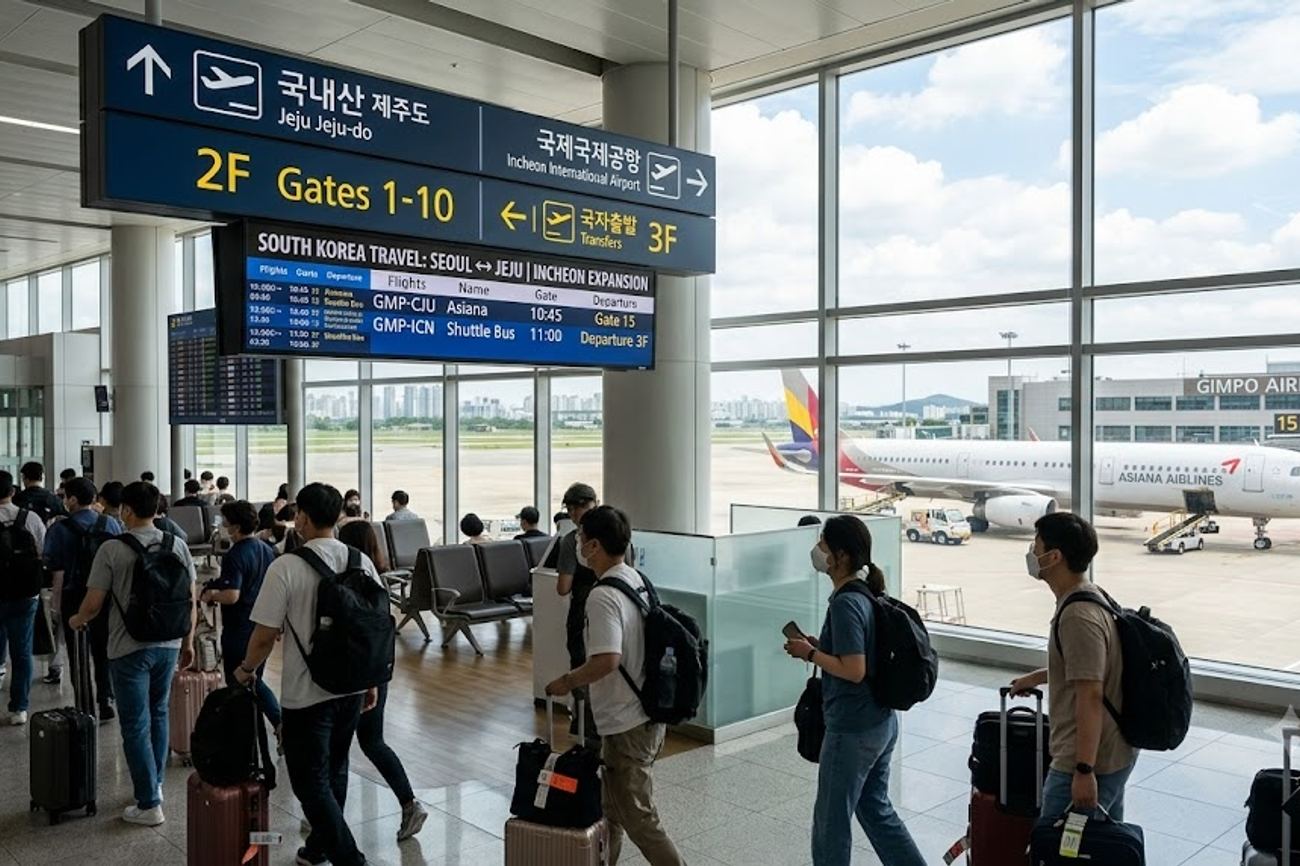
Image generated by AI
A KRW 2,500 reduced passenger service charge at Incheon International Airport serves as the primary financial lever in Jeju Air’s aggressive winter pivot. This strategic pricing incentive, coupled with a simultaneous expansion of Incheon–Jeju frequencies, signals a calculated redistribution of capacity away from the traditional Gimpo hub. While the airline is not abandoning the Seoul–Jeju corridor, the coordinated timing of "non-operation" periods at Gimpo and increased availability at Incheon suggests a fundamental shift in how the carrier intends to capture domestic demand between October 2026 and March 2027.
The Anatomy of a Network Reset
The current restructuring is not a simple timetable tweak but a multi-layered operational overhaul. Between September 10 and September 17, Jeju Air issued a series of B2B notices that fundamentally alter the domestic flight map for the winter season. The most sweeping of these changes, published on September 17, resets the schedules for flights connecting Jeju with Gimpo, Busan, Cheongju, and Daegu, effective from October 25, 2026, through March 27, 2027.
For the traveler, the most volatile segment is the Gimpo–Jeju route. The airline has implemented a "non-operation and reaccommodation" window from November 4, 2026, to March 27, 2027. This phrasing is critical; it does not indicate a total route cancellation, but rather the removal of specific flight rotations. This creates a precarious environment for passengers who booked winter travel early in the year, as existing itineraries may be subject to involuntary changes or cancellations.
To balance this contraction at Gimpo, Jeju Air is leveraging Incheon International Airport Corporation to create a dual-airport strategy for the capital region. While Gimpo remains the legacy domestic gateway, Incheon is seeing a frequency expansion starting October 25, 2026. This move was preceded by a targeted sales campaign from September 10 to September 17, specifically designed to migrate demand toward the Incheon gateway before the official winter schedule was locked.
Operational Timeline and Capacity Shifts
The sequence of these announcements reveals a carrier moving rapidly to optimize its fleet deployment. The following table outlines the specific triggers and their operational impact:
| Notice Date | Effective Period | Route Affected | Action Taken | Impact on Passenger |
|---|---|---|---|---|
| Sept 10 | Sept 20 & 23 | Jeju $\rightarrow$ Gimpo | Timing Adjustment | Immediate schedule shift |
| Sept 11 | Oct 28 & 30 | Gimpo $\rightarrow$ Jeju | Capacity Increase | Short-term seat availability |
| Sept 14 | Nov 4 – Mar 27 | Gimpo $\leftrightarrow$ Jeju | Selected Non-operation | Potential re-booking required |
| Sept 14 | Oct 25 – Mar 27 | Incheon $\leftrightarrow$ Jeju | Frequency Expansion | Increased winter options |
| Sept 17 | Oct 25 – Mar 27 | Multi-city $\leftrightarrow$ Jeju | Network-wide Reset | Broad timetable changes |
The geographical precision of these changes is noteworthy. The airline is specifically managing the flow between the Gangseo-gu district of Seoul (Gimpo) and the 2 Gonghang-ro area of Jeju-si. By diversifying the departure points, Jeju Air is mitigating the risks associated with slot constraints at Gimpo while tapping into the logistical advantages of Incheon.
Expert Analysis: The Incheon Migration Strategy
The simultaneous reduction of specific Gimpo rotations and the expansion of Incheon services is a classic "capacity migration" play. For travelers booking these routes, the direct consequence is a fragmented booking experience where the "Seoul to Jeju" search result may show availability, but the specific departure airport—and the subsequent transit time to that airport—varies wildly.
The pricing data provides the clearest evidence of this strategy. Jeju Air has maintained parity in base fares to ensure the move to Incheon is seen as a matter of convenience and value rather than a "budget" alternative. Both Incheon and Gimpo share a standard Friday-to-Sunday base fare of KRW 85,000 and a Monday-to-Thursday discount fare of KRW 70,000. The fuel surcharge remains locked at KRW 20,900 for tickets issued from September 1.
Travelers navigating the Seoul-to-Jeju corridor are seeing a strategic shift in logistics as flight capacities expand across both major hubs. Passengers can coordinate their departures through the Korea Airports Corporation, which manages Gimpo International Airport's high-frequency domestic shuttle services to Jeju.
However, the "hidden" incentive is the airport charge. By slashing the domestic passenger service charge at Incheon to KRW 2,500 (a 50% reduction) until December 31, 2026, Jeju Air is effectively subsidizing the longer commute to Incheon. This pricing pressure means that for the first quarter of the winter season, Incheon is the mathematically superior choice for cost-conscious travelers.
From a regulatory perspective, this shift suggests that Jeju Air is navigating the strict slot environments managed by the Korea Airports Corporation. By shifting a portion of the Jeju load to Incheon, they can maintain their market share on the country's busiest domestic route without being entirely dependent on the congested Gimpo infrastructure. For the travel industry, this serves as a warning: "confirmed" winter bookings on domestic Korean routes are currently high-risk assets.
Key Takeaways
- Itinerary Volatility: Passengers with Gimpo–Jeju bookings between November 4, 2026, and March 27, 2027, must verify their flights, as selected rotations have been cancelled.
- Incheon Pivot: Jeju Air is actively expanding its Incheon–Jeju frequency to offset Gimpo reductions, creating a two-hub system for the Seoul region.
- Financial Incentive: A 50% reduction in Incheon passenger service charges (down to KRW 2,500) is available until December 31, 2026.
- Fare Parity: Base fares remain identical across both Seoul airports, with weekend peaks at KRW 85,000 and weekday lows at KRW 70,000.
- Network Scope: The reset extends beyond Seoul, affecting winter timetables for Busan, Cheongju, and Daegu flights to Jeju.
FAQ: Jeju Air Winter Schedule 2026-2027
Are all Jeju Air flights from Gimpo to Jeju cancelled this winter? No. The airline has announced "selected non-operation" for certain flights from November 4, 2026, to March 27, 2027. Many flights continue to operate, including additional capacity added for October 28 and 30.
Why should I fly from Incheon instead of Gimpo to Jeju? Beyond increased flight frequency, Incheon offers a financial advantage. Until December 31, 2026, the domestic passenger service charge is reduced by 50% to KRW 2,500, making it cheaper than departing from Gimpo.
What happens if my Gimpo–Jeju flight was cancelled? Jeju Air has implemented reaccommodation measures for affected passengers. You should check your specific booking via the airline's portal or your travel agent to see if you have been moved to a different time or airport.
Do the winter changes affect flights from other cities? Yes. The September 17 notice confirmed that schedule changes apply to the broader Jeju domestic network, specifically including routes from Busan, Cheongju, and Daegu.
The shift toward Incheon is more than a schedule change; it is a blueprint for how domestic carriers will bypass urban congestion to maintain growth.
Tags: Jeju Air, Gimpo International Airport, Incheon International Airport, Jeju-si, South Korea Aviation 2026, Korea Airports Corporation
Related Travel Guides
- Canada’s Manulife Transforms Travel Insurance With ChatGPT App To Deliver Faster Digital Protection For Travellers
- Qatar Teams Up With Saudi Arabia And More As GCC AI Tourism Gains Momentum With Nearly 30% New Tech Innovations For Travellers
- Japan Tourism Gains New Attraction with Edo Tokyo Open Air Museum Historic Buildings
This article is for informational purposes. Flight routes, passenger regulations, visa rules, and transit advisories are subject to change by airlines and aviation authorities. Readers are advised to verify schedules and travel documentation with relevant carriers and border agencies before departure.
Related Stories

SITA Leads New Aviation Era as Smart AI, Biometrics, and Data Exchange Remove Barriers Across Global Air Travel

Canada’s Manulife Transforms Travel Insurance With ChatGPT App To Deliver Faster Digital Protection For Travellers