
South Korea Overtakes Japan in Chinese Holiday Demand: Seoul Welcomes 777,000 Visitors as July 2026 Reshapes East Asian Travel

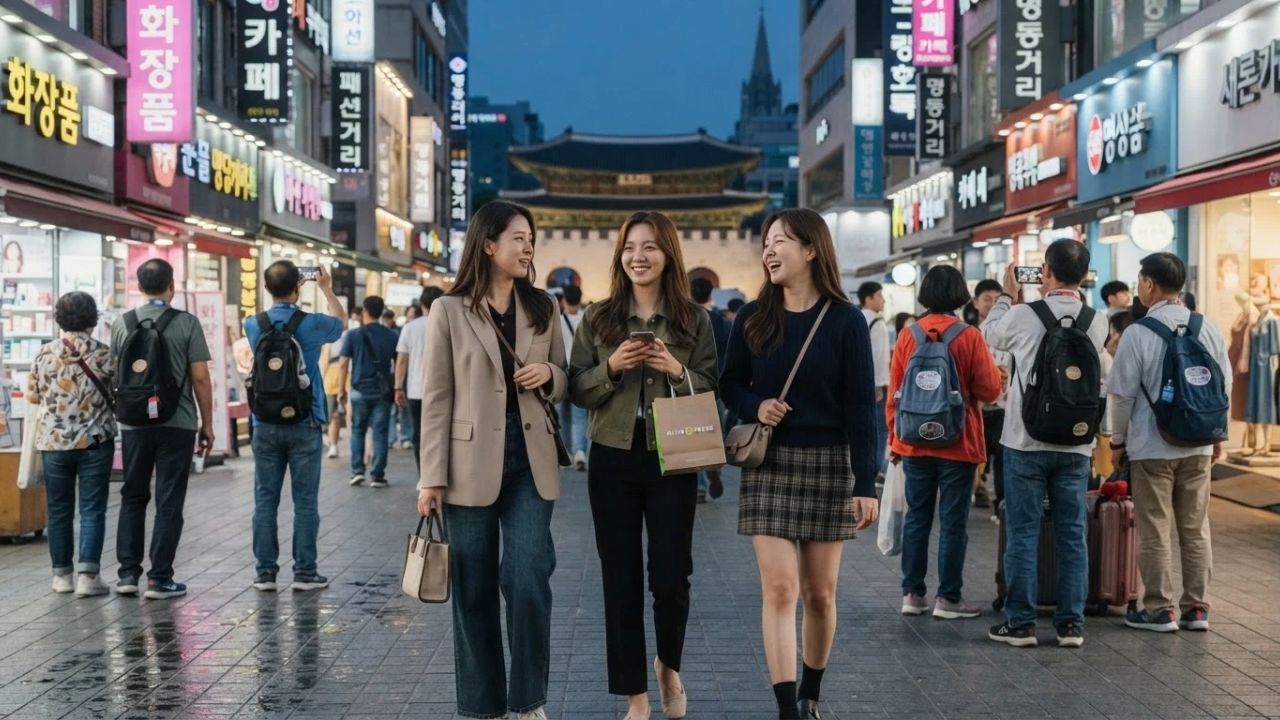
In a historic reversal of East Asian travel patterns, South Korea welcomed 777,000 Chinese visitors in July 2026—a 29% year-on-year surge—overtaking Japan, which saw Chinese arrivals drop 56.1% to 428,200 during the same month. Propelled by the global resonance of Hallyu entertainment, short flight corridors, and frictionless urban payment systems, Seoul drove South Korea's total inbound arrivals to a record-breaking 2.093 million visitors in July and 12.803 million across the first seven months of the year.
The dramatic transformation marks a watershed moment in Asia's competitive tourism sector. Just twelve months prior, in July 2025, Japan dominated the regional market, attracting approximately 980,000 Chinese vacationers compared to South Korea's 600,000—a commanding 1.6-to-1 advantage for Tokyo, Kyoto, and Osaka. By mid-2026, that dynamic flipped entirely. South Korea recorded approximately 350,000 more Chinese travelers than Japan in a single month, demonstrating how swiftly consumer sentiment, geopolitical mood, and tailored cultural marketing can redirect international travel flows.
While Japan maintained its overall inbound lead with 3.442 million total foreign visitors in July 2026—sustained by powerful growth from South Korea itself and Taiwan—the sharp decline in Chinese leisure demand has recalibrated regional aviation networks and retail corridors. For South Korea, the influx has transformed Seoul, Busan, and Jeju Island into prime beneficiary destinations, setting new benchmarks for international visitor expenditure and urban hospitality recovery.
The Local Trend Revealed: A 350,000-Visitor Reversal in East Asia
The mid-year statistics compiled by regional tourism boards illustrate the magnitude of this cross-border realignment. South Korea’s 29.0% year-on-year surge in Chinese arrivals to 777,000 travelers elevated China back to its undisputed position as the nation's premier feeder market. In stark contrast, Japan’s tally of 428,200 Chinese tourists represented a steep 56.1% contraction compared to July 2025.
| Country Destination | July 2026 Chinese Arrivals | Year-on-Year Change | July 2025 Benchmark | Regional Market Position |
|---|---|---|---|---|
| South Korea | 777,000 visitors | +29.0% growth | ~600,000 visitors | Leading Asian choice for Chinese outbound holidaymakers |
| Japan | 428,200 visitors | -56.1% drop | ~980,000 visitors | Experienced steep contraction in Chinese visitor demand |
The root causes behind this structural swing extend beyond simple seasonal variation. A pronounced softening in Chinese traveler confidence toward Japan—influenced by bilateral geopolitical tensions, domestic travel sentiment shifts, and cost sensitivity—curbed package tours and independent leisure bookings into Tokyo and Osaka. Concurrently, South Korea aggressively tailored its entry procedures, digital payment channels, and pop-culture marketing to meet the expectations of modern Chinese travelers.
For younger demographics in Shanghai, Beijing, Qingdao, and Guangzhou, South Korea delivers an accessible, high-energy vacation. Flight times between eastern Chinese coastal airports and Seoul Incheon (ICN) or Gimpo (GMP) average between ninety minutes and two hours. This geographical proximity, coupled with dozens of daily flights, enables spontaneous weekend getaways, shopping expeditions, and concert trips that require far less vacation leave than long-haul holidays.
Additionally, the cultural pull of the Korean Wave (Hallyu) remains exceptionally potent. Contemporary Chinese visitors are not merely touring historic palaces; they are following curated itineraries celebrating K-pop music videos, television filming locations in Gangnam and Hongdae, beauty and medical wellness clinics in Sinsa-dong, and designer street fashion in Seongsu-dong.
South Korea Reaches Record Heights: Inbound Arrivals Hit 2.093 Million in July 2026
The wave of Chinese arrivals provided the catalyst for South Korea’s historic tourism performance. The country recorded 2.093 million international visitors in July 2026, representing a 20.8% year-on-year increase and setting an all-time monthly record for the nation’s tourism industry.
| Rank | Primary Source Market | July 2026 Visitor Arrivals | Year-on-Year Trajectory & Profile |
|---|---|---|---|
| 1 | China | 777,000 arrivals | Surpassed 2019 levels; anchors urban retail and pop-culture travel |
| 2 | Japan | 330,000 arrivals | Steady bilateral leisure exchange and beauty-focused city breaks |
| 3 | Taiwan | 261,000 arrivals | Strong demand for regional food circuits and seasonal mountain rail trips |
| 4 | United States | 150,000 arrivals | Sustained interest in cultural heritage, military history, and gastronomy |
| 5 | Hong Kong | 76,000 arrivals | High-spending independent travelers exploring culinary and cafe scenes |
Cumulative arrivals between January and July 2026 reached 12.803 million foreign tourists, a 21.3% increase compared to the equivalent seven-month period in 2025. Crucially, this performance is 29.5% higher than the pre-pandemic benchmark recorded during the same period in 2019.
Chinese visitor recovery has proved especially robust. Chinese tourist arrivals in July 2026 reached approximately 149.6% of July 2019 levels, demonstrating that demand from mainland China has fully transcended pre-pandemic baselines. Where travelers once booked rigid group bus tours, the new cohort consists predominantly of independent, digitally savvy millennial and Gen-Z travelers who explore neighborhood cafes, indie art galleries, and night food markets.
Japan Retains Overall Volume Lead Amid Diversified Source Markets
While Japan lost its position as the top destination for Chinese holidaymakers, the country remains a formidable global tourism powerhouse. Japan welcomed 3.442 million total foreign visitors in July 2026, retaining a commanding lead over South Korea’s 2.093 million in absolute inbound arrivals.
Japan’s resilience stems from its diversified global visitor base. Rather than relying entirely on a single source market, Japan absorbed the downturn in Chinese arrivals through strong double-digit growth across other neighboring Asian territories:
- South Korea to Japan: 894,700 South Korean travelers visited Japan in July 2026, marking a 31.9% year-on-year rise. Favorable exchange rates against the Japanese yen and expanded budget flights connecting Busan, Daegu, and Seoul to regional Japanese prefectures (Fukuoka, Osaka, Hokkaido) fueled heavy outbound travel.
- Taiwan to Japan: Visitors from Taiwan reached 763,800 in July 2026, representing a 26.4% year-on-year increase.
- Western Long-Haul Demand: High visitor volumes from North America, Europe, and Australia continued to support hotel occupancy across Tokyo, Kyoto, Hiroshima, and the Japanese Alps.
This cross-border dynamic illustrates a fascinating reciprocal travel phenomenon: while Chinese tourists pivoted toward South Korea, South Korean vacationers crossed the Korea Strait in historic numbers to explore Japan.
Cultural & Environmental Value: Transforming Heritage Exploration and Urban Living
The rapid growth in international visitors has prompted South Korean tourism officials, municipal planners, and cultural preservation trusts to balance tourist density with neighborhood livability and cultural integrity.
In historic quarters like Bukchon Hanok Village and Insa-dong in Seoul, traditional wooden architecture (hanok) coexists with residential life. Municipal authorities have introduced designated visiting hours (10:00 AM to 5:00 PM) and residential quiet zones to protect local elderly residents from noise and overcrowding. Travelers are encouraged to appreciate traditional Joseon-era craftsmanship—such as mother-of-pearl lacquerware (najeonchilgi), traditional mulberry paper (hanji), and natural fermentation crafts—directly from accredited master artisans.
For the visitor, the real impact is experiencing how traditional Korean culture seamlessly integrates into modern urban rhythms. At Seoul's grand royal palaces—Gyeongbokgung, Changdeokgung, and Deoksugung—visitors wearing traditional Korean hanbok receive complimentary palace admission. This initiative has transformed historical sites into interactive cultural sanctuaries where international travelers actively participate in living tradition.
Simultaneously, eco-conscious and community-based initiatives are taking root beyond the capital. Travelers are venturing onto the Olle walking trails of volcanic Jeju Island, supporting rural fishing villages and women divers (haenyeo), whose centuries-old sustainable free-diving traditions are recognized on the UNESCO Intangible Cultural Heritage list. In historic temple complexes like Woljeongsa in Gangwon Province and Haeinsa in Gyeongsang, the national Templestay program offers guests immersive retreats focused on mindful meditation, monastic chores, and vegan temple cuisine (baru gongyang), demonstrating how heritage tourism can foster inner peace while supporting monastery conservation.
Visitor Insider Tips: Navigating Seoul, Jeju, and Busan with Local Expertise
Navigating South Korea during this period of high visitor interest requires strategic planning and localized digital tools. Here are practical insider recommendations:
- Download Local Navigation Apps Before Arrival: Google Maps does not provide functional walking directions or accurate transit routing in South Korea due to national security regulations governing domestic geographic data. Download and install Naver Map or KakaoMap, both of which provide comprehensive English interfaces, real-time bus arrival tracking, subway transfer guidance, and pedestrian navigation.
- Secure a WOWPASS or Seoul Climate Card: Avoid airport foreign exchange markups and high credit card foreign transaction fees by purchasing a WOWPASS card upon arrival at Incheon or Gimpo airports. The card acts as a prepaid Korean won debit card that can be reloaded in multiple foreign currencies and doubles as a T-money transit card. For extensive exploration within the capital, consider the municipal Climate Card, which offers unlimited rides on Seoul subways and public buses for designated multi-day passes.
- Master Palace and Hanok Etiquette: When renting a hanbok for palace visits, choose certified cultural rental shops that provide authentic traditional designs rather than synthetic party costumes. When exploring Bukchon Hanok Village, respect strict community rules: keep conversations to a whisper, refrain from peering into private residential courtyards, and avoid sitting on high wooden door thresholds (muntteok), which in Korean tradition symbolizes stepping on good fortune.
- Jeju Island Visa-Free Window: International travelers, including Chinese passport holders, can take advantage of the 30-day visa-free entry policy on Jeju Island, provided they arrive via direct international flights to Jeju International Airport (CJU) without transiting through the mainland.
- Explore Neighborhood Food Markets Over Tourist Chains: Skip crowded commercial shopping avenues and discover historic public food markets. Visit Mangwon Market in western Seoul for hand-pulled knife-cut noodles (kalguksu) and crispy sweet-and-spicy fried chicken bites (dakgangjeong). At Seoul's historic Gwangjang Market, sit at family-run stalls to enjoy freshly ground mung bean pancakes (bindaetteok) fried in cast-iron skillets alongside hand-rolled mayak gimbap paired with chilled rice wine (makgeolli).
- Dining Table Courtesy: When dining in traditional Korean restaurants, wait for the eldest person at the table to lift their spoon before eating. Never stick chopsticks vertically into a bowl of white rice, as this resembles ancestral funeral incense offerings. When someone pours you water or a beverage, hold your glass with both hands to convey respect.
Tourism Outlook: East Asia's New Era of Cultural and Aviation Diplomacy
The July 2026 data confirms that Asia's tourism leadership is entering a more competitive and dynamic phase. South Korea’s ascension over Japan in Chinese holiday demand proves that traveler loyalties can shift rapidly when cultural appeal, geographic proximity, and streamlined border access align.
Moving forward, South Korea's primary challenge will be extending visitor stays and encouraging travelers to explore beyond Seoul's capital borders. By investing in high-speed KTX rail connections, expanding international charter flights into regional gateways like Busan Gimhae (PUS) and Daegu (TAE), and promoting coastal, alpine, and culinary routes across Jeolla and Gangwon provinces, South Korea aims to convert short-term holiday surges into sustainable, balanced nationwide growth.
For Japan, the priority remains reassuring Chinese visitors while continuing to cultivate diversified source markets across North America, Europe, and Southeast Asia. As both nations modernize their tourism infrastructures, travelers across East Asia stand to benefit from more competitive airfares, richer cultural experiences, and seamless digital travel environments throughout the remainder of 2026 and into 2027.
Related Travel Guides
Disclaimer
This article is for informational and educational purposes only. It does not constitute legal, financial, or professional advice. While we strive to provide accurate and up-to-date information, travel policies, regulations, and conditions change rapidly. Always verify information with official sources before making travel decisions. Nomad Lawyer makes no representations about the accuracy, reliability, completeness, or suitability of the information provided. Readers should consult qualified professionals for advice specific to their circumstances. The views expressed in this article are those of the author and do not necessarily reflect the views of Nomad Lawyer.
Raushan Kumar
Founder & Lead Developer
Full-stack developer with 11+ years of experience and a passionate traveller. Raushan built Nomad Lawyer from the ground up with a vision to create the best travel and law experience on the web.
Learn more about our team →