South Korea Cherry Blossom Travel Surge Drives Record 18.93 Million Tourist Arrivals in Historic Spring Boom

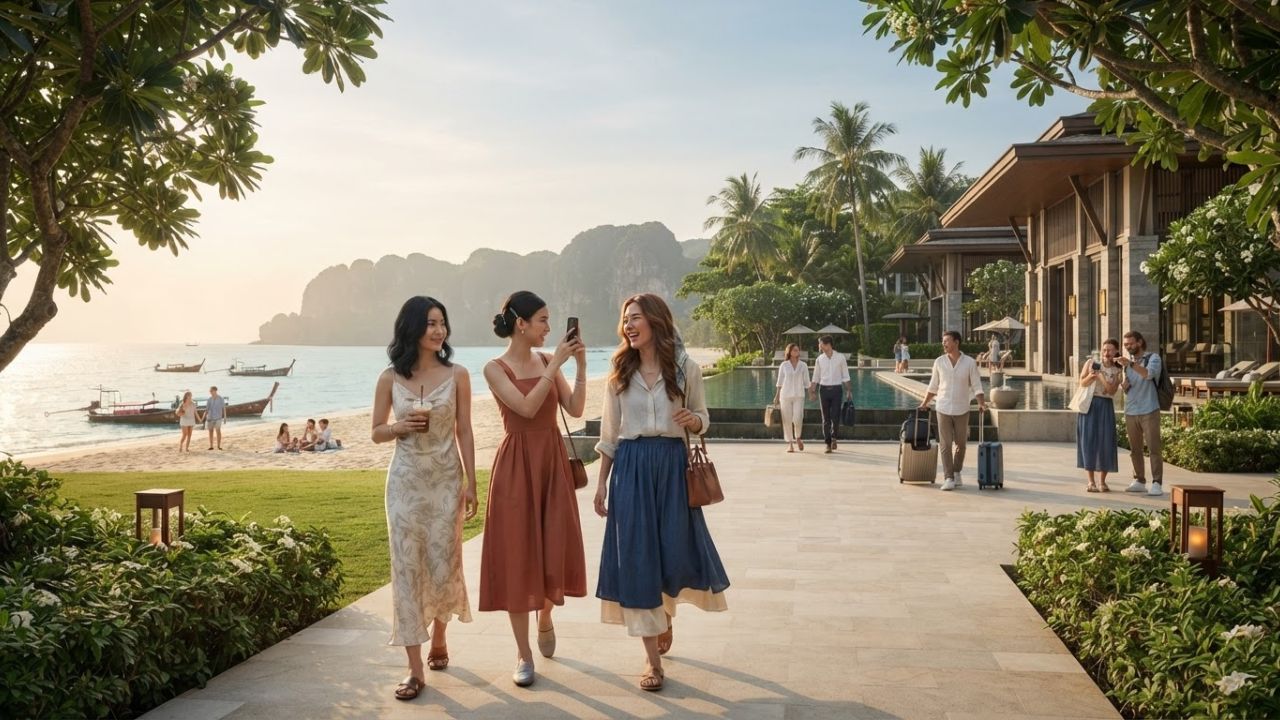
Image generated by AI
South Korea registered an all-time record of 18.937 million foreign tourist arrivals as an early spring floral bloom propelled high-speed rail travel, regional festival spending, and independent international exploration across the peninsula.
SEOUL, South Korea — Unusually mild spring atmospheric shifts caused floral blooms across South Korea to open up to eight days earlier than historical climate baselines, igniting an unprecedented international travel surge. Official national tourism statistics confirm that the country welcomed 18.937 million foreign tourists, permanently eclipsing pre-pandemic benchmarks.
The spring travel window saw 3.42 million foreign visitors in the first quarter alone, followed by a 7.8% expansion over 2019 baseline levels in the second quarter. First-half (H1) international arrivals reached 8.826 million visitors, marking the highest H1 inbound volume in South Korean aviation and hospitality history.
| Tourism Metric | 2025 Record Volume / Value | Year-on-Year / Benchmark Change | Strategic Sector Significance |
|---|---|---|---|
| Annual Foreign Arrivals | 18,937,000 visitors | Exceeds pre-pandemic levels | All-time historical high for South Korea |
| H1 International Arrivals | 8,826,000 visitors | Highest H1 record in history | Base anchor for 2025 tourism output |
| Q1 Foreign Arrivals | 3,420,000 visitors | High Q1 spring surge | Early bloom drove Q1 momentum |
| Q2 Arrival Growth Rate | +7.8% YoY | Shift vs 2019 baseline | Sustained early summer trajectory |
| Total Tourist Spending | $14.37 Billion USD | Record consumer expenditure | Driven by dining, retail & culture |
Provincial Bloom Timeline and Regional Arrival Trajectory
The early arrival of warm air currents reshaped traditional travel schedules, starting along the southern coastline before advancing rapidly north to the capital.
       South Korea 2025 Floral Bloom Trajectory & Transit Flow
┌─────────────────────────────────────────────────────────────────────────┐
│ March 22: Seogwipo, Jeju Island (Official Initial Bloom)                │
├─────────────────────────────────────────────────────────────────────────┤
│ March 23: Changwon (Jinhae Port) & Busan Coastal Canopy Exposure       │
├─────────────────────────────────────────────────────────────────────────┤
│ Late March: Inland Hubs (Daejeon & Jeonju Peak Canopy Density)         │
├─────────────────────────────────────────────────────────────────────────┤
│ Early April (Post-Apr 1): Seoul Metropolitan Walkways (Yeouido/Songpa)  │
└─────────────────────────────────────────────────────────────────────────┘
Southern eco-zones bloomed first, with Seogwipo on Jeju Island registering full bloom on March 22. Coastal hubs Changwon and Busan reached full exposure on March 23. Regional transit channels into Daejeon and Jeonju experienced immediate demand spikes by late March, while Seoul's major park corridors reached peak canopy shortly after April 1.
| Regional Hub | Official Bloom Date | Key Spring Destination | Primary Visitor Transit Channel |
|---|---|---|---|
| Jeju Island (Seogwipo) | March 22, 2025 | Seokchon Coast / Mt. Hallasan | Jeju International Airport (CJU) |
| Changwon & Busan | March 23, 2025 | Jinhae Gunhangje / Haeundae | KTX Gyeongbu Line / Gimhae Airport (PUS) |
| Daejeon & Jeonju | Late March 2025 | Hanok Village / Expo Park | KTX Honam Line / Express Bus Terminals |
| Seoul Metropolitan Area | April 1+ 2025 | Yeouido / Seokchon Lake | Seoul Station / AREX Airport Express |
International Source Market Breakdown and Demographic Shifts
Growth across primary source markets provided balanced regional traffic. Mainland China led overall volume with 5.48 million annual visitors, supported by expanded short-haul air capacity.
- Greater China: Mainland China contributed 5.48 million arrivals. Taiwan logged a 50.1% increase compared to pre-pandemic benchmarks.
- Japan: Remained the second-largest origin market, sustained by weekend flight frequencies into Incheon (ICN) and Gimhae (PUS).
- United States: Long-haul travel registered notable expansion, led by a 42.1% surge in American visitors.
- Demographic Composition: Independent travelers aged 20 to 30 comprised 31.2% of total foreign visitors during the first half of 2025, driven by pop culture, media filming locations, and regional cafe culture.
| Origin Market | 2025 Visitor Volume / Shift | Primary Market Driver | Preferred Entry Gateway |
|---|---|---|---|
| Mainland China | 5,480,000 visitors | Short-haul flight restoration & leisure | Incheon (ICN) / Jeju (CJU) |
| Japan | 2nd Largest Origin Market | Weekend city breaks & culinary travel | Gimhae (PUS) / Gimpo (GMP) |
| Taiwan | +50.1% vs Pre-Pandemic | Independent regional itineraries | Incheon (ICN) / Daegu (TAE) |
| United States | +42.1% YoY Surge | Educational breaks & long-haul leisure | Incheon International Airport |
Economic Impact of Major Festivals and Capital Hotspots
Regional seasonal festivals delivered significant financial windfalls for local hospitality and retail merchants across South Gyeongsang and Greater Seoul.
The 63rd Jinhae Gunhangje festival in Changwon welcomed 3.34 million visitors over its two-week schedule. Direct regional consumer spending reached 39 billion KRW, generating a total economic ripple effect of 130 billion KRW ($97 million USD) across the South Gyeongsang economy. Foreign attendees recorded the highest daily per-capita spending at 57,872 KRW.
    Regional Economic Impact of Peak Floral Festivals (Spring 2025)
  ┌────────────────────────────────────────────────────────────────────────┐
  │ Jinhae Gunhangje (Changwon): 3.34M Visitors | 130B KRW Total Impact    │
  ├────────────────────────────────────────────────────────────────────────┤
  │ Yeouido Spring Festival (Seoul): 3.50M Visitors along Han River        │
  ├────────────────────────────────────────────────────────────────────────┤
  │ Seokchon Lake Festival (Songpa-gu): 2.20M Visitors near Lotte Tower    │
  └────────────────────────────────────────────────────────────────────────┘
In Seoul, over 3.5 million visitors attended the Yeouido Spring Flower Festival along Yeouiseo-ro, while the Seokchon Lake Cherry Blossom Festival in Songpa-gu attracted 2.2 million visitors. Heritage sites Gyeongbokgung and Changdeokgung experienced record international foot traffic, fueled by visitors renting traditional Hanbok.
| Festival / Venue | Location | Visitor Footfall | Direct Economic / Commercial Impact |
|---|---|---|---|
| Jinhae Gunhangje | Changwon, S. Gyeongsang | 3,340,000 visitors | 130 Billion KRW ($97M USD) total economic output |
| Yeouido Spring Festival | Yeouido, Seoul | 3,500,000 visitors | High retail & transit volume along Han River |
| Seokchon Lake Festival | Songpa-gu, Seoul | 2,200,000 visitors | Commercial surge across Jamsil retail precinct |
| Jinhae Daily Foreign Spend | Changwon | N/A | 57,872 KRW per capita foreign visitor spend |
Transition to Independent Travel and Digital Infrastructure Adoption
South Korea's inbound sector completed a structural shift toward autonomous travel. Group tours accounted for only 8.6% of foreign arrivals, while Free Independent Travellers (FITs) represented 82.9% of total incoming tourists.
- Digital Payment Growth: Foreign credit card and contactless mobile payments surged 64.2% year-on-year.
- Prepaid Transit Passes: Issuance of specialized tourist transit cards (including T-Money and WOWPASS) exceeded 1.45 million units in H1 2025.
- Navigation App Usage: Over 78% of surveyed FITs used localized navigation applications (such as Naver Map and KakaoMap) to navigate subway and bus lines.
- Convenience Store Retail: Sales at neighborhood convenience store chains rose 52.1% YoY, boosted by immediate tax-refund processing at checkout.
| Independent Travel Metric | 2025 Operational Statistic | Industry Implications |
|---|---|---|
| Free Independent Traveller (FIT) Share | 82.9% of total tourists | Tour group market drops to 8.6% share |
| Contactless & Card Transactions | +64.2% YoY growth | Cashless mobile payment adoption |
| Prepaid Transit Pass Issuance (H1) | 1,450,000+ units | Direct access to subways, buses & retail |
| Localized Navigation App Usage | 78% of surveyed FITs | Shift to Naver Map over global apps |
| Convenience Store Sales Growth | +52.1% YoY | Instant tax-refund checkout adoption |
High-Speed Rail Dispatch and Regional Tourism Decentralization
Korea Railroad Corporation (KORAIL) managed high passenger loads by operating high-speed KTX services at near-maximum capacity, dispersing visitors away from Seoul into provincial regions.
During peak bloom weeks, high-speed rail load factors on primary corridors connecting Seoul to Busan and Shin-Gyeongju reached 94.2%. Foreign usage of multi-day Korail passes grew by 38.5% YoY in H1 2025, enabling over 2.1 million foreign arrivals to travel beyond Greater Seoul within 48 hours of landing at Incheon International Airport.
       KORAIL High-Speed Rail Passenger Load Rates (Peak Floral Window)
 ┌─────────────────────────────────────────────────────────────────────────┐
 │ Seoul <──> Busan (Gyeongbu Line KTX): 94.2% Peak Seat Occupancy         │
 ├─────────────────────────────────────────────────────────────────────────┤
 │ Seoul <──> Shin-Gyeongju (Heritage Corridor KTX): 94.2% Occupancy       │
 ├─────────────────────────────────────────────────────────────────────────┤
 │ Regional Dispersal: 2.1M+ Foreign Visitors Exited Seoul within 48 Hours │
 └─────────────────────────────────────────────────────────────────────────┘
Media filming locations in Gyeongju (Bulguksa Temple and Hwangridan-gil) and coastal Gangneung logged a 41.3% increase in foreign visitors compared to spring 2024, supported by young travelers accessing regional KTX stations.
| Rail Line & Regional Route | Peak Passenger Load Factor | Multi-Day Pass Growth | Operational Dispersal Impact |
|---|---|---|---|
| Seoul to Busan (Gyeongbu KTX) | 94.2% seat capacity | +38.5% YoY pass growth | Dispersed 2.1M+ tourists within 48 hrs of arrival |
| Seoul to Shin-Gyeongju (KTX) | 94.2% seat capacity | High international usage | Powered 41.3% growth in Gyeongju media footfall |
| Jeonju / Honam Line (KTX) | ~90%+ seat capacity | Steady FIT reservations | Drove 44.6% booking surge in Hanok stays |
Record Expansion of Medical and Dermatological Tourism
South Korea welcomed a record 2.01 million foreign medical patients in 2025, representing a 71.9% increase year-on-year as international travelers paired seasonal sightseeing with healthcare procedures.
Overseas patients and accompanying companions generated 12.5 trillion KRW in direct health and leisure spending, translating into an estimated 22.8 trillion KRW in total domestic economic production. Non-invasive outpatient procedures dominated, with 87.7% of patients seeking treatment at specialized cosmetic and dermatological clinics.
| Medical Tourism Region | International Patient Volume | Percentage Market Share | Key Specialty Districts |
|---|---|---|---|
| Seoul Metropolitan Area | 1,760,000 patients | 87.2% of total market | Gangnam & Myeongdong Dermatology Clinics |
| Busan Metropolitan City | ~76,380 patients | 3.8% of total market | Centum City / Seomyun Medical Street |
| Gyeonggi Province | ~54,270 patients | 2.7% of total market | Suwon & Seongnam Regional Centers |
| National Total | 2,010,000 patients | 100% (71.9% YoY growth) | Direct Spend: 12.5T KRW |
Hotel Occupancy Rates, Lodging Revenues, and Municipal Protection
Surging seasonal demand drove hotel performance metrics upward across urban centers:
- Seoul Hotel Occupancy: Central Seoul districts (Jung-gu and Jongno-gu) reached an average occupancy of 91.8% during the first week of April 2025.
- Regional Room Rates: Hotel rates in Busan and Changwon rose 27.4% in late March compared to standard spring baselines.
- Heritage Lodging: Bookings for traditional Hanok stays and short-term rentals rose 44.6% YoY across Jeonju and Seoul.
- Crowd Safety & Protection: Municipal authorities deployed 2,500+ safety stewards daily in Seoul and Changwon. Elevated viewing platforms reduced vegetation damage by 18% versus 2024, while a 15% expansion in bus and subway service frequencies offset more than 120,000 potential private vehicle trips.
| City / District | Peak Lodging Occupancy | Accommodation Pricing Shift | Municipal Preservation Measures |
|---|---|---|---|
| Seoul (Jung-gu / Jongno-gu) | 91.8% hotel occupancy | +44.6% YoY Hanok stay bookings | 2,500+ safety stewards deployed daily |
| Busan & Changwon | High festival occupancy | +27.4% late-March rate surge | 15% transit frequency increase (-120k vehicle trips) |
Traveler Transit Logistics: KTX Rail Pass Booking, T-Money Cards, and Airport Connections
Travelers planning independent spring itineraries across South Korea should observe core transit and connectivity guidelines:
Airport Transfers & Express Rail
- Incheon Airport Express (AREX): Operates direct non-stop trains from Incheon Airport (Terminal 1 & Terminal 2) to Seoul Station in 43 to 51 minutes.
- Gimhae Airport (PUS) to Busan Central: Connect via the Busan-Gimhae Light Rail Transit to Sasang Station for subway transfer to Haeundae and Seomyun.
KTX Rail Pass & Booking Advice
- KORAIL Pass: Foreign tourists can purchase 3-day or 5-day consecutive or flexible Korail passes online prior to arrival. Seat reservations open 30 days in advance and sell out rapidly for peak spring weekend travel between Seoul, Gyeongju, and Busan.
- Transit & Payment Cards: WOWPASS and T-Money cards can be purchased at airport convenience stores or AREX kiosks. They serve as subway/bus passes and debit cards at retail stores nationwide.
| Transit Corridor | Transport Mode | Travel Time | Logistics Advice for Foreign Travellers |
|---|---|---|---|
| Incheon Airport (ICN) to Seoul Station | AREX Express Train | 43 mins (T1) / 51 mins (T2) | Reserved seating; purchase ticket at airport basement |
| Seoul to Busan | KTX Gyeongbu Line | 2 hours 15 minutes | Book seats 30 days ahead during peak floral bloom |
| Seoul to Shin-Gyeongju | KTX Gyeongbu Line | 2 hours 05 minutes | Gateway to Bulguksa Temple & Hwangridan-gil |
| Seoul to Changwon (Jinhae) | KTX to Changwon-Chungmu | 2 hours 45 minutes | Direct transit to Jinhae Gunhangje festival venue |
Frequently Asked Questions
When did the 2025 cherry blossom season start in South Korea?
The season began on March 22 on Jeju Island. Coastal cities Changwon and Busan reached full bloom on March 23, while the Seoul metropolitan area reached peak canopy shortly after April 1.
How many international tourists visited South Korea in 2025?
South Korea recorded an all-time high of 18.937 million foreign tourists in 2025, with 8.826 million arrivals recorded during the first half (H1) of the year.
What was the economic impact of the Jinhae Gunhangje festival?
The festival generated 39 billion KRW in direct consumer spending and an estimated 130 billion KRW ($97 million USD) in total regional economic output across South Gyeongsang.
How did foreign tourists navigate South Korea without tour groups?
Over 82.9% of foreign tourists traveled independently (FITs), utilizing prepaid T-Money/WOWPASS transit cards and localized navigation apps like Naver Map.
Related Travel Guides
This article is for informational purposes. Flight routes, passenger regulations, visa rules, and transit advisories are subject to change by airlines and aviation authorities. Readers are advised to verify schedules and travel documentation with relevant carriers and border agencies before departure.
Related Stories
South Korea Medical Beauty Tourism Faces Regulatory Reckoning Over Misleading Claims and Predatory Clinic Contracts
Samarkand Marathon 2026: Uzbekistan Attracts 1,500 Athletes from 63 Nations for Sports Tourism