
South India Celebrates Its Authentic Vegetarian Street Food Legacy as Rasanai Presents The Great Saiva Festival Across Three Cities
South India Celebrates Its Authentic Vegetarian Street Food Legacy as Rasanai Presents The Great Saiva Festival Across Three Cities

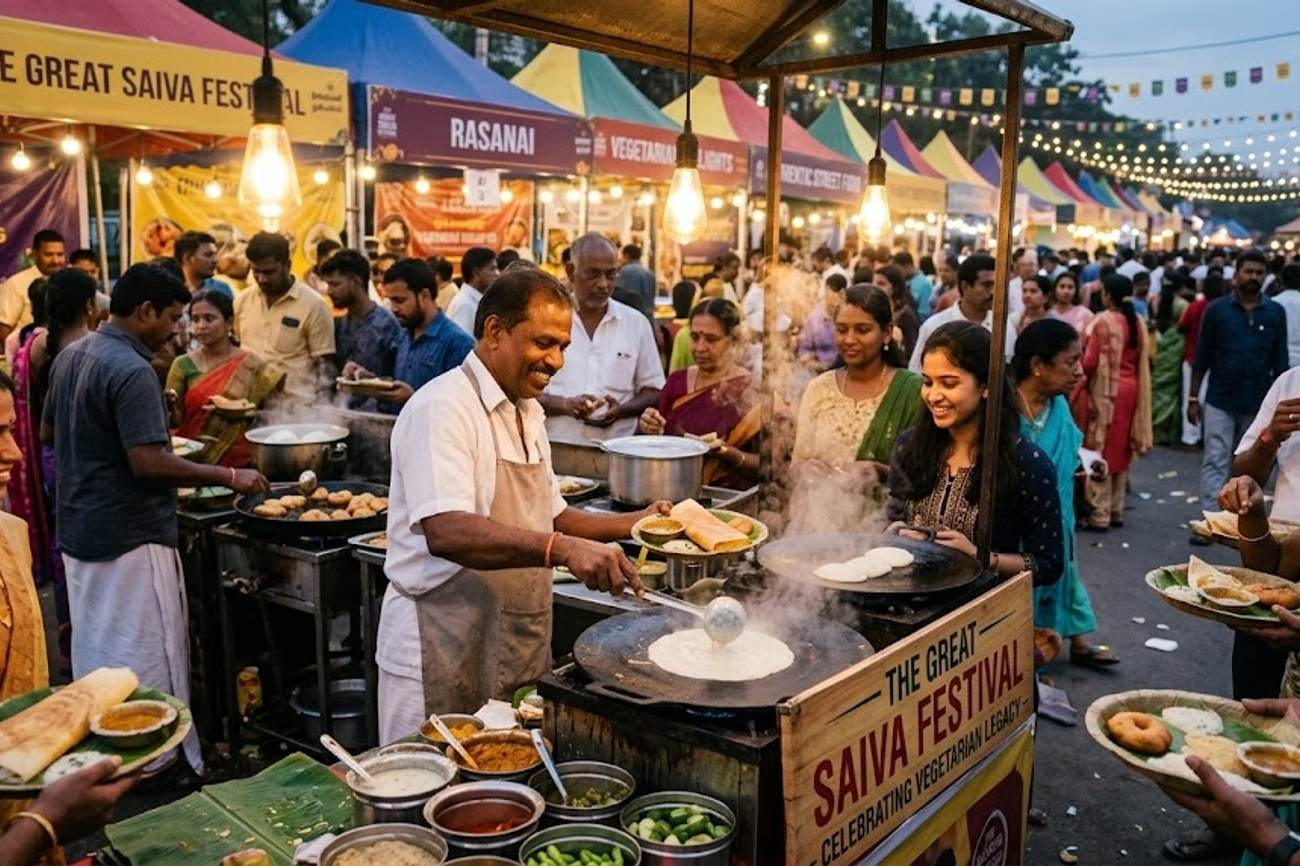
Image generated by AI
[Chennai, October 2023] — Rasanai has officially launched The Great Saiva Festival, a specialized culinary event dedicated to the vegetarian street food traditions of South India. The initiative aims to elevate regional plant-based flavors by integrating traditional recipes with a contemporary dining environment across multiple urban hubs.
The festival operates across Rasanai's established outlets in Chennai, Coimbatore, and Kochi. By synthesizing the distinct culinary identities of Tamil, Kannadiga, Andhra/Telugu, and Malayali cultures, the event seeks to provide a centralized platform for authentic regional flavors that are typically confined to local street markets and temple towns.
The Catalyst for the Celebration
The Great Saiva Festival was triggered by a perceived gap in the modern culinary landscape, where South Indian vegetarian street food is frequently overlooked in favor of more mainstream street food categories. While the regions of Tamil Nadu, Karnataka, Andhra Pradesh, Telangana, and Kerala possess deep-rooted food traditions shaped by centuries of local farming and cultural exchange, these delicacies rarely feature in high-profile food festivals.
Rasanai's objective is to shift this narrative by demonstrating that vegetarian fare can match the innovation and indulgence of any other culinary tradition. The festival focuses on the technical mastery inherent in South Indian cooking—specifically fermentation, tempering, slow roasting, and precise spice blending. By utilizing core regional ingredients such as native vegetables, lentils, coconut, curry leaves, and aromatic spices, the event highlights the transformation of simple produce into complex gastronomic experiences.
Regional Influence and Market Reach
The festival serves a diverse demographic of diners across three major Southern Indian cities, focusing on four primary cultural culinary pillars:
- Tamil Nadu: Focuses on bold flavor profiles, traditional spice blends, and dishes inspired by temple town traditions.
- Karnataka: Highlights a mix of coastal and inland preparations, specifically focusing on the unique culinary heritage of the region.
- Andhra Pradesh & Telangana: Contributes the characteristic high-heat spice profiles and pungent flavors typical of Telugu cuisine.
- Kerala: Emphasizes Malabar flavors, coastal ingredients, and the heavy use of coconut-based cooking techniques.
The geographic footprint of the event is concentrated in the following hubs:
- Chennai
- Coimbatore
- Kochi
What This Means for Travelers
For international nomads and domestic tourists visiting South India, this festival provides a curated, low-risk entry point into the complex world of regional street food. Rather than navigating high-traffic market lanes or coastal villages to find authentic tastes, travelers can access a consolidated menu in a professional dining setting.
The most significant impact for the diner is the introduction of "mock meat" and plant-based seafood alternatives. Rasanai is using modern culinary techniques to recreate the texture and appearance of non-vegetarian street food while remaining strictly vegetarian. This allows travelers to experience the "soul" of South Indian non-veg street food—such as the famous ghee roasts or fish fry—without consuming animal products.
Visitors to the Chennai Airport or those staying in hotels across the Kerala Tourism circuit can now integrate these specific regional tastes into their itineraries. The menu includes highly specific regional items such as:
- Periyakadai Veethi Javvarisi Bonda paired with Kara Chutney.
- Saiva Eeral Varuval and Bunglow Saiva Meen Varuval (plant-based interpretations).
- Mangalore Buns accompanied by Mock Chicken Gassi.
- Rose Badam Kalalandu Pongal.
- Malabar-style tapioca cutlets and Chettinad-inspired chutneys.
The Evolution of South Indian Dining
The Great Saiva Festival represents a broader trend in the Indian hospitality sector: the movement toward "cultural storytelling" through food. By moving beyond simple vegetarian alternatives and instead celebrating the identity of the cuisine itself, Rasanai is positioning vegetarianism as a primary culinary destination rather than a dietary restriction.
The timeline for the festival focuses on the immediate season, allowing guests to explore the intersection of heritage and innovation. The use of plant-based proteins suggests a forward-looking approach to sustainability and dietary inclusivity, catering to the growing global demand for vegan and vegetarian options that do not sacrifice traditional flavor profiles.
The festival also underscores the importance of preserving regional identities. By documenting and presenting recipes from shopping streets and coastal villages in a modern format, the event acts as a living archive of South Indian culinary imagination.
FAQ: The Great Saiva Festival 2023
Where can I experience The Great Saiva Festival? The festival is currently hosted at Rasanai outlets located in three major South Indian cities: Chennai, Coimbatore, and Kochi.
Is the food strictly vegetarian? Yes. While the menu includes "mock meat" and seafood-inspired dishes designed to mimic the taste and texture of non-vegetarian food, all ingredients are 100% vegetarian.
What are the signature dishes I should try? Recommended highlights include the Mangalore Buns with Mock Chicken Gassi, Periyakadai Veethi Javvarisi Bonda, and the Rose Badam Kalalandu Pongal.
Does the festival cover all of South India? The menu is curated to represent four major regional identities: Tamil, Kannadiga, Andhra/Telugu, and Malayali cuisines.
A bold reclamation of the South Indian street.
#Rasanai #SouthIndiaFood #VegetarianTravel #ChennaiDining #KochiEats #SaivaFestival2023
Related Travel Guides
- Roastery Coffee House Brings Speciality Indian Coffee Experience to Bengaluru With New Banashankari House
- Christina Roach Transforms Bengaluru Hospitality Scene With Slohh by Roach Blending Heritage, Design and Luxury Experiences
- Wellness and Longevity Tourism: Navigating the Shift to Health-Centric Luxury Hospitality in 2026
Disclaimer
This article is for informational and educational purposes only. It does not constitute legal, financial, or professional advice. While we strive to provide accurate and up-to-date information, travel policies, regulations, and conditions change rapidly. Always verify information with official sources before making travel decisions. Nomad Lawyer makes no representations about the accuracy, reliability, completeness, or suitability of the information provided. Readers should consult qualified professionals for advice specific to their circumstances. The views expressed in this article are those of the author and do not necessarily reflect the views of Nomad Lawyer.
Preeti Gunjan
Contributor & Community Manager
A passionate traveller and community builder. Preeti helps grow the Nomad Lawyer community, fostering engagement and bringing the reader experience to life.
Learn more about our team →