
SkyWest Airlines Flight SKW5826 Diverts to Omaha Eppley Airfield from Denver-Lincoln Route 2026
SkyWest Airlines flight SKW5826 diverted to Omaha Eppley Airfield on August 6, 2026, highlighting the critical role of regional alternative airports in US aviation safety.

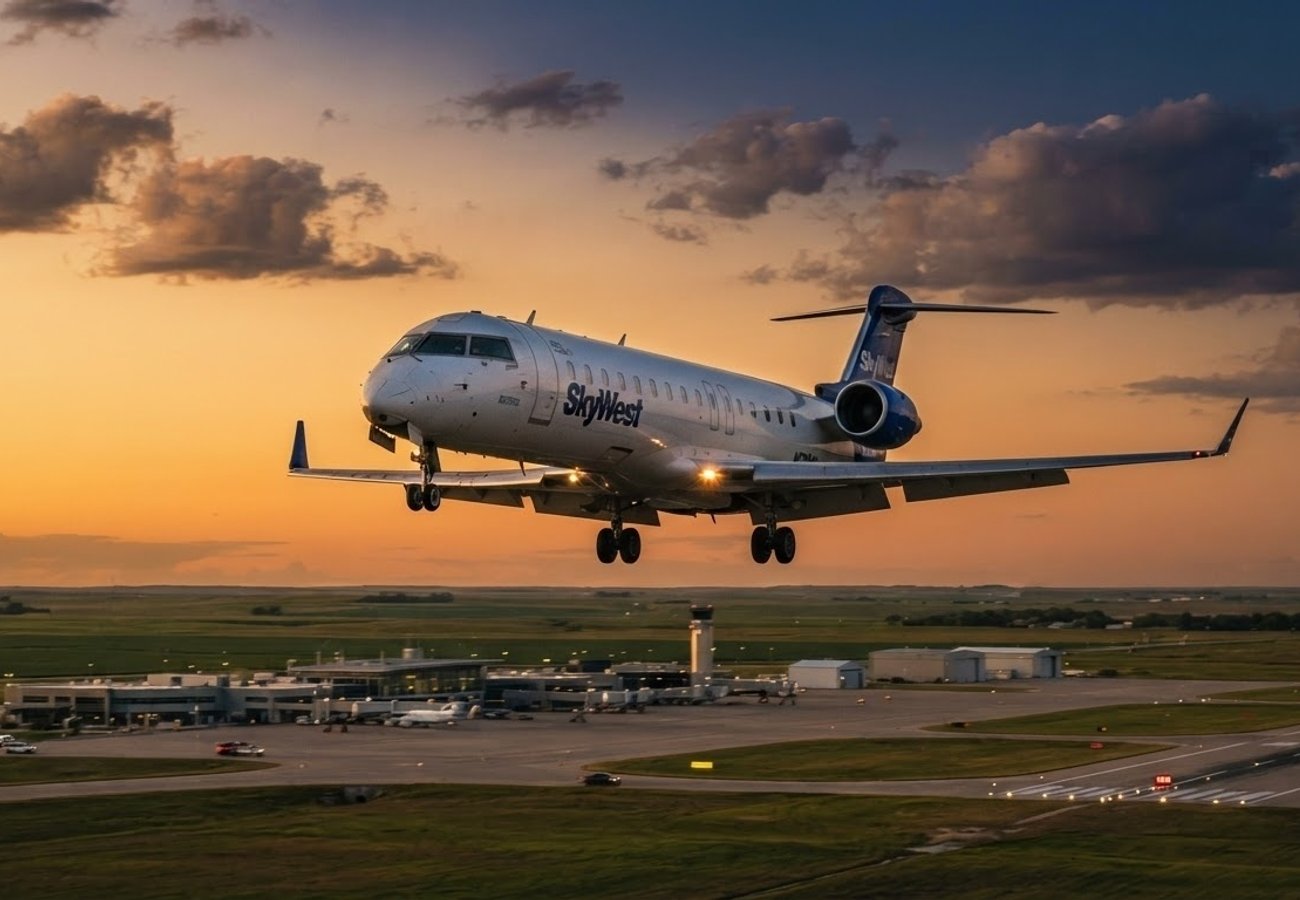
Image generated by AI
A regional SkyWest flight diverted to Omaha Eppley Airfield on August 6, 2026, after a disruption on the route from Denver to Lincoln, ensuring passenger safety via a strategic alternative landing.
The reliability of regional aviation relies on the ability to pivot instantly when conditions shift. This was evident on August 6, 2026, when SkyWest Airlines flight SKW5826 was forced to alter its course. Originally scheduled to connect Denver International Airport (DEN) with Lincoln Airport (LNK), the flight ended its journey at Omaha Eppley Airfield instead.
The aircraft, a Canadair Regional Jet CRJ-700 with registration N788SK, departed Denver at approximately 8:04 AM local time, slightly behind its scheduled 7:45 AM departure. While the flight was on track to arrive in Lincoln at 10:17 AM EDT, the crew initiated a diversion to Omaha. While SkyWest has not publicly disclosed the specific trigger for the diversion—which could range from technical precautions to weather or medical needs—the move underscores the "safety-first" protocol mandatory in US airspace.
The Strategic Role of Omaha Eppley Airfield
For the traveler, a diversion is often seen as a frustration, but from an operational standpoint, it is a calculated safety maneuver. Omaha Eppley Airfield serves as a primary relief valve for the Nebraska regional corridor. Its proximity to Lincoln, coupled with robust infrastructure capable of handling the CRJ-700, makes it the logical choice for diverted regional traffic.
The use of alternative airports allows regional carriers to maintain a high safety margin without risking a return to the origin city, which would cause significantly longer delays. In this instance, the diversion minimized the distance from the original destination while providing the necessary facilities for a secure landing.
Impact on Regional Travel and Passenger Logistics
When a flight diverts, the operational focus shifts from aviation to ground logistics. Passengers on SKW5826 faced an unplanned stop in Omaha, triggering a chain of coordination involving:
- Aircraft Inspections: Technical evaluations to determine if the CRJ-700 could continue to Lincoln.
- Ground Transport: The coordination of shuttles or private transport to move passengers from Omaha to Lincoln.
- Crew Management: Assessing duty hour limits to ensure the flight crew remained within legal operating windows.
This incident highlights the fragility and flexibility of regional hubs. Because these flights connect smaller cities to major networks, any disruption requires tight synchronization between pilots, air traffic controllers, and ground handling teams.
Visitor Insider Tips for Regional US Travel
Navigating regional diversions or delays in the American Midwest requires a specific approach to minimize stress:
- The "Alternate Airport" Strategy: When booking regional flights into smaller cities like Lincoln, identify the nearest major alternative (in this case, Omaha). Knowing the distance between the two can help you quickly arrange your own ride-share or rental if airline transport is delayed.
- Midwest Weather Windows: August in the Plains is peak season for sudden thunderstorms. To avoid diversions, aim for the earliest morning departures (pre-10:00 AM), as convective weather typically builds in the afternoon.
- Dining in Omaha: If you find yourself stranded at Eppley Airfield, head toward the Old Market district. It is a short ride from the airport and offers some of the best local Nebraska steakhouse experiences and artisan cafes, turning a travel glitch into a culinary detour.
- Cultural Etiquette: In regional hubs, ground staff are often stretched thin during diversions. Patience and clear communication regarding your final destination usually result in faster resolution and better transport options.
Regional Aviation Outlook
The diversion of SKW5826 is a microcosm of the broader US regional aviation strategy. As the industry moves toward 2027, there is an increasing emphasis on "resilient routing"—the practice of ensuring every regional leg has at least two viable, high-capacity alternative airports within a 30-minute flight radius.
While the lack of an official reason for the August 6 diversion leaves some questions, the successful landing at Omaha proves that the fail-safes of the US aviation system are functioning. For the nomad lawyer or frequent business traveler, this serves as a reminder that regional travel requires a flexible itinerary and a basic understanding of local airport geography.
Safety protocols ensure that a change in destination is always preferable to a compromise in security.
Related Travel Guides
Disclaimer
This article is for informational and educational purposes only. It does not constitute legal, financial, or professional advice. While we strive to provide accurate and up-to-date information, travel policies, regulations, and conditions change rapidly. Always verify information with official sources before making travel decisions. Nomad Lawyer makes no representations about the accuracy, reliability, completeness, or suitability of the information provided. Readers should consult qualified professionals for advice specific to their circumstances. The views expressed in this article are those of the author and do not necessarily reflect the views of Nomad Lawyer.
Kunal K Choudhary
Co-Founder & Contributor
A passionate traveller and tech enthusiast. Kunal contributes to the vision and growth of Nomad Lawyer, bringing fresh perspectives and driving the community forward.
Learn more about our team →