
Singapore-Malaysia Border Congestion: Analysis of 2026 Wait Times & Tech
Analysis of September 2026 cross-border travel data between Singapore, Malaysia, and Thailand. Explore ICA's new clearance concepts and National Day congestion

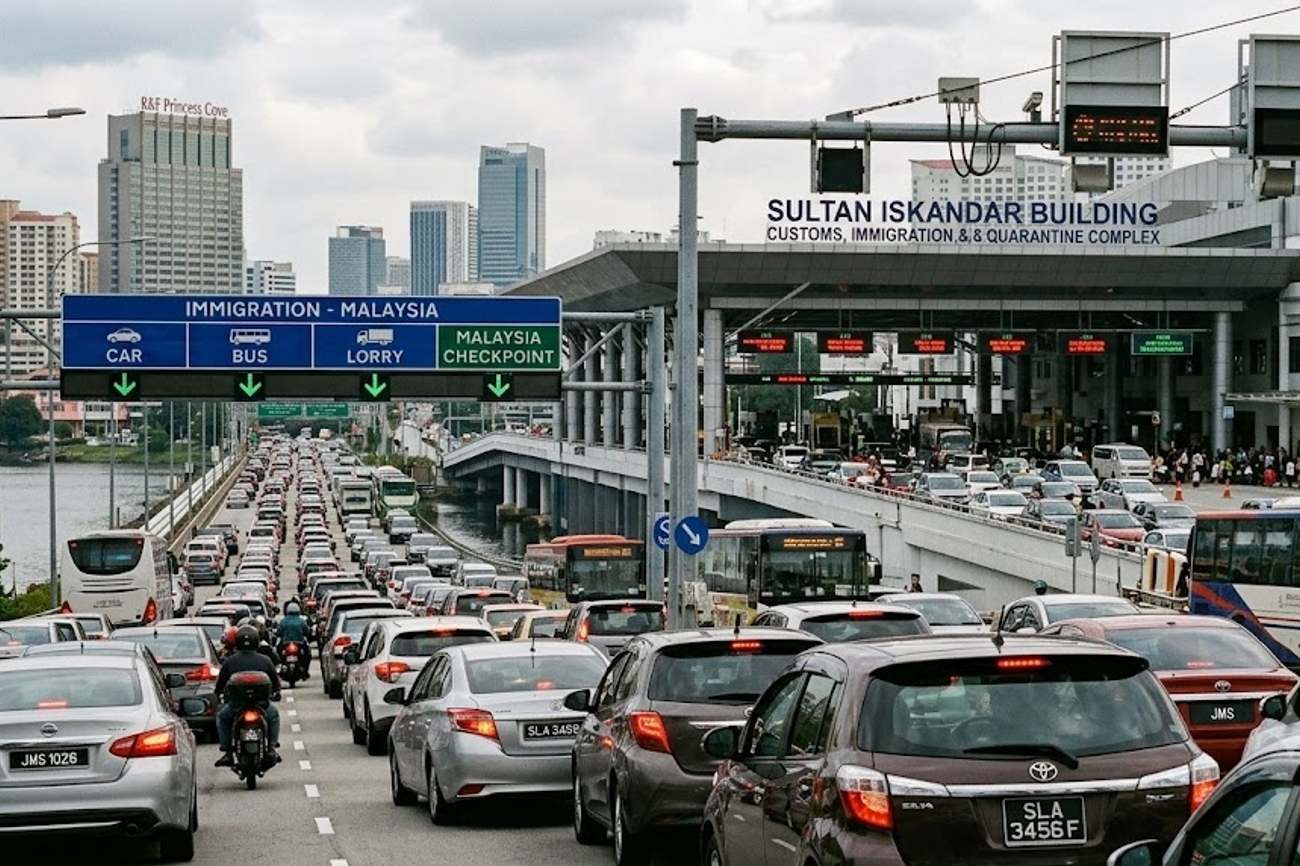
Image generated by AI
Cross-border travel between Singapore, Malaysia, and Thailand is currently defined by a sharp divide in infrastructural efficiency. As of September 2026, data reveals a critical gap in processing speeds across five major land checkpoints, where digital integration has yet to fully solve systemic congestion at the region's busiest nodes.
The Singapore-Malaysia Bottleneck
The Woodlands Checkpoint and Tuas Second Link remain among the most congested international land borders globally. Despite the transition to digital clearance, these arteries struggle with sheer volume. While weekday traffic remains moderate, weekends and public holidays trigger multi-kilometre tailbacks.
Data from the Immigration & Checkpoints Authority (ICA) of Singapore confirms the scale of this volatility. During the National Day weekend (7–10 August 2026), over 2.1 million travellers utilized these checkpoints. The peak occurred on 7 August, with 593,000 individuals clearing immigration in 24 hours. During this window, motorists departing Singapore faced wait times of up to three hours, largely due to congestion on the Malaysian side.
Regional Efficiency Comparisons
In stark contrast to the Singaporean experience, the Sadao and Bukit Kayu Hitam crossings—connecting Malaysia and Thailand—demonstrate significantly higher throughput, with some vehicles clearing in as little as 30 seconds. This disparity highlights the difference between managing massive urban commuter flows versus regional transit.
Technological Interventions
To mitigate these delays, the ICA has deployed the "New Clearance Concept," shifting away from manual passport stamping:
- QR Code Integration: Eligible travellers pre-register via the MyICA mobile app. Encrypted QR codes are scanned at automated booths to verify vehicle occupants instantly.
- Biometric Rollout: Advanced facial recognition is being progressively implemented, specifically targeting motorcyclists to reduce manual checkpoints.
- Real-Time Monitoring: Authorities are pushing travelers toward the LTA One Motoring Website and the Expressway Motoring & Advisory System to flatten the congestion curve.
Key Facts Breakdown
- Peak Volume: 593,000 travellers in 24 hours (7 August 2026).
- Weekend Total: 2.1 million travellers (7–10 August 2026).
- Max Wait Time: Up to 3 hours at Singapore-Malaysia checkpoints.
- Min Wait Time: 30 seconds at Sadao and Bukit Kayu Hitam crossings.
- Upcoming High-Traffic Window: September school holidays (4–14 September 2026).
Why This Matters
From a logistical perspective, this data confirms that technology alone cannot override geographical and volume constraints. The "New Clearance Concept" reduces per-vehicle interaction time, but it does not increase the physical capacity of the causeways.
For frequent commuters and logistics operators, the real impact is a shift in predictability. The reliance on the MyICA app and real-time LTA data is no longer optional; it is a requirement for avoiding three-hour delays. The extreme efficiency at the Thai-Malaysian border suggests that the bottlenecks in Singapore are not due to a lack of regional digital capability, but rather the unprecedented density of the Johor-Singapore corridor.
Industry Outlook
Expect continued aggressive investment in ICQS (Immigration, Customs, Quarantine, and Security) complexes. The focus will likely shift from "faster processing" to "demand management," using predictive analytics to steer travellers toward off-peak windows. Until physical capacity is expanded or commuter volumes are diverted, the volatility of the National Day and school holiday surges will remain a permanent fixture of the region's travel landscape.
Internal Link Suggestions:
- Guide to MyICA App Registration for Frequent Travellers
- ASEAN Infrastructure Report: The Future of ICQS Complexes
- Comparing Southeast Asia's Digital Nomad Visas and Border Access
Related Travel Guides
Disclaimer
This article is for informational and educational purposes only. It does not constitute legal, financial, or professional advice. While we strive to provide accurate and up-to-date information, travel policies, regulations, and conditions change rapidly. Always verify information with official sources before making travel decisions. Nomad Lawyer makes no representations about the accuracy, reliability, completeness, or suitability of the information provided. Readers should consult qualified professionals for advice specific to their circumstances. The views expressed in this article are those of the author and do not necessarily reflect the views of Nomad Lawyer.
Preeti Gunjan
Contributor & Community Manager
A passionate traveller and community builder. Preeti helps grow the Nomad Lawyer community, fostering engagement and bringing the reader experience to life.
Learn more about our team →