
Singapore Changi Airport Sustainable Aviation Fuel Mandate 2026
Singapore will introduce a mandatory passenger-funded Sustainable Aviation Fuel levy for flights departing Changi Airport starting October 1, 2026.

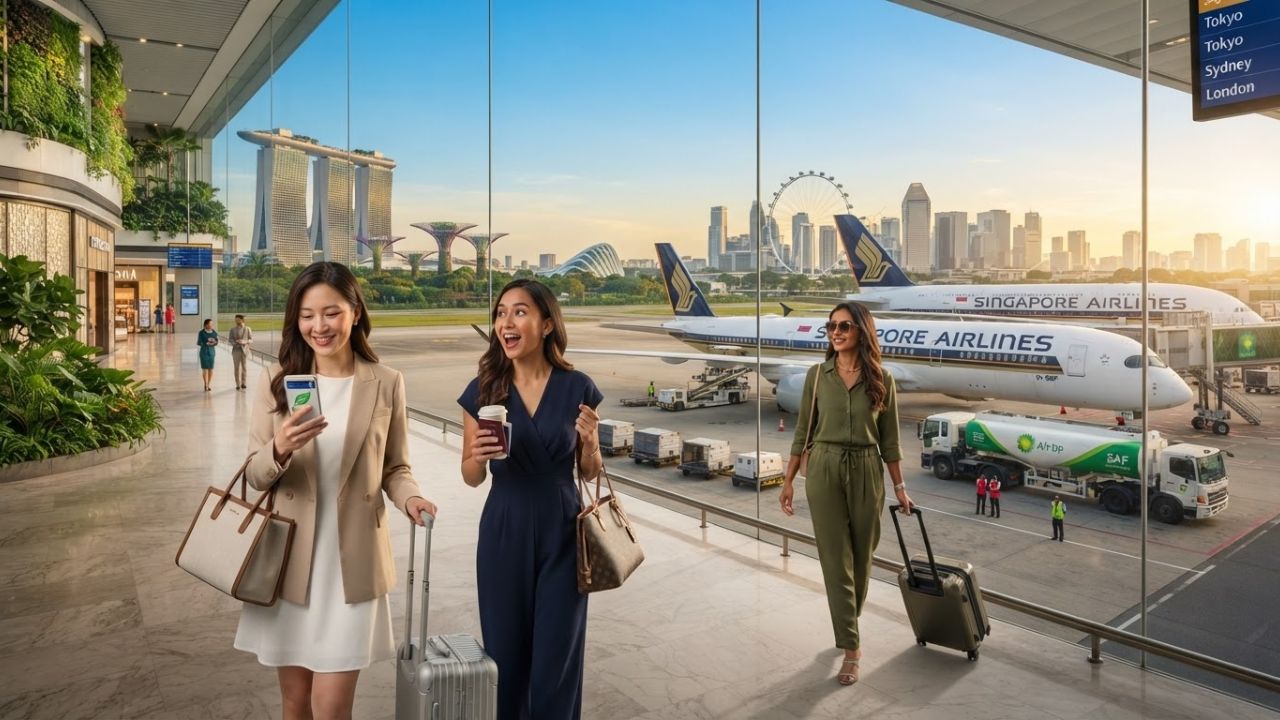
Image generated by AI
How Singapore Changi Airport is Launching Mandatory Sustainable Aviation Fuel Levies to Lead Eco-Friendly Regional Transit in 2026
Singapore is pioneering one of the world's most comprehensive aviation decarbonization frameworks by introducing passenger-funded Sustainable Aviation Fuel requirements at Changi Airport. Departing travelers will contribute directly to a centralized purchasing fund, establishing a new model for low-impact high-yield premium travel across Asia.
The Local Trend Revealed
Singapore is shifting its aviation infrastructure toward environmental compliance through a structured national program. Guided by the Sustainable Air Hub Blueprint, the Civil Aviation Authority of Singapore is implementing a mandatory passenger-funded Sustainable Aviation Fuel (SAF) requirement. Beginning October 1, 2026, every commercial flight departing from Changi Airport (SIN) and Seletar Airport (XSP) must operate using at least a one percent SAF blend.
The program is designed to expand progressively to match supply availability and global fuel market developments. Aviation planners have targeted the blending requirement to increase to between three and five percent by 2030. Rather than letting ticket prices fluctuate unpredictably based on volatile fuel markets, the government has introduced a fixed-cost levy determined by travel distance and cabin class.
The mandatory SAF levy will apply to air tickets issued from April 1, 2026, for passengers departing on or after October 1, 2026. To protect the competitive status of Changi Airport as a major global transit gateway, transfer and transit passengers are completely exempt from the surcharge. This balanced approach ensures that local environmental goals are met while maintaining the city-state's position as a regional hub.
The structure of the passenger-funded Sustainable Aviation Fuel levy is detailed in the table below:
| Ticket Type / Cabin Class | Route Distance Type | Example Destinations | Mandatory SAF Surcharge (S$) |
|---|---|---|---|
| Economy Class | Short-haul regional | Kuala Lumpur, Bangkok, Jakarta | S$1.00 |
| Economy Class | Long-haul international | London, New York, San Francisco | S$10.40 |
| Business / First Class | Short-to-long-haul routes | Global network | Up to S$41.60 |
| Transit / Transfer | Any connection | Non-departing itineraries | S$0.00 (Exempt) |
Cultural & Environmental Value (Information Gain)
Implementing a mandatory SAF blending requirement reduces the lifecycle carbon footprint of air travel departing from Singapore, protecting regional ecosystems and coastal biodiversity across Southeast Asia. The collected passenger levies are directed into a centralized funding pool managed by a dedicated non-profit organization known as SAFCO. SAFCO coordinates bulk fuel purchases and blends the renewable fuel directly into the common airport fuel distribution system.
This centralized model supports local renewable fuel refining. Singapore is home to Neste's largest sustainable aviation fuel refinery, which possesses a production capacity of one million tonnes annually. Sourcing fuel locally reduces shipping emissions and enhances regional energy security. This system aligns with green policies managed by the National Environment Agency of Singapore and green tourism initiatives promoted by the Singapore Tourism Board.
Visitor Insider Tips
Navigating Singapore Changi Airport and planning a visit to the city-state can be made more efficient by observing a few local transit and cultural guidelines.
- Travel During Shoulder Months: Plan your visit during the off-peak months of September and October. These months experience lower tourist volumes, allowing for a quieter experience at Changi's botanical exhibits and urban nature areas.
- Support Local Culinary Traditions: Dine at the Jewel Changi food halls located on the lower levels. These spots feature local heritage food vendors offering traditional Kaya toast, laksa, and chicken rice, directly supporting local culinary businesses.
- Utilize Reusable Bags and Bottles: Singapore enforces strict waste management rules. Carry a reusable water bottle and shopping bags when exploring retail zones, as many outlets charge fees for single-use plastic.
- Access the MRT Direct from Changi: Use the Mass Rapid Transit (MRT) subway station situated in the basement of Terminal 2 and Terminal 3. It is a highly efficient, low-carbon transit route that connects travelers to the downtown district.
- Visit the Changi Jurassic Mile: If you have a long layover, rent a bicycle or walk along the Jurassic Mile path. This outdoor display connects the airport terminals directly to East Coast Park, offering a low-impact nature break.
Tourism Outlook
The long-term impact of Singapore’s Sustainable Air Hub Blueprint extends beyond national borders, setting a clear example for environmental policy across the Asia-Pacific region. As international corporations prioritize ESG (Environmental, Social, and Governance) targets, Changi’s transparent levy structure provides corporate travel managers with clear documentation of carbon reduction contributions. This policy ensures that Singapore remains a leading destination for environmentally responsible premium travel, setting the stage for subsequent green aviation initiatives worldwide.
FAQ: Singapore Changi Airport SAF Levy 2026
When does the mandatory SAF requirement take effect?
The requirement begins on October 1, 2026, and applies to all tickets issued on or after April 1, 2026.
Are transit passengers required to pay the SAF levy?
No. Transit and transfer passengers are completely exempt from the SAF levy to preserve Changi Airport's role as a major regional connecting hub.
Where is the Sustainable Aviation Fuel produced?
A significant portion of the fuel is produced locally at Neste's one-million-tonne-capacity SAF refinery located in Singapore.
Related Travel Guides
Taiwan Regional Tourism LCC Fleet Modernization
Airbus Planes Reveals 42,000 New Aircraft Demand Through 2045
Disclaimer
This article is for informational and educational purposes only. It does not constitute legal, financial, or professional advice. While we strive to provide accurate and up-to-date information, travel policies, regulations, and conditions change rapidly. Always verify information with official sources before making travel decisions. Nomad Lawyer makes no representations about the accuracy, reliability, completeness, or suitability of the information provided. Readers should consult qualified professionals for advice specific to their circumstances. The views expressed in this article are those of the author and do not necessarily reflect the views of Nomad Lawyer.
Kunal K Choudhary
Co-Founder & Contributor
A passionate traveller and tech enthusiast. Kunal contributes to the vision and growth of Nomad Lawyer, bringing fresh perspectives and driving the community forward.
Learn more about our team →