
Avoiding Dynamic Currency Conversion: Why Local Currency Beats Home Currency in 2026

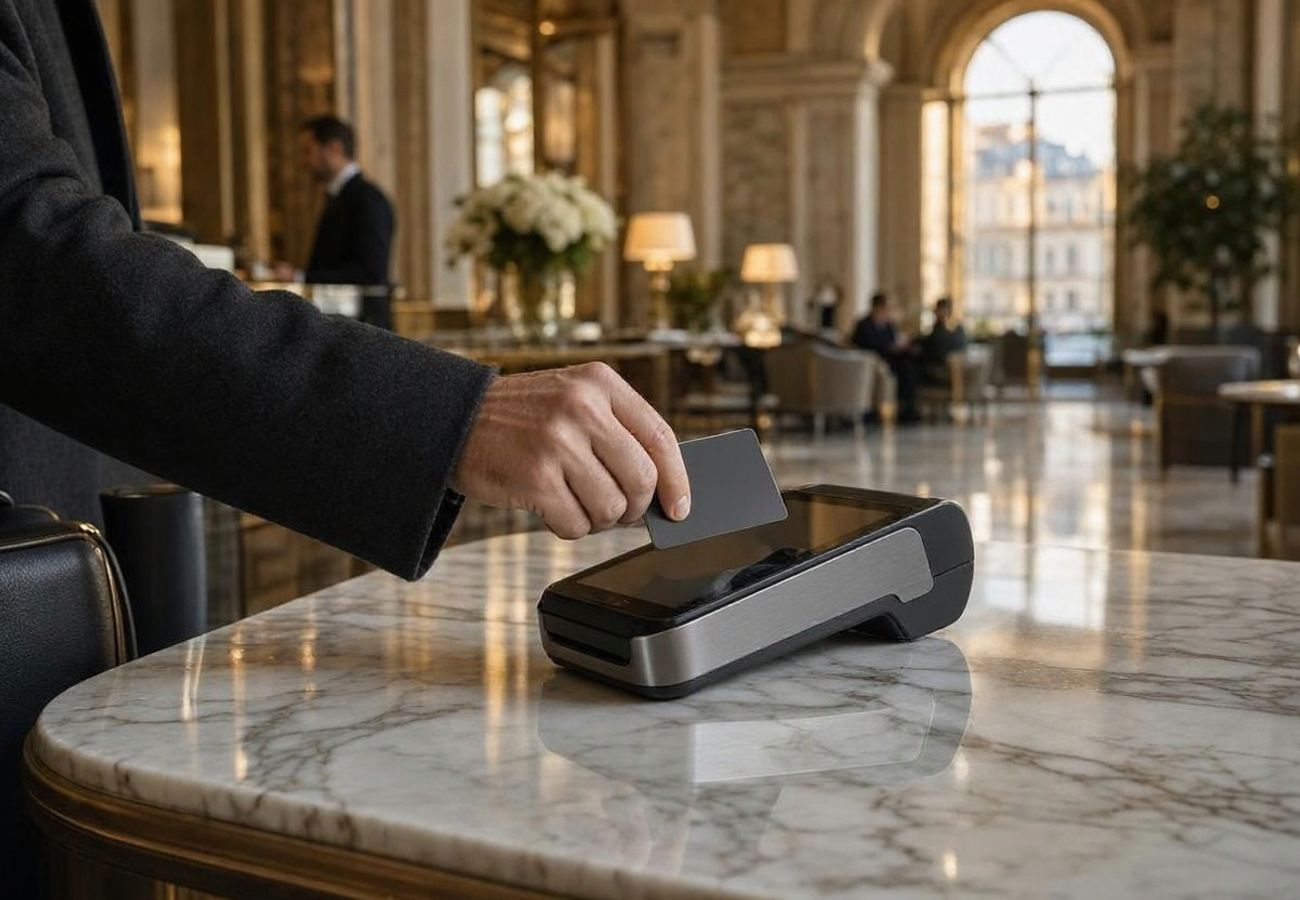
Image generated by AI
A 3% to 8% markup is the typical hidden cost travelers pay when they select their home currency over the local one at foreign payment terminals. While the option to see a bill in a familiar currency feels like a convenience, it is actually a financial trap known as Dynamic Currency Conversion (DCC). For the modern nomad, this single choice at a restaurant in Paris or an ATM in Bangkok can quietly inflate the cost of an entire trip.
The Mechanics of Dynamic Currency Conversion
Dynamic Currency Conversion is a point-of-sale service that allows a merchant or ATM operator to convert a transaction from the local currency into the traveler's home currency before the transaction is processed. When a traveler opts for this, the exchange rate is not determined by their bank or the card network, but by the DCC provider—usually a third party associated with the merchant's payment processor.
The danger lies in the "guaranteed rate" marketing. Terminals often frame DCC as a way to avoid "exchange rate risk" or "surprises." In reality, the DCC provider embeds a profit margin directly into the exchange rate. This is distinct from a foreign transaction fee. While a bank's foreign transaction fee is a transparent percentage added to a statement, a DCC markup is hidden within the rate itself.
When a traveler declines DCC and chooses the local currency, the transaction is routed through the card network—such as Visa or Mastercard—which uses wholesale-based rates that closely track the mid-market exchange rate.
Cost Comparison: Local Currency vs. DCC
The financial impact of DCC becomes evident when comparing the network rate against various provider markups. Using a hypothetical 200 euro hotel bill in Barcelona (based on a mid-market rate of 1 EUR = 1.07 USD), the following table illustrates the cost escalation.
| Payment Method | Exchange Rate (Approx.) | Total Cost (USD) | Effective Markup |
|---|---|---|---|
| Local Currency (Network Rate) | 1.07 | $214.00 | 0% (Base) |
| DCC Option (3% Markup) | 1.10 | $220.00 | +$6.00 |
| DCC Option (5% Markup) | 1.12 | $224.00 | +$10.00 |
| DCC Option (8% Markup) | 1.16 | $232.00 | +$18.00 |
Expert Analysis: The Psychological Trap of "Guaranteed Rates"
For travelers booking high-value services or withdrawing large sums of cash, the direct consequence of selecting home currency is a significant loss of purchasing power. The pricing pressure created by DCC is intentional; it leverages the traveler's desire for certainty. By offering a "guaranteed" total, the merchant removes the anxiety of fluctuating rates, but the price of that certainty is a premium that almost always exceeds any potential market volatility over the 48 to 72 hours it takes for a transaction to settle.
Even for those using cards with foreign transaction fees (typically around 3%), the math still favors local currency. A 3% bank fee combined with a competitive network rate is almost always cheaper than a DCC rate that carries a 5% to 8% markup. The only scenario where DCC might be competitive is if a traveler uses a card with an exceptionally high foreign transaction fee (above 8%), which is rare for modern travel-optimized credit cards.
Furthermore, regulatory bodies like the International Air Transport Association (IATA) and various EU financial regulators require that DCC terms be disclosed. However, the user interface of the terminal is often designed to steer the user toward the "Accept Conversion" button through the use of color (green vs. grey) or misleading labels like "Decline Transaction" instead of "Decline Conversion."
Key Takeaways
- Always select local currency: Whether it is Yen in Japan, Baht in Thailand, or Euros in France, declining the conversion is the most cost-effective choice.
- Ignore "Guaranteed" labels: Terms like "no surprises" or "guaranteed rate" are marketing signals for a DCC markup.
- Distinguish fees from rates: Foreign transaction fees are charged by your bank; DCC markups are embedded in the exchange rate by the merchant.
- Read the buttons carefully: "Decline Conversion" does not mean "Cancel Purchase." It simply tells the machine to let your bank handle the exchange.
FAQ: Currency Conversion 2026
Does declining conversion cancel my payment? No. Choosing "Decline Conversion" or "Continue without Conversion" simply instructs the terminal to process the charge in the local currency. The transaction still completes, and the merchant is paid in full.
Why does the ATM offer me my home currency? The ATM operator earns a commission from the DCC provider for every traveler who accepts the conversion. It is a profit center for the machine owner, not a service for the traveler.
Which is cheaper: a 3% bank fee or DCC? In almost all cases, the 3% bank fee is cheaper. DCC markups frequently reach 5% to 8%, meaning you pay a higher premium for the "convenience" of seeing your home currency on the screen.
How can I tell if I was charged a DCC fee? Compare the exchange rate on your bank statement with the mid-market rate on the day of the transaction. If the rate is significantly higher than the Visa or Mastercard indicative rates, DCC was likely applied.
The most expensive convenience in travel is the one that promises you won't have to do the math.
Related Travel Guides
This article is for informational purposes. Flight routes, passenger regulations, visa rules, and transit advisories are subject to change by airlines and aviation authorities. Readers are advised to verify schedules and travel documentation with relevant carriers and border agencies before departure.
Related Stories

IHCL Expands Ginger Hotels to Atchutapuram Visakhapatnam with New 125-Room Business Hub in 2026

Four Seasons Resort Mallorca Restores Historic Formentor Prize for Literature in November 2026