
Sharjah Airport Expands Global Reach at ATM 2026: 19.4M Passengers and Terminal Upgrades

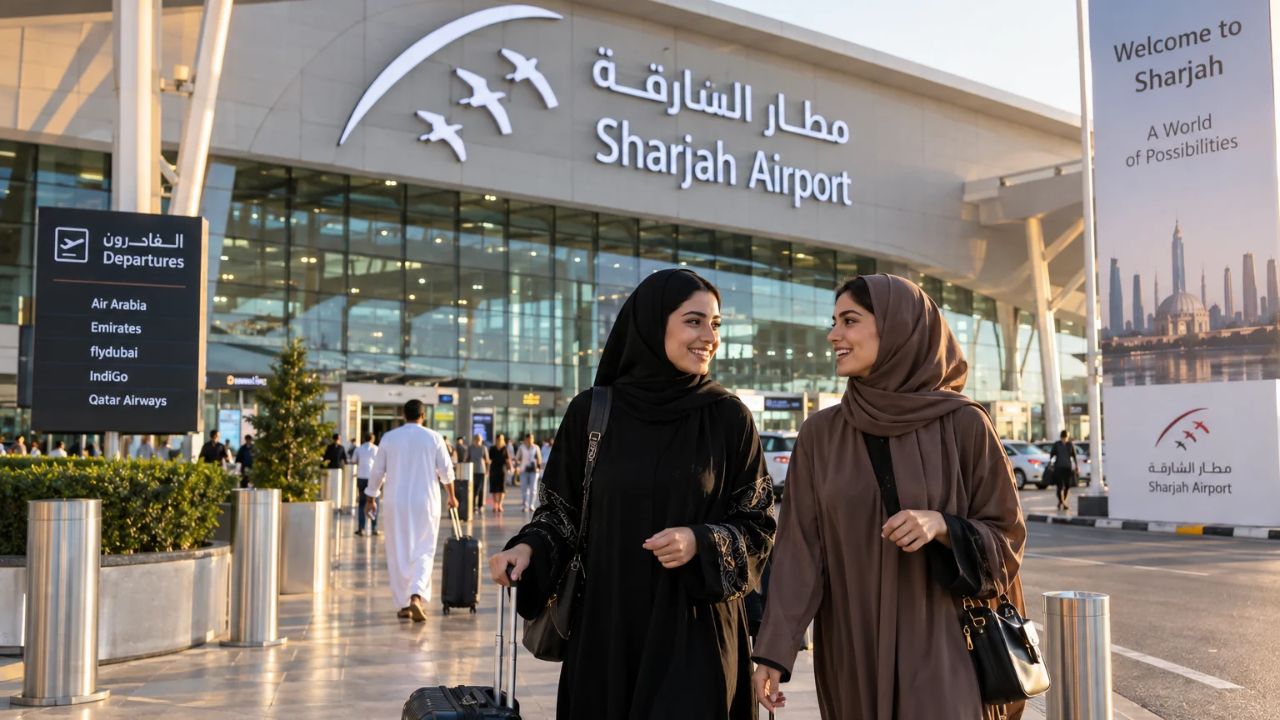
Handling more than 19.4 million passengers in 2025—a 13.9 per cent annual surge—Sharjah Airport Authority (SAA) utilized Arabian Travel Market (ATM) 2026 to showcase its comprehensive passenger terminal expansion project and digital processing systems that connect travelers to over 100 global destinations. Partnering with the Sharjah Commerce and Tourism Development Authority (SCTDA) and low-cost pioneer Air Arabia, the northern emirate is positioning its primary aviation facility as a rapid-transit, culturally focused alternative to congested Gulf mega-hubs.
The multi-phase airport development reflects a broader strategic realignment across the United Arab Emirates. Rather than focusing exclusively on long-haul transit passengers, Sharjah Airport combines extensive point-to-point low-cost carrier connectivity with seamless regional highway links. This infrastructure positions the facility as the principal northern gateway for cultural tourism, eco-adventures in the desert interior, and accessible beach getaways along the Gulf and Indian Ocean coastlines.
The Local Trend Revealed: Strategic Infrastructure Driving Northern Emirates Travel
At ATM 2026, Sharjah Airport Authority presented ongoing structural and digital advancements designed to accommodate rising international demand while maintaining efficient passenger transit times.
Collaborating under a joint pavilion with SCTDA, the Sharjah Airport Travel Agency (SATA), and base carrier Air Arabia, the airport’s operational roadmap emphasizes smart biometric processing, expanded gate boarding capacity, and automated baggage handling.
For international passengers, these enhancements translate into swift, friction-free airport navigation. While neighboring aviation hubs process massive transit banks that require long terminal walks, Sharjah’s single-terminal design prioritizes curb-to-gate efficiency, making it particularly appealing to business travelers, regional families, and holidaymakers targeting the Northern Emirates.
Key Milestones and Operational Capabilities of Sharjah Airport
| Operational Dimension | Current Metric / Strategic Milestone | Practical Traveler Benefit |
|---|---|---|
| Annual Passenger Volume | Surpassed 19.4 million travelers in 2025 | Rapid expansion demonstrating strong consumer confidence |
| Annual Growth Rate | 13.9 per cent year-on-year increase | Expanding carrier choices and flight frequency stability |
| Global Route Network | Serving over 100 direct international destinations | Direct links connecting the Middle East, Asia, and Europe |
| Anchor Airline Partner | Air Arabia (headquarters and primary operational hub) | Extensive low-cost regional and medium-haul air options |
| Institutional Alliance | SCTDA, SATA, and Sharjah Airport Authority | Unified destination management aligning flights with hotel stays |
| Infrastructure Project | Comprehensive passenger terminal expansion | Expanded gate lounges, retail zones, and biometric checkpoints |
Passenger Traffic Surge: Surpassing 19.4 Million Travelers in 2025
Sharjah Airport’s operational performance in 2025 set new benchmarks for the Northern Emirates. Welcoming over 19.4 million passengers represented an increase of 13.9 per cent over the previous annual cycle, outperforming general regional aviation growth rates.
This sustained growth is driven by several complementary factors:
- Affordable Airfare Structures: As the home base for Air Arabia, the airport captures high volumes of cost-conscious expatriate workers, regional corporate commuters, and independent leisure travelers.
- Geographical Transit Advantage: Situated directly between the urban centers of Dubai, Ajman, and the interior desert heritage corridors, Sharjah offers strategic highway access via the E311 (Sheikh Mohammed bin Zayed Road) and E611 (Emirates Road).
- Evolving Airport Amenities: Recent terminal enhancements incorporate self-service bag drops, expanded immigration e-gates, and modernized family lounges that ease peak-hour passenger flows.
Passenger Traffic Growth Trajectory at Sharjah Airport
| Operating Period | Verified Passenger Volume | Annual Percentage Increase | Primary Growth Drivers |
|---|---|---|---|
| 2024 Baseline | ~17.03 million passengers | Baseline recovery phase | Regional network restoration and fleet deliveries |
| 2025 Performance | 19.4+ million passengers | 13.9 per cent increase | Expanded European routes, Gulf business travel, and Asian links |
| 2026 Target Outlook | Target capacity exceeding 20M+ | Sustained expansion | Terminal expansion completion and Air Arabia fleet growth |
Global Network Scale: Connecting Over 100 International Destinations
Through strategic route development, Sharjah Airport connects passengers to more than 100 destinations across the Middle East, the Indian Subcontinent, Southeast Asia, Central Asia, and Europe.
Air Arabia's ongoing fleet expansion—deploying fuel-efficient Airbus A320 and longer-range A321neo LR aircraft—allows the airline to reach European cities like Milan, Athens, and Krakow, as well as emerging commercial centers across Central Asia.
This expanding international web supports Sharjah’s destination marketing strategy. By establishing affordable, direct flight access, the emirate successfully attracts cultural travelers, family groups, and heritage enthusiasts who historically bypassed the Northern Emirates.
Cultural & Environmental Value: Preserving Emirati Heritage and Desert Ecosystems
Unlike tourism models centered entirely around modern skyscrapers and theme parks, Sharjah positions itself as the cultural and intellectual heart of the UAE, recognized by UNESCO in 1998 as the Cultural Capital of the Arab World.
Heritage District Restoration
Tourism revenue supported by airport arrivals flows directly into municipal restoration initiatives:
- Heart of Sharjah: A historic preservation project rehabilitating traditional coral-stone architecture, ancient covered souks (Souq Al Arsah), and merchant houses (Bait Al Naboodah), providing visitors with an authentic glimpse into pre-oil Arabian maritime life.
- Museum of Islamic Civilization: Situated along the waterfront in a converted historic souk, housing over 5,000 rare Islamic artifacts, manuscripts, and astrolabes.
Eco-Tourism and Environmental Sanctuaries
Sharjah actively preserves delicate desert, wetland, and marine habitats:
- Wasit Wetland Centre: A protected coastal wetland reserve home to over 198 bird species, native marshlands, and salt flats, offering nature enthusiasts quiet observation hides.
- Mleiha Archaeological Centre: Located deep in the interior desert, this eco-archaeology park preserves Paleolithic and Neolithic settlements, offering guided desert treks, fossil viewing, and low-impact stargazing camps.
- Khor Kalba Mangrove Reserve: On the Gulf of Oman coastline, protecting ancient mangrove estuaries that nurture endangered Arabian collared kingfishers and green sea turtles.
Visitor Insider Tips: Fast Airport Transit, Modest Etiquette, and Emirati Gastronomy
Travelers arriving at Sharjah Airport can optimize their journey across the Northern Emirates with these practical, local insights:
- Airport Transit Advantage: Sharjah Airport's compact terminal layout allows arrivals to clear customs and reach ground transportation in under 20 minutes. For travelers heading into Dubai, taking a taxi or private transfer during off-peak hours (10:00 AM to 3:30 PM, or after 8:30 PM) takes just 30 to 40 minutes, completely bypassing heavy rush-hour border bottlenecks along the E11.
- Cultural Etiquette & Local Laws: Sharjah maintains a more traditional social environment than neighboring emirates. Modest attire covering shoulders and knees is strictly observed in public shopping centers, museums, and street promenades. In accordance with local law, the sale and consumption of alcoholic beverages are strictly prohibited throughout the emirate.
- Authentic Emirati Dining:
- Machboos: Savor the classic national dish of spiced basmati rice simmered in dried lime (loomi), cardamom, and cloves, served with tender slow-braised lamb or local sea bass (hammour).
- Harees: A traditional celebratory dish made of wheat slow-cooked with shredded meat into a smooth, savory porridge, topped with melted ghee.
- Luqaimat: Crisp fried dough dumplings drizzled generously with warm date syrup and toasted sesame seeds, enjoyed alongside fragrant Arabic coffee (gahwa) scented with saffron.
- Best Seasons to Visit: The prime travel window extends from November through March, when daytime temperatures average a comfortable 24°C to 28°C (75°F to 82°F). This period coincides with outdoor cultural events like the Sharjah Light Festival and heritage festivals in the desert.
Tourism Outlook: Strengthening Sharjah’s Long-Term Aviation Ecosystem
The announcements at ATM 2026 establish that Sharjah Airport is transitioning from a regional support airport into a self-sustaining international hub.
By investing in physical passenger terminal capacity, smart digital processing, and targeted airline partnerships, Sharjah Airport Authority and SCTDA are building an aviation network that directly supports regional economic diversification.
For global travelers, Sharjah offers an accessible, affordable, and culturally authentic gateway to the rich traditions and natural beauty of the United Arab Emirates.
Related Travel Guides
Emirates Wins Historic Berlin Approval: Germany Opens Fifth Hub with Daily Dubai Flights
Philippines Travel Boom 2026: Riyadh Air Launches Manila Route and Vietjet Expands Clark Gateway
10 Best Cultural Heritage Sites and Desert Escapes in the UAE for 2027
Disclaimer
This article is for informational and educational purposes only. It does not constitute legal, financial, or professional advice. While we strive to provide accurate and up-to-date information, travel policies, regulations, and conditions change rapidly. Always verify information with official sources before making travel decisions. Nomad Lawyer makes no representations about the accuracy, reliability, completeness, or suitability of the information provided. Readers should consult qualified professionals for advice specific to their circumstances. The views expressed in this article are those of the author and do not necessarily reflect the views of Nomad Lawyer.
Raushan Kumar
Founder & Lead Developer
Full-stack developer with 11+ years of experience and a passionate traveller. Raushan built Nomad Lawyer from the ground up with a vision to create the best travel and law experience on the web.
Learn more about our team →