
Seychelles International Airport to Ferry Guide: Best Routes to Praslin and La Digue 2026
Master the transit from Seychelles International Airport to the Inter Island Quay with detailed breakdown of taxi costs, Cat Cocos schedules, and Praslin-La Digue connections for 2026.

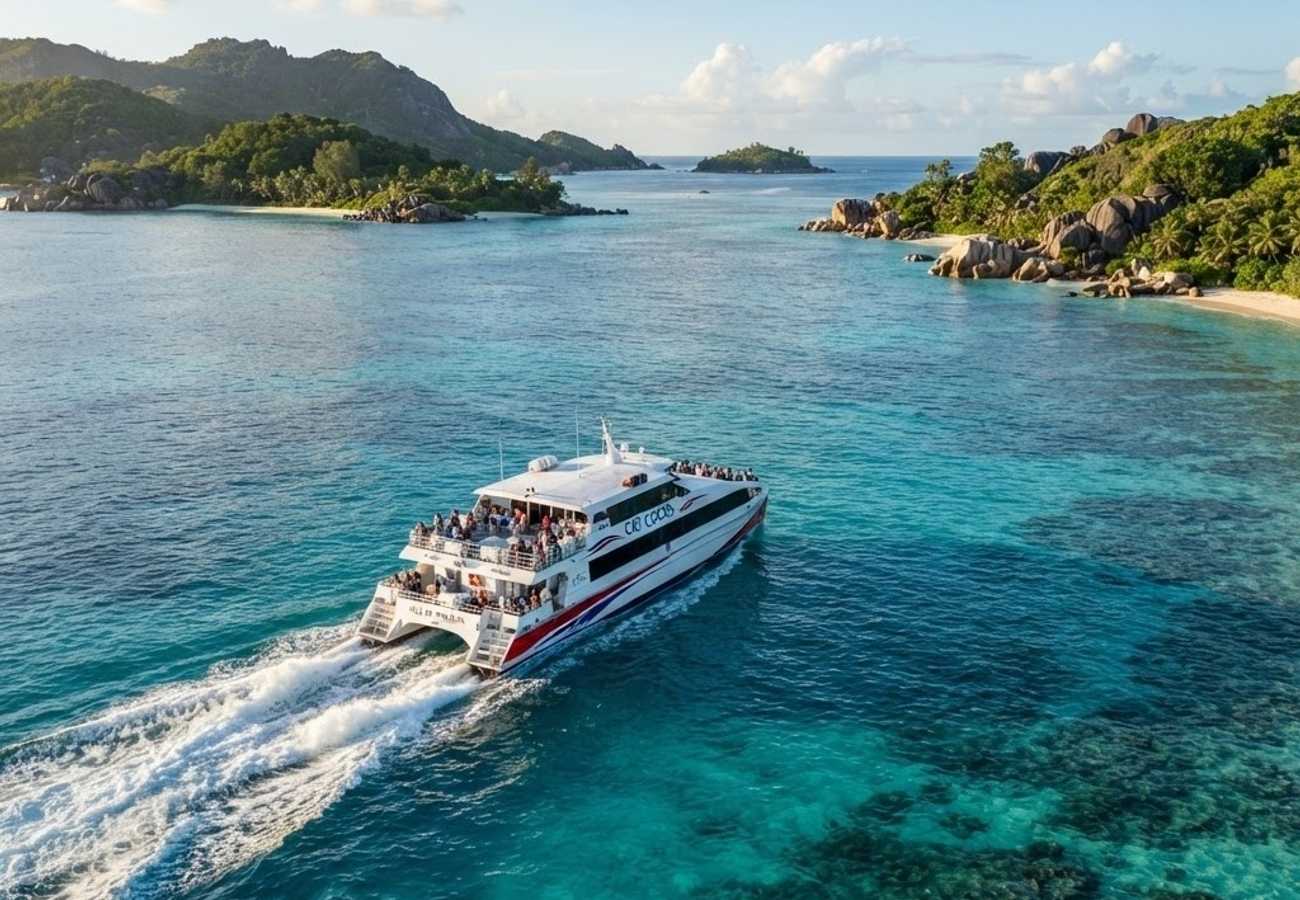
Image generated by AI
Connecting from Seychelles International Airport (SEZ) to the inter-island ferries requires precise timing and a clear transit strategy to avoid missing the limited daily sailings to Praslin and La Digue. Travelers arriving on Mahé must navigate a 10-kilometer journey to the capital's port before boarding high-speed catamarans.
Navigating the Transit from SEZ to Victoria Port
Seychelles International Airport is situated at Pointe Larue on the eastern coastline of Mahé. To reach the ferries bound for Praslin and La Digue, passengers must travel to the Inter Island Quay at the New Port in Victoria. While the distance is a mere 10 kilometers, the travel time fluctuates based on traffic conditions. In optimal conditions, the trip takes approximately 15 minutes, but congestion near central Victoria can extend this journey to 25 minutes.
Upon clearing immigration and customs, passengers enter a compact arrivals hall. There are no rail links or dedicated airport express shuttles. Transit options are limited to three primary modes: standard taxis, pre-arranged private transfers, or the public bus system. Because the Cat Cocos ferries operate exclusively from the Inter Island Quay—not the airport—securing reliable transport to the port is the first critical step for any traveler planning a same-day departure from Mahé.
Comparing Transport Options: Taxis, Private Shuttles, and Public Buses
For the majority of international arrivals, the airport taxi is the most efficient method of reaching the port. Current industry data indicates a standardized fare of approximately SCR 300 for the trip from the airport to the Inter Island Quay, which converts to roughly 20 to 25 US dollars per vehicle. These vehicles typically accommodate three passengers with full luggage or four passengers with lighter bags. Taxis are available 24/7 at the terminal rank, providing a balance of speed and cost.
Private transfers offer an alternative for those prioritizing reliability. Often organized through hotels or specialized "ferry shuttle" agencies, these services provide a greeting agent in the arrivals hall. Costs for these transfers generally range between 25 and 40 euros per vehicle. The primary advantage of a private transfer is flight monitoring; drivers adjust pickup times based on real-time arrival data, eliminating the need to queue at the taxi rank.
The public bus, managed by the Seychelles Public Transport Corporation, is the most economical choice, with fares cited around SCR 8 per person. However, this option is fraught with logistical challenges. Buses are not designed for large suitcases and often reach capacity during peak commuting hours. Furthermore, the bus does not drop passengers directly at the quay; it terminates at the Victoria bus station, necessitating a 10-minute walk through city streets with luggage. This route is only recommended for travelers with minimal gear and flexible schedules.
Cat Cocos Operations: Logistics and Fare Structures
Cat Cocos serves as the primary maritime link between Mahé and the outer islands. The transit time from Mahé to Praslin is approximately 1 hour 10 minutes for direct services, increasing to 1 hour 45 minutes for vessels that include a stop at La Digue.
Current Ferry Pricing and Schedules
| Route | Class | Approximate Price (One Way) |
|---|---|---|
| Mahé to Praslin | Economy | €60 |
| Mahé to La Digue | Economy | €70+ |
Schedules are subject to seasonal shifts, but typical daily departures from Mahé occur around 08:00/08:30, midday, and 16:30. Because these schedules are rigid, travelers are advised to maintain a significant time buffer between their flight landing and the ferry departure.
The check-in process for Cat Cocos mirrors aviation protocols. Operators recommend arriving at the quay 60 minutes prior to departure for baggage weighing and tagging. Economy passengers generally receive a free checked baggage allowance of 25 kilograms, with additional fees applied to overweight luggage or specialized sports equipment. While some passengers have successfully boarded with 30 to 40 minutes of lead time, this leaves no margin for error regarding queues or luggage handling delays.
Selecting the Best Route to Praslin and La Digue
Travelers have two primary methods for reaching Praslin: the Cat Cocos ferry or a domestic flight. Those prone to motion sickness or visiting during the southeast trade-wind season often prefer the domestic flight. These flights take roughly 15 minutes and depart from a terminal adjacent to the international arrivals area at SEZ. However, these flights are more expensive, have stricter baggage limits, and offer fewer available seats than the ferry.
For those continuing to La Digue, there are two main strategies:
- Direct Ferry: Booking a through-ticket from Mahé to La Digue via Praslin.
- Flight-Ferry Combo: Taking a domestic flight to Praslin and then transferring to a local ferry (such as Cat Rose) for the final leg to La Digue.
The Praslin to La Digue crossing is short, typically taking 15 minutes. Even for this brief trip, a 30-minute pre-departure check-in is requested. Many Cat Cocos sailings are synchronized with these shorter transfers, allowing for a seamless transition. For example, a passenger arriving on a 11:00 ferry from Mahé may reach Praslin by 12:15 and board a 13:00 connection to La Digue.
Why This Matters: The Traveler's Perspective
For the modern traveler, the transition from SEZ to the ferry terminal is the most volatile part of a Seychelles itinerary. A flight delay of just one hour can result in missing the final ferry of the day, forcing an unplanned overnight stay on Mahé. From a logistical standpoint, the "three-hour rule" is essential: landing at least three hours before a scheduled sailing accounts for immigration, baggage reclaim, and the transit to Victoria.
Choosing a taxi over a bus isn't just about comfort; it is about risk mitigation. The physical exertion of hauling luggage from the bus terminal to the quay in tropical heat or rain can significantly degrade the start of a vacation. For those carrying heavy equipment, such as diving gear, the domestic flight is often the more logical choice despite the cost, as it eliminates the need for the 10-kilometer transit to the port entirely.
Precision in planning is the only way to ensure a seamless transition from the tarmac to the turquoise waters of the outer islands.
Related Travel Guides
Disclaimer
This article is for informational and educational purposes only. It does not constitute legal, financial, or professional advice. While we strive to provide accurate and up-to-date information, travel policies, regulations, and conditions change rapidly. Always verify information with official sources before making travel decisions. Nomad Lawyer makes no representations about the accuracy, reliability, completeness, or suitability of the information provided. Readers should consult qualified professionals for advice specific to their circumstances. The views expressed in this article are those of the author and do not necessarily reflect the views of Nomad Lawyer.
Kunal K Choudhary
Co-Founder & Contributor
A passionate traveller and tech enthusiast. Kunal contributes to the vision and growth of Nomad Lawyer, bringing fresh perspectives and driving the community forward.
Learn more about our team →