
Breaking Airline News: Severe Travel Chaos Paralyzes Southwest Florida International Airport as Flight Cancellations Surge
Breaking airline news: Amidst catastrophic summer weather and air traffic gridlock, Southwest Florida International Airport in Fort Myers suffers massive operational meltdowns, triggering 16 severe delays and 4 total flight cancellations across major U.S. carriers.

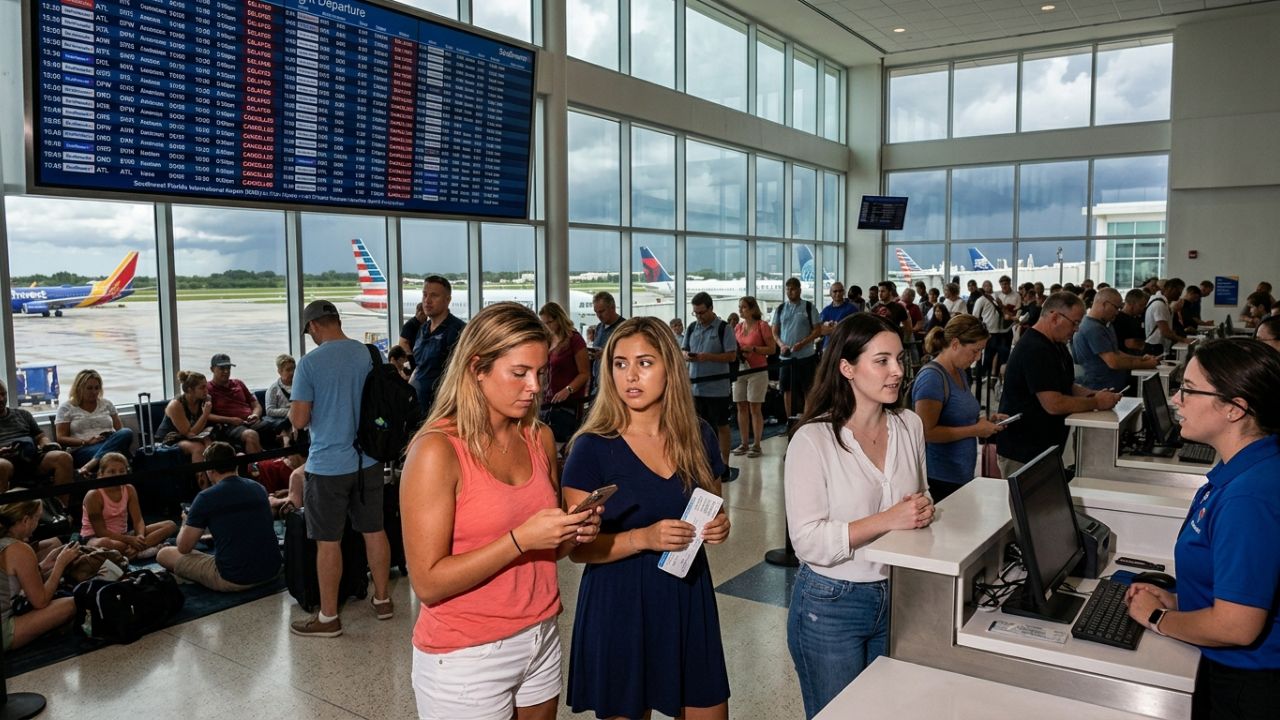
Image representing the intense operational meltdown at Southwest Florida International Airport as severe travel chaos paralyzes the Fort Myers aviation hub. With 16 massive delays and 4 total flight cancellations, passengers flying American Airlines, Delta, and United face catastrophic disruptions and severed domestic connections.
Breaking Airline News: Severe Travel Chaos Paralyzes Southwest Florida International Airport as Flight Cancellations Surge
As sudden operational meltdowns, explosive summer weather patterns, and severe air traffic congestion violently transform the Florida Gulf Coast aviation network into a massive endurance test, Southwest Florida International Airport (RSW) has suffered a critical infrastructure failure. In a brutal demonstration of how quickly massive terminal bottlenecks can destroy regional mobility, Fort Myers has experienced a severe surge in airport disruptions. The latest operational telemetry confirms that travel chaos has paralyzed the gateway, triggering 16 massive flight delays and 4 catastrophic flight cancellations. This sudden collapse in schedule integrity has devastated thousands of passengers flying with major carriers including American Airlines, Delta Air Lines, United Airlines, Southwest Airlines, and JetBlue Airways, severing vital domestic corridors to Atlanta, Chicago, Dallas, New York, and Charlotte.
In a brutal demonstration of how highly vulnerable independent bookings remain to sudden operational shocks, passengers attempting to navigate through Florida’s heavily congested airspace have been met with massive logistical ruin. For travelers banking on seamless summer escapes or critical business connections, an airport delay is no longer just a minor inconvenience; it is a terrifying precursor to a completely collapsed itinerary. The massive disruption at Southwest Florida International Airport proves that even the most modern Gulf Coast facilities are highly susceptible to sudden gridlock. As the Federal Aviation Administration (FAA) scrambles to manage National Airspace System restrictions and airlines desperately attempt to recover stranded aircraft, passengers are being thrown into intense survival mode, battling long customer service queues, missed international connections, and the terrifying prospect of sleeping on terminal floors.
Expanded Overview: The Anatomy of a Gulf Coast Transit Meltdown
The terrifying reality of overwhelming passenger stress currently testing Southwest Florida International Airport brutally exposes the extreme consequences of relying on highly constrained, peak-season routing. Because the Florida aviation network operates at maximum capacity during the summer, the sudden loss of operational stability forces the broader infrastructure to instantly collapse. To combat this, massive multi-agency coordination is required, but for the passengers currently trapped in Fort Myers, the travel chaos represents a devastating financial and mental toll that cannot be instantly repaired.
Section-Wise Breakdown: Decoding the RSW Infrastructure Failure
To fully comprehend the massive logistical failures currently paralyzing the Florida travel grid, passengers and corporate planners must rigorously review exactly how this explosive disruption is destroying regional mobility.
Southwest Florida International Airport (RSW): The Epicenter of the Meltdown To understand the absolute severity of this localized crisis, one must look at the exact operational telemetry at RSW. Serving millions of passengers annually as the primary gateway to the Gulf Coast, the airport has been violently hit by a sudden wave of schedule failures. The confirmed 16 delayed flights and four total cancellations have created a massive backlog of highly stressed passengers. The Lee County Port Authority, which manages the facility, is working desperately to clear the terminal bottlenecks, but the cascading effect of these disrupted departures has already paralyzed the immediate aviation ecosystem.
Airlines Under Fire: The Collapse of Major Corridors The travel chaos is not isolated to a single carrier; it is a massive, multi-airline failure. American Airlines, Delta, United, Southwest, and JetBlue are all actively battling the operational fallout. The severed connections represent some of the most critical arteries in the U.S. domestic network. Flights destined for major fortress hubs—including Atlanta, Chicago, Dallas, New York, and Charlotte—have been severely compromised. This means that a single delay in Fort Myers is violently destroying downstream international connections at these mega-hubs, leaving passengers stranded thousands of miles from their final destinations.
Flight Details and Operational Telemetry
To guarantee that travelers can aggressively track the specific intelligence regarding this massive operational meltdown, the following matrix details the exact, verified data confirming the travel chaos at Southwest Florida International Airport.
| Operational Metric | Verified Telemetry |
|---|---|
| Primary Disruption Hub | Southwest Florida International Airport (RSW) |
| City/Location | Fort Myers, Florida, USA |
| Confirmed Flight Delays | 16 |
| Confirmed Flight Cancellations | 4 |
| Major Airlines Impacted | American Airlines, Delta, United, Southwest, JetBlue |
| Critical Routes Severed | Atlanta, Chicago, Dallas, New York, Charlotte |
| Managing Authority | Lee County Port Authority / FAA |
Data reflects the massive operational failure and passenger disruption currently paralyzing the Fort Myers aviation grid.
Passenger Impact: The Brutal Cost of Travel Chaos
For the thousands of passengers trapped within the RSW terminal, the effect of this massive disruption is overwhelmingly negative. A canceled flight or a massive delay aggressively eliminates any certainty in a travel itinerary. Families attempting to return from Gulf Coast vacations are facing the terrifying prospect of forced hotel rebookings, exorbitant last-minute rental car fees, and the exhaustion of managing stranded children in a congested terminal. For business travelers attempting to reach Dallas or New York, missed connections translate to lost revenue and destroyed corporate schedules. The financial bleeding associated with this localized travel chaos is staggering, as passengers are forced to absorb the costs of an aviation network operating on the brink of failure.
Industry Analysis: What is Triggering the Florida Meltdown?
The global aviation industry is currently witnessing a brutal reality: Florida airspace is highly volatile. Aviation industry analysts confirm that these sudden flight cancellations and delays stem from a highly toxic combination of operational hazards. Florida's notorious summer weather patterns—featuring sudden, explosive thunderstorms, heavy rainfall, lightning activity, and reduced visibility—force immediate ground stops. When combined with severe air traffic control (ATC) congestion, airline crew timeout regulations, and aircraft maintenance requirements, the system simply breaks. The FAA is actively implementing traffic management initiatives to prevent a total national airspace collapse, but these federal restrictions inevitably result in localized pain at airports like RSW.
Conclusion: Surviving the Chaos
As the extremely critical U.S. transit network braces for further instability driven by explosive summer passenger volumes and severe weather friction, this massive disruption at Southwest Florida International Airport represents a highly dangerous warning for travelers. Passengers desperate to avoid missed connections and the severe logistical nightmare of being stranded mid-journey must immediately execute aggressive defense strategies. Travelers must fiercely prioritize early check-ins, actively monitor FAA airspace alerts, and maintain constant digital contact with their airlines. This intelligence proves that surviving the modern era of commercial aviation relies entirely on anticipating localized operational failures, expecting severe travel chaos, and always maintaining a heavily fortified backup plan when navigating vulnerable Florida gateways.
Key Takeaways
- Massive Infrastructure Failure: Southwest Florida International Airport (RSW) in Fort Myers has been paralyzed by severe travel chaos and massive terminal gridlock.
- Verified Disruptions: Operational telemetry confirms 16 massive flight delays and 4 total flight cancellations.
- Airlines Compromised: Major carriers including American Airlines, Delta, United, Southwest, and JetBlue are all experiencing severe schedule failures.
- Severed Domestic Arteries: Critical routes connecting Fort Myers to mega-hubs in Atlanta, Chicago, Dallas, New York, and Charlotte have been compromised.
- Passenger Survival: Stranded travelers must utilize heavily fortified backup itineraries and actively monitor FAA directives to survive the massive financial and logistical toll of summer weather disruptions.
Related Travel Guides
Disclaimer
This article is for informational and educational purposes only. It does not constitute legal, financial, or professional advice. While we strive to provide accurate and up-to-date information, travel policies, regulations, and conditions change rapidly. Always verify information with official sources before making travel decisions. Nomad Lawyer makes no representations about the accuracy, reliability, completeness, or suitability of the information provided. Readers should consult qualified professionals for advice specific to their circumstances. The views expressed in this article are those of the author and do not necessarily reflect the views of Nomad Lawyer.
Kunal K Choudhary
Co-Founder & Contributor
A passionate traveller and tech enthusiast. Kunal contributes to the vision and growth of Nomad Lawyer, bringing fresh perspectives and driving the community forward.
Learn more about our team →