Seoul Tourism Spending Shifts Beyond Myeong-dong as Foreign Visitors Fuel an 80 Percent Surge in Seongsu and Namdaemun

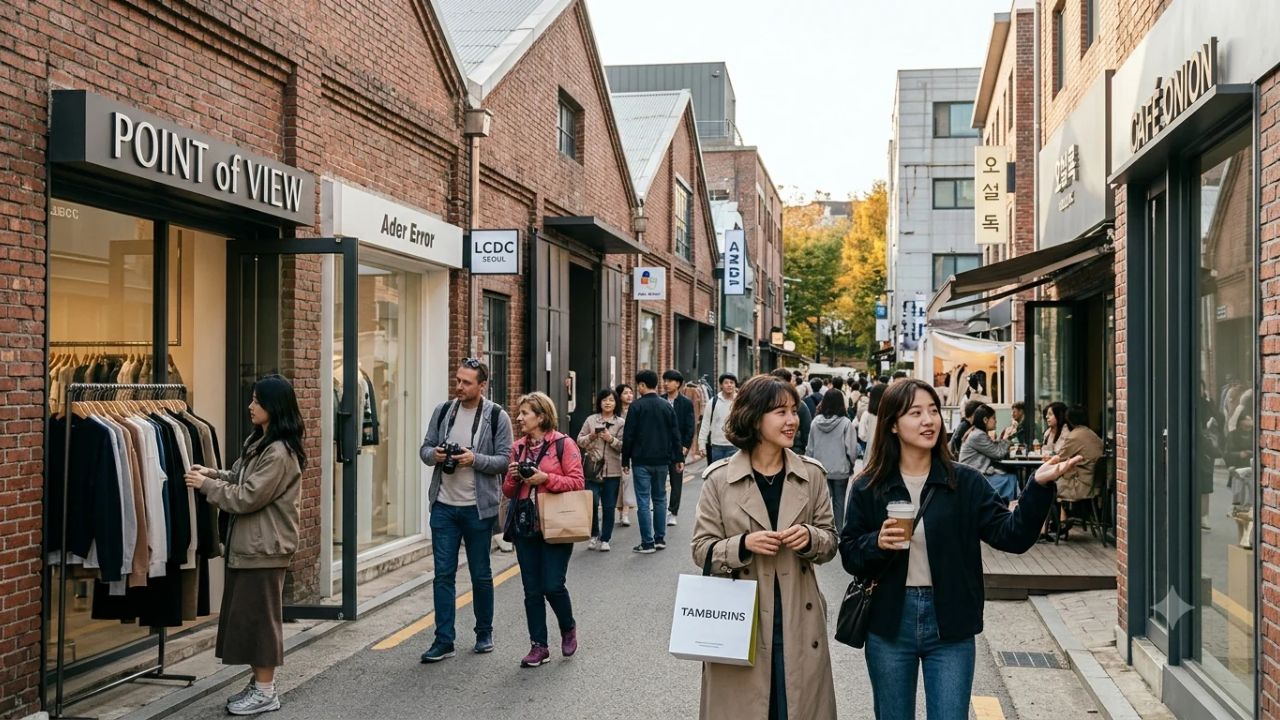
SEOUL — A structural geographic decentralization of inbound tourist expenditure is transforming South Korea’s capital in 2026, as international visitors increasingly bypass traditional commercial epicenters like Myeong-dong and Gangnam to deploy capital across neighborhood shopping districts, repurposed industrial enclaves, and heritage street markets. Official transaction figures compiled for January through September 2026 reveal that foreign credit card expenditures in Seoul’s localized commercial districts surged by an extraordinary 80.5 percent year-on-year, reaching 308.2 billion won. Leading this retail migration are Seongsu-dong—a post-industrial manufacturing hub turned creative retail laboratory where foreign spending more than doubled—and the 600-year-old labyrinth of Namdaemun Market, where overseas purchasing surged 65.6 percent.
This profound reallocation of tourist capital marks an important inflection point for South Korea's visitor economy. Rather than confining their itineraries to standardized duty-free shopping complexes, branded department store avenues, and cosmetic storefront rows in central Seoul, global travelers are gravitating toward environments that reflect authentic, everyday Korean lifestyle culture. Traditional household goods, independent fashion labels, converted red-brick warehouse cafes, and neighborhood street-food alleys are emerging as the primary engines of Seoul's international appeal. In response, the Seoul Metropolitan Government is executing multi-billion-won municipal upgrades, installing modern architectural canopies, expanding pedestrian viewing promenades, and integrating cultural programming to distribute the economic dividends of tourism across the urban fabric.
       SEOUL METROPOLITAN INBOUND SPENDING REDISTRIBUTION (JAN–SEP 2026)
       ================================================================

       [ CITYWIDE TOURISM EXPANSION (H1 2026 BASELINE) ]
       * International Inbound Arrivals: 8.23 Million (+21.0% YoY Growth)
       * Total Foreign Card Spending: 5.6172 Trillion Won (+57.0% YoY Growth)
                                       |
                                       v
       [ THE LOCAL DISTRICT SURGE: 308.2 BILLION WON (+80.5% YoY) ]
       * Traditional Markets Foreign Card Spend: +48.8% YoY
       * Domestic Retail Spending Growth in Same Districts: +1.5% YoY
                                       |
                 +---------------------+---------------------+
                 |                                           |
                 v                                           v
       [ CREATIVE INDUSTRIAL RETAIL: SEONGSU ]     [ HERITAGE COMMERCE: NAMDAEMUN ]
       * Spend: 263.8 Billion Won (+100.6% YoY)    * Spend: 15.758 Billion Won (+65.6% YoY)
       * Converted red-brick warehouses & cafes    * Everyday household goods & market food
       * Temporary experimental pop-up flagships   * Younger transaction count: +44% to +53%
       * Anchored by Seoul Forest (10M visits)     * Hanok-inspired 135m design arcade
The Decentralization Phenomenon: Deconstructing the 80.5 Percent Local District Surge
To grasp the magnitude of Seoul's retail transformation, one must contrast the recent 80.5 percent surge in neighborhood spending against the city's broader macroeconomic tourism performance. In the first half of 2026, the Seoul Metropolitan Government documented a record 8.23 million international arrivals, representing a 21 percent expansion over the previous year. Concurrently, total foreign credit card spending across the entire metropolis reached 5.6172 trillion won—a 57 percent annual increase.
However, while aggregate citywide spending expanded at a healthy clip, the rate of spending growth within decentralized neighborhood commercial districts outpaced the citywide baseline by more than 23 percentage points. International travelers deployed 308.2 billion won across local neighborhood merchants between January and September 2026. In traditional markets, overseas credit card spending grew by 48.8 percent.
This statistical divergence indicates that while established retail districts like Myeong-dong and Gangnam continue to process substantial gross transaction volumes, their historical monopoly on foreign tourism capital is dissolving.
SEOUL TOURISM EXPENDITURE & GROWTH PROFILE (2025–2026)
| Commercial Sector | Reporting Period | Recorded Metric | YoY Growth Trajectory |
|---|---|---|---|
| & Geographic Zone | & Measurement Type | Value (KRW / Count) | & Strategic Meaning |
| Citywide Foreign | January–June 2026 | 5.6172 Trillion | +57.0% YoY |
| Card Expenditure | (Official SMG Data) | Won Total Spend | Record overall rebound |
| Local Neighborhood | January–September | 308.2 Billion | +80.5% YoY |
| Commercial Districts | 2026 Card Volume | Won Total Spend | Hyper-growth away from |
| central tourist strips | |||
| Seongsu-dong | January–September | 263.8 Billion | +100.6% YoY |
| Creative District | 2026 Card Volume | Won Total Spend | Spending doubled; top |
| growth among 10 hubs | |||
| Namdaemun Market | January–September | 15.758 Billion | +65.6% YoY |
| (Jayu Shopping Zone) | 2026 Card Volume | Won Total Spend | Foreign share expanded |
| from 9.4% to 14.4% | |||
| Traditional Markets | January–September | Aggregate Card | +48.8% YoY |
| (Citywide Collective) | 2026 Card Volume | Transactions | High heritage demand |
Several socio-cultural and generational dynamics explain this dramatic retail migration:
First, consumer psychology among international travelers has matured beyond superficial brand acquisition. In the early phases of the Korean Wave (Hallyu), overseas tourists traveled with prescriptive shopping lists dominated by duty-free luxury apparel, commercial ginseng extracts, and heavily advertised mass-market cosmetic brands clustered along Myeong-dong's pedestrian promenade. Today, a digital-first generation of international travelers—heavily influenced by social media platforms, independent travel vlogs, and Korean lifestyle curation—seeks out micro-trends that mirror the everyday habits of Seoul's trend-setting youth (the MZ generation).
Second, travelers are prioritizing authentic spatial ambiance over standardized department store architecture. In neighborhoods like Seongsu-dong and Euljiro, the physical environment forms an integral component of the retail experience. The juxtaposition of working metal fabrication workshops, aromatic artisanal coffee roasteries, and minimalist fashion concept stores offers an immersive urban texture that cannot be replicated inside a sterile commercial shopping mall.
Third, the economic composition of retail spending has shifted toward high-margin discretionary lifestyle goods. Rather than buying high-volume commoditized souvenirs, international visitors are investing in niche perfume brands, custom leather footwear, independent designer eyewear, and artisanal ceramics. This spending tilt explains why transaction totals in specialized neighborhood quarters are expanding at double-digit and triple-digit rates.
The Rise of Seongsu-dong: From Industrial Factories to Global Retail Laboratory
Nowhere is Seoul’s retail transformation more vividly demonstrated than in Seongsu-dong. Located in Seongdong Ward along the northern banks of the Han River, Seongsu was historically known as the center of South Korea’s domestic shoe manufacturing, leather tanning, and commercial printing industries during the 1960s and 1970s. For decades, the district was characterized by monotonous red-brick warehouses, greasy auto repair garages, and narrow industrial alleys filled with the sound of mechanical stamping presses.
Over the past decade, however, Seongsu underwent an organic, designer-led urban renaissance, earning widespread international acclaim as the "Brooklyn of Seoul." Visionary architects, independent fashion entrepreneurs, and creative hospitality operators recognized the unique aesthetic value of the district's raw, weathered industrial structures. Rather than demolishing these heritage buildings, developers embraced adaptive reuse, transforming cavernous warehouse shells into dramatic gallery spaces, concept flagships, and artisanal cafes.
       SEONGSU-DONG ADAPTIVE REUSE & POP-UP ECOSYSTEM
       ==============================================

       [ HISTORIC INDUSTRIAL BEDROCK (1960s–1980s) ]
       * Manual shoemaking factories, leather tanneries & metal stamping plants
       * Sturdy utilitarian red-brick architecture & high-ceiling concrete spans
                                       |
                                       v
       [ ADAPTIVE REUSE CATALYSTS (DAELIM CHANGGO & ONION) ]
       * Preserved exposed brick, rusted steel trusses & industrial skylights
       * Combined contemporary art galleries with specialty coffee roasteries
                                       |
                                       v
       [ EXPERIMENTAL RETAIL & GLOBAL LUXURY FLAGSHIPS ]
       * Kinetic sculpture installations: Gentle Monster & Tamburins Haus Nowhere
       * Architectural monuments: Christian Dior Seongsu glass greenhouse
       * Beauty curation laboratories: Amore Seongsu raw botanical testing lounge
                                       |
                                       v
       [ POP-UP RETAIL INFRASTRUCTURE: TEMPORARY COMMERCIAL THEATER ]
       * Weekly rotating brand experiences, limited-edition product drops & art
       * High-velocity consumer turnover attracting global creative travelers
The commercial results documented in 2026 are staggering. From January through September, foreign credit card expenditure in the Seongsu district reached 263.8 billion won, representing an astounding 100.6 percent year-on-year increase. Recorded overseas spending in Seongsu more than doubled within a twelve-month period, establishing the highest growth rate among the ten major commercial districts monitored by the municipal government.
Several structural factors anchor Seongsu's commercial magnetism:
First, the district has become the undisputed global capital of the "pop-up store" (ppob-eob seuto-eo). Major multinational fashion houses, domestic beauty conglomerates, automotive manufacturers, and entertainment agencies lease former factory spaces for temporary, high-impact experiential retail campaigns running anywhere from two weeks to three months. These installations function as interactive brand museums featuring kinetic art sculptures, robotic installations, bespoke fragrance blending bars, and limited-edition product drops. For international visitors, the ephemeral nature of these pop-up spaces creates an intense sense of urgency and repeat visitation, as the commercial offerings change entirely from one season to the next.
Second, flagship permanent installations in Seongsu have redefined commercial architecture. Groundbreaking retail spaces—such as the experimental eyewear laboratory of Gentle Monster and its companion fragrance label Tamburins, the illuminated metallic glass palace of Christian Dior Seongsu, and the Amore Seongsu beauty lounge (where visitors test over 1,500 skincare formulas in a restored automotive garage wrapped around a serene botanical garden)—draw tens of thousands of design-focused travelers daily.
Third, Seongsu's urban vitality is bolstered by its direct integration with Seoul Forest. Spanning approximately 530,000 square meters, this massive public park acts as an ecological and cultural buffer, allowing visitors to seamlessly transition between high-concept retail browsing and peaceful nature walks under mature tree canopies.
This synergy between commercial innovation and public greenery was highlighted during the 2026 Seoul International Garden Show, which took place across Seoul Forest and connected Seongsu streets from May 1 to October 27. The 180-day civic exhibition surpassed five million cumulative visits within its first 48 days and crossed the monumental milestone of ten million visits on September 16, channeling millions of international and domestic pedestrians directly into adjacent retail and dining avenues.
Heritage Commerce Re-Invented: Everyday Goods and Youth Demographics at Namdaemun Market
While Seongsu-dong captures the avant-garde frontier of Seoul's retail evolution, a parallel and equally fascinating transformation is unfolding across the ancient stone flagstones of Namdaemun Market. Located adjacent to the historic Great South Gate (Sungnyemun) in Jung Ward, Namdaemun is South Korea’s oldest and largest traditional market, boasting an unbroken commercial lineage of more than six centuries dating back to the reign of King Taejong in 1414.
Containing over 20,000 independent wholesale and retail stalls compressed into a dense urban grid, Namdaemun was long perceived by international tourists as an aging, utilitarian bazaar primarily catering to elderly domestic shoppers looking for wholesale textiles, inexpensive clothing, and kitchen hardware.
However, official transaction records for 2026 demonstrate a remarkable commercial renaissance driven by foreign travelers. In the retail sector surrounding the Namdaemun Market Jayu Shopping Centre, total credit card sales reached 109.181 billion won between January and September 2026—a 7.5 percent annual increase. Decisively, foreign visitor spending was the sole engine of this expansion: overseas card spending climbed from 9.514 billion won in the first nine months of 2025 to 15.758 billion won in 2026, marking a 65.6 percent surge.
NAMDAEMUN JAYU SHOPPING SECTOR: SPENDING DIVERGENCE (2025–2026)
| Spending Metric | Jan–Sep 2025 | Jan–Sep 2026 | YoY Variance & Trend |
|---|---|---|---|
| Total Merchant Card | 101.563 Billion | 109.181 Billion | +7.5% Overall Growth |
| Sales Volume | Won | Won | |
| Foreign Visitor Card | 9.514 Billion | 15.758 Billion | +65.6% SURGE IN |
| Expenditure | Won | Won | OVERSEAS SPENDING |
| Domestic Customer | 92.049 Billion | 93.423 Billion | +1.5% Domestic |
| Expenditure | Won | Won | Stagnation |
| Foreign Share of | 9.4% of Total | 14.4% of Total | Overseas customers |
| Market Spending | Sales Volume | Sales Volume | capture 5% more share |
While domestic spending in Namdaemun remained nearly flat at 1.5 percent growth, foreign capital drove total market expansion, pushing the international share of total sales from 9.4 percent to 14.4 percent.
The underlying catalyst for this resurgence is the international viral popularity of ordinary, utilitarian Korean household products. Driven by authentic travel sharing across international social media platforms, foreign visitors have developed a fascination with everyday items deeply rooted in Korean domestic routines:
- Korean Exfoliating Towels (Song-Wol / Italy Towels): Inexpensive, brightly colored viscose scrubbing cloths traditionally utilized in public bathhouses (jjimjilbangs) for physical exfoliation have become one of the most sought-after personal care souvenirs among international visitors.
- Mesh Bath and Market Baskets: Breathable, lightweight plastic and mesh caddies used by Korean households for organizing toiletries and fresh produce have emerged as design-forward, functional accessories for foreign apartment dwellers.
- Traditional Winter Accessories and Scarves: High-density wholesale textile stalls in Namdaemun offer wool, cashmere, and fleece scarves at a fraction of department store prices, attracting budget-conscious travelers seeking winter warmth.
- Stainless-Steel Korean Tableware: Sets of flat stainless-steel chopsticks and long-handled spoons (sujeo), alongside traditional individual brass dining bowls, are purchased in vast quantities by culinary enthusiasts seeking to recreate authentic Korean dining aesthetics at home.
       NAMDAEMUN MARKET: GENERATIONAL CONSUMER DEMOGRAPHIC SHIFT
       =========================================================

       [ THE HISTORICAL PERCEPTION: ELDERLY DOMESTIC SHOPPERS ]
       Wholesale bulk buyers & senior citizens browsing discount textiles
                                       |
                                       v
       [ 2026 DEMOGRAPHIC INFLECTION: YOUNG ADULT TRANSACTION GROWTH ]
       * Consumers Aged 20 and Below: +44.0% Weekend Transaction Surge
       * Consumers Aged in Their 30s: +53.0% Weekend Transaction Surge
       * Average Daily Foreign Floating Population: 30,132 Pedestrians
                                       |
                                       v
       [ DUAL ENGINE: RETRO LIFESTYLE HUNTING & STREET GASTRONOMY ]
       * Young shoppers pair vintage fashion hunting with iconic market foods:
         Hand-cut Kalguksu noodles, spicy braised hairtail fish & sugar Hotteok
Simultaneously, the demographic profile of Namdaemun’s customer base is skewing dramatically younger. Credit card transaction tracking reveals that during weekends and national holidays, purchasing frequency among consumers aged 20 and below surged by 44 percent, while transactions among consumers in their 30s jumped by 53 percent.
Young international and domestic shoppers are drawn to Namdaemun’s lively street food alleys, combining accessory shopping with culinary exploration in the famous Kalguksu Alley (where hand-cut noodle soups are served alongside complimentary spicy cold noodles), Braised Hairtail Fish Alley (Galchi Jorim Golmok), and roadside stalls frying crispy vegetable hotteok and steamed handmade dumplings (mandu).
Municipal Architecture & Urban Design: The Namdaemun Innovation Project
Recognizing that Namdaemun’s physical infrastructure was ill-equipped to handle surging international pedestrian traffic, the Seoul Metropolitan Government launched the comprehensive Namdaemun Market Area Innovation Project. Because Namdaemun is an irreplaceable cultural heritage asset containing 20,000 independent shops, municipal planners avoided heavy-handed modern redevelopment that would sanitize the market’s organic atmosphere. Instead, the city implemented sensitive architectural interventions designed to enhance visitor comfort while honoring historical building traditions.
The crowning achievement of this civic revitalization was officially unveiled on November 17, 2025: a stunning 135-meter-long design arcade spanning the market's primary central thoroughfare.
NAMDAEMUN MARKET AREA INNOVATION INFRASTRUCTURE MATRIX
| Entity / Facility | Delays | Cancellations | Details |
|---|---|---|---|
| Project Component | Architectural Form | Technical Features | Practical Visitor & |
| & Civic Objective | & Structural Scope | & Safety Systems | Merchant Benefit |
| Hanok Design Arcade | 135-meter covered | Translucent | All-weather shopping; |
| (Completed Nov 2025) | street structure; | architectural | natural lighting; smoke |
| curved eave design | membrane; vents | ventilation safety | |
| Sungnyemun Heritage | Widened stone | Direct sightlines; | Frictionless walking |
| Pedestrian Walkway | pedestrian avenue | integrated historic | link between market |
| to ancient gate | stone lighting | and National Treasure | |
| Namsan Vertical | Outdoor mechanical | Universal access; | Eliminates steep hill |
| Connection Elevators | elevator towers & | connects Hoehyeon | barrier for elderly |
| covered stairs | to Baekbeom Square | & strollers to Namsan | |
| Elevated Rest Deck | Second-story civic | Public seating; | Open viewing platform; |
| & Viewing Pavilion | skywalk & terrace | tourist information | panoramic perspective |
| overlooking alleys | desk & clean WCs | over market roofscapes |
Drawing inspiration from the graceful, sweeping eaves of traditional Korean hanok roof architecture, the arcade incorporates a lightweight, high-tensile architectural membrane roof. The structure provides complete shelter from torrential summer monsoons and freezing winter snowfalls, while its translucent material diffuses natural daylight evenly across merchant stalls below. Automated ridge vents and acoustic baffles regulate airflow and minimize ambient noise echo, while integrated automated fire-suppression sprinklers and smoke exhausts address the acute fire hazards historically associated with dense traditional markets.
Beyond the covered arcade, the municipal revitalization masterplan encompasses five additional infrastructural links:
- Sungnyemun Heritage Walkway: A broad, landscaped pedestrian promenade connecting the western edge of the market directly to Sungnyemun Gate (National Treasure No. 1), allowing visitors to combine shopping with historical exploration without crossing multilane roadway traffic.
- Namsan Mountain Accessibility Elevators: Large-capacity outdoor glass elevators and gentle switchback ramps connecting Hoehyeon Subway Station directly to Baekbeom Square on the slopes of Namsan Mountain, eliminating the steep, exhausting stair climbs that previously deterred older visitors and families with strollers.
- Elevated Viewing Decks and Rest Facilities: Second-story pedestrian skywalks installed above congested intersections, providing tourists with shaded seating pavilions, panoramic vantage points over the sprawling market rooflines, and clean, accessible public restrooms.
- Entrance Gate Plazas: Modernized public transit interchange plazas at subway exits, equipped with digital multilingual wayfinding kiosks and interactive shop-directory touchscreens.
- Experiential Streetscape Paving: High-durability granite paving embedded with non-slip textures and tactile ground indicators, creating a unified visual identity across the market's labyrinthine secondary alleys.
The Expanding Urban Constellation: Jongno 3-ga, Ikseon-dong, and Beyond
The centrifugal dispersion of international tourism spending in Seoul is not confined solely to Seongsu-dong and Namdaemun Market. A broader urban constellation of historic and working-class neighborhoods is absorbing international visitor flows, creating a resilient, decentralized tourism economy.
In Jongno 3-ga, international travelers are drawn to one of central Seoul's most resilient neighborhood ecosystems. By day, the district functions as an unpretentious commercial zone populated by jewelry wholesalers, hardware merchants, and traditional musical instrument shops. As darkness falls, however, the streets surrounding Jongno 3-ga Subway Station transform into an iconic open-air culinary landscape dominated by dozens of pojangmacha (tented street-food bars).
Sitting on plastic stools beneath bright orange plastic tarpaulins, international visitors rub shoulders with local office workers, sharing plates of spicy stir-fried pork, seafood scallion pancakes (pajeon), and chilled soju. This spontaneous, unvarnished social interaction provides foreign travelers with an authentic cultural immersion that cannot be engineered in sterile tourist restaurants.
       SEOUL'S DECENTRALIZED NEIGHBORHOOD TOURISM CONSTELLATION
       ========================================================

       [ JONGNO 3-GA & EULJIRO ("HIPJIRO") ]
       * Working-class printing & hardware alleys by day; neon beer bars by night
       * Spontaneous cultural exchange at outdoor Pojangmacha street food tents
                                       |
                 +---------------------+---------------------+
                 |                                           |
                 v                                           v
       [ IKSEON-DONG HANOK ENCLAVE ]               [ HONGDAE & YEONNAM-DONG ]
       * 1920s urban Hanok residential grid        * Indie music, youth street fashion
       * Modernized craft beer pubs, specialty     * Gyeongui Line Forest Park green trail
         bakeries & artisanal tea salons           * Creative busking & graphic design studios
Immediately adjacent to Jongno 3-ga lies Ikseon-dong, Seoul’s oldest surviving urban hanok residential enclave, constructed in the 1920s as a modern residential development. Over the past six years, Ikseon-dong’s narrow, labyrinthine alleys have been lovingly restored, housing independent craft beer microbreweries, artisanal sourdough bakeries, and traditional tea salons within preserved wooden courtyards.
Similarly, in Euljiro—famously dubbed "Hipjiro" by local youth—young entrepreneurs have opened hidden speakeasies, natural wine bars, and graphic design studios inside the upper floors of working industrial metal lathes and acrylic manufacturing plants.
The macroeconomic consequences of this multi-district expansion are profoundly positive. By dispersing visitor foot traffic across multiple urban wards, Seoul successfully prevents the acute overtourism crises that have paralyzed European capitals like Barcelona and Venice. Neighborhood retailers, family-run restaurants, and local transit networks capture direct economic gains, building a resilient, sustainable visitor economy that enriches both international travelers and local citizens.
Strategic Traveler Blueprint: Exploring Seoul’s Local Districts Like an Insider
For international visitors planning to experience Seoul’s evolving retail and cultural landscape in 2026, executing a successful neighborhood-based itinerary requires practical preparation and cultural awareness:
       NEIGHBORHOOD EXPLORATION PLAYLIST: FIVE ESSENTIAL PROTOCOLS
       ==========================================================

       [ 1. FINANCIAL & PAYMENT REDUNDANCY ]
       * Carry physical Korean Won cash for traditional market food stalls
       * Use international credit cards (Visa/Mastercard) at established retail shops
       * Load T-Money or Climate Card for seamless subway & bus transfers
                                       |
                                       v
       [ 2. TEMPORAL SCHEDULING STRATEGY ]
       * Visit Namdaemun Market in the morning (09:00–12:00) for fresh food & crafts
       * Explore Seongsu-dong in the afternoon & evening (13:00–21:00) for pop-ups
       * Avoid Seongsu on peak weekend afternoons (14:00–17:00) to bypass 2-hour queues
                                       |
                                       v
       [ 3. DIGITAL WAYFINDING & RESEARCH ]
       * Download Naver Map or KakaoMap (Google Maps has limited walking navigation)
       * Monitor Instagram and Catch Table for temporary Seongsu pop-up reservations
                                       |
                                       v
       [ 4. SUSTAINABLE NEIGHBORHOOD ETIQUETTE ]
       * Respect residential peace in Ikseon-dong and Bukchon hanok alleys
       * Support independent artisans & family-owned food stalls directly
- Maintain Payment Redundancy: While foreign credit card acceptance has expanded dramatically across neighborhood commercial districts—as evidenced by the 80.5 percent spending surge—many small food stalls and elderly vegetable merchants in Namdaemun Market operate exclusively in physical Korean Won cash or domestic bank transfers. Always carry 30,000 to 50,000 Won in cash for market street food, while utilizing international credit cards for larger fashion, beauty, and lifestyle transactions in Seongsu.
- Utilize Local Navigation Applications: Standard international navigation services like Google Maps suffer from restricted functionality in South Korea due to national security data regulations. Before departure, download domestic navigation applications such as Naver Map or KakaoMap, which provide real-time English-language walking directions, precise subway exit numbering, and up-to-date operating hours for independent cafes and boutiques.
- Time Your Neighborhood Visits Intelligently: To maximize your experience, match each district with its natural operational rhythms. Namdaemun Market is at its most authentic and energetic during the morning hours between 09:00 and 12:00, when wholesale goods are unpacked and fresh noodles are prepared. Conversely, Seongsu-dong comes alive in the afternoon and evening: visit between 13:00 and 20:00 on weekdays to explore pop-up stores without encountering the massive two-hour queuing lines that frequently form on Saturday and Sunday afternoons.
- Leverage the Seoul Climate Card for Regional Transit: Take advantage of the Seoul Metropolitan Government's "Climate Card" (Gihu Donghaeng Card), an unlimited transit pass offering short-term tourist options for 1, 2, 3, or 5 days. For a modest daily fee, travelers enjoy unlimited rides on the entire Seoul Subway network and municipal buses, making multi-district transit between Namdaemun (Hoehyeon Station, Line 4), Seongsu (Seongsu Station, Line 2), and Jongno 3-ga (Lines 1, 3, and 5) effortless and economical.
- Practice Mindful Neighborhood Etiquette: When exploring residential and semi-industrial neighborhoods like Ikseon-dong or the working artisan streets of Seongsu, remember that these areas remain active living and working communities. Maintain quiet reverence when passing residential hanok doorways, ask permission before photographing independent artisans at work, and dispose of takeaway coffee cups in designated municipal recycling bins.
The geographic diversification of Seoul's tourism economy demonstrates that modern international travel is fundamentally about authentic connection. By venturing beyond the commercial neon of Myeong-dong to embrace the working heritage of Namdaemun and the creative energy of Seongsu, travelers will discover the dynamic, layered soul of one of the world's greatest metropolises.
Related Travel Guides
- Secondary Cities Outpace Traditional Hubs in 2026 as Anti-Overtourism Regulations Spread
- Seoul Travel Week 2026 Unveils Interactive Cultural Tourism Program
- Australia Scales Up Coral Restoration Tourism as Cairns Deploys Larval Robotics
- Japan Autumn Travel Guide: How to Navigate Tokyo and Kyoto Foliage, Temple Illuminations
- Paris and Brussels Launch Joint European Gastronomy Pass Promoting Organic Dining
This article is for informational purposes. Flight routes, passenger regulations, visa rules, and transit advisories are subject to change by airlines and aviation authorities. Readers are advised to verify schedules and travel documentation with relevant carriers and border agencies before departure.
Related Stories
UK Noise Pollution Rankings 2026: Salford Loudest City While Scotland's Perth and Kinross Emerges as Ultimate Peaceful Travel Retreat
US Bipartisan Coalition Advances Film Tourism and Federal Tax Credits to Rival Overseas Production Hubs