
The £5,000 Liquid Trap: How Paused Next-Gen Scanners and Security Confusion Trigger Massive Airport Disruptions and Travel Chaos
As global transit hubs face severe bottlenecks, widespread confusion over 100ml hand luggage rules and delayed CT scanners plunge thousands of passengers into agonizing travel chaos and steep financial penalties.

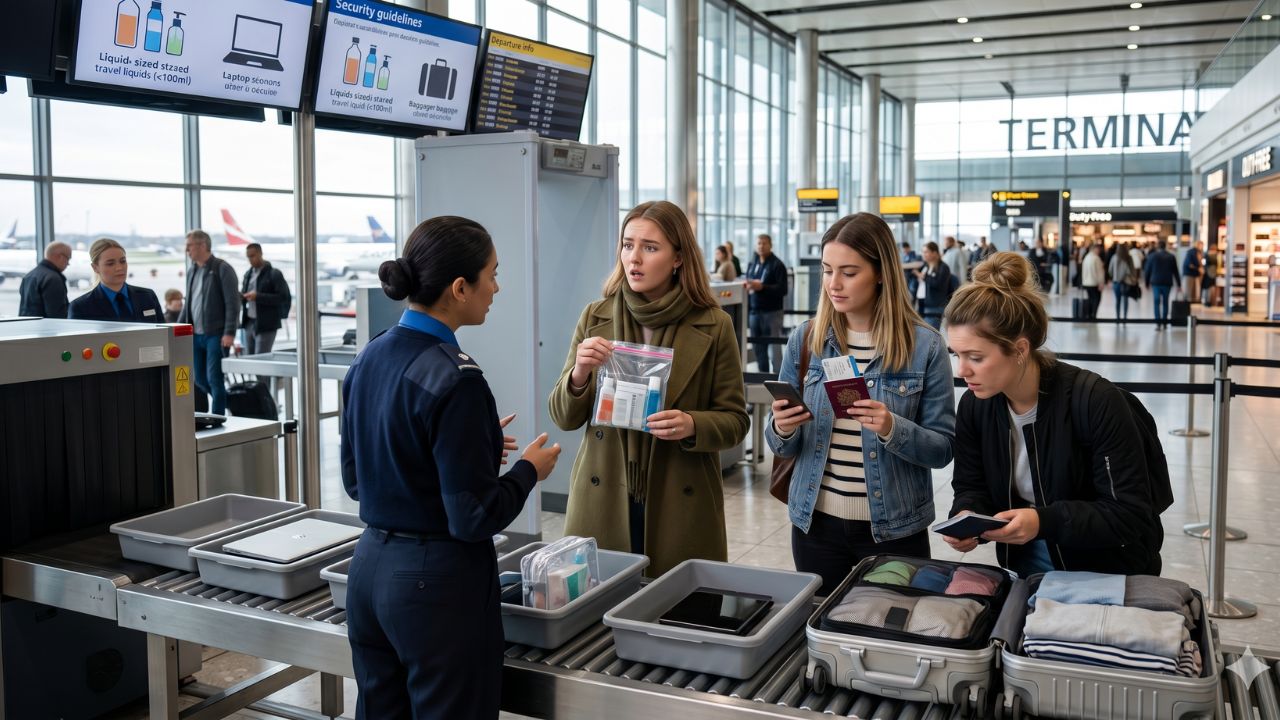
Image generated by AI
A Massive Regulatory Crackdown Triggers Security Gridlock
While massive sectors of the global passenger network frequently battle highly unpredictable extreme weather events and horrific commercial fleet constraints, the sudden, unmanageable collapse of terminal checkpoints remains the absolute most terrifying catalyst for cascading airport disruptions. Delivering highly urgent, breaking airline news, verified international transit trackers confirm that a massive operational disaster has actively detonated, completely exposing vulnerable international tourists and corporate commuters to severe travel chaos directly at the security gates. Today, June 4, 2026, highly alarming operational news forcefully emerged confirming that a widespread, systemic confusion surrounding hand luggage regulations has completely paralyzed departure halls, triggering a wave of agonizing delays, sudden flight cancellations, and severe financial penalties.
While desperate travelers usually attempt to navigate terrifying terminal gridlock caused by airline scheduling failures, these exclusive aviation updates reveal a highly systemic, incredibly dangerous logistical meltdown actively destroying holiday itineraries before passengers even reach the boarding gate. What many assume to be a minor oversight—like leaving a bottle of sunscreen or a jar of regional jam in a carry-on—is now resulting in lengthy terminal gridlocks, violently missed flights, and substantial regulatory fines reaching up to an astonishing £5,000. Stepping into a bustling international terminal is increasingly turning into a highly stressful ordeal, as travelers find themselves pulled aside, having their personal items confiscated, and facing steep, unexpected financial penalties due to a highly fragmented security apparatus.
Expanded Overview: The Scale of the Hand Luggage Disruption
The sudden, highly publicized execution of this massive nationwide operational slowdown serves as an undeniable example of how rapidly complex continental logistics can collapse into extreme transit pressure. The underlying cause behind this friction is a perfect storm created by paused upgrades for next-generation airport CT scanners combined with a ruthless tightening of consumer enforcement rules across major transit networks. For a massive corporate and leisure corridor heavily reliant on incredibly robust, high-frequency flight schedules, this massive wave of security friction heavily exposes the entire network to terrifying bottlenecks.
The terrifying reality of the current transit crisis is found in the sheer volume of passengers abruptly halted by the security matrix. When a prohibited item passes into the screening lane, the entire conveyor system violently grinds to a halt. A single bag search can add up to a devastating 20 minutes of delay for an individual passenger. This creates an immediate, compounding bottleneck that delays hundreds of people trailing behind them in line, often forcing airlines to execute massive flight delays or endure the chaos of rebooking passengers who simply could not clear security in time. The compounding effect of these delays completely ruins connecting flights across the globe.
Section-Wise Breakdown of the Security Meltdown
The 100ml Gray Area and the Liquid Trap
The foundational rule of airport security seems straightforward: liquids must reside in containers no larger than 100 milliliters. Yet, the absolute definition of what constitutes a “liquid” is precisely where thousands of passengers trip up every single day. Airport screening technology evaluates materials strictly based on their physical consistency and molecular density. The standard security protocol states that anything spreadable, pourable, sprayable, or liquefiable falls directly under the restriction. This means everyday necessities like peanut butter, luxury face creams, aerosols, and even thick chutneys are flagged instantly by X-ray machines, plunging the checkpoint into massive travel chaos.
The Next-Gen Scanner Failure
Adding to the extreme friction is the highly fragmented rollout of Next-Generation Advanced Imaging Technology (CT scanners) across global aviation hubs. Early announcements led many travelers to mistakenly believe that by 2026, the traditional 100ml liquid rule would be completely abolished. However, massive supply chain disruptions, structural flooring constraints, and software testing delays have forced international transport departments to repeatedly extend deadlines. As a result, travelers face a highly toxic patchwork of conflicting rules, heavily penalizing passengers who rely on the assumption that rules have relaxed universally.
Escalating Penalties and Missed Departures
This severe confusion directly triggers catastrophic outcomes for travelers. The "Liquid Trap" results in sudden non-compliance terminal delays and massive missed departures due to re-screening holds. Beyond the absolute destruction of travel itineraries, passengers are actively facing up to £5,000 in regulatory airport fines for severe non-compliance, alongside steep last-minute luggage check-in fees at the boarding gate.
Verified Aviation Disruption and Confiscation Data
To fully comprehend the massive operational scale and strict enforcement dictating this highly destructive capacity crisis, the following table explicitly details the exact items triggering severe airport disruptions today:
Common Hand Luggage Confiscation Matrix
| Frequently Seized Item | Hidden Security Classification |
|---|---|
| Hazelnut Spread / Honey | Classified as a liquid gel |
| Soft Cheeses (Brie/Feta) | Evaluated as a liquid paste |
| Roll-on Deodorants | Tracked as a fluid aerosol |
| Oversized Empty Flasks | Rejected if volume > 100ml |
Passenger Impact: Navigating the Checkpoint Gridlock
For the modern commuter attempting to navigate this highly volatile international network, the passenger impact of this massive operational meltdown is completely terrifying. Reliable, stress-free security screening is the absolute backbone of seamless travel, and this hub collapse completely destroyed that promise.
- Endure Severe Financial Penalties: Because security compliance is being ruthlessly enforced, shocked passengers are subjected to extreme financial threats, including up to £5,000 in regulatory fines and steep last-minute baggage fees.
- The Threat of Ruined Itineraries: Due to the horrific 20-minute delay per bag search, entire security lanes are violently gridlocked, guaranteeing that passengers will miss their flights and suffer severe travel chaos.
- Survive the Confiscation Trap: Travelers are aggressively urged to implement "Solid-State Substitution"—swapping traditional liquid toiletries for solid bars of soap and dry shampoo—to completely insulate their wallets from steep penalties and confiscations.
Conclusion: A Highly Destructive Transit Meltdown
The massive, highly publicized collapse of security efficiency across global airport terminals represents a severe, incredibly dangerous wake-up call for the aviation sector. By actively demonstrating that paused equipment upgrades and strict enforcement of the 100ml rule can instantly plunge a high-capacity airport into extreme operational emergencies, this systemic failure completely shatters passenger confidence. As executive leadership across international transport departments frantically scramble to address the scanner rollout delays, domestic and international tourists are heavily urged to aggressively separate their liquids, actively prepare for sudden security bottlenecks, and fully expect this unprecedented regulatory crackdown to trigger massive regional travel chaos.
Key Takeaways
- Massive Security Gridlock: Widespread confusion over hand luggage rules and delayed CT scanner deployments are causing severe terminal gridlock and flight delays.
- The 100ml Liquid Trap: Items like hazelnut spread, soft cheeses, and roll-on deodorants are strictly classified as liquids and trigger immediate 20-minute bag search delays.
- Severe Financial Penalties: Passengers face horrific financial consequences, including up to £5,000 in regulatory airport fines and steep last-minute checked baggage fees.
- Next-Gen Scanner Delays: Supply chain and structural issues have paused the rollout of next-generation CT scanners, creating a highly toxic, fragmented security landscape in 2026.
- Passenger Survival Tactics: Travelers caught in the disruption are aggressively urged to consolidate gels into transparent 1-liter pouches, swap liquids for solid-state alternatives, and arrive with massive buffer times to survive the security chaos.
Disclaimer: The specific regulatory fines, confiscation matrix classifications, and scanner deployment timelines presented in this report are based on verified aviation tracking data and security enforcement policies in June 2026. Official airport security protocols, baggage fee structures, and terminal congestion levels are highly volatile and subject to continuous, real-time update based on active operational shifts. Prospective passengers are urgently advised to fiercely monitor their specific airline's baggage policies and verify active security requirements directly via official government portals prior to airport arrival.
Disclaimer
This article is for informational and educational purposes only. It does not constitute legal, financial, or professional advice. While we strive to provide accurate and up-to-date information, travel policies, regulations, and conditions change rapidly. Always verify information with official sources before making travel decisions. Nomad Lawyer makes no representations about the accuracy, reliability, completeness, or suitability of the information provided. Readers should consult qualified professionals for advice specific to their circumstances. The views expressed in this article are those of the author and do not necessarily reflect the views of Nomad Lawyer.
Kunal K Choudhary
Co-Founder & Contributor
A passionate traveller and tech enthusiast. Kunal contributes to the vision and growth of Nomad Lawyer, bringing fresh perspectives and driving the community forward.
Learn more about our team →