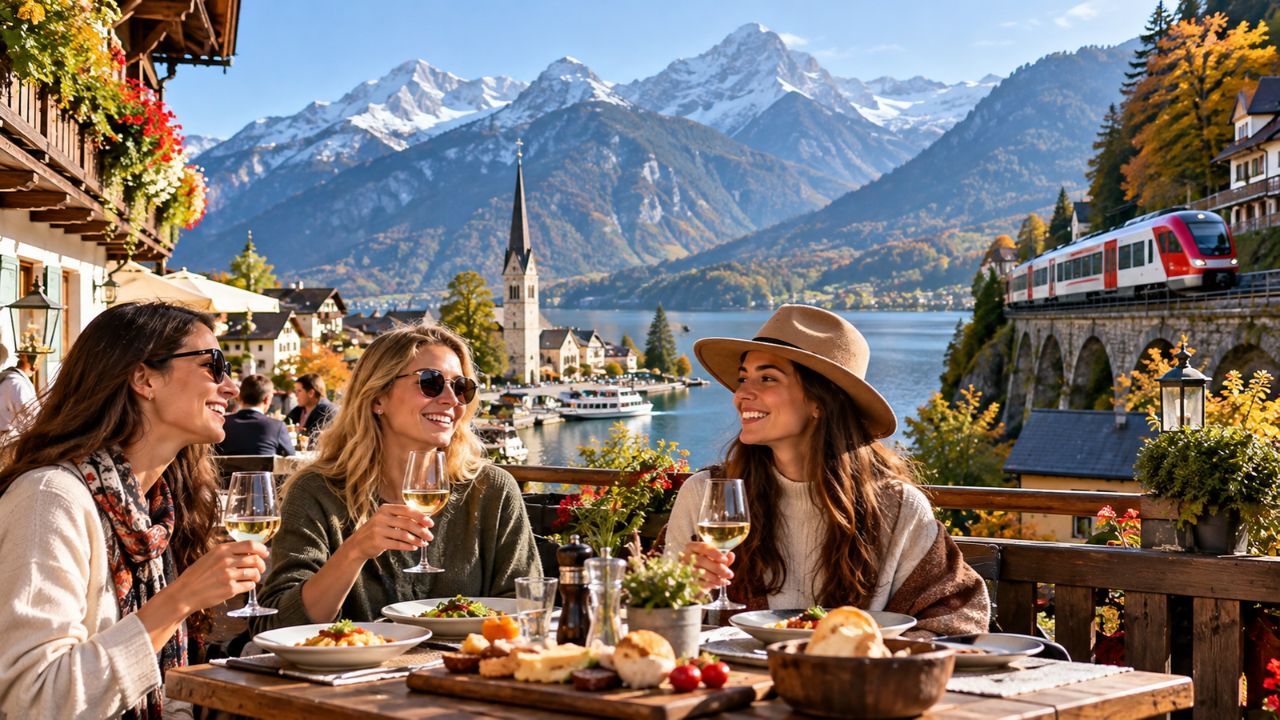
Secondary Cities Outpace Traditional Hubs in 2026 as Anti-Overtourism Regulations Reshape Global Travel Flows

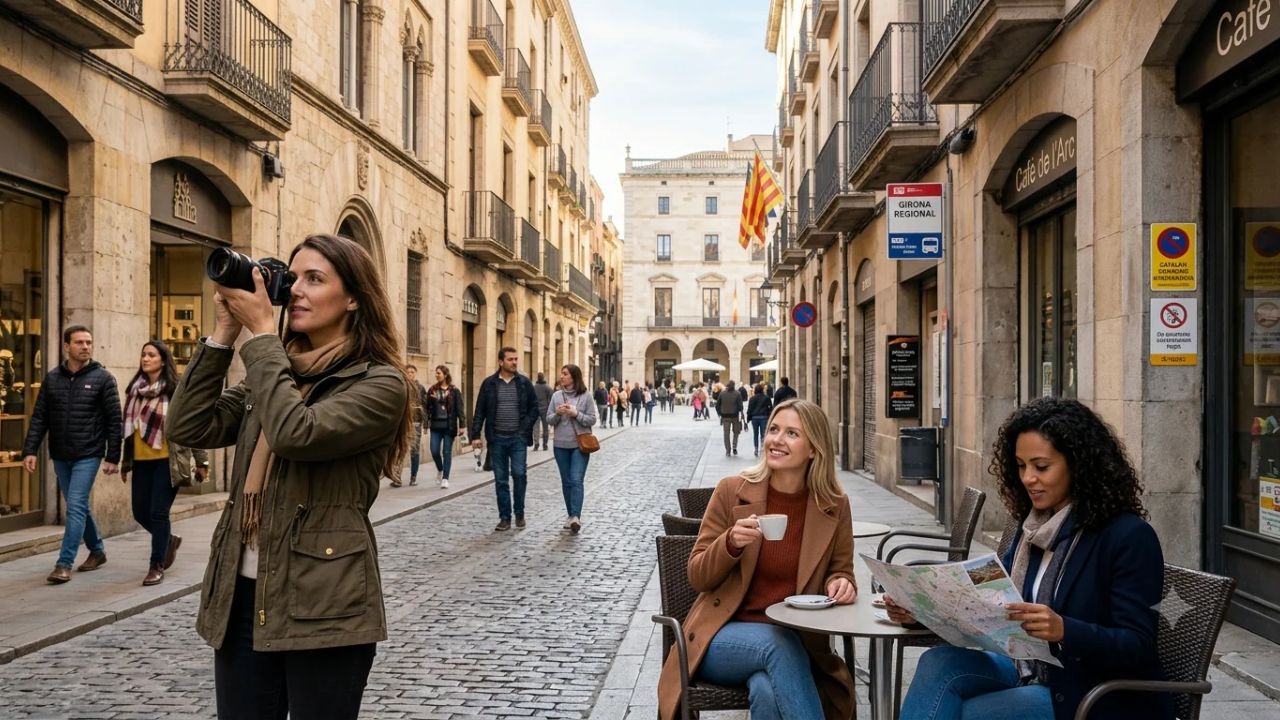
GENEVA / MADRID / SINGAPORE — A structural decentralization of international leisure and corporate tourism is sweeping across Europe and the Asia-Pacific in 2026, as aggressive anti-overtourism regulations, daily visitor quotas, and surging municipal levies in premier capitals propel double-digit travel growth into secondary and tertiary urban destinations. According to unified statistical filings and econometric datasets compiled from the United Nations World Tourism Organization (UN Tourism), the World Economic Forum (WEF), and global booking intelligence platforms, secondary urban centers are systematically outperforming traditional tier-one megacities across virtually every key performance indicator. While international arrivals to established gateway capitals grew at modest rates between 0.4 percent and 3.1 percent year-on-year, secondary hubs recorded arrival expansions ranging from 8.4 percent to an astounding 18.1 percent, driven by a structural migration of global traveler intent.
This geographical redistribution marks the definitive end of an era defined by unconstrained spatial concentration. For decades, a handful of global iconic metropolises captured an overwhelming share of international cross-border arrivals, corporate hospitality investment, and airline route capacity. However, the resulting strain on metropolitan infrastructure, hyper-inflated residential housing markets, and civic backlashes from resident populations have forced municipal governments from Venice and Barcelona to Amsterdam and Kyoto to enact punitive containment policies. In response, international travelers, airline network planners, and institutional hotel real estate funds are pivoting toward secondary regional capitals that offer authentic cultural assets, lower urban congestion, and superior commercial yield profiles.
       THE GREAT TRAVEL REDISTRIBUTION: PRIMARY VS. SECONDARY DYNAMICS (2026)
       ======================================================================

       [ PRIMARY CAPITAL CONTAINMENT (OVERTOURISM BREAKING POINT) ]
       * Strict daily entry quotas & historic center day-tripper fees
       * Short-term holiday rental bans & commercial moratoria (e.g. Barcelona 2028)
       * Cruise ship terminal bans & punitive overnight hotel tourist levies
       * Growth Plateau: +0.4% to +3.1% YoY Inbound Arrival Expansion
                                       |
                                       v
                     [ PASSENGER VOLUME REALLOCATION ]
                                       |
                                       v
       [ SECONDARY & TERTIARY CITY SURGE (THE DECENTRALIZATION WAVE) ]
       * Central & Eastern Europe Secondary Hubs: +18.1% YoY (Czechia, Poland)
       * East Asian Secondary Prefectures & Cities: +14.6% YoY (Japan, S. Korea)
       * Southeast Asian Regional Gateways: +11.2% YoY (Vietnam, Thailand)
       * Western European Secondary Hubs: +8.4% YoY (Nordics, Spain, France)
                                       |
                 +---------------------+---------------------+
                 |                                           |
                 v                                           v
       [ HOSPITALITY OUTPERFORMANCE ]              [ STRUCTURAL TRANSIT ENABLERS ]
       * Occupancy: 73.4%–78.2% (Beats Primary)    * Direct Point-to-Point Long-Haul Air
       * Sustained ADRs: $215 to $249 Nightly      * Trans-European Rail Network (TEN-T)
       * Lead Times: 48% Booked > 30 Days Out      * Reduced Regional Airport Landing Fees
The Anatomy of Hyper-Concentration: Why Primary Capitals Hit The Carrying-Capacity Wall
To comprehend the speed at which secondary destinations are outpacing primary hubs, one must examine the acute ecological, social, and civic pressures that precipitated the regulatory clampdown in established global capitals. For over thirty years, national destination marketing organizations measured success through gross passenger arrivals. Cities such as Paris, London, Rome, Barcelona, Amsterdam, Tokyo, and Bangkok celebrated year after year of record-breaking tourist influxes, dedicating municipal budgets to expanding airport terminals and subsidizing overseas marketing campaigns.
However, this hyper-concentration produced severe socio-economic distortions:
First, residential housing markets suffered catastrophic supply contraction. The proliferation of unregulated short-term holiday rental platforms converted tens of thousands of residential apartment buildings into de facto unlicensed hotels. In historical quarters such as the Gothic Quarter in Barcelona, the historic canal belt of Amsterdam, and the central arrondissements of Paris, long-term residential rental inventories collapsed by 40 to 60 percent over a decade, driving rental prices beyond the reach of local working-class residents, university students, and municipal civil servants.
Second, civic infrastructure buckled under seasonal demand surges. Municipal water treatment facilities, waste management systems, public transit lines, and emergency healthcare networks—engineered to support resident populations—faced systemic overload during peak summer and holiday seasons. Historical monuments, ancient cobblestone pavements, and sacred religious sanctuaries suffered irreversible physical wear and tear under the daily friction of millions of tour group footsteps.
PRIMARY HUB RESTRICTIVE POLICIES VS. SECONDARY INCENTIVES (2026)
| Entity / Facility | Delays | Cancellations | Details |
|---|---|---|---|
| Destination Class | Core Policy Action | Regulatory Mechanism | Desired Municipal Result |
| Primary Capitals | Restrictive | Daily entry fees, | Suppress peak volume; |
| (Venice, Barcelona, | Containment & | cruise ship bans, | protect local housing; |
| Amsterdam, Kyoto) | Deterrence Mandates | holiday rental bans | reduce resident friction |
| Secondary Cities | Capacity Expansion | Reduced airline | Disperse economic spend |
| (Brno, Wrocław, | & Proactive Yield | landing fees, rail | into regional supply |
| Kanazawa, Da Nang) | Management | subsidies, tax relief | chains and job markets |
Third, public sentiment reached a boiling point, culminating in widespread resident protests and political mobilizations across southern Europe and East Asia. Slogans like "Tourists Go Home" and "Your Luxury, Our Misery" evolved from fringe graffiti into powerful political mandates.
Confronting angry electorates, municipal and national governments enacted sweeping containment measures:
- Daily Entry Quotas and Access Levies: Venice codified its permanent entry fee system for day-trippers, charging peak fees up to €10 and capping daily pedestrian access to historic bridges.
- Short-Term Rental Bans: Barcelona passed historic legislation mandating the total cancellation of all 10,101 tourist apartment licenses by November 2028, returning residential housing stock to permanent tenants. Similarly, Florence, Milan, and Palma de Mallorca implemented strict moratoria on new holiday home registrations within historic city limits.
- Cruise Ship Berthing Exclusions: Ports in Amsterdam, Venice, Santorini, and Palma banned mega-cruise liners from berthing in city-center harbors, relocating passenger berths dozens of kilometers away or restricting daily cruise passenger arrivals.
- Punitive Tourist Surcharges: Municipal overnight visitor taxes in Amsterdam, Paris, Rome, and Brussels were increased between 50 and 150 percent, directly raising the cost per night for visitors staying in primary city hotels.
As primary cities erected these regulatory and financial barriers, international travel demand did not vanish; rather, it sought immediate operational release valves.
The 2026 Performance Metrics: How Secondary Cities Outperformed Tier-One Capitals
Comprehensive data from the UN Tourism World Tourism Barometer, the World Economic Forum’s Travel & Tourism Development Index (TTDI) 2026, and Amadeus travel analytics confirms that international visitor flows have actively redirected into secondary and tertiary urban corridors across both Europe and Asia.
REGIONAL INBOUND TOURISM & HOSPITALITY KPI MATRIX (2026)
| Entity / Facility | Delays | Cancellations | Details |
|---|---|---|---|
| Geographic Region | Primary Hub Growth | Secondary City | Secondary Hotel |
| & Market Segment | (YoY Inbound) | Growth (YoY Inbound) | Occupancy Performance |
| Central & Eastern | +2.2% YoY | +18.1% YoY | 75.8% Occupancy |
| Europe | (Prague, Budapest) | (Brno, Wrocław, PL) | (Outpaces Primary 71%) |
| East Asia | +3.1% YoY | +14.6% YoY | 77.9% Occupancy |
| (Tokyo, Seoul) | (Kanazawa, Busan) | (Outpaces Primary 74%) | |
| Southeast Asia | +0.4% YoY | +11.2% YoY | 73.4% Occupancy |
| (Bangkok, Manila) | (Da Nang, Chiang R) | (Outpaces Primary 68%) | |
| Western Europe | +1.8% YoY | +8.4% YoY | 78.2% Occupancy |
| (Paris, Amsterdam) | (Nordics, Regional) | (Outpaces Primary 76%) |
The statistical disparity between primary and secondary growth rates is stark:
In Central and Eastern Europe, secondary urban markets recorded a staggering 18.1 percent year-on-year increase in overnight international visitors, compared to a modest 2.2 percent expansion across established capital cities. In the Czech Republic, while Prague operated under strict group tour noise curfews and holiday rental licensing caps, regional destinations such as Brno, Olomouc, and Plzeň registered an 18 percent increase in international hotel reservations.
Further east, Central Asian cultural and transit hubs across Uzbekistan and Tajikistan recorded international flight search increases exceeding 64 percent, as travelers traded crowded European cathedrals for the monumental Silk Road architecture of Samarkand and Bukhara.
In East Asia, secondary cities surged by 14.6 percent year-on-year, compared to 3.1 percent growth in premier metropolitan hubs. In Japan, where Tokyo and Kyoto grapple with acute pedestrian congestion and transportation bottlenecks, international travelers have expanded into the Hokuriku, Tohoku, and Kyushu regions. Historic castle towns and coastal hubs such as Kanazawa, Takayama, Sendai, and Fukuoka experienced double-digit growth, supported by direct bullet train (Hokuriku Shinkansen) extensions and regional promotion campaigns.
In South Korea, international travelers looked beyond Seoul, traveling via the KTX high-speed rail network to the maritime gastronomy hub of Busan, the heritage architecture of Jeonju Hanok Village, and the coastal Olympic city of Gangneung.
       2026 OVERNIGHT INTERNATIONAL ARRIVAL GROWTH COMPARISON (%)
       ==========================================================

       Central/Eastern European Secondary Hubs : [====================] 18.1%
       East Asian Secondary Cities             : [=================] 14.6%
       Southeast Asian Secondary Cities        : [============] 11.2%
       Western European Secondary Cities       : [=========] 8.4%
       East Asian Primary Hubs                 : [===] 3.1%
       Central/Eastern European Primary Hubs   : [==] 2.2%
       Western European Primary Hubs           : [=] 1.8%
       Southeast Asian Primary Hubs            : [=] 0.4%
In Southeast Asia, secondary urban centers grew by 11.2 percent, whereas primary hubs virtually stagnated at 0.4 percent growth. In Vietnam, international visitors increasingly bypassed extended stays in Hanoi and Ho Chi Minh City, directing their itineraries toward Da Nang, Quy Nhon, Da Lat, and Hue. In Thailand, secondary destinations such as Chiang Rai, Hua Hin, and Krabi outpaced congested Bangkok and Phuket, aided by newly expanded regional airports and cross-border overland routes.
In Western Europe, secondary and nature-adjacent markets expanded by 8.4 percent, compared to 1.8 percent in traditional capitals. Northern European destinations experienced exceptional flight search momentum, with Sweden (+36 percent), Denmark (+34 percent), Ireland (+33 percent), Belgium (+32 percent), and Norway (+31 percent) significantly outperforming the broader European continental average. This Scandinavian and Atlantic acceleration illustrates how travelers are actively combining urban culture with direct wilderness access, preferring mid-sized coastal and fjord gateways over dense metropolitan sprawl.
The underlying behavioral driver behind this geographical pivot is a profound realignment in consumer value perception. In primary capitals, international travelers face a compounding accumulation of daily friction: long ticket queues at major museums, mandatory time-slot reservations booked weeks in advance, inflated restaurant menu pricing, and pervasive crowding on public transit lines. In contrast, secondary cities offer travelers an unhurried, authentic experience where cultural monuments remain accessible, local residents welcome visitors, and regional gastronomy reflects genuine terroir rather than tourist-oriented commercial formulas.
In the hospitality sector, secondary markets demonstrated robust commercial fundamentals. Hotel Average Daily Rates (ADR) across European and Asian secondary cities held firm between $215 and $249, with sustained peak-season occupancy exceeding 73 percent to 78 percent—regularly surpassing the occupancy rates of primary capitals. Because secondary destinations feature a more balanced ratio of hotel rooms to incoming travelers, local hoteliers are able to command premium rates during peak demand periods without triggering the local backlash associated with unconstrained tourist influxes.
Additionally, booking lead times lengthened dramatically: nearly 48 percent of all international bookings for secondary city hotels were finalized more than thirty days in advance, proving that visits to non-primary cities are no longer impulsive, last-minute diversions, but rather deliberately planned anchor destinations. Average lengths of stay in secondary destinations expanded from 2.1 nights to 3.8 nights, as travelers increasingly utilize secondary urban centers as regional basecamps from which to explore surrounding rural valleys, historic castles, and coastal reserves.
Transport Infrastructure Re-Engineering: Rail Expansion and Direct Regional Aviation
The rapid ascent of secondary cities is not merely an ideological consumer preference; it is powered by coordinated infrastructure engineering across civil aviation and national railway systems. For decades, international travelers were compelled to route through primary hubs because international flight networks operated exclusively on a "hub-and-spoke" architecture, terminating at massive international airports like London Heathrow, Paris Charles de Gaulle, Tokyo Haneda, or Bangkok Suvarnabhumi.
Over the past three years, transport ministries and civil aviation authorities have aggressively re-engineered this transit matrix to bypass congested metropolitan gateways:
       TRANS-NATIONAL TRANSPORT RE-ENGINEERING: HUB BYPASS MATRIX
       =========================================================

       [ THE OLD CONGESTED HUB-AND-SPOKE CORRIDOR ]
       International Origin ===> Megacity Primary Hub Airport (Congestion & Delays)
       ===> Expensive Intercity Transfer ===> Secondary Regional Destination

                                    vs.

       [ THE 2026 DIRECT DECENTRALIZATION CORRIDOR ]
       Route A: Direct Point-to-Point Long-Haul Flight to Secondary Airport Gateway
       Route B: Primary Hub Arrival ===> Immediate High-Speed Rail (TEN-T) Connection
       Results:
       * Lower airport landing fees passed through as competitive ticket prices
       * Avoids metropolitan transit gridlock and airport terminal delays
       * Seamless digital ticketing linking regional rail, buses, and e-mobility
First, civil aviation authorities have offered aggressive financial incentives to international and low-cost carriers to establish direct point-to-point routes into secondary gateways. By slashing airport handling charges, passenger facility fees, and landing duties at regional airports—such as Porto in Portugal, Kraków in Poland, Da Nang in Vietnam, and Fukuoka in Japan—authorities have enabled airlines to offer competitive direct international fares. The introduction of long-range, narrowbody commercial airframes, notably the Airbus A321XLR and Boeing 737 MAX, allows carriers to operate direct transcontinental and regional international routes economically without needing to fill massive 350-seat twin-aisle widebody planes.
Second, in Europe, the integration of the Trans-European Transport Network (TEN-T) high-speed rail master plan has established rail as the primary mode of intercity transit. High-speed lines connecting secondary hubs directly to international border crossings—such as the Rail Baltica corridor, high-speed lines in Spain connecting Valencia, Seville, and Malaga directly to the French border, and high-speed rail links in Italy between Bologna, Turin, and Venice—allow international travelers to disembark from a flight and transfer seamlessly onto high-speed electric trains without entering a primary metropolitan center.
Third, national tourism organizations have heavily digitalized regional public transportation. In Japan and South Korea, regional transit authorities have integrated multilingual digital smart-ticketing systems with international payment platforms and mobile wallets. An independent foreign traveler can now land at a regional airport, board a local electric train, and navigate rural bus networks using a digital transit card on their smartphone, eliminating the linguistic and logistical anxieties that historically confined non-Japanese-speaking tourists to central Tokyo or Osaka.
The Real Estate & Hospitality Capital Shift: Institutional Funds Chase Yields
The decentralization of global travel is driving a parallel revolution in international commercial real estate and hospitality private equity. For decades, institutional investment funds, sovereign wealth trusts, and global hotel management corporations focused their capital deployment almost exclusively on tier-one capitals, competing fiercely to acquire trophy assets in central London, Paris, Tokyo, and New York.
By 2026, the economic return profile for primary city hotel investments has eroded significantly:
HOTEL ASSET INVESTMENT PROFILE: PRIMARY VS. SECONDARY
| Investment Metric | Saturated Primary Gateway Hotel | Emerging Secondary City Hotel |
|---|---|---|
| Land Acquisition Cost | Astronomical; high municipal fees | Moderately priced; development grants |
| Construction Permits | Protracted (3 to 6 years); | Streamlined civic approval process; |
| & Bureaucracy | subject to moratoria & legal caps | proactive municipal planning support |
| Operating Margins | Compressed by high union wages, | Healthy operating margins; lower labor |
| municipal levies & utility spikes | and facilities maintenance overhead | |
| Capitalization Rates | Compressed Yields (3.5% to 4.5%) | Attractive Yields (6.5% to 8.5%) |
| Demand Composition | Volatile mass-tourist volume; | Resilient extended-stay leisure; |
| highly vulnerable to regulations | corporate MICE and regional business |
Skyrocketing land acquisition costs, punitive municipal hotel development moratoria, soaring construction interest rates, and elevated municipal taxation in primary capitals have compressed capitalization rates (cap rates) to between 3.5 percent and 4.5 percent. Conversely, secondary urban centers offer highly attractive investment fundamentals, with cap rates regularly achieving 6.5 percent to 8.5 percent.
Private equity funds and major global hotel brands—including Marriott International, Hilton Worldwide, Accor, and Hyatt—are aggressively directing their development pipelines toward secondary cities. Rather than building massive 500-room corporate towers, developers are investing in 100- to 180-room lifestyle hotels, boutique heritage conversions, and extended-stay serviced apartments that integrate regional architectural motifs and local culinary operations. This adaptive reuse model allows institutional investors to transform decommissioned textile mills in northern England, historic post offices in the Czech Republic, and merchant warehouses in Japan into luxury boutique properties, breathing new economic life into historic city centers while avoiding the contentious construction battles typical of saturated capitals.
Municipal governments across secondary urban regions are facilitating this capital influx through targeted regulatory incentives. Regional development agencies are offering reduced commercial property tax rates during initial operating years, establishing streamlined fast-track building permit pipelines, and co-funding public realm improvements—such as pedestrianized town squares, illuminated waterfront esplanades, and public Wi-Fi infrastructure—adjacent to new hotel developments. This collaborative public-private alignment ensures that hospitality capital acts as a catalyst for broader urban regeneration rather than an isolated enclave of commercial extraction.
Concurrently, the international Meetings, Incentives, Conferences, and Exhibitions (MICE) sector is migrating away from primary capitals. Corporate event planners and international professional associations, confronting exorbitant conference center rental fees and inflated hotel room rates in capitals like London, Paris, and Singapore, are increasingly selecting secondary convention cities. Regional hubs such as Leipzig in Germany, Valencia in Spain, Katowice in Poland, and Busan in South Korea have invested public development grants to construct state-of-the-art, carbon-neutral convention complexes. Corporate delegates report higher satisfaction ratings in secondary destinations, citing walkable city centers, lower urban stress, and authentic regional culinary offerings.
Local Economic Resilience: Multipliers and Supply-Chain Integration
The macroeconomic benefit of secondary city tourism expansion extends far beyond hotel corporate profits. When international tourist spending is concentrated within primary capitals, a significant portion of that capital suffers from "economic leakage"—flowing out of the destination to foreign-owned airline conglomerates, international hotel parent companies, and global luxury retail chains.
Conversely, tourism in secondary and regional cities acts as a powerful economic multiplier, with visitor expenditures embedding directly into the domestic regional economy:
       ECONOMIC CAPTURE & MULTIPLIER: PRIMARY HUB VS. SECONDARY CITY
       ==============================================================

       [ PRIMARY CAPITAL: HIGH ECONOMIC LEAKAGE ]
       Visitor Spend ===> Global Hotel Corporate Chain ===> Foreign Luxury Boutiques
       ===> Multinational Food Distributors ===> High Capital Flight Out of Host City

                                    vs.

       [ SECONDARY REGIONAL CITY: HIGH LOCAL RETENTION ]
       Visitor Spend ===> Independent Regional Boutique Hotel ===> Local Farming Cooperatives
       ===> Neighborhood Artisans & Markets ===> Municipal Transit Infrastructure
       * Direct Job Creation: Travel and tourism supports > 13% of regional service jobs
       * Wage Gains Dispersed into Secondary Municipal Tax Bases & Rural Communities
In secondary cities, international visitor spending integrates tightly with local supply chains:
- Direct Agricultural Retention: Regional restaurants and boutique hotels source their produce, meats, dairy, and beverages directly from surrounding rural agricultural cooperatives and family-owned vineyards, retaining food and beverage dollars within the regional economy.
- Artisanal and Heritage Preservation: Spending on souvenirs, crafts, and cultural admissions flows directly to independent regional craftsmen, folk art guilds, and municipal museums, revitalizing centuries-old artisanal traditions that faced extinction due to rural depopulation.
- Youth Employment and Professional Retention: Travel and tourism accounts for over 13 percent of all direct employment in regional service economies. By creating professional career opportunities in hospitality management, culinary arts, eco-guiding, and digital tourism logistics, secondary cities provide viable economic alternatives for young professionals, counteracting the historic brain drain toward primary capitals.
Strategic Destination Governance: Avoiding the Second-Wave Overtourism Trap
While the rapid expansion of secondary city tourism delivers immense economic revitalization, municipal planners are acutely aware of a looming danger: the "second-wave overtourism trap." If secondary cities allow unmanaged, unchecked tourism growth, they risk replicating the exact same housing crises, environmental degradation, and resident alienation that paralyzed primary capitals.
To achieve sustainable, balanced growth, forward-looking secondary cities are implementing proactive destination management frameworks before carrying-capacity ceilings are breached:
       PROACTIVE DESTINATION MANAGEMENT: THE SECONDARY CITY BLUEPRINT
       ==============================================================

       [ 1. PROACTIVE HOUSING PROTECTION & RENTAL LICENSING CAPS ]
       * Establish strict municipal caps on short-term holiday rentals early
       * Limit holiday lets to maximum 60–90 days annually for primary residences
       * Prevent institutional private equity from buying residential housing stock
                                       |
                                       v
       [ 2. REAL-TIME DATA ANALYTICS & VISITOR FLOW DISPERSION ]
       * Deploy IoT sensor arrays and mobile cellular density tracking
       * Dynamic pricing: Adjust regional transit fares & museum fees in real time
       * Disperse crowds toward outer district nature trails and satellite towns
                                       |
                                       v
       [ 3. VALUE-OVER-VOLUME TOURISM MARKETING ]
       * Terminate generic mass-tourism marketing campaigns
       * Target high-yield cultural travelers, remote professionals & eco-tourists
       * Prioritize extended average length of stay (LoS) over gross arrivals
                                       |
                                       v
       [ 4. RING-FENCED MUNICIPAL INFRASTRUCTURE REINVESTMENT ]
       * Mandate that 100% of municipal tourist levies fund local infrastructure
       * Upgrade regional waste management, public parks, and water treatment
       * Protect civic liveability and ensure direct resident quality-of-life benefits
- Codify Early Short-Term Rental Regulations: Rather than waiting for residential housing markets to collapse, secondary cities must establish firm municipal licensing caps on short-term holiday rentals. Policies should restrict holiday rentals to primary residences for a maximum of 60 to 90 days per year, preventing commercial speculative investors from removing long-term rental stock from local residents.
- Deploy Real-Time IoT and Mobile Flow Management: Municipal authorities should utilize Internet of Things (IoT) pedestrian sensors, mobile network density tracking, and digital reservation systems to monitor visitor concentrations in historic squares and sensitive ecological sites. When density thresholds approach safe limits, dynamic digital signage and mobile apps can divert visitors toward under-visited satellite neighborhoods and cultural attractions.
- Prioritize Economic Yield over Headcount Metrics: Regional tourism boards must abandon gross arrival tallies as their benchmark of success. Performance metrics should measure Average Daily Expenditure (ADE), Length of Stay (LoS), and Local Spending Dispersion, designing marketing strategies that attract cultural enthusiasts, eco-tourists, and extended-stay travelers who respect local heritage.
- Reinvest Tourist Levies into Civic Infrastructure: Ensure that municipal visitor taxes are legally ring-fenced to fund tangible community improvements—including modernizing public transit fleets, restoring historical architecture, enhancing public parks, and upgrading municipal waste and water treatment facilities. When local residents see tourism revenues directly subsidizing their public services, community support for the visitor economy remains resilient.
- Establish Resident Participatory Tourism Councils: Municipal administrations must formally incorporate neighborhood resident associations, local shopkeepers, and cultural heritage guardians into official destination planning committees. Rather than allowing commercial marketing boards to dictate visitor volume targets in isolation, participatory councils hold statutory veto power over large-scale hospitality zoning permits and major festival scheduling. This institutional safeguard guarantees that tourism growth enhances rather than displaces neighborhood social cohesion.
In parallel, forward-thinking secondary municipalities are collaborating with university urban planning faculties to execute longitudinal carrying-capacity audits. By modeling environmental indicators—including per-capita residential water consumption, noise pollution decibel levels, and carbon emissions from intercity passenger transfers—city planners establish dynamic thresholds that trigger automated regulatory interventions before ecological or civic breaking points are reached.
The rise of secondary cities represents a permanent, healthy maturation of the global travel industry. By rejecting the unchecked concentration of the past and embracing proactive, value-driven destination governance, secondary urban centers across Europe and the Asia-Pacific are building a sustainable, balanced future for international tourism in the 21st century.
Related Travel Guides
- Seoul Travel Week 2026 Unveils Interactive Cultural Tourism Program
- Australia Scales Up Coral Restoration Tourism as Cairns Deploys Larval Robotics
- Japan Autumn Travel Guide: How to Navigate Tokyo and Kyoto Foliage, Temple Illuminations
- Paris and Brussels Launch Joint European Gastronomy Pass Promoting Organic Dining
- Japan Overhauls Tax-Free Shopping as Tourists Must Pay Upfront Consumption Tax
This article is for informational purposes. Flight routes, passenger regulations, visa rules, and transit advisories are subject to change by airlines and aviation authorities. Readers are advised to verify schedules and travel documentation with relevant carriers and border agencies before departure.
Related Stories
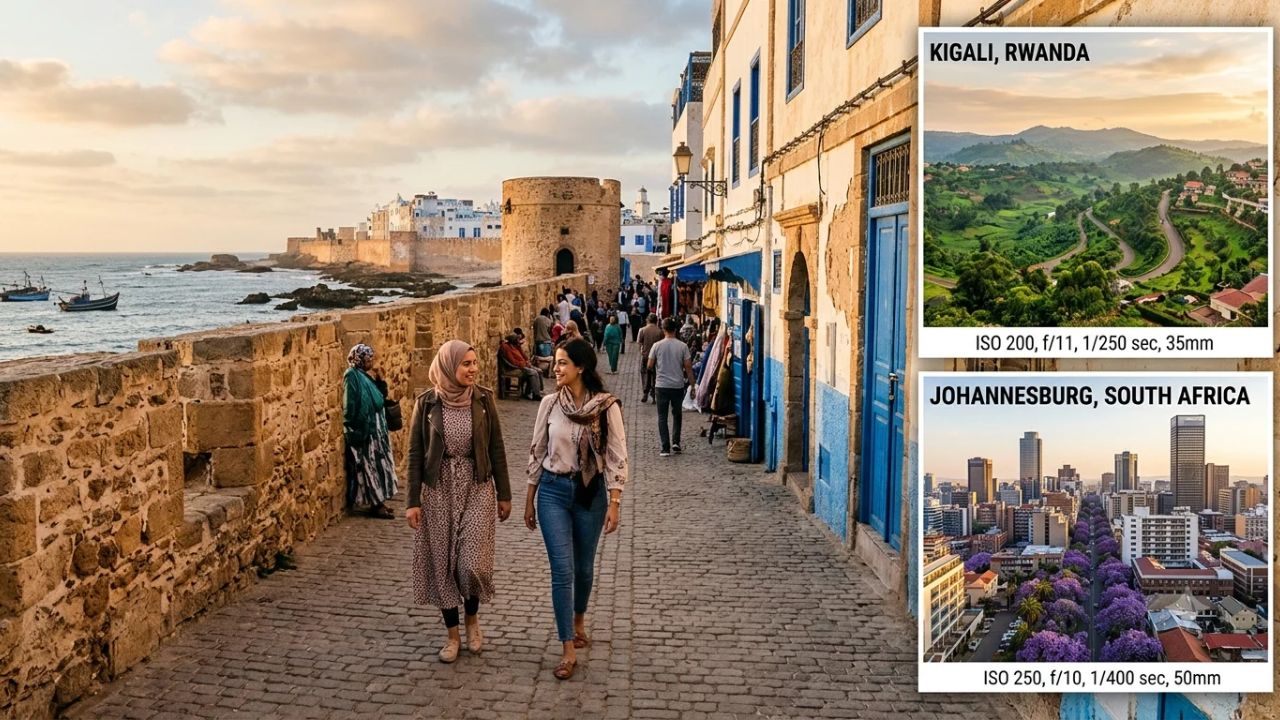
American Travelers Pivot to African Thanksgiving Escapes: Why Essaouira, Kigali, and Johannesburg Outshine Overcrowded Marrakech in 2026

Bruges Leads Europe's Autumn City Break Ranking as Travellers Shift Beyond Amsterdam