
Seattle Connects Hong Kong, Rome, London, Reykjavik and Barcelona as Six New Intercontinental Services Expand Global Travel: All You Need to Know
Seattle Connects Hong Kong, Rome, London, Reykjavik and Barcelona as Six New Intercontinental Services Expand Global Travel: All You Need to Know

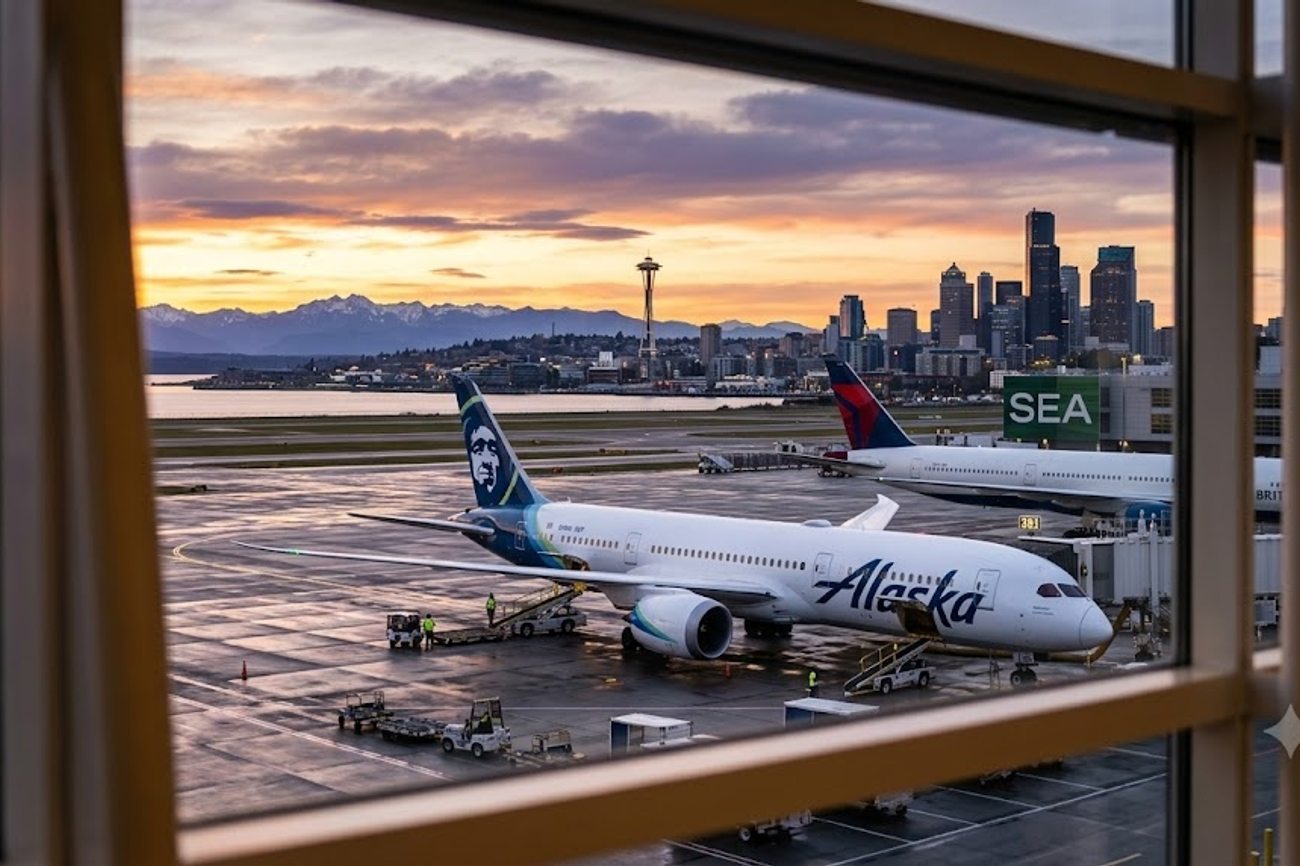
Image generated by AI
52.7 million passengers passed through Seattle-Tacoma International Airport (SEA) in 2025, marking a historic peak in annual traffic. This record-breaking volume signals a fundamental shift in the Pacific Northwest's role within the global aviation hierarchy, moving from a regional hub to a primary intercontinental gateway. While domestic travel remains the bedrock of the airport's operations, the acceleration of international growth—evidenced by a 7.8% increase in overseas traffic—indicates a strategic pivot toward high-yield long-haul markets in Europe and Asia.
The Strategic Pivot to Intercontinental Expansion
The surge in passenger volume is not merely a byproduct of recovering travel demand but a result of aggressive network expansion. In 2025, the Port of Seattle recorded 7,105,076 international passengers, contrasted against a domestic volume of 45,610,105. This disparity highlights a significant opportunity for growth in the international segment, which the airport has pursued by diversifying its carrier base.
By August 2026, the airport's international architecture had evolved to include 63 nonstop services spanning 37 distinct destinations. This network is supported by 29 different airlines, a diversification strategy that reduces reliance on a single carrier and increases competitive pricing for the consumer. The infrastructure now supports 96 domestic nonstop destinations, creating a massive feeder system that allows international carriers to pull passengers from across the United States into the Seattle hub for overseas transit.
2026 Network Evolution and Data Breakdown
The year 2026 served as a catalyst for Seattle's global connectivity, characterized by the introduction of six new intercontinental services. These routes were not distributed randomly; they targeted high-value business and tourism hubs in the European Union and the Asia-Pacific region.
The expansion is highlighted by a coordinated effort between Alaska Airlines and Delta Air Lines to saturate the European market, while Cathay Pacific restored a vital link to the East.
| Airline | New 2026 Route | Launch Date | Regional Impact |
|---|---|---|---|
| Cathay Pacific | Seattle $\rightarrow$ Hong Kong | March 30, 2026 | Restores primary East Asian gateway |
| Alaska Airlines | Seattle $\rightarrow$ Rome | April 28, 2026 | Opens Southern Europe access |
| Alaska Airlines | Seattle $\rightarrow$ London | May 2026 | Connects to global financial hub |
| Alaska Airlines | Seattle $\rightarrow$ Reykjavik | May 2026 | Establishes North Atlantic bridge |
| Delta Air Lines | Seattle $\rightarrow$ Rome | May 2026 | Increases Italy capacity/competition |
| Delta Air Lines | Seattle $\rightarrow$ Barcelona | May 2026 | Diversifies Spanish market access |
The restoration of the Hong Kong route via Cathay Pacific is particularly significant. Hong Kong operates as a primary aviation nexus; therefore, this service does not simply connect two cities but provides Seattle passengers with a springboard into the broader Asian market. Simultaneously, the aggressive push into Europe by Alaska Airlines—launching three separate routes in a two-month window—represents a bold transition for the carrier from a regional powerhouse to a long-haul competitor.
Expert Analysis: The Synergy of Air and Sea Logistics
For the seasoned traveler, the expansion of SEA is not just about flight options; it is about the integration of multimodal transport. The most critical pattern here is the symbiotic relationship between the airport and the cruise industry. The International Air Transport Association (IATA) often tracks how hub connectivity drives regional tourism, and Seattle provides a textbook example.
The Port of Seattle is projecting a record 330 cruise calls for the 2026 season, expecting roughly 2.1 million revenue passengers. The data reveals a staggering dependency: 82% of these cruise passengers arrive via aircraft. Furthermore, 53% of these travelers opt for overnight stays, averaging 1.7 nights in the city.
The direct consequence of adding routes to Barcelona, Rome, and Hong Kong is the reduction of "friction" for high-spending international cruise tourists. Previously, a traveler from Spain or Hong Kong would have faced multiple connections to reach the embarkation point for an Alaska cruise. By eliminating these connections, Seattle increases its attractiveness as a primary cruise port over competitors like Vancouver. This creates a pricing pressure on hotels and short-term rentals in the Seattle metro area, as the "pre-cruise stay" becomes a standardized part of the international itinerary.
Furthermore, the announcement of a Seattle-to-Athens route starting May 12, 2027, suggests that the airport is moving toward a "year-round global city" status. By diversifying into Greece, the airport is capturing the growing demand for Mediterranean leisure travel, ensuring that international traffic remains steady even outside the peak Alaska cruise window.
Key Takeaways
- Record-Breaking Volume: SEA handled 52.7 million total passengers in 2025, with international traffic growing by 7.8% to exceed 7.1 million.
- European Saturation: Six new services in 2026 focused heavily on Europe, with Rome receiving dual service from both Delta and Alaska Airlines.
- Asian Connectivity: The return of Cathay Pacific on March 30, 2026, restores a critical direct link to the Hong Kong hub.
- Cruise Integration: 82% of the 2.1 million projected 2026 cruise passengers arrive by air, making flight expansion essential for the maritime economy.
- Future Growth: The network continues to expand with a scheduled nonstop service to Athens launching May 12, 2027.
FAQ: Seattle International Travel 2026-2027
Which airlines now offer direct flights from Seattle to Rome? Both Alaska Airlines and Delta Air Lines have launched nonstop services to Rome as of 2026, providing travelers with more scheduling flexibility and competitive pricing for trips to Italy.
When did nonstop service to Hong Kong resume in Seattle? Cathay Pacific restored the nonstop connection between Seattle and Hong Kong on March 30, 2026, reopening a primary gateway for travel to Asia.
How does the airport expansion affect Alaska cruise travelers? With 82% of cruise passengers arriving by air, the new direct routes from Europe and Asia allow international travelers to reach their cruise ships with fewer connections and less travel time.
What is the next major international destination being added to SEA? Alaska Airlines has announced that nonstop service to Athens will begin on May 12, 2027, further expanding the airport's reach into Southern Europe.
The transformation of Seattle-Tacoma International into a global nexus proves that the Pacific Northwest is no longer a destination endpoint, but a primary transit engine for the world.
Tags: Seattle-Tacoma International Airport, Alaska Airlines, Delta Air Lines, Cathay Pacific, Port of Seattle 2026, Seattle-Hong Kong Route
Related Travel Guides
- Western Railway Adds More Festive Season Train Options With Four Special Services Extended Till November 2026
- United States Joins Mexico and More American Countries as 2026 Tropical Storms Bring Floods, Mudslides and Travel Disruption
- Cyprus Tourism Gains Momentum as Nicosia Hosts Global Multilingual Short Film Festival: All You Need to Know
Disclaimer
This article is for informational and educational purposes only. It does not constitute legal, financial, or professional advice. While we strive to provide accurate and up-to-date information, travel policies, regulations, and conditions change rapidly. Always verify information with official sources before making travel decisions. Nomad Lawyer makes no representations about the accuracy, reliability, completeness, or suitability of the information provided. Readers should consult qualified professionals for advice specific to their circumstances. The views expressed in this article are those of the author and do not necessarily reflect the views of Nomad Lawyer.
Raushan Kumar
Founder & Lead Developer
Full-stack developer with 11+ years of experience and a passionate traveller. Raushan built Nomad Lawyer from the ground up with a vision to create the best travel and law experience on the web.
Learn more about our team →