
United States Joins Mexico and More American Countries as 2026 Tropical Storms Bring Floods, Mudslides and Travel Disruption
United States Joins Mexico and More American Countries as 2026 Tropical Storms Bring Floods, Mudslides and Travel Disruption

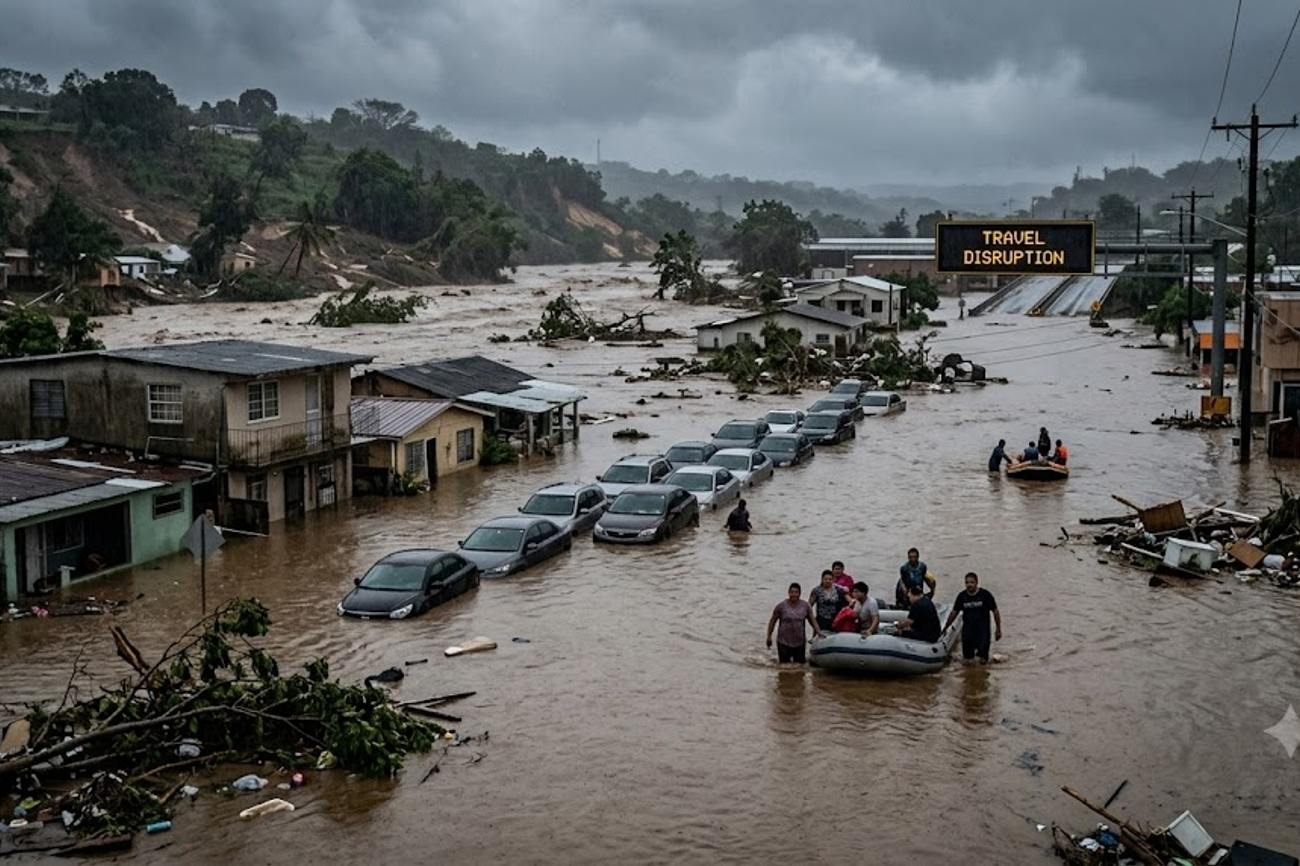
Image generated by AI
Six sovereign nations across the Americas have already suffered documented travel disruptions in 2026 due to a volatile tropical cyclone season. While headline-grabbing hurricanes often dominate the news cycle, the current data reveals a more insidious pattern: lower-intensity tropical storms are causing systemic failures in road networks and coastal logistics from the Gulf of Mexico to the Pacific coast of Central America.
The Anatomy of a Fragmented Season
The 2026 season is characterized not by a single catastrophic event, but by a series of regional clusters that target specific transit corridors. In the United States, the focus has been the Gulf Coast, where three distinct systems—Arthur, Bertha, and Edouard—have tested the resilience of southeastern infrastructure. The pattern began on 17 June with Tropical Storm Arthur appearing near the middle Texas coast, which prompted the National Hurricane Center (NHC) to issue warnings for life-threatening flooding. This was followed on 22 July by Tropical Storm Bertha, which struck St. Bernard Parish, Louisiana, with sustained winds of 45 mph (approximately 75 km/h). The cycle concluded with Tropical Storm Edouard, which centered near Port Arthur and brought heavy rain and gusty winds to southeastern Texas.
Simultaneously, Mexico is grappling with a high-activity Eastern Pacific basin. Tropical Storm Boris moved inland over Guerrero, triggering alerts for mudslides and flooding in both Guerrero and Oaxaca. The threat persists with Tropical Storm Polo, which is currently targeting the southwestern coast, specifically the states of Guerrero, Michoacán, Colima, and Jalisco. These systems highlight a recurring vulnerability: the intersection of tropical moisture and mountainous terrain, which converts rainfall into geological hazards.
Further south, the impact of Tropical Storm Cristina demonstrates the "domino effect" of Central American weather systems. This single storm created a synchronized crisis across Nicaragua, Honduras, El Salvador, and Guatemala. Rainfall totals in this region were forecast between 4 and 8 inches, with extreme isolated pockets reaching 12 inches.
Regional Impact Data: 2026 Tropical Systems
The following data tracks the specific storms and their corresponding logistical threats across the Americas.
| Country | Storm Name | Primary Warning/Threat | Logistical Impact |
|---|---|---|---|
| United States | Arthur | Tropical Storm Warning / Flooding | Coastal and road disruption |
| United States | Bertha | Louisiana Landfall (45 mph winds) | Local transport failure |
| United States | Edouard | Heavy Rain / Gusty Winds | Airport access / Road blockage |
| Mexico | Boris | Guerrero Landfall / Mudslide Risk | Destination and road closure |
| Mexico | Polo | Dangerous Surf / Heavy Rain | Beach and coastal transit risk |
| Nicaragua | Cristina | Tropical Storm Warning / Rain | Overland travel risk |
| Honduras | Cristina | Rainfall Threat | Flooding / Road instability |
| El Salvador | Cristina | Tropical Storm Warning / Rain | Coastal and mudslide risk |
| Guatemala | Cristina | Heavy Rain / Flooding | Regional transit disruption |
Expert Analysis: The "Low-Intensity" Fallacy
For travelers booking routes through the Gulf Coast or Central America, the direct consequence of this data is the need to abandon wind-speed as the primary metric for risk. The 2026 season proves that a "Tropical Storm" designation—often viewed as less severe than a "Hurricane"—can be equally disruptive to travel logistics.
The pricing pressure and logistical delays created by these storms stem from "indirect hazards." When Tropical Storm Bertha hit Louisiana with only 45 mph winds, the primary disruption was not structural wind damage, but the saturation of drainage systems and the subsequent flooding of access roads. For the nomad or business traveler, this means a flight might technically depart, but the ground transportation to the airport becomes impossible.
In Mexico, the risk is compounded by topography. The Servicio Meteorológico Nacional (SMN) has forecast 18–21 named tropical cyclones in the Eastern Pacific for 2026, including four to five major hurricanes. However, the impact of storms like Boris in Guerrero shows that the real danger for travelers is the mudslide. In mountainous regions, rainfall does not just cause puddles; it triggers slope failures that can sever the only road connecting a tourist destination to a major city for days or weeks.
Finally, the case of Tropical Storm Cristina reveals a regional vulnerability. When a system affects four countries (Nicaragua, Honduras, El Salvador, and Guatemala) simultaneously, it creates a bottleneck in cross-border overland travel. For those utilizing regional buses or rental cars, a single storm can effectively close the transit corridor of the entire isthmus, forcing a reliance on more expensive air travel at a time when regional airports are also facing weather delays.
Key Takeaways
- Rainfall Over Wind: Travelers must prioritize rainfall totals and flood warnings over wind speed, as 2026 data shows that "low-wind" storms are causing the most significant road and airport-access disruptions.
- Topographic Risk: In Mexico (specifically Guerrero and Oaxaca), the primary threat is the conversion of heavy rain into mudslides, which can isolate mountainous regions even if the storm center remains offshore.
- Central American Synchronization: Tropical Storm Cristina demonstrates that a single system can disrupt overland travel across four different nations simultaneously, making cross-border journeys highly volatile.
- Basin Activity: With 18–21 named cyclones expected in the Eastern Pacific, travelers to southwestern Mexico should expect intermittent disruptions to beach and marine activities throughout the season.
- Official Monitoring: Reliance on the International Air Transport Association (IATA) and local civil protection agencies is mandatory for real-time transit updates during these events.
FAQ: Americas Tropical Weather 2026
Do I need to worry about travel if a storm is only a "Tropical Storm" and not a "Hurricane"? Yes. As seen with storms Arthur and Bertha, tropical storms can cause life-threatening flooding and road closures that disrupt airport access and coastal travel, regardless of whether they reach hurricane-force winds.
Which areas of Mexico are most at risk for mudslides during the 2026 season? The states of Guerrero and Oaxaca are particularly vulnerable due to their mountainous terrain and exposure to Eastern Pacific systems like Tropical Storm Boris.
How does tropical weather affect cross-border travel in Central America? Systems like Tropical Storm Cristina can cause widespread flooding and landslides across Nicaragua, Honduras, El Salvador, and Guatemala, making overland border crossings dangerous or impossible.
What is the best way to track flight disruptions during these storms? Monitor the official websites of your airline and the National Hurricane Center (NHC) for weather warnings, and check local civil protection alerts for ground transport updates.
When the rain starts in the tropics, the map changes faster than the flight board.
Tags: Tropical Storm Cristina 2026, NHC Weather Alerts 2026, Mexico Pacific Cyclone Season, Gulf Coast Travel Disruptions, Central American Transit Risk
Related Travel Guides
- Cyprus Tourism Gains Momentum as Nicosia Hosts Global Multilingual Short Film Festival: All You Need to Know
- Indian Railways Faces Compensation Order After Delayed Train Journey Causes Passenger Hardship
- US Joins Canada and Central America as Atlanta Welcomes Visitors for Major Autumn Festivals and Cultural Tourism in 2026
Disclaimer
This article is for informational and educational purposes only. It does not constitute legal, financial, or professional advice. While we strive to provide accurate and up-to-date information, travel policies, regulations, and conditions change rapidly. Always verify information with official sources before making travel decisions. Nomad Lawyer makes no representations about the accuracy, reliability, completeness, or suitability of the information provided. Readers should consult qualified professionals for advice specific to their circumstances. The views expressed in this article are those of the author and do not necessarily reflect the views of Nomad Lawyer.
Raushan Kumar
Founder & Lead Developer
Full-stack developer with 11+ years of experience and a passionate traveller. Raushan built Nomad Lawyer from the ground up with a vision to create the best travel and law experience on the web.
Learn more about our team →