Scotland Unveils Landmark Visitor Levy Across Edinburgh, Stirling, Dundee, and the Highlands

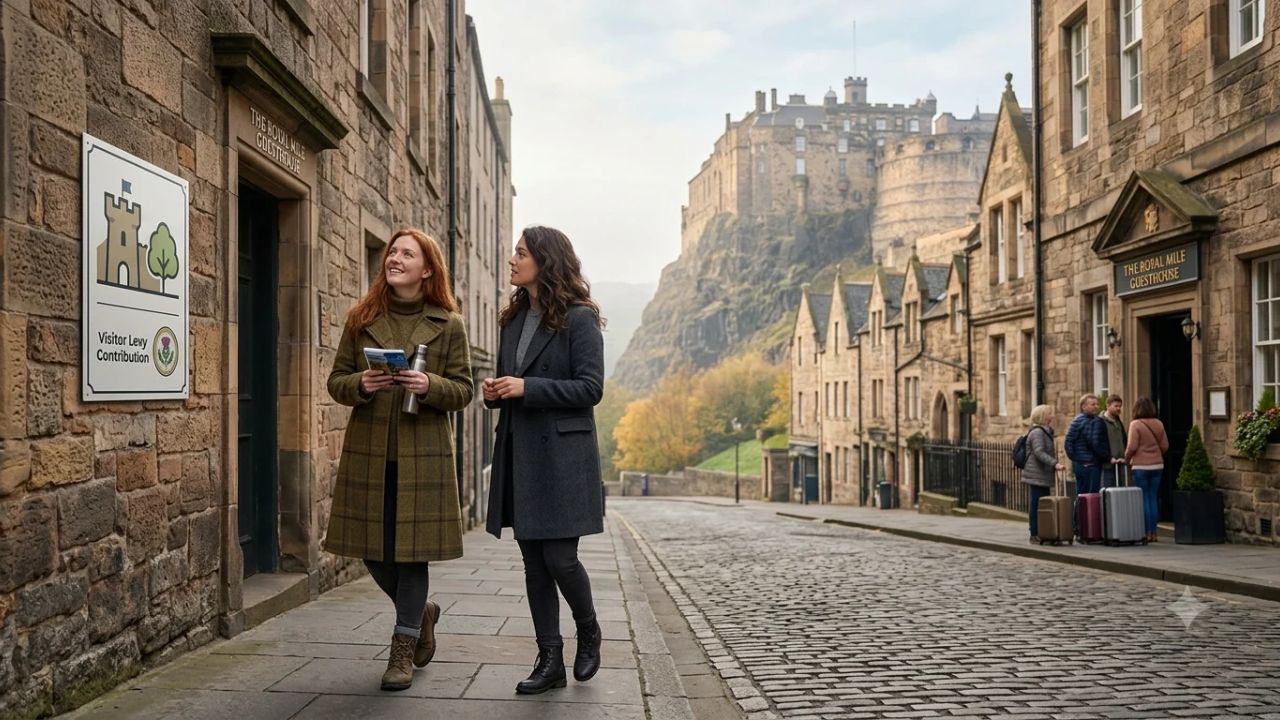
Scotland's pioneering Visitor Levy framework empowers municipal councils to levy overnight accommodation taxes to safeguard historic infrastructure and protect natural environments
[EDINBURGH, Oct 30, 2026] — Scotland has entered a transformative era in destination management as municipal councils across the country advance localized visitor accommodation levies under the Visitor Levy (Scotland) Act 2024, creating dedicated funding streams to safeguard historic urban centers, rural mountain corridors, and local community infrastructure.
[!NOTE] Legislative and Operational Status: Scotland’s decentralized tourism levy empowers its 32 local councils to establish tailored charges on paid overnight stays. Edinburgh became the UK's first capital to activate the policy on July 24, 2026, implementing a 5% percentage-based charge capped at five consecutive nights. Stirling Council formally approved a 3% levy targeting June 2027, while Dundee City Council evaluates either a 5% charge or a £5 flat fee ahead of a potential 2028 rollout. In the Scottish Highlands, a tiered fixed model (£5 for hotels and short-term lets; £2 for campsites) incorporates a vital winter exemption (December through February) to protect off-peak rural hospitality. Combined collections across the four regions are projected to generate £22 million to £30 million annually.
SCOTTISH MUNICIPAL VISITOR LEVY ARCHITECTURE (2026)
| Column 1 |
|---|
| [ ENABLING LEGISLATION: VISITOR LEVY (SCOTLAND) ACT 2024 ] |
| Discretionary statutory power devolved to all 32 Scottish local authority councils |
| +----------------------------+-----------------------------+ |
| v v v |
| [ EDINBURGH ] [ STIRLING ] [ DUNDEE ] [ HIGHLANDS ] |
| - Status: Active July 2026 - Status: Approved Dec 2025 - Status: Consult 2026 - Status: Review |
| - Rate: 5% of room rate - Rate: 3% of room rate - Model: 5% OR £5 flat - Model: Tiered |
| - Cap: First 5 nights - Cap: First 7 nights - Target: 2028 / 2029 - Rate: £5 / £2 |
| - Timing: Year-round - Timing: Targeting June 2027- Context: V&A design - Window: 9 mos |
| +----------------------------+-----------------------------+----------------------+ |
| v |
| [ RING-FENCED CAPITAL REINVESTMENT DOMAINS ] |
| - Heritage & Stonework Conservation (Edinburgh Castle, Stirling Castle, Wallace Monument) |
| - Green Public Mobility (Electric municipal bus fleets, cycle corridors, park-and-ride hubs) |
| - Rural Ecosystem Maintenance (Erosion control on 450 miles of trails, mountain rescue grants) |
| - Community Infrastructure & Cleanliness (Street sanitation, public Wi-Fi, accessibility ramps) |
The Devolution of Scottish Tourism Finance
For generations, the global appeal of Scotland—from the medieval wynds of Edinburgh's Old Town to the windswept glens of the Great Glen and the rugged coastlines of the Western Isles—has drawn millions of admirers from across the globe. Yet the very popularity that sustains regional commerce has placed unprecedented pressure on local resources. Pavements laid centuries ago, single-track Highland roads, remote public sanitation facilities, and municipal waste services have faced relentless wear and tear funded almost exclusively by local council taxpayers.
The passage of the Visitor Levy (Scotland) Act 2024 marked a decisive turning point in how destination economies operate across the United Kingdom. Rather than enforcing a rigid, one-size-fits-all national mandate from Holyrood, the legislation devolved discretionary taxation authority directly to Scotland's thirty-two local government councils. This statutory decentralization acknowledges an undeniable geographic reality: the economic needs and carrying capacities of a dense metropolitan festival capital differ fundamentally from those of an expansive rural region containing hundreds of isolated townships.
By permitting local authorities to collect modest overnight accommodation charges, the legislation rebalances the social contract of Scottish travel. Arriving guests actively contribute to the ongoing preservation of the historic buildings, scenic landscapes, and public amenities they enjoy. Crucially, the statute establishes strict legal safeguards requiring that all collected revenues be ring-fenced exclusively for destination enhancement, heritage conservation, public mobility, and community infrastructure, preventing funds from being absorbed into general municipal overheads.
Edinburgh: The Vanguard of Urban Visitor Levies
Edinburgh stands as the pioneer of the UK's municipal visitor levy movement, translating legislative permissions into operational fiscal policy. On July 24, 2026, the City of Edinburgh Council formally activated the capital's visitor levy, establishing an administrative precedent that destination managers across Britain and Europe are watching closely.
EDINBURGH VISITOR LEVY: OPERATIONAL BLUEPRINT
| Column 1 |
|---|
| [ FISCAL STRUCTURE & COLLECTION METHODOLOGY ] |
| - Rate: 5% calculated on the accommodation cost before Value Added Tax (VAT) is applied |
| - Duration Threshold: Capped strictly at the first 5 consecutive nights per property |
| - Effective Date: July 24, 2026 (Mandatory digital booking platform integration: Oct 1, 2025) |
| [ SCOPE OF PARTICIPATING PROPERTIES ] |
| - Traditional: Hotels, boutique guesthouses, bed and breakfasts, commercial youth hostels |
| - Flexible: Self-catering apartments, aparthotels, short-term lets (Airbnb, Vrbo, Booking.com) |
| - Seasonal: Commercial student accommodations leased to leisure visitors during summer breaks |
| [ RESIDENT SENTIMENT & REINVESTMENT OBJECTIVES ] |
| - 68% of central residents reported severe seasonal overcrowding prior to levy implementation |
| - 25% projected alleviation of neighborhood wear and public realm strain over three fiscal cycles |
| - Direct funding for street cleansing, heritage stonework, and August festival logistics |
The Edinburgh Visitor Levy introduces a 5% percentage-based fee calculated directly on the room rate of paid overnight accommodation before Value Added Tax (VAT) is applied. To ensure fairness for long-term travelers, seasonal workers, and visiting academics, the charge is capped strictly at the first five consecutive nights of an individual stay.
The scope of coverage is intentionally comprehensive. The levy applies across traditional hotels, boutique bed and breakfasts, youth hostels, self-catering holiday apartments, aparthotels, and residential properties listed on peer-to-peer home-sharing platforms. It also covers commercial student accommodations leased to holidaymakers during the peak summer festival season.
The strategic rationale for Edinburgh’s 5% levy is tied directly to the scale of its annual visitor footfall. Each August, during the Edinburgh International Festival, the Edinburgh Festival Fringe, and the Royal Edinburgh Military Tattoo, the capital's population effectively doubles. The resulting footfall accelerates the deterioration of ancient volcanic stone steps, strains central waste management, and tests municipal bus and tram networks.
Ahead of the July 2026 activation, the city council mandated a comprehensive preparation window beginning October 1, 2025. This permitted major digital intermediaries—including Airbnb, Vrbo, and Booking.com—to integrate automated calculation algorithms into their online checkout portals. Pilot software audits revealed a 96% auto-collection rate across participating channels, shielding visitors and front-desk staff from cumbersome cash transactions upon arrival.
Prior to the rollout, community impact surveys indicated that 68% of residents in Edinburgh’s Old Town and New Town felt overwhelmed by the unmitigated physical impacts of tourism. Municipal economic projections indicate that targeted public realm investments funded by the levy will reduce visible neighborhood strain by up to 25% over the next three operating cycles, restoring civic harmony between residents and global visitors.
Stirling: Strategic Gateway and Medieval Heritage Corridor
Situated at the historic meeting point of the Scottish Lowlands and Highlands, Stirling has long functioned as a primary travel corridor. Dominated by Stirling Castle and the Wallace Monument, the region welcomes millions of day-trippers and overnight travelers whose vehicles and walking tours concentrate around fragile medieval architecture and steep cobblestone roads.
STIRLING COUNCIL VISITOR LEVY SPECIFICATIONS
| Column 1 |
|---|
| [ LEGISLATIVE MILESTONES & IMPLEMENTATION TIMELINE ] |
| - Formal Council Approval: December 11, 2025 |
| - Effective Booking Application: Applied to reservations made on or after January 1, 2027 |
| - Earliest Operational Activation: June 2027 |
| [ FISCAL PARAMETERS & EXEMPTION CRITERIA ] |
| - Rate: 3% year-round charge on accommodation cost calculated prior to VAT |
| - Maximum Duration Cap: Exemptions apply to all overnight stays exceeding 7 consecutive nights |
| - Statutory & Local Exemptions: Permanent residents, registered carers, verified educational and |
| charitable youth groups participating in regional outdoor residential programs |
| [ FINANCIAL TARGETS & INFRASTRUCTURE ALLOCATIONS ] |
| - Projected Annual Yield: £5.0 million to £7.5 million |
| - Dedicated Capital Uses: Stirling Castle stone maintenance, Loch Lomond gateway trail access, |
| rural car park improvements, and £2.8 million toward zero-emission public transport networks |
Stirling Council became the second Scottish authority to complete formal approval, passing its landmark levy on December 11, 2025. The council established an operational implementation date of June 2027, applying to all overnight accommodation bookings made on or after January 1, 2027.
The approved framework applies a 3% year-round charge across all paid visitor accommodations, calculated before VAT. Stirling’s model balances fiscal revenue with social equity, providing exemptions for permanent residents, registered carers, and visitors staying longer than seven consecutive nights. In addition, the council established targeted carve-outs for verified educational groups and charitable youth organizations participating in regional residential camps.
Economic projections estimate that Stirling's 3% levy will generate between £5 million and £7.5 million annually. These revenues are legally dedicated to environmental conservation, outdoor access maintenance, and historic site protection. Because Stirling acts as a natural funnel where travelers explore regional battlefields, castles, and the Trossachs National Park corridor, localized trail surfaces and parking facilities face continuous wear.
A substantial portion of Stirling’s projected levy revenue—an estimated £2.8 million annually—is earmarked to subsidize zero-emission electric bus routes and develop dedicated cycling corridors linking Stirling railway station directly to regional historic sites, enhancing clean regional transit.
Dundee: Post-Industrial Design Capital and Dual-Model Consultation
On the eastern coast along the Firth of Tay, Dundee represents a dynamic post-industrial city redefining its regional economy through cultural regeneration. Centered on the waterfront and anchored by the V&A Dundee—Scotland’s first dedicated design museum—the city has developed a thriving cultural and conference tourism sector.
DUNDEE CITY COUNCIL: EVALUATION & CONSULTATION
| Column 1 |
|---|
| [ CONSULTATION & STATUTORY NOTICE RULES ] |
| - Active Consultation Period: Running through late November 2026 |
| - Statutory 18-Month Lead-In Rule: Prevents practical implementation prior to 2028 or 2029 |
| - Participating Stakeholders: Regional hoteliers, MICE event organizers, local merchants |
| [ EVALUATED FISCAL APPROACHES ] |
| - Approach 1 (Dynamic Percentage): 5% charge scaling naturally with luxury vs. budget room rates |
| - Approach 2 (Flat Rate Model): £5 fixed charge per room, per night across all accommodation |
| [ BASELINE REGIONAL METRICS ] |
| - Annual Visitor Volume: Exceeds 1.35 million individual trips |
| - Average Length of Stay: 2.6 days (Primarily design breaks, corporate summits, museum visits) |
| - Reinvestment Goals: Waterfront public space cleaning, cultural arts grants, digital kiosks |
Dundee City Council launched a comprehensive statutory consultation running through late November 2026. Under Scottish statutory guidelines governing new municipal levies, an eighteen-month formal notice period must follow council ratification, placing Dundee's practical implementation window between 2028 and 2029.
During the consultative phase, municipal planners have examined two distinct operational structures:
- Approach 1 (Percentage Scale): A 5% charge calculated on the room rate, scaling automatically with room prices so luxury hotels contribute proportionally more than budget guesthouses.
- Approach 2 (Fixed Flat Fee): A flat fee of £5 per room, per night, providing operational simplicity and predictable revenue regardless of seasonal price fluctuations.
Dundee’s economic analysis is supported by data tracking 1.35 million annual visits with an average duration of 2.6 days. As the city attracts corporate conferences, gaming exhibitions, and museum enthusiasts, municipal infrastructure requires dependable funding to maintain public realm cleanliness, support cultural programming, and maintain active waterfront parks.
Inverness and the Highland Council: Rural Realities and Seasonal Protections
The Highland Council Region, encompassing Inverness, Loch Ness, the Isle of Skye, and the far northern reaches of Caithness and Sutherland, faces logistical and geographical realities vastly different from compact urban centers. Here, tourism is defined by long-distance road trips, motorhome travel, and outdoor excursions spread over thousands of square miles of fragile countryside.
HIGHLAND COUNCIL REGION: TIERED SEASONAL FRAMEWORK
| Column 1 |
|---|
| [ GEOGRAPHIC CHALLENGES & SCHEME TIMELINE ] |
| - Terrain Scope: Vast rural territory, single-track roads, mountain passes, remote parking lots |
| - Consultation Status: 12-week statutory phase completed; final council review scheduled |
| - Earliest Operational Launch: Unlikely before 2028 due to rural operator software lead times |
| [ TIERED FIXED-FEE STRUCTURE ] |
| - Tier 1 (£5 per room/night): Traditional hotels, guesthouses, B&Bs, self-catering holiday lets |
| - Tier 2 (£2 per night): Youth hostels, designated campsites, touring caravan and camper parks |
| [ SEASONAL EXEMPTION WINDOW ] |
| - Active Operating Period: 9 months annually (March 1 to November 30) |
| - Winter Exemption: December, January, and February fully exempt to protect off-peak hospitality |
| - Economic Cushion: Preserves cash flow for 18,000 rural hospitality workers; saves £150,000 in |
| administrative overhead for seasonal operators during low-occupancy winter quarters |
To address these distinct regional dynamics, The Highland Council designed a tiered fixed-fee framework following an intensive twelve-week consultation. Recognizing that rural hospitality requires extended software preparation, implementation is anticipated no earlier than 2028.
Unlike Edinburgh's percentage model, Highland Council's proposal implements a tiered fixed-fee system:
- Tier 1: A charge of £5 per room, per night on traditional hotels, boutique lodges, bed and breakfasts, and short-term rentals.
- Tier 2: A reduced charge of £2 per night on youth hostels, registered campsites, and touring caravan parks, maintaining affordability for backpackers and outdoor campers.
A defining element of the Highland framework is its seasonal design. The levy will operate for nine months of the year, deliberately exempting the winter off-peak months of December, January, and February.
Across the Highlands, the hospitality sector supports over 18,000 full-time and seasonal jobs, yet winter occupancy drops by up to 35% compared to summer peaks. Exempting the winter quarter relieves small rural operators of compliance burdens and protects shoulder-season cash flows, saving regional businesses an estimated £150,000 annually in administrative overhead during low-revenue months.
Highland tourism patterns differ markedly from urban breaks. Visitors in the Highlands average stays of 4.1 days (compared to 2.4 days in Edinburgh), with an average daily expenditure of £85 per traveler—roughly 60% of which is spent directly on localized transit, food, and recreational guiding. The funds generated by the tiered levy will be channeled into repairing single-track road passing places, providing public chemical waste disposal stations for motorhomes, and maintaining mountain rescue facilities.
Comparative Overview of Scottish Municipal Levy Frameworks
The four pioneering council regions present diverse approaches designed to address their unique economic and geographical priorities.
| Municipal Council / Region | Current Implementation Status | Proposed Levy Rate & Structure | Stay Duration & Seasonal Rules | Primary Ring-Fenced Expenditure Focus |
|---|---|---|---|---|
| Edinburgh | Active (July 24, 2026) | 5% percentage-based on pre-VAT room cost | Capped at first 5 consecutive nights; Year-round | Public cleansing, historic Old Town stonework, festival infrastructure |
| Stirling | Approved (Targeting June 2027) | 3% percentage-based on pre-VAT room cost | Capped at first 7 nights; Year-round (Carer & youth exemptions) | Stirling Castle pathway repairs, outdoor access routes, electric bus fleets |
| Dundee | Consultation (Earliest 2028/29) | Evaluating 5% percentage OR £5 flat room fee | Standard overnight booking criteria; Year-round | Waterfront public amenities, design district upkeep, cultural arts grants |
| Highlands (Inverness) | Review Phase (Earliest 2028) | Tiered flat fee (£5 hotels/STLs; £2 campsites/hostels) | 9-month active window; Exempts Dec, Jan, Feb | Single-track road repairs, rural parking, motorhome waste points, mountain rescue |
Operational Realities: Small Businesses, Ring-Fencing, and Infrastructure
The introduction of municipal accommodation taxes involves complex administrative adjustments and strategic resource allocations across Scotland's tourism economy.
ECONOMIC & OPERATIONAL MULTIPLIERS (2026)
| Column 1 |
|---|
| [ INDEPENDENT HOSPITALITY & DIGITAL INTEGRATION ] |
| - Independent properties account for 58% of overnight bed nights in Stirling & Highlands |
| - 40% higher administrative burden reported per room among small independent guesthouses |
| - 180-day recommended software lead-in window to protect small business cash flows |
| - 74% of short-term rentals booked via digital channels; 96% auto-collection success in pilots |
| [ HERITAGE & STONEWORK CONSERVATION DEFICITS ] |
| - Combined 3.5M annual visitors across Edinburgh Castle and Stirling Castle |
| - £1.2 million baseline conservation deficit prior to dedicated visitor levy funding |
| - Ring-fenced levy revenues project covering up to 35% of specialized masonry restoration costs |
| [ REGIONAL ECONOMIC MULTIPLIER & LOCAL SUPPLY CHAINS ] |
| - Every £1 collected in tourism levies generates £2.30 in secondary local supply chain spending |
| - Regional food and drink producers project 15% to 22% increase in direct hospitality contracts |
| - £4.5 million in accessibility grants retrofitting historic ramps, paths, and tactile paving |
Small Bed and Breakfasts Versus Corporate Hotel Chains
A central consideration during statutory hearings was the disparity in administrative capacity between international corporate hotel chains and family-run bed and breakfasts. While global hotel groups quickly updated central reservation systems and deployed automated accounting modules, small guesthouses often rely on legacy software or manual reservation ledgers.
Independent accommodation providers account for approximately 58% of total overnight bed nights across Stirling and the Highlands. These smaller businesses reported a 40% higher administrative burden per room during software transitions. To prevent cash flow disruption, regional tourism authorities established a minimum 180-day lead-in window, giving operators sufficient time to update booking engines and train front-desk personnel.
Digital Platforms and Automated Remittance Technologies
In urban markets like Edinburgh, where over 74% of short-term rental bookings occur via online intermediaries such as Airbnb, Vrbo, and Booking.com, automated point-of-sale remittance is essential. Digital intermediaries collaborated with municipal IT departments to build secure Application Programming Interfaces (APIs) that calculate the 5% charge at online checkout and remit the funds directly to city revenue accounts.
To protect personal and financial data, all municipal collection systems are required to comply with advanced data privacy standards. Municipal councils have allocated approximately £350,000 each toward cybersecurity architecture, requiring bi-annual third-party penetration testing to ensure user privacy across millions of automated transactions.
Ring-Fenced Protection for Historic Stonework
A primary objective of the Scottish levies is addressing structural conservation deficits at historic sites. Edinburgh Castle and Stirling Castle together log over 3.5 million annual visitors, generating an estimated £1.2 million in baseline structural deficits before the introduction of accommodation charges.
Levy legislation strictly mandates that revenues cannot be redirected to general municipal accounts. Ring-fenced allocations are projected to cover up to 35% of specialized stone masonry restoration, lime mortar repointing, and ancient parapet stabilization across designated municipal heritage zones, protecting Scotland's historic fortifications from weather erosion and heavy foot traffic.
Local Supply Chains and the Economic Multiplier
The financial impact of the visitor levy extends into local agricultural and food supply chains. Regional economic impact assessments indicate that every £1 collected through destination management frameworks stimulates £2.30 in secondary spending within local supply chains.
With municipal councils dedicating revenues to showcase local gastronomy, regional farmers, craft brewers, and artisanal smokehouses anticipate a 15% to 22% increase in direct supply contracts with hotels, inns, and restaurants. This economic multiplier ensures that revenue remains within local communities rather than leaking outward to multinational distributors.
Accessibility Modernization Across Historic Sites
Preserving centuries-old architecture must be balanced with modern accessibility standards. Historic cobblestone streets, narrow wynds, and elevated viewing terraces can present significant mobility hurdles for travelers with physical disabilities or elderly visitors.
Audits of Scottish heritage attractions revealed that roughly 30% of sites required mobility upgrades to satisfy contemporary accessibility criteria. To address this need, municipal budgets have designated £4.5 million in combined grant funding to install discreet stone-finished wheelchair ramps, accessible public restrooms, and tactile guidance paving within high-traffic visitor areas without altering historical character.
COMMUNITY & ENVIRONMENTAL REINVESTMENT INITIATIVES
| Column 1 |
|---|
| [ MARITIME & CRUISE SHIP CONGESTION MANAGEMENT ] |
| - 1.2 million cruise passenger arrivals recorded annually across Scottish ports |
| - Maritime day-visitors generate an average of £32 locally, compared to £85 for overnight guests |
| - Councils evaluating port-use surcharges and integrated transport fees to balance public costs |
| [ TRAIL RESTORATION & ENVIRONMENTAL PRESERVATION ] |
| - Foot traffic accelerates upland path degradation by 28% annually across national parks |
| - £3.2 million dedicated environmental grant pool protecting 450 miles of walking trails |
| [ COMMUNITY WELLBEING & EMERGENCY SUPPORT ] |
| - £1.8 million invested in free high-speed public Wi-Fi mesh networks across Edinburgh & Inverness |
| - 5% allocation toward regional cultural arts funds, supporting 120 artisan events annually |
| - £2.1 million allocated to volunteer mountain rescue teams handling 600-750 annual call-outs |
| - 5,000+ hospitality workers trained annually in sustainable practices and digital compliance |
Cruise Ship Day-Visitors and Maritime Balancing
While overnight accommodation levies capture revenue from hotel and short-term rental guests, coastal destinations encounter specific challenges from cruise ship day-visitors. Ports such as Leith, South Queensferry, Dundee, and Invergordon welcome more than 1.2 million cruise passengers annually.
These day-tripping visitors utilize local streets, public sanitation, and transit systems without staying overnight in commercial accommodation. Maritime economic surveys show cruise passengers spend an average of £32 per person locally, compared to £85 per day spent by overnight travelers. As a result, municipal authorities are evaluating complementary port-use fees and integrated public transit ticketing surcharges to ensure cruise passengers contribute equitably toward municipal upkeep.
Upland Trail Restoration and Biodiversity Protection
In rural regions, heavy recreational foot traffic accelerates soil erosion and harms fragile native ecosystems. Environmental assessments across the Highlands and Stirling indicate that foot traffic accelerates upland path degradation by 28% annually on popular routes.
To address this wear, regional authorities have established a £3.2 million conservation fund. These grants finance path maintenance, stone pitching, drainage clearing, and native woodland restoration across more than 450 miles of public walking trails in the Cairngorms National Park, Loch Lomond and the Trossachs, and the Nevis Gorge.
Digital Transparency and Real-Time Accountability Dashboards
To maintain public trust, Scottish councils are launching public online data portals that track incoming levy revenues and fund allocations in real time. These digital dashboards publish detailed quarterly financial reports illustrating exact expenditures across heritage preservation, public sanitation, active travel networks, and environmental protection.
Pilot testing of these transparency portals demonstrated that public support for destination management rose by 42% when citizens had clear digital visibility into how revenues were deployed. In addition, administrative overhead required to operate these portals is capped at less than 1.5% of total annual levy collections across participating jurisdictions.
Essential Emergency Services and Mountain Rescue Grants
The surge in hillwalking, mountaineering, and remote driving tours across the Highlands has placed heavier operational demands on regional emergency medical services and volunteer mountain rescue teams.
Mountain rescue teams across Scotland respond to 600 to 750 emergency call-outs annually, with roughly 70% concentrated during peak summer and autumn travel windows. Beginning in late 2026, designated municipal relief frameworks will disburse £2.1 million in specialized equipment subsidies, emergency medical kits, and operational training grants to support volunteer mountain rescue units.
Cultural Arts Funds and Workforce Development
Recognizing that local cultural identity is central to visitor satisfaction, councils have designated 5% of annual levy revenue to establish regional cultural arts grant funds. These funds will support more than 120 independent community festivals, traditional Gaelic and Scots musical gatherings, and artisan craft workshops each year.
Simultaneously, regional tourism agencies have launched professional training academies to upskill the hospitality workforce. Supported by municipal levy partnerships, these programs train more than 5,000 hospitality workers annually in digital compliance, multilingual guest services, and accredited green tourism operations.
European Benchmarking and the Future of UK Destination Policy
Scotland’s adoption of municipal visitor levies aligns it with established European travel capitals. Cities such as Amsterdam, Barcelona, Rome, and Berlin have successfully utilized overnight accommodation taxes for decades, typically levying charges ranging from €1 to €5 per night or 3% to 7% of room value, generating over €45 million annually for urban maintenance and civic services.
Where Scotland distinguishes itself is in its decentralized, tailored structure. Rather than imposing uniform national fees, the Scottish framework empowers individual regions to develop solutions suited to their local geography:
- Edinburgh deploys a progressive percentage-based rate with a 5-night cap to balance festival pressures with extended stays.
- Stirling applies a moderate 3% rate paired with exemptions for registered carers, local residents, and stays beyond seven nights.
- Dundee weighs dynamic percentage scaling against fixed room fees to match its emerging design and waterfront conference economy.
- The Highlands implements a tiered fixed fee paired with a 9-month seasonal window that exempts winter off-peak months to sustain rural livelihoods.
The combined yield of £22 million to £30 million projected for the first full operating cycle represents a substantial financial reinvestment in Scotland's physical assets. As these programs demonstrate their value, local authorities in Wales, Cornwall, and Greater Manchester are reviewing the Scottish legislative framework as a potential model for sustainable tourism finance across the wider United Kingdom.
Frequently Asked Questions (PAA)
What is the Visitor Levy (Scotland) Act 2024?
The Visitor Levy (Scotland) Act 2024 is legislation passed by the Scottish Parliament that gives local councils the discretionary legal power to introduce an accommodation tax on paid overnight stays. All funds collected must be ring-fenced to support local tourism facilities, heritage conservation, public infrastructure, and destination management.
How much is the Edinburgh Visitor Levy and when did it take effect?
The Edinburgh Visitor Levy took effect on July 24, 2026. It applies a 5% percentage-based charge calculated on the room rate of paid overnight accommodation before Value Added Tax (VAT) is added. To protect longer-stay visitors, the fee is capped strictly at the first five consecutive nights of an individual stay.
Why does the Scottish Highlands propose a seasonal exemption during winter?
The Highland Council Region proposed a 9-month operational window that exempts the off-peak winter months of December, January, and February. Because winter visitor numbers drop significantly in remote rural areas, the seasonal exemption protects small bed and breakfasts, guesthouses, and rural inns from administrative burdens and preserves cash flow during low-occupancy months.
How are visitor levy revenues spent by local councils?
By law, all revenues must be ring-fenced specifically for tourism-related infrastructure and local services. Primary expenditures include restoring historic stone monuments (such as Edinburgh Castle and Stirling Castle), repairing eroded walking trails, modernizing public restrooms, subsidizing zero-emission electric buses, expanding free public Wi-Fi, and supporting volunteer mountain rescue teams.
Do visitor levies apply to campsites, youth hostels, and short-term rentals?
Yes, but fee structures differ by region. In Edinburgh and Stirling, percentage-based levies apply to short-term rentals (such as Airbnb and Vrbo), hotels, guesthouses, and hostels alike. In the Scottish Highlands, a tiered structure charges £5 per room per night for hotels and short-term rentals, but applies a reduced rate of £2 per night for youth hostels, campsites, and caravan parks to keep outdoor recreation accessible.
Related Travel Guides
This article is for informational purposes. Flight routes, passenger regulations, visa rules, and transit advisories are subject to change by airlines and aviation authorities. Readers are advised to verify schedules and travel documentation with relevant carriers and border agencies before departure.
Related Stories
Oman’s Musandam and Saudi Arabia’s Aseer Emerge as Premier Hidden Gems for Sustainable 2027 Travel

New Zealand Tourism Surges to 99% Pre-Pandemic Level as Chinese Visitor Spend Hits NZ$1.5 Billion