
Oman’s Musandam and Saudi Arabia’s Aseer Emerge as Premier Hidden Gems for Sustainable 2027 Travel
Oman's fjord enclave of Musandam and Saudi Arabia's verdant Aseer mountain region are redefining Middle Eastern travel for 2027, backed by multi-billion-dollar sovereign investments in eco-tourism.

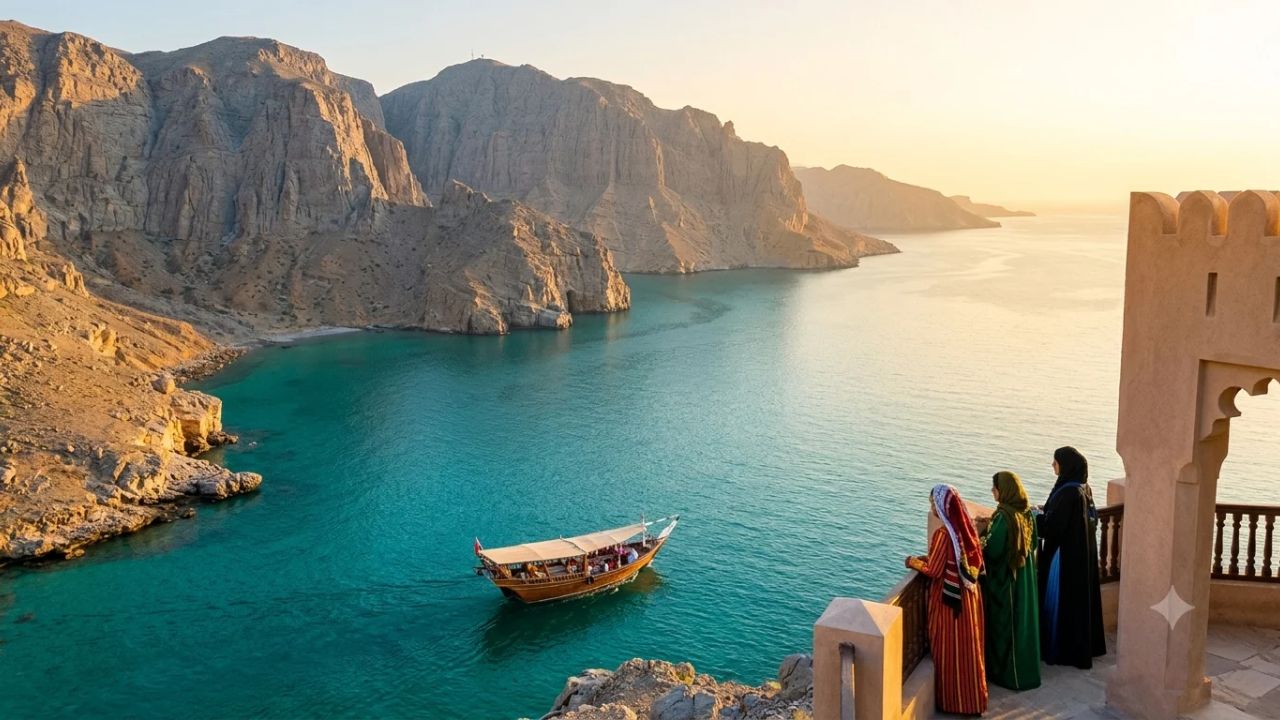
As global travelers increasingly pivot away from overcrowded European summer hotspots toward pristine nature and authentic cultural immersion, Oman’s fjord-carved enclave of Musandam and Saudi Arabia’s verdant high-altitude Aseer region have taken center stage as the Middle East’s foremost hidden travel gems for 2027.
Backed by comprehensive sovereign frameworks under the Oman Vision 2040 Implementation Follow-up Unit and Saudi Vision 2030, these two distinct topographical marvels represent a calculated shift away from mass-volume, low-margin footfall toward high-yield, ecologically protected luxury travel. By combining state-of-the-art infrastructure—such as the newly expanded Khasab Airport and trans-mountain highway tunnels—with strict marine and heritage conservation zoning, Musandam and Aseer are providing international adventurers with an extraordinary alternative to traditional tourist corridors.
Musandam: The Fjord-Carved "Norway of Arabia"
Perched on the northernmost tip of the Arabian Peninsula and separated from the rest of the Sultanate by the United Arab Emirates, the Musandam Governorate commands a dramatic maritime position along the Strait of Hormuz. Celebrated for its 2,087-meter limestone peaks that plunge vertically into crystal-clear turquoise waters, Musandam boasts dramatic desert fjords (khors) extending up to 16 kilometers inland.
                    MUSANDAM SUSTAINABLE TOURISM PROFILE (OMAN VISION 2040)
  ========================================================================================
  Strategic Asset               Operational Metric               Development Objective
  ----------------------------------------------------------------------------------------
  Khasab Airport Expansion      500,000 Capacity Target (2030)   Direct regional flight links
  Dibba Coastal Road Link       98%+ Construction Complete       Rapid overland UAE connectivity
  Port Khasab Cruise Terminal   58,267+ Annual Cruise Visitors   45+ Luxury cruise calls
  Marine Protection Zones       Strict Vessel Corridor Rules     Protects dolphins & coral reefs
  National Tourism Spend        >OMR 1.02 Billion (Nationwide)   Fuels local eco-tourism SMEs
  ========================================================================================
Under policies enacted by the Ministry of Heritage and Tourism of Oman, Musandam is being systematically developed into an international eco-adventure hub. Historical landmarks such as the 17th-century Portuguese-built Khasab Fort and ancient petroglyph valleys are integrated with low-impact marine exploration. Traditional wooden dhow cruises allow travelers to navigate the secluded waters of Khor Sham, where resident humpback and bottlenose dolphins thrive within newly demarcated marine reserves.
High-end hospitality in the enclave—anchored by world-renowned retreats such as Six Senses Zighy Bay—is expanding through boutique cliffside eco-lodges designed to preserve fragile coastal ecosystems while providing private paragliding arrivals, traditional Omani culinary journeys, and deep-sea diving along untouched coral reefs.
Saudi Arabia’s Aseer: Lush Mountain Peaks and Ancient Ethics
In the southwestern corner of the Kingdom, the Aseer province defies conventional perceptions of Arabian geography. Accounting for approximately 70% of Saudi Arabia's total natural vegetation cover, Aseer features mist-shrouded junipers, high-altitude terraced farms, and Mount Sawda—the nation's highest peak rising over 3,000 meters above sea level.
  SAUDI VISION 2030: ASEER REGIONAL TRANSFORMATION ("PEAKS AND MORALS")

  [ Public Investment Fund (PIF) ] ====> [ Aseer Development Authority (ASDA) ]
                                                        |
                 +======================================+
                 |                                      |
                 v                                      v
  [ Summer Season Footfall ]                 [ 2030 Macro Targets ]
  * 3.0M+ Summer 2026 Visitors               * 10.0 Million Annual Visitors
  * Year-round 20°C–25°C cool climate        * 26 Billion SAR GDP Contribution
  * High-altitude trekking in Sawda          * Preservation of Al-Qatt Al-Asiri
Operating under the regional development banner of Qimam and Shiyam (Peaks and Morals), the Aseer Development Authority (ASDA) has transformed the regional capital of Abha and the surrounding mountains into a year-round haven. During peak mid-summer months, while neighboring Gulf lowlands face extreme heat, Aseer maintains a refreshing climate between 20°C and 25°C, drawing over three million travelers during the summer 2026 season alone.
Key strategic initiatives advancing through the Saudi Tourism Authority (Visit Saudi) include:
- Architectural Identity Preservation: Enforcing strict building codes inspired by traditional stone-and-mud watchtowers and safeguarding Al-Qatt Al-Asiri—the UNESCO-recognized geometric wall art traditionally hand-painted by local women.
- Adventure and Eco-Tourism: Expanding multi-day trekking trails, mountain biking corridors, and paragliding launch pads across the Sarawat mountain range.
- Agricultural Regeneration: Revitalizing ancient gravity-fed stone terraced farms that yield aromatic highland coffee, wild honey, and mountain herbs.
Comparative Travel Dynamics: Musandam vs. Aseer
While both destinations target discerning travelers seeking pristine landscapes, their topography and experiential offerings cater to distinct travel motivations:
| Feature / Metric | Oman's Musandam Peninsula | Saudi Arabia's Aseer Province |
|---|---|---|
| Geographic Character | Desert fjords, sea cliffs & coastal straits | Verdant temperate highlands, plateaus & valleys |
| Highest Elevation | Jebel Harim (2,087 m) | Mount Sawda (~3,000 m) |
| Primary Climate Appeal | Sunny winter marine escapes & warm diving | Cool, breezy summer mountain retreats |
| Signature Experience | Traditional dhow cruising & dolphin tracking | High-altitude mountain trekking & heritage villages |
| Cultural Touchpoint | Portuguese forts & traditional fishing villages | Mud-and-stone castles & Al-Qatt Al-Asiri art |
| Long-Term Target | 500,000 air passengers by decade's end | 10 million annual visitors by 2030 |
| Strategic Vision | Oman Vision 2040 Sustainable Hub | Saudi Vision 2030 ("Peaks and Morals") |
Sustainable Tourism Architecture: The 2027 Traveler's Advantage
The rise of Musandam and Aseer marks a mature inflection point for Middle Eastern tourism development, prioritizing long-term ecological stewardship over unconstrained expansion:
- Environmental Capping: Both regional master plans enforce carrying-capacity limits on sensitive ecosystems. Musandam regulates maritime vessel speeds to safeguard marine mammals, while Aseer limits vehicular access in national park wilderness zones to prevent soil erosion.
- Economic Retention in Communities: Development frameworks directly support small-to-medium enterprises (SMEs), ensuring that guided hikes, artisan textile sales, and homestay accommodations channel foreign expenditure directly to indigenous families.
- Cross-Border Multi-Destination Circuits: Regional airline connectivity allows international travelers to design multi-country itineraries—pairing the sea fjords of Musandam via Dubai or Muscat with a short regional flight to Abha for high-altitude mountain trekking.
As travelers finalize itineraries for 2027, the dramatic sea cliffs of Musandam and the misty juniper forests of Aseer stand out as authentic, regenerative travel experiences that prove the Arabian Peninsula’s most compelling treasures lie far beyond the beaten path.
Frequently Asked Questions
Why is Oman's Musandam called the "Norway of Arabia"?
Musandam earned the moniker because of its dramatic desert fjords (khors)—sea inlets carved between 2,000-meter limestone mountain cliffs that drop steeply into turquoise waters, resembling Scandinavian fjords in an arid setting.
What is the climate like in Saudi Arabia's Aseer region during summer?
Unlike the rest of the Arabian Peninsula, Aseer enjoys a temperate highland climate, with summer temperatures averaging between 20°C and 25°C, accompanied by regular mountain breezes, fog, and seasonal rainfall.
What are the main transport upgrades serving Musandam?
Musandam is upgrading Khasab Airport to handle 500,000 passengers annually by 2030, while the Dibba coastal road network is over 98% complete, significantly reducing driving times from the UAE.
What does the "Qimam and Shiyam" slogan mean for Aseer?
Translating to "Peaks and Morals," the slogan embodies the Aseer Development Strategy, aiming to celebrate the region's soaring mountain topography alongside its time-honored social values and architectural heritage.
Related Travel Guides
- Jordan Expands Global MICE Tourism with Dead Sea Infrastructure, Digital Visas, and Corporate Travel Push
- Spain Hotel Prices Rise 6.7% in September 2026 as Overseas Overnight Stays Climb to 40.1 Million
- Greece Inbound Arrivals Jump 13.4% in August 2026 as Visitor Spending Sinks 6.5% Amid Soaring Travel Costs
Disclaimer
This article is for informational and educational purposes only. It does not constitute legal, financial, or professional advice. While we strive to provide accurate and up-to-date information, travel policies, regulations, and conditions change rapidly. Always verify information with official sources before making travel decisions. Nomad Lawyer makes no representations about the accuracy, reliability, completeness, or suitability of the information provided. Readers should consult qualified professionals for advice specific to their circumstances. The views expressed in this article are those of the author and do not necessarily reflect the views of Nomad Lawyer.
Raushan Kumar
Founder & Lead Developer
Full-stack developer with 11+ years of experience and a passionate traveller. Raushan built Nomad Lawyer from the ground up with a vision to create the best travel and law experience on the web.
Learn more about our team →