New Zealand Tourism Surges to 99% Pre-Pandemic Level as Chinese Visitor Spend Hits NZ$1.5 Billion

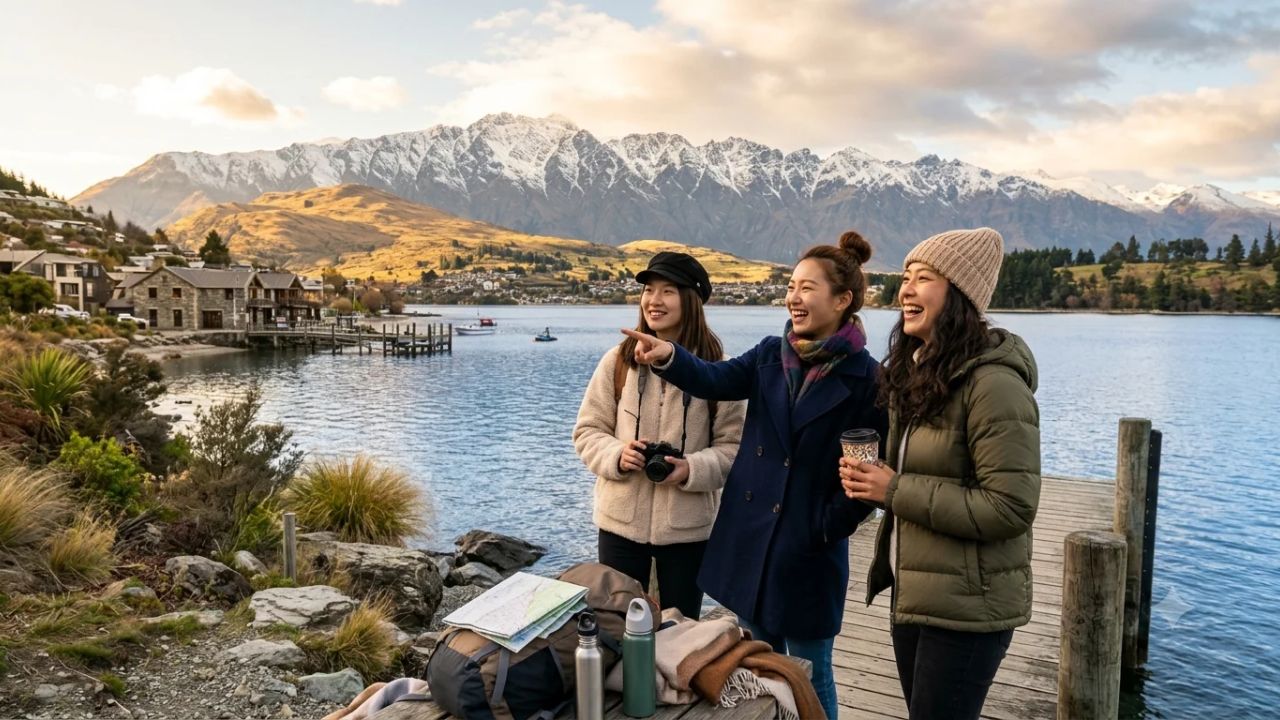
International visitor arrivals in New Zealand reached 99% of pre-pandemic levels in August 2026, supported by strong Chinese leisure demand across North and South Islands
[AUCKLAND, Oct 30, 2026] — Propelled by an accelerating resurgence in Chinese leisure travel and streamlined trans-Tasman electronic entry, New Zealand has brought total overseas visitor arrivals to 99% of pre-pandemic 2019 benchmarks, with Chinese expenditure surging 26% year-on-year to reach NZ$1.5 billion.
[!NOTE] Key Tourism Benchmarks: Monthly data from Statistics New Zealand reveals that international visitor arrivals climbed to approximately 248,700 in August 2026—a year-on-year increase of 18,400 travelers, closing the gap with August 2019 to within 1%. China emerged as a primary growth driver, contributing 6,500 additional arrivals and accounting for 11% of all international entries. Concurrently, Ministry of Business, Innovation and Employment (MBIE) survey data confirms that annual Chinese visitor spend expanded by 26% to reach NZ$1.5 billion for the year ending June 2026.
NEW ZEALAND TOURISM RECOVERY ARCHITECTURE (2026)
| Column 1 |
|---|
| [ AUGUST 2026 OVERSEAS ARRIVALS: 248,700 TRAVELERS ] |
| +----------------------------+-----------------------------+ |
| v [ CHINESE INBOUND SURGE ] v [ TRANS-TASMAN NZeTA TRIAL ] |
| - 11% of Total August Arrivals - Implemented: November 2025 |
| - +6,500 Additional Arrivals vs. Aug 2025 - Eligible Chinese holders of valid |
| - Annual Spending: NZ$1.5 Billion (+26% YoY) Australian visas travel on NZeTA |
| - Shift to Free Independent Travelers (FIT) - Eliminates separate NZ visa fee |
| +----------------------------+-----------------------------+ |
| v |
| [ REGIONAL DISPERSION HUBS ] |
| - Auckland: Main international gateway & Waitematā Harbour air link |
| - Queenstown: Lake Wakatipu, Remarkables alpine luxury & adventure hub |
| - Rotorua: Geothermal mud pools, Pohutu Geyser & living Māori cultural heritage |
| - Canterbury & Mackenzie: Christchurch gateway, Lake Tekapo Dark Sky & Aoraki / Mount Cook |
Reaching 99% Pre-Pandemic Parity: The August 2026 Arrival Breakthrough
The publication of international travel figures for August 2026 marks a milestone for New Zealand's post-pandemic economic recovery. Total overseas visitor arrivals reached approximately 248,700 during the month, reflecting an increase of 18,400 travelers compared to August 2025.
Most significantly, this volume brought overall arrivals to approximately 99% of the level recorded in August 2019, virtually erasing the deficit created by years of border restrictions and international aviation bottlenecks.
ARRIVALS RECOVERY TRAJECTORY: AUGUST COMPARISON
| Column 1 |
|---|
| AUGUST 2019 (PRE-PANDEMIC BENCHMARK): ~251,000 Overseas Arrivals |
| =========================================== |
| AUGUST 2025 (INTERMEDIATE RECOVERY): 230,300 Overseas Arrivals |
| ===================================== |
| AUGUST 2026 (CURRENT PERFORMANCE): 248,700 Overseas Arrivals (+18,400 YoY) |
| =========================================== |
| RECOVERY INDEX: 99.1% OF 2019 VOLUME CHINESE MARKET SHARE: 11% OF ALL ARRIVALS |
China played an outsized role in closing this gap. In August 2026 alone, Chinese visitors accounted for roughly 6,500 of the 18,400 net additional arrivals compared to the previous year.
Representing 11% of all international travelers entering the country during the month, China solidified its standing as New Zealand's second-largest source market by visitor volume and economic impact, trailing only neighboring Australia.
Rather than relying on seasonal peaks, the consistent month-on-month flow of Chinese visitors through the late winter and early spring shoulder period demonstrates a structural stabilization in travel demand.
The NZ$1.5 Billion Inflow: Unpacking MBIE International Visitor Survey Metrics
While arrival numbers reflect border movements, economic yield reveals the true health of the hospitality sector. Data released by the Ministry of Business, Innovation and Employment (MBIE) through its International Visitor Survey (IVS) confirms that Chinese visitor expenditure reached approximately NZ$1.5 billion during the year ending June 2026.
This represents an increase of 26% compared to the prior twelve-month period, outpacing the rate of arrival growth and pointing to higher average spend per traveler.
CHINESE TRAVELER EXPENDITURE DYNAMICS (YEAR TO JUNE 2026)
| Column 1 |
|---|
| [ TOTAL EXPENDITURE ] [ ANNUAL REVENUE GROWTH ] |
| NZ$1.5 Billion Inbound Spend +26% Increase Year-on-Year |
| [ STRUCTURAL SPENDING SHIFTS ] |
| - Old Model: Low-margin group bus tours, fixed retail commission stores, short stays. |
| - Modern Model: Free Independent Travelers (FIT), self-drive rental SUVs, luxury alpine lodges. |
| - Primary Expenditure Allocation: Boutique accommodations, guided eco-walks, fine dining, |
| regional cellar door tastings, and adventure activities (jetboating, skydiving, heli-hiking). |
The underlying composition of Chinese tourism in New Zealand has undergone a permanent qualitative evolution:
- Rise of the Free Independent Traveler (FIT): The historical model of rigid, large-group bus tours has largely given way to independent travelers, couples, and small multi-generational family parties. These travelers organize bespoke itineraries, rent modern vehicles or campervans, and remain in the country for longer durations.
- Dispersion into Regional Economies: FIT travelers stay less time in transit hotels and spend more in regional communities. Expenditures flow directly to local café owners, artisanal honey producers in Central Otago, vineyard operators in Marlborough, and independent kayak guides in Abel Tasman.
- Premium Experience Preferences: Chinese holidaymakers are increasingly prioritizing unique experiences—such as scenic helicopter flights over southern glaciers, private star-gazing sessions in international dark sky reserves, and farm-stay experiences—over luxury brand shopping in metropolitan centers.
| Inbound Source Market | August 2026 Arrivals | YoY Arrival Growth | Annual Spend (Year to June 2026) | Annual Spend Growth | Average Dwell Duration |
|---|---|---|---|---|---|
| Australia | ~98,500 | +4.2% | NZ$3.4 Billion | +8.5% | 7 – 10 Days |
| China | ~27,300 (11% share) | +31.2% (+6,500) | NZ$1.5 Billion | +26.0% | 14 – 19 Days |
| United States | ~21,400 | +6.8% | NZ$1.8 Billion | +11.2% | 11 – 15 Days |
| United Kingdom | ~11,200 | +2.1% | NZ$1.1 Billion | +5.4% | 18 – 24 Days |
| Japan | ~7,800 | +9.5% | NZ$0.6 Billion | +14.1% | 9 – 13 Days |
Cross-Border Visa Innovation: The Australia-New Zealand NZeTA Trial
A major catalyst behind this tourism surge is an innovative cross-border visa initiative introduced by Immigration New Zealand in late 2025.
TRANS-TASMAN NZeTA TRIAL OPERATIONAL WORKFLOW
| Column 1 |
|---|
| [ CHINESE CITIZEN IN AUSTRALIA ] |
| Holds an eligible, valid Australian visa (e.g., subclass 600 tourist, student, or business) |
| v |
| [ DIGITAL NZeTA APPLICATION ] |
| - Submits online application via mobile app or Immigration NZ portal |
| - Processed within 24 to 72 hours; nominal electronic processing fee |
| - Bypasses traditional, lengthy paper visitor visa submission and duplicate biometric vetting |
| v |
| [ DIRECT TRANS-TASMAN FLIGHT ] |
| - Departs directly from Sydney, Melbourne, Brisbane, or Perth |
| - Arrives in Auckland, Christchurch, or Queenstown with automated eGate processing |
| v |
| [ MULTI-DESTINATION "DOWN UNDER" ITINERARY ] |
| Combines Great Barrier Reef / Sydney Opera House with Queenstown fjords and Rotorua geysers |
Initiated in November 2025 as a 12-month pilot program, the policy allows eligible Chinese passport holders who possess specified valid Australian visas to travel to New Zealand using a simple New Zealand Electronic Travel Authority (NZeTA) rather than applying for a full New Zealand visitor visa.
This regulatory adjustment addresses a longstanding friction point in Pacific travel:
- Eliminating Duplicate Visa Barriers: Previously, Chinese travelers planning a joint Australia-New Zealand itinerary had to complete two separate, costly visa application processes involving extensive financial documentation and administrative processing times that could stretch for weeks.
- Stimulating Dual-Destination Bookings: By allowing pre-vetted Chinese tourists visiting Australia to obtain an electronic travel authority in minutes, New Zealand captures substantial overflow traffic. Thousands of travelers vacationing in Sydney or Melbourne now add a four-to-seven-day side trip to Queenstown or Auckland.
- Direct Aviation Synergies: The policy directly supports trans-Tasman flight connectivity operated by Air New Zealand, Qantas, and Jetstar, keeping trans-Tasman seat occupancy high throughout the year.
Gateway to the North: Auckland's International Flight Recovery and Urban Appeal
Auckland serves as New Zealand’s primary international aviation gateway and the principal point of entry for travelers arriving from East Asia.
AUCKLAND REGIONAL TOURISM & LOGISTICS ASSETS
| [ AUCKLAND INTERNATIONAL AIRPORT (AKL) ] |
|---|
| - Nonstop long-haul air services from Beijing (Air China), Shanghai (China Eastern & Air NZ), |
| and Guangzhou (China Southern Airlines). |
| - Modern terminal enhancements and multi-lingual passenger wayfinding systems. |
| [ URBAN & HARBOR EXPERIENCES ] |
| - Sky Tower: Panoramic 360-degree observation deck and SkyWalk adventures. |
| - Waitematā Harbour: Americas Cup sailing charters and sunset dinner cruises. |
| - Volcanic Cones: Walkable volcanic summits at Mount Eden (Maungawhau) and Rangitoto Island. |
| [ REGIONAL DAY EXCURSIONS ] |
| - Waiheke Island: 40-minute ferry to world-class boutique vineyards, olive groves, and beaches. |
| - Matakana Coast: Farmers markets, sculpture parks, and marine reserves at Goat Island. |
Auckland’s connectivity has been reinforced by the restoration of daily direct flights from China’s major aviation hubs, including Shanghai Pudong, Guangzhou Baiyun, and Beijing Capital, operated by Air New Zealand, China Southern, China Eastern, and Air China.
For Chinese visitors, Auckland provides an accessible blend of urban comfort and coastal nature. The city’s waterfront dining precincts—including Wynyard Quarter, Viaduct Harbour, and Commercial Bay—feature contemporary restaurants serving fresh New Zealand green-lipped mussels, Pacific oysters, and grass-fed dairy products.
In addition, Auckland serves as the natural staging ground for self-drive tours heading north to the Bay of Islands or south into the Waikato region, where the world-famous Hobbiton Movie Set in Matamata continues to attract film enthusiasts and families.
Alpine Splendor in the South: Queenstown, Wakatipu, and Central Otago
Nestled on the shores of Lake Wakatipu beneath the jagged peaks of The Remarkables, Queenstown is the undisputed adventure and luxury resort capital of the South Island.
QUEENSTOWN & CENTRAL OTAGO TOURISM ASSETS
| Column 1 |
|---|
| [ LAKE WAKATIPU & HERITAGE EXPEDITIONS ] |
| - TSS Earnslaw: Historic 1912 steamship cruising across Lake Wakatipu to Walter Peak Farm. |
| - Skyline Gondola & Luge: Scenic cable car to Bob's Peak with panoramic alpine vistas. |
| - Dart River Wilderness: Jetboat excursions through glacier-carved valleys in Glenorchy. |
| [ HERITAGE & VINEYARD CORRIDORS ] |
| - Arrowtown: Preserved 1860s gold-mining settlement, Chinese miners' historic village. |
| - Gibbston Valley: Cool-climate Pinot Noir wineries, artisanal cheeseries, and cellar doors. |
| [ LUXURY LODGING & WELLNESS ] |
| - Exclusive luxury lodges (Matakauri Lodge, Blanket Bay, Rosewood Matakauri). |
| - Onsen Hot Pools: Private cliffside cedar hot tubs overlooking the Shotover River canyon. |
For Chinese travelers, Queenstown represents the quintessential New Zealand landscape: crystal-clear glacial waters, towering snow-capped peaks, and clean alpine air. The resort town balances high-adrenaline adventure sports—such as bungy jumping, skydiving, and jetboating through the Shotover River canyons—with premium relaxation experiences.
High-net-worth Chinese visitors increasingly select ultra-exclusive alpine retreats, such as Blanket Bay near Glenorchy and Rosewood Matakauri Lodge on the edge of Lake Wakatipu. These luxury properties provide seclusion, personalized concierge teams, and bespoke culinary programs featuring seasonal Otago venison, Canterbury lamb, and regional organic produce. Luxury flight-seeing operators also report elevated demand for private helicopter excursions lifting off from Queenstown to soar over Mount Aspiring National Park, touch down on ancient glacier snowfields for private tastings, and sweep into Milford Sound (Piopiotahi) for fiord cruises beneath sheer granite cliffs.
Historic Arrowtown, located just 20 minutes from central Queenstown, holds special cultural significance. Visitors explore the restored Arrowtown Chinese Settlement, an authentic heritage site preserving the stone cottages and stores of 19th-century Chinese gold miners who helped build the Otago region's early economy.
In neighboring Gibbston, known as the "Valley of the Vines," Chinese holidaymakers tour boutique wineries specializing in world-renowned Central Otago Pinot Noir, enjoying outdoor tastings that pair fine vintages with local cheeses and wild game. Private guided fly-fishing charters on the Greenstone and Caples rivers have also seen climbing participation among Chinese outdoor enthusiasts seeking catch-and-release rainbow and brown trout fishing in pristine backcountry waters.
Māori Cultural Heritage and Geothermal Wonders: Rotorua and Taupō
In the central North Island, Rotorua provides visitors with a sensory encounter with New Zealand’s living earth and indigenous cultural heritage.
ROTORUA GEOTHERMAL & MĀORI HERITAGE CORRIDORS
| Column 1 |
|---|
| [ GEOTHERMAL PHENOMENA ] |
| - Te Whakarewarewa Thermal Valley: Boiling mud pools, sulfur steam vents, hot springs. |
| - Pōhutu Geyser: The Southern Hemisphere's largest active geyser, erupting up to 30m high. |
| - Wai-O-Tapu Thermal Wonderland: Vivid orange and green Champagne Pool and Lady Knox Geyser. |
| [ TE PUIA & LIVING MĀORI CULTURE ] |
| - New Zealand Māori Arts and Crafts Institute: Master carving (whakairo) & weaving (raranga). |
| - Traditional Pōhiri Welcomes: Marae protocols, choral waiata, and ceremonial Haka performances. |
| - Geothermal Hāngī Feasts: Slow-cooked meals prepared in natural underground steam vents. |
| [ ECO-ADVENTURE & FORESTRY ] |
| - Whakarewarewa Redwoods (Titokorangi): Elevated canopy tree-walks among giant Californian trees. |
| - Polynesian Spa: Therapeutic geothermal mineral bathing overlooking Lake Rotorua. |
Rotorua has long attracted international travelers fascinated by its geothermal activity. At Te Puia, situated within the Te Whakarewarewa Thermal Valley, visitors witness the majestic Pōhutu Geyser, which erupts up to twenty times daily, sending steam and boiling water 30 meters into the air.
Equally compelling for Chinese holidaymakers is the opportunity to engage with indigenous Māori culture. Te Puia houses the national carving and weaving schools, where young apprentices learn traditional woodcarving and flax weaving from master artisans. Cultural centers have introduced Mandarin-speaking cultural ambassadors who interpret the core philosophical concepts of whakapapa (genealogy and ancestral lineage), kaitiakitanga (environmental guardianship), and manaakitanga (unconditional hospitality). These cultural tenets resonate powerfully with Chinese visitors whose own traditions emphasize deep family lineage, multi-generational heritage, and respect for nature.
Evening cultural programs introduce guests to traditional welcoming ceremonies (pōhiri), the powerful haka, and the authentic hāngī—a traditional feast of meats, root vegetables, and stuffing slow-cooked underground in baskets over geothermal steam vents. This cultural engagement delivers direct economic benefits to regional iwi (tribal) organizations, sustaining community education and language preservation initiatives.
Complementing daytime excursions, geothermal wellness retreats across the Bay of Plenty have experienced strong Chinese patronage. Historic sanctuaries such as the Polynesian Spa offer private lakeside mineral bathing fed by both acidic and alkaline natural springs, valued for relieving fatigue and promoting skin vitality. Nearby at Hell's Gate (Tikitere), travelers immerse themselves in nutrient-dense volcanic mud baths and sulfur pools utilized by Māori warriors for centuries, creating a balanced itinerary combining cultural education with natural physical rejuvenation.
The Canterbury and Alpine Corridors: Christchurch, Lake Tekapo, and Aoraki / Mount Cook
Beyond the primary resort hubs, Chinese independent travelers are driving tourism growth across the central South Island, charting scenic road trips through the Canterbury Plains, the Mackenzie Basin, and the Southern Alps.
CANTERBURY & MACKENZIE BASIN EXPEDITIONS
| Column 1 |
|---|
| [ CHRISTCHURCH: THE GARDEN CITY GATEWAY ] |
| - Christchurch International Airport (CHC): Direct seasonal air links and South Island hub. |
| - Punting on the tranquil Avon River (Ōtākaro) through the Christchurch Botanic Gardens. |
| - Restored heritage tramways, Riverside Market artisan food hall, and street art culture. |
| v |
| [ MACKENZIE BASIN & LAKE TEKAPO ] |
| - Turquoise glacial waters of Lake Tekapo framed by blooming lupin fields in spring. |
| - Church of the Good Shepherd: Iconic stone chapel overlooking alpine waters. |
| - Aoraki Mackenzie International Dark Sky Reserve: World-class stargazing at Mount John. |
| v |
| [ AORAKI / MOUNT COOK NATIONAL PARK ] |
| - Home to New Zealand's highest peak (3,724 meters) and expansive hanging glaciers. |
| - Hooker Valley Track: Accessible 10-kilometer walking trail crossing dramatic suspension bridges. |
| - Tasman Glacier Heli-Hiking: Ski-plane and helicopter landings on New Zealand's longest glacier. |
Christchurch: Resilient Garden City
Christchurch functions as the southern gateway for travelers beginning classic South Island loop tours. The city features a blend of Victorian garden heritage and contemporary urban architecture. Visitors stroll through the 160-year-old Botanic Gardens, glide along the Avon River on hand-poled flat-bottom punts, and sample artisanal regional fare at the Riverside Market.
Dark-Sky Tourism at Lake Tekapo
A three-hour drive south of Christchurch leads travelers into the Mackenzie Basin, renowned for the milky-turquoise waters of Lake Tekapo, colored by finely ground glacial rock flour.
The region is designated as the Aoraki Mackenzie International Dark Sky Reserve, one of the largest gold-tier dark sky reserves in the world. Free from metropolitan light pollution, the area draws thousands of Chinese photography enthusiasts who visit the Church of the Good Shepherd to capture views of the Southern Cross, the Magellanic Clouds, and the core of the Milky Way arching across snow-dusted alpine summits.
Aoraki / Mount Cook National Park
Further inland, Aoraki / Mount Cook National Park encompasses 23 alpine peaks rising above 3,000 meters, dominated by Mount Cook at 3,724 meters. Accessible walking trails like the Hooker Valley Track allow families and novice hikers to cross three swing suspension bridges over roaring glacial rivers, ending at an iceberg-filled terminal lake with views of hanging glaciers.
For high-end travelers, scenic operators provide ski-plane landings on the Tasman Glacier, offering an alpine experience that leaves a lasting impression on international visitors.
| Regional Hub | Top Geographic Attraction | Signature Travel Experience | Recommended Stay Duration | Primary Inbound Transportation |
|---|---|---|---|---|
| Auckland | Waitematā Harbour & Sky Tower | Urban dining, Waiheke wine tasting, island ferries | 2 – 3 Days | Direct international flights to Auckland (AKL) |
| Queenstown | Lake Wakatipu & Remarkables | Jetboating, luxury alpine lodges, Arrowtown gold trails | 4 – 6 Days | Direct domestic flights or Queenstown Airport (ZQN) |
| Rotorua | Te Puia & Pōhutu Geyser | Geothermal mud pools, Māori hāngī, redwood canopy walks | 2 – 3 Days | 2.5-hour drive from Auckland or Rotorua Airport |
| Christchurch | Botanic Gardens & Avon River | Punting on the Avon, tram tours, gateway to the South | 1 – 2 Days | Christchurch International Airport (CHC) |
| Lake Tekapo | Church of the Good Shepherd | Dark Sky stargazing, hot springs, lupin photography | 1 – 2 Days | Scenic inland alpine highway drive from Christchurch |
| Aoraki / Mount Cook | Hooker Valley & Tasman Glacier | Glacier heli-hiking, alpine walks, mountain scenery | 2 – 3 Days | Highway 80 scenic branch off Mackenzie Basin |
Practical Traveler Planning: Navigating Seasons, Roads, and Cultural Customs
For international visitors and travel advisors organizing holidays across New Zealand, understanding local travel conditions ensures a seamless and memorable vacation.
NEW ZEALAND TRAVEL PLANNING CHECKLIST
| Column 1 |
|---|
| PHASE 1: VISAS & ENTRY DOCUMENTATION |
| [ ] Determine visa category: Standard Visitor Visa vs. NZeTA for eligible Australian visa holders. |
| [ ] Pay the International Visitor Conservation and Tourism Levy (IVL) included with entry apps. |
| [ ] Download the New Zealand Traveller Declaration (NZTD) digital customs pre-clearance app. |
| PHASE 2: TRANSPORTATION & SELF-DRIVE SAFETY |
| [ ] Drive on the LEFT side of the road; familiarize yourself with single-lane bridge rules. |
| [ ] Keep realistic driving times: mountainous, winding alpine roads take longer than GPS maps show. |
| [ ] Carry chains or verify all-wheel-drive capability when crossing high passes in winter/spring. |
| PHASE 3: BIOSECURITY & ENVIRONMENTAL ETIQUETTE |
| [ ] Declare all outdoor footwear, camping gear, fresh fruits, vegetables, and meats to Customs. |
| [ ] Practice the Tiaki Promise: Act as a guardian of nature, pack out all litter, protect wildlife. |
| [ ] Respect sacred Māori cultural sites (wāhi tapu); refrain from climbing restricted summits. |
Biosecurity and Border Integrity
New Zealand enforces some of the world's strictest biosecurity laws to protect its unique agricultural economy and isolated island flora and fauna. Travelers must declare all food, plant materials, hiking boots, and outdoor sporting equipment on their digital passenger arrival card. Outdoor footwear must be thoroughly cleaned of all mud and soil before arrival to prevent the transmission of microscopic plant pathogens like kauri dieback disease.
Self-Drive Road Safety
With Free Independent Travelers predominantly exploring New Zealand via rental cars or motorhomes, road safety is paramount. Vehicles travel on the left-hand side of the road, and alpine corridors feature numerous single-lane bridges where drivers must obey directional right-of-way signage.
Travelers should avoid scheduling excessively long driving days; mountain roads are winding and steep, meaning a 200-kilometer journey through alpine passes can easily require four to five hours of driving time.
Cultural Etiquette and the Tiaki Promise
Visitors are invited to embrace the Tiaki Promise—a commitment to care for New Zealand, act as a guardian of nature (kaitiakitanga), and preserve the land for future generations. When visiting Māori meeting grounds (marae) or thermal reserves, travelers should observe customary protocols: remove shoes when entering meeting houses, listen respectfully during speechmaking, and avoid touching sacred wooden carvings unless invited.
The resurgence of Chinese travel to New Zealand, generating NZ$1.5 billion in annual spending and lifting monthly arrivals to 99% of pre-crisis benchmarks, signals a vibrant new chapter for the country’s tourism economy. By embracing independent travelers who venture deeply into regional communities, New Zealand is fostering a high-value, sustainable tourism sector that celebrates its alpine landscapes, living indigenous culture, and warm hospitality.
Frequently Asked Questions (PAA)
How close is New Zealand's tourism recovery to pre-pandemic levels?
In August 2026, New Zealand welcomed approximately 248,700 overseas visitor arrivals, representing 99% of the volume recorded in August 2019 before the pandemic disrupted global travel. The recovery has been led by visitors from Australia, China, and the United States.
How much do Chinese tourists spend in New Zealand annually?
According to the Ministry of Business, Innovation and Employment's International Visitor Survey, Chinese visitors spent approximately NZ$1.5 billion in New Zealand during the year ending June 2026. This reflects a 26% increase in spending compared to the previous year.
What is New Zealand’s NZeTA trial for Chinese visitors traveling from Australia?
Beginning in November 2025 as a 12-month pilot program, eligible Chinese passport holders with specified valid Australian visas can travel to New Zealand using an electronic travel authority (NZeTA) rather than applying for a separate, full visitor visa, provided they travel directly from Australia.
What are the top destinations for Chinese travelers visiting New Zealand?
Top destinations include Auckland (the primary international gateway and waterfront hub), Queenstown (famed for Lake Wakatipu, alpine scenery, and luxury lodges), Rotorua (renowned for geothermal mud pools and Māori cultural experiences), Christchurch, and the dark-sky reserves around Lake Tekapo and Aoraki / Mount Cook.
How has the style of Chinese tourism in New Zealand changed in 2026?
Chinese travelers are increasingly visiting as Free Independent Travelers (FIT) rather than on large commercial bus tours. They tend to stay longer, rent private vehicles or campervans, explore regional outdoor destinations, and spend more on luxury lodges, fine dining, wine cellar doors, and guided eco-adventures.
Related Travel Guides
This article is for informational purposes. Flight routes, passenger regulations, visa rules, and transit advisories are subject to change by airlines and aviation authorities. Readers are advised to verify schedules and travel documentation with relevant carriers and border agencies before departure.
Related Stories

New Caledonia Tourism Resets Global Strategy: New Marketing Agencies in France, Australia, and New Zealand to Accelerate Recovery
Vietnam Surges as Australia’s Fastest-Growing Holiday Destination: Phu Quoc and Hoi An Lead Travel Boom